Written By Bridget Stieb, Director of Marketing at LUX Foundation Solutions • Reviewed by LUX’s foundation repair specialists serving Northern Virginia & Florida
Crawl space mold is caused by moisture, and in Northern Virginia, moisture is constant. Clay-heavy soil retains water year-round, annual rainfall exceeds 40 inches, and summer relative humidity in unprotected crawl spaces regularly climbs above 60 percent, the threshold at which mold begins to grow.
What makes it serious is the stack effect. Up to 50 percent of the air in your home comes from the crawl space below. Mold spores, musty odors, and contaminants move through the air flow into your living space. Over time, this affects air quality and creates a persistent mold problem that can trigger respiratory issues.
This guide covers the 7 most common causes of crawl space mold and what you can do about each one.
What Mold Needs to Grow in a Crawl Space
Before you can stop crawl space mold, you need to understand what keeps it alive. Mold only needs three things: organic food, a stable temperature, and moisture.
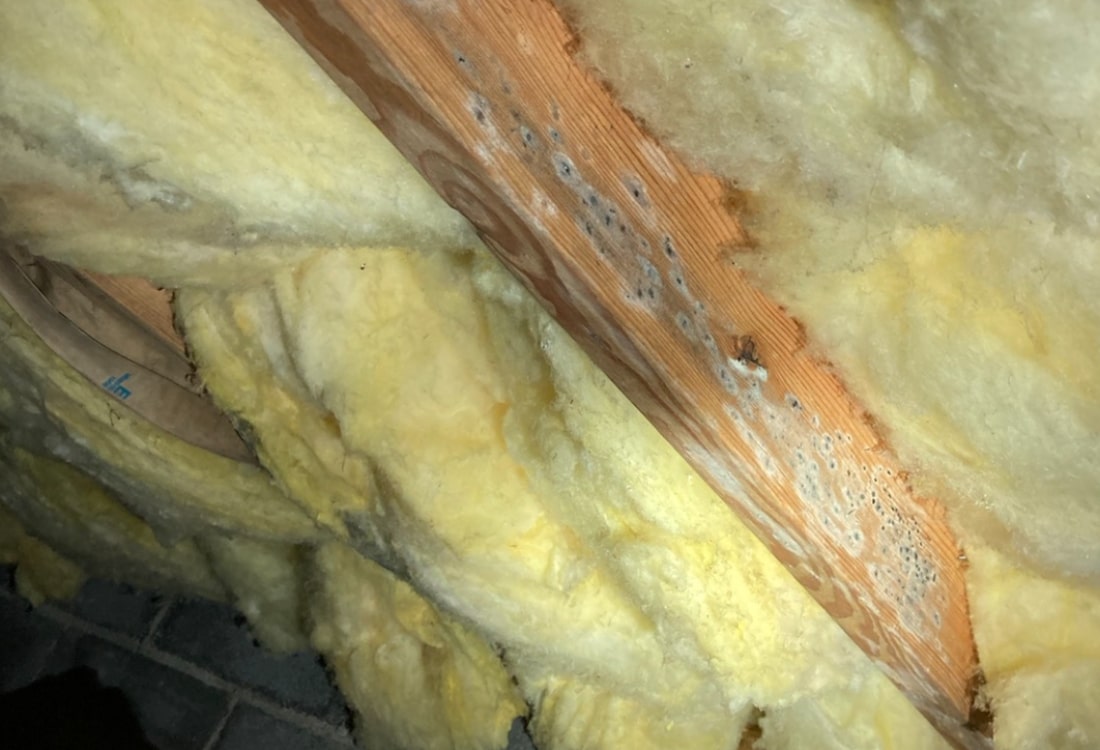
Your crawl space already provides the first two. Wood joists, subflooring, and insulation contain cellulose, which feeds all the mold types commonly found in homes. Temperatures typically range from 40 to 90 degrees Fahrenheit, ideal for growth. You cannot change either of those two conditions.
What you can control is moisture. Without moisture, mold spores stay dormant. They are still present, but they cannot grow or spread. The moment dampness enters the crawlspace, those spores activate and begin breaking down the wood, leading to rot, structural damage, and potential contamination of indoor air.
Every cause on this list is a different pathway through which moisture enters your crawl space. Close those pathways, and you take away the one thing mold cannot survive without.
1. Missing or damaged vapor barrier.
The dirt floor of your crawl space is not actually dry. Soil acts like a sponge, pulling moisture up from the water table through capillary action. As temperature and air pressure shift, that moisture evaporates upward into your crawl space.
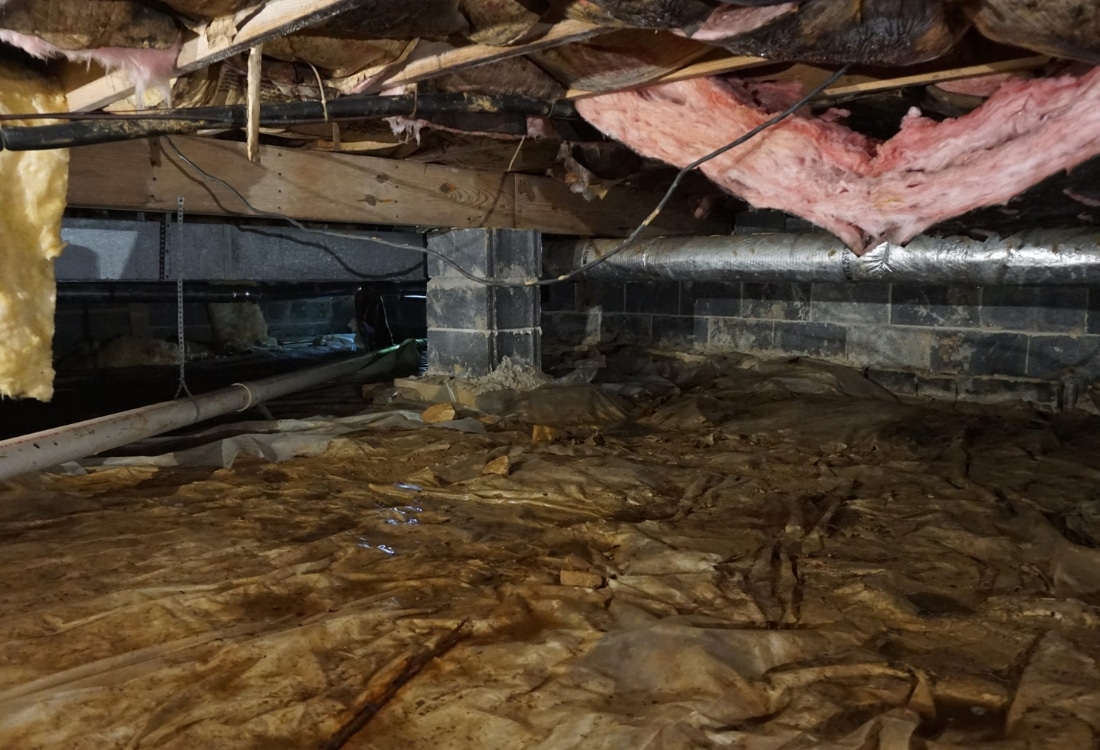
A vapor barrier stops that evaporation at the source. But it only works if it covers 100 percent of the soil and stays intact. In older Northern Virginia homes, 6-mil poly sheeting installed 10 or more years ago is often found torn, collapsed, or pushed aside during service visits. When we find active mold, a deteriorated vapor barrier is involved more often than any other single factor
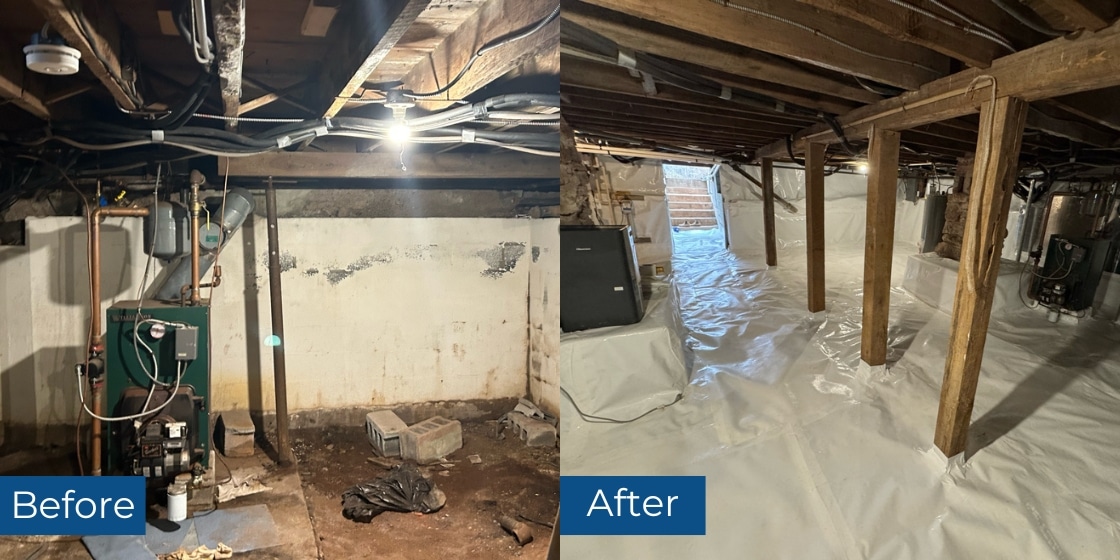
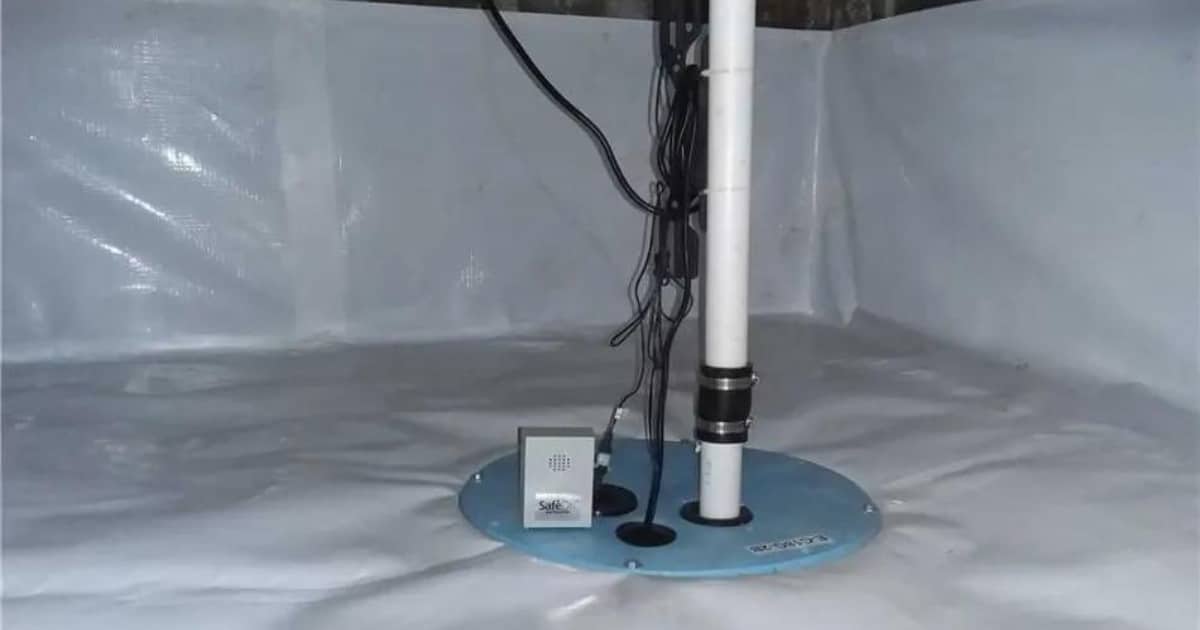
The fix: Replace damaged sheeting with a heavy-duty reinforced liner, 10 mil or heavier. For full protection, crawl space encapsulation covers the floor, walls, vents, and all moisture entry points.
2. Standing water and poor drainage.
Standing water from poor foundation drainage, plumbing leaks, and flooding after heavy rain can saturate wood joists quickly. Once wood moisture exceeds 19 percent, mold colonizes within 24 to 48 hours, causing water damage and rot in structural wood.
In Northern Virginia, clay soil holds water against foundation walls for days after rain stops, long after the surface looks dry. In our inspections, inadequate drainage around the foundation is the single most consistent finding in homes with active crawl space mold.
The fix: Ensure the ground slopes away from your foundation. Extend downspouts at least six to ten feet from the structure. If water is still getting in after heavy rain, a perimeter drainage system may be needed.
3. Condensation on Cold Surfaces
Condensation forms when warm, humid air meets a cold surface, such as metal pipes, HVAC ducts, or the underside of subflooring. The moisture drips onto wood joists from above, creating mold that grows top-down rather than from the ground up and spreads to other areas of the crawlspace.
A vapor barrier cannot stop this. In Northern Virginia, this problem has grown more common as homeowners replace older HVAC systems with high-efficiency units that run colder, creating more condensation on duct surfaces in warm, humid crawl spaces.
The fix: Insulate cold-water pipes and HVAC ductwork in the crawl space to raise their surface temperatures above the dew point. Install a dehumidifier to reduce ambient humidity.
4. High humidity and poor ventilation.
When crawl space humidity exceeds 60 percent, wood absorbs moisture directly from the air, and mold activates. Most homeowners assume their crawl space is fine because it feels cool down there. But cool air holds moisture just as effectively as warm air.
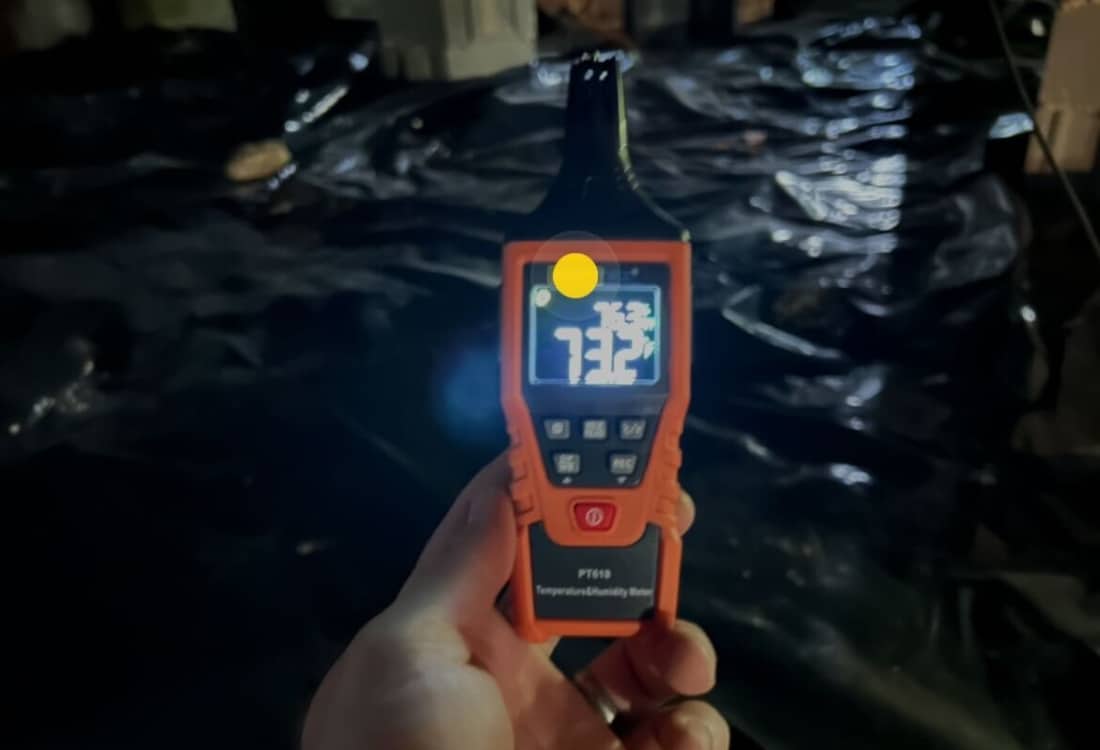
The only way to know the actual humidity in your crawl space is to measure it with a hygrometer. In Northern Virginia, crawl spaces without moisture control regularly read 80 to 90 percent humidity during summer. That is not close to the danger zone. That is well past it.
The ventilation myth: For decades, building codes required foundation vents in crawl spaces on the assumption that fresh air would carry moisture out. In Northern Virginia, that logic breaks down. Open those vents in summer, and you’re pulling hot, humid outside air into a crawl space that’s sitting around 65 degrees. That air hits every cold surface and condenses. You’re not removing moisture, you’re introducing it.
The fix: Seal foundation vents. Install a crawl space dehumidifier sized for your space to maintain humidity below 55 percent year-round.
5. Plumbing Leaks
Sometimes the call is coming from inside the house. A pinhole leak in a supply line under your floor can spray a fine mist of water onto a joist 24 hours a day. Because it is under the house, you may never see a drop in water pressure or a spike in your water bill.
Drain leaks are worse. A slow drip from a toilet seal or a kitchen drain carries organic waste, providing mold with water and food. By the time you notice a soft spot in the floor or a musty smell in the bathroom, the mold has typically been growing for months.
The fix: Inspect accessible plumbing in your crawl space twice a year. Look for water staining on wood, corrosion on pipes, and any sign of active dripping. A professional inspection finds leaks you would not otherwise see.
6. Freeze-thaw cycles.
Every freeze-thaw cycle does a little more damage. Water seeps into small cracks in your foundation walls in the fall, and when temperatures drop, it freezes and expands, widening the cracks a little each time.
Over a full Northern Virginia winter with multiple freeze-thaw cycles, minor cracks become significant points of moisture entry. By spring, those widened cracks are channeling groundwater directly into the crawl space. Homeowners who notice mold in May usually do not realize the moisture pathway opened in November.
The fix: Inspect your foundation walls each spring for new or widened cracks. Seal them before the next freeze cycle. If water enters consistently through foundation walls, a crawl space drainage system manages it before it accumulates.
7. HVAC Condensation and Duct Leaks
When supply ducts run through your crawl space and your HVAC system runs frequently during a Virginia summer, those cold metal ducts become condensation points. Humid air contacts the cold metal, loses its moisture-holding capacity, and drips water directly onto the wood joists below.
Duct leaks worsen this mold issue; cooled air escaping into the crawl space further lowers the local temperature, creating even more condensation. In Northern Virginia, homes built before 1990 often have deteriorated flex-duct connections and failed tape as common findings during crawl-space inspections.
The fix: Inspect HVAC ductwork in the crawl space for leaks, disconnected sections, and missing insulation. Insulate duct surfaces to raise their temperature above the dew point. If duct leaks are significant, address them before installing moisture-control solutions; otherwise, you are managing the symptom while the source persists.
In our inspections of older Northern Virginia homes, the most common scenario we encounter is a combination of causes: poor drainage keeping the soil wet, a deteriorated vapor barrier letting ground moisture rise, and condensation forming on aging HVAC ducts above. No single fix addresses all three.
That is why a professional assessment is the most reliable starting point. It identifies which moisture pathways are active in your crawl space before recommending any solution. Trying to get rid of all the mold without first identifying every active source leads to recurrence.
The “Stack Effect”: Why Crawl Space Mold Affects Your Whole Home
You might assume that mold under your house stays under your house. It does not.
Your home breathes from the bottom up. Warm air rises and escapes through the upper levels, pulling crawl space air upward through every crack in your floor, every pipe hole, and every wire penetration. This is called the stack effect.
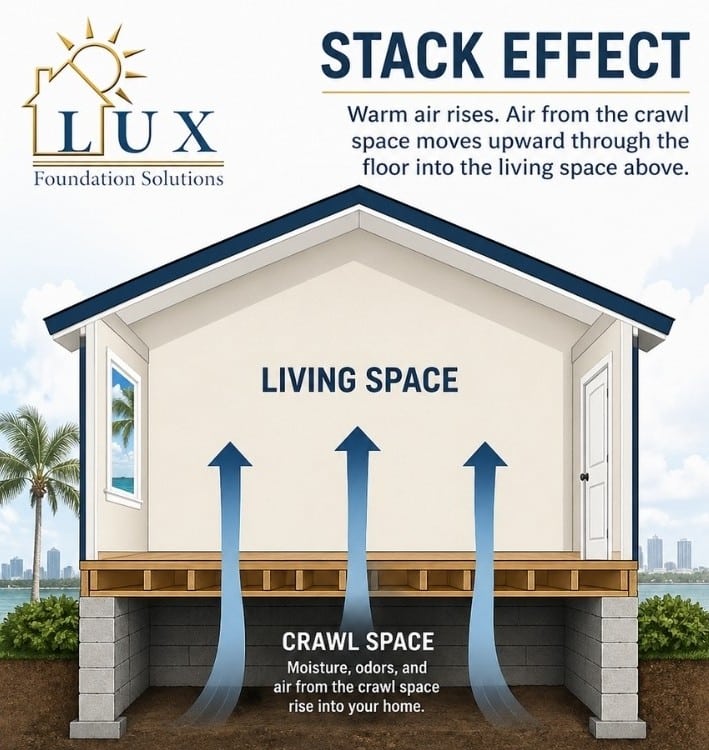
Up to 50 percent of the air on your first floor comes from below. In a Northern Virginia home with an unencapsulated crawl space, that air carries mold spores, humidity, and airborne contaminants directly into the rooms where your family spends time every single day.
This is why crawl space mold shows up as musty odors you cannot find, allergy symptoms that worsen at home, or respiratory issues that improve when you leave. The air is the problem. The crawl space is the source.
Addressing the moisture source is the first step. If mold is already present, professional remediation must come first.
CONCLUSION
Mold is a symptom, not the root problem. It signals that your home has a moisture issue that has gone unaddressed long enough for spores to activate and spread. The causes on this list rarely work alone. One leads to another, and by the time mold is visible, several pathways are usually active.
A visual inspection of your crawl space twice a year gives you the earliest possible warning. If you find anything that concerns you, call 540-616-3900 or fill out our online form. LUX Foundation Solutions serves Northern Virginia, the Shenandoah Valley, North Central Virginia, and West Virginia.
ABOUT THE AUTHOR

Causes of Crawl Space Mold Growth FAQ’s
Is mold in a crawl space dangerous?
Yes. Crawl space mold is dangerous because of the stack effect. Up to 50 percent of the air inside your home can come from the crawl space, which means mold spores and mycotoxins from colonies below are constantly moving up into the rooms where you live and sleep. Prolonged exposure can lead to health problems such as respiratory issues, worsening allergies, and, in cases of black mold, more serious neurological and immune system effects.
How quickly can mold spread in a crawl space?
Mold can begin colonizing wood surfaces within 24 to 48 hours of moisture exposure when humidity is above 60 percent. Once established, it steadily spreads to adjacent wood surfaces and insulation. A minor moisture event, such as a slow-leaking plumbing or a torn vapor barrier, can lead to significant mold growth across floor joists within weeks if left unaddressed.
Can mold under a house make you sick?
Yes. Mold spores don’t stay in the crawl space. They move up into the living area through the stack effect and the HVAC system. Once they’re circulating through the air you breathe, exposure can irritate the lungs, aggravate asthma and allergies, and lead to ongoing sinus problems. Kids, older adults, and anyone with a compromised immune system tend to feel it the most.
If you suspect mold is down there, a professional assessment and proper removal are worth it for both the house and the people living in it.
What does crawl space mold smell like?
Crawl space mold typically produces a musty, earthy odor, similar to damp soil or wet leaves. You’ll notice it most on the ground floor, near HVAC vents, or right after the system kicks on.
If the smell keeps coming back and you can’t find an obvious source, that’s usually a sign that something is growing underneath the house before it becomes visible.
Can I bleach the mold growing in my crawl space?
No, you should not use bleach on moldy wood. Bleach is mostly water. On a porous surface like a wooden joist, chlorine remains on the surface, while water soaks into the wood. This can actually feed the mold’s “roots” (called hyphae) and cause them to grow deeper. Professional mold remediation companies use specialized cleaners that kill mold and lift stains without adding excess water to the wood. For any visible mold growth, we always recommend a professional evaluation.
How often should crawl space inspection be conducted?
At least once a year, and after major weather events, including in rainy climates, flooding, or an extended freeze-thaw period during a Northern Virginia winter. Annual inspections allow early detection of moisture problems before mold establishes itself. Homes with older vapor barriers, unencapsulated crawl spaces, or a history of moisture issues should be inspected twice a year.
What are the most common types of mold found in Northern Virginia crawl spaces?
In Northern Virginia crawl spaces, Cladosporium and Penicillium are the two types you’ll run into most. They don’t need much to get going, just wood or insulation and humidity above 55 percent.
Stachybotrys, what most people call black mold, is far less common but considerably more serious. It needs sustained moisture to develop, so it tends to appear after a plumbing leak or flooding. Whatever you find down there, get a professional in to assess it. The type doesn’t change that.