Sinking Porch

A sinking porch is rarely just a surface problem. When concrete starts to drop or pull away from the house, the soil beneath it has shifted or lost its load-carrying capacity. The movement does not stop on its own.

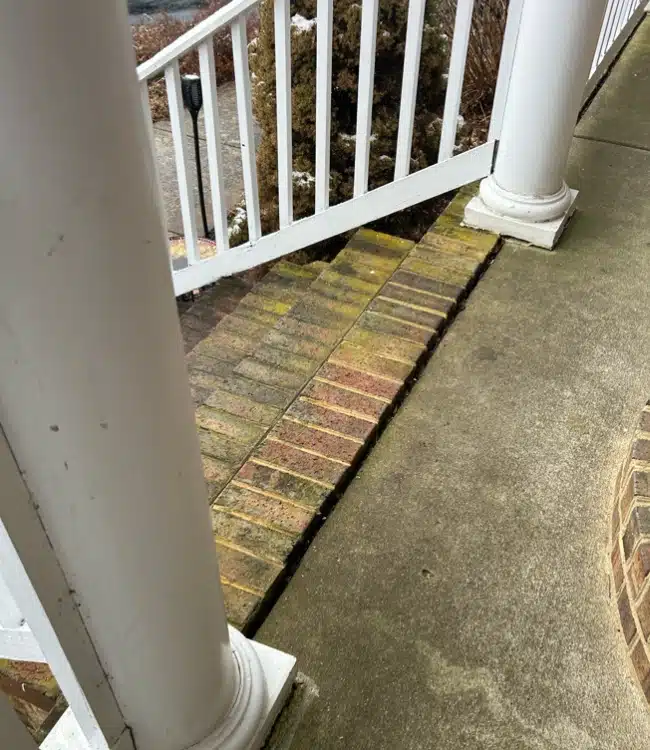
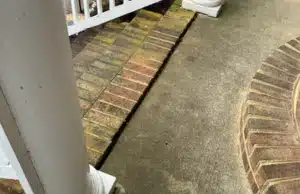
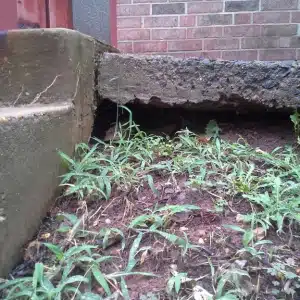
Sunken brick porch step separated from concrete surface showing an active sinking porch problem in Northern Virginia.

What is a Sinking Porch?

A concrete porch sinking into the ground is telling you something about what is happening below the surface. The slab itself is not the problem. The soil beneath it is. When the ground shifts, erodes, or loses its load-bearing capacity, the concrete above follows.

In Northern Virginia, concrete front porch sinking problems are among the most common concrete issues our team assesses. The region’s clay soils absorb moisture and expand in wet seasons, then shrink and pull away in dry periods. This cycle of clay soil shrinkage and expansion gradually weakens concrete slabs year after year, often without visible warning until the movement becomes noticeable.

If you are seeing signs of a sinking porch, the cause is active beneath the surface. It will not correct itself. A free estimate is the right first step.

Signs of Sinking Concrete Porch

A sinking porch rarely announces itself all at once. Most homeowners notice one small sign first, assume it is cosmetic, and wait. By the time a second or third sign appears, the movement has usually been underway for more than one season. If you are seeing any of the following, your porch sinking problem deserves a professional assessment: 

  • A noticeable tilt or slanting porch surface that was not there before. 
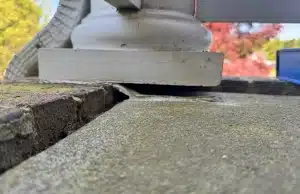
  • Visible gaps between the porch slab and the exterior wall of the house.
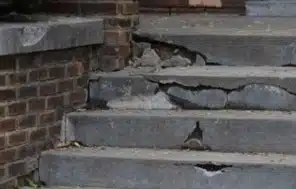
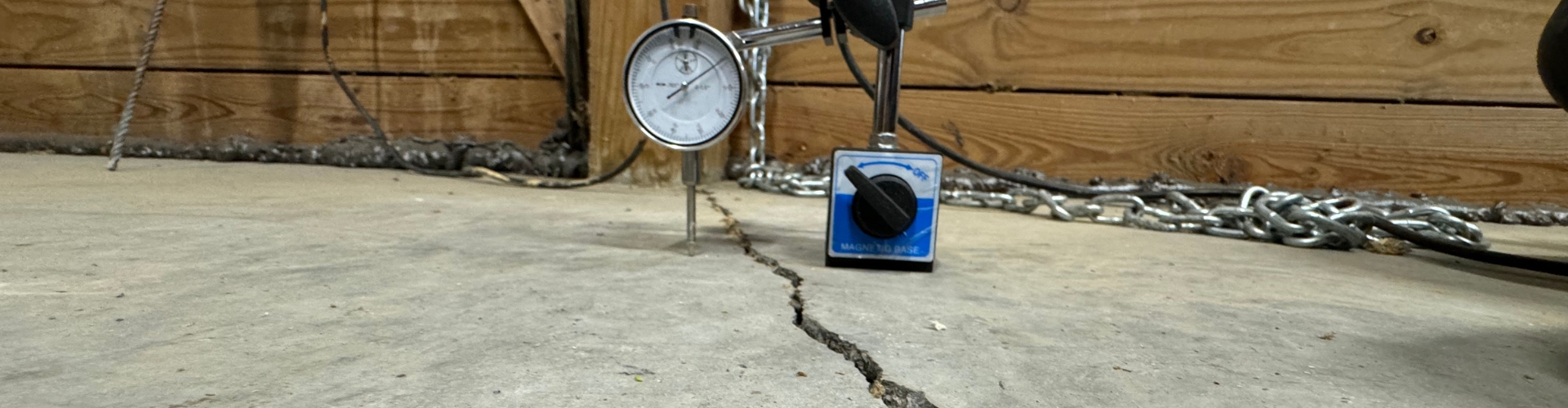
  • Cracks across the concrete surface or along the edges where the porch meets the steps.
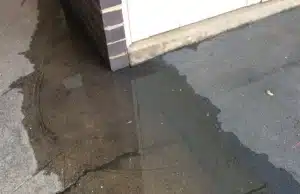
  • Water pooling near the base of the porch after rain, indicating the ground slope has changed.
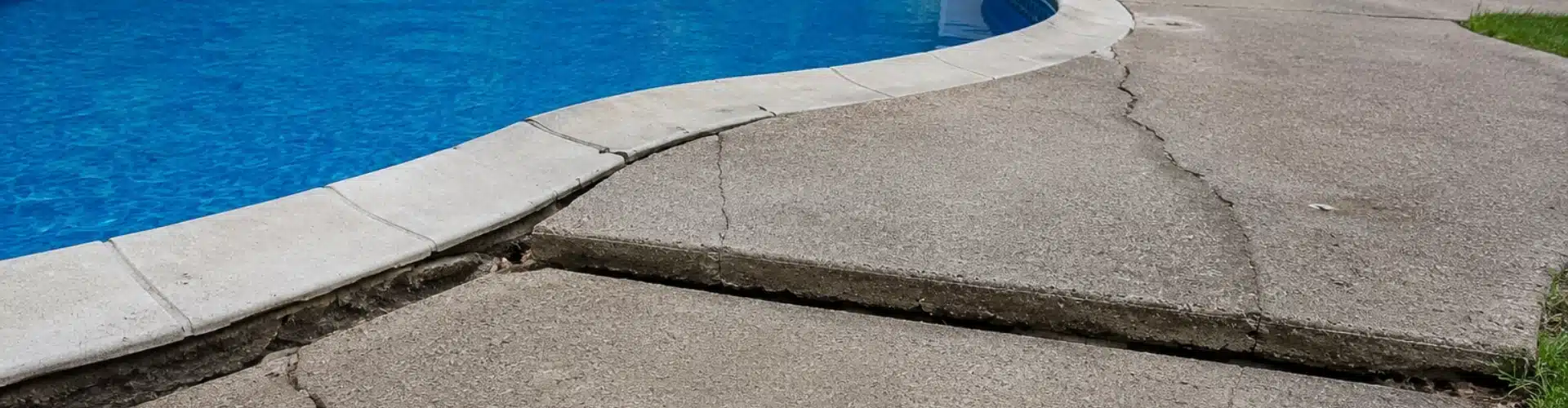
  • Sections that have shifted, dropped, or no longer align with the porch level, a sign of uneven settling beneath the slab. 
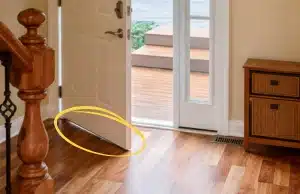
  • Difficulty opening or closing doors leading to the porch due to shifting.

In our experience inspecting concrete porch sinking cases across Northern Virginia, homeowners who catch these signs early avoid major cracks that make further damage far more costly to address.

What Causes Concrete Porch Sinking?

A sinking porch always has a cause beneath the surface. Here are the most common reasons concrete porches sink in Northern Virginia homes:

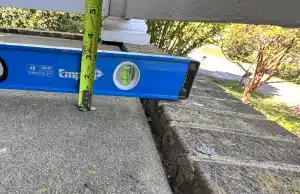
Concrete porch slab separated from brick wall with visible gap and soil settlement causing sinking porch in Front Royal, VA.

Soil Settlement

Over time, the soil beneath a concrete porch compresses under the slab’s weight, leading to uneven settling across the surface. In Northern Virginia, where clay-heavy soils are common, this process is accelerated by seasonal moisture changes. Clay-heavy soil expands when wet and shrinks when dry, creating a cycle of movement that gradually removes the stable support the porch needs to stay level.

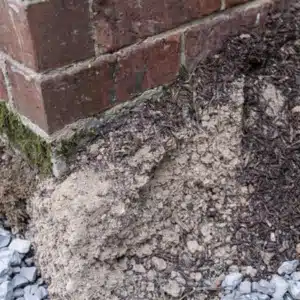
Eroded soil pulling away from brick foundation base showing ground erosion as cause of a sinking porch in Stephens City, VA.

Ground Erosion

Heavy rainfall and poor drainage can wash soil out from under a porch slab, leading to erosion. It creates empty spaces that the concrete eventually fills. Northern Virginia receives over 40 inches of rain annually, and homes with poor grading or gutters that discharge water near the foundation are more at risk. Once a void forms beneath the slab, each new rainstorm worsens the sinking.

Construction soil compactor on job site showing poor compaction as a cause of sinking porch in White Post, VA.

Poor Compaction

When a porch is built on soil that was not properly compacted during construction, the ground settles on its own timeline after the concrete is poured. Northern Virginia homes built on fill soil often see this regularly, as do properties where the original ground was graded or disturbed before construction. The result is a gradual, uneven sinking that may not become visible for years.

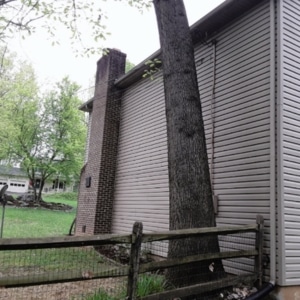
Tree growing close to a home exterior showing how root disruption causes a sinking porch in Berryville, VA.

Tree Roots Disruption

Trees extracting moisture from the soil near a porch is a less visible but equally damaging cause. Root disruption destabilizes the ground below the slab as roots draw water out of clay-rich soils and cause significant shrinkage in dry months.

In Northern Virginia, where older neighborhoods have large trees growing close to homes, root disruption is a more common cause of porch sinking than many homeowners realize.

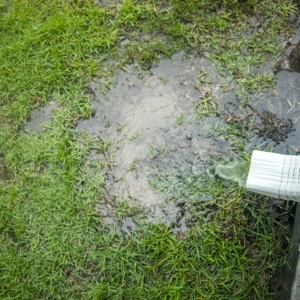
Waterlogged lawn with pooling water near a home showing poor drainage causing a sinking porch in Strasburg, VA.

Improper Drainage

When water has no controlled path away from the porch, it repeatedly saturates the surrounding soil. Saturated soil loses its load-bearing capacity, and the porch above begins to shift. In our experience inspecting concrete porch sinking cases across Northern Virginia, inadequate drainage is one of the most consistent findings, often working alongside soil erosion or poor compaction to accelerate the problem.

Our Solutions to Fix a Sinking Porch

At LUX Foundation Solutions, we have assessed and repaired sinking porch problems across Northern Virginia, the Shenandoah Valley, North Central Virginia, and West Virginia. The right repair depends on what is causing the sinking and the current condition of the concrete. Here is what we typically recommend:

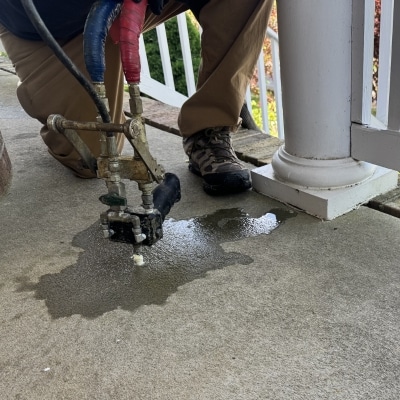
Concrete Lifting (Polyurethane Foam Injection) 

When the porch slab is still structurally sound but has dropped due to soil voids or erosion beneath it, concrete porch lifting is the most efficient solution. Our team injects expanding polyurethane foam through small holes drilled in the slab, filling the voids and raising the concrete back toward its original position. 

This approach is faster and far less disruptive than a full replacement. It works well for most cases of concrete porch sinking where the slab itself remains intact, and the underlying void or settled soil is the primary driver of the movement.

Concrete Caulking 

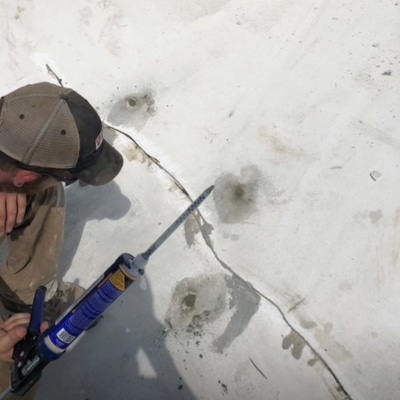
When cracks and gaps are minor and the slab has not shifted significantly, our concrete caulking seals the openings. That seal keeps water out and slows surface damage before it compounds. Caulking addresses surface symptoms but does not correct underlying soil movement. 

At LUX, we recommend caulking only after the structural cause of the sinking has been resolved, not as a standalone fix for an active sinking porch problem.

Foundation Piers 

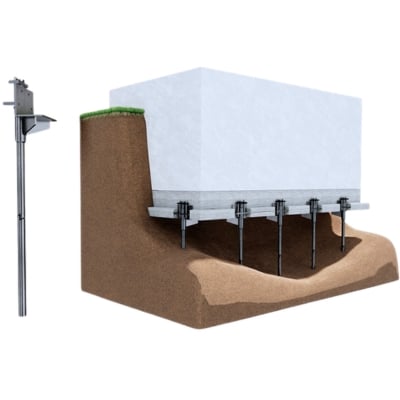
For sinking porch cases involving significant foundation settlement or unstable soil at depth, push piers or helical piers provide deep structural support that surface-level foundation repairs cannot. Piers are driven into stable soil or bedrock below the unstable layers, transferring the load away from the compromised ground. 

In our inspections of porch sinking problems in Northern Virginia, piering is most common when the settlement involves the home’s foundation itself rather than the porch slab alone.

Schedule a Free Sinking Porch Assessment

A sinking porch does not level itself out over time. Every wet season adds more soil movement, every freeze-thaw cycle widens the gaps, and every rain event removes more of the ground supporting the slab. The sooner the underlying cause is addressed, the sooner concrete elevation restores your porch to a safe, level surface without the cost of a full replacement.

LUX Foundation Solutions serves homeowners across Northern Virginia, the Shenandoah Valley, North Central Virginia, and West Virginia. Our team will assess your porch, identify the cause of the settlement, and recommend the repair that solves the actual problem.

Call 540-508-8587 or fill out our online form to schedule your free assessment today.

Request a free Estimate

Sinking Porch FAQs

My porch is sinking. Can it affect the rest of my home?

Yes. The damage a sinking porch manifests on the surface is often secondary to the stress it is placing on the adjoining walls and door frames below. Gaps that open between the porch and the house allow water to enter at the foundation line, threatening the home’s structural integrity over time. In our experience, porch sinking problems that go unaddressed for multiple seasons almost always involve secondary damage to the adjoining structure by the time they are assessed.

How do I know if my concrete porch is sinking or just normal settling?

Some minor settling in the first few years after construction is normal as the soil adjusts to the load. A concrete porch that is actively sinking shows progressive movement, wider gaps than last season, growing cracks, or steps that have dropped noticeably. If the movement is ongoing rather than stable, it is not normal settling, and it will not stop without intervention.

My front porch is sinking. What should I do?

The first step is to stop waiting to see if it gets worse because it will. A sinking front porch is driven by soil conditions beneath the slab that do not correct themselves over time. Have a professional assess the cause before the movement progresses further. The earlier the problem is identified, the more repair options are available and the lower the risk to your property value. Get a free on-site assessment.

How much does sinking porch repair cost?

Repair costs vary depending on the size of your porch, how much it has settled, and the method required. Concrete leveling with polyurethane foam is typically the most cost-effective option when the slab is structurally sound. Foundation piering involves more labor and material and carries a higher cost, but it is necessary when the problem extends to the foundation itself.

LUX offers a free on-site assessment to provide an accurate estimate for your specific situation, rather than a rough ballpark.

How long does sinking porch repair take?

Polyurethane foam concrete leveling can often be completed in a few hours for a standard porch slab, with the area ready to use the same day. Foundation piering takes longer, depending on the number of piers needed and site access. Your LUX project assessment will include a timeline specific to the recommended repair method.

How can I prevent my porch from sinking?

The most effective preventive measures address water management around the porch. Gutters should discharge water at least five to six feet from the foundation. The ground around the porch should slope away from the house so water does not pool against the slab. Sealing concrete cracks as soon as they appear prevents water from entering and eroding the soil below. 

In Northern Virginia, where clay soils respond strongly to seasonal moisture changes, annual inspections of the porch and surrounding drainage are the best early warning system available.

Related Signs

Thank you! Your form has been successfully submitted. You may receive service-related text messages from Lux Foundation Solutions, including appointment updates, reminders, and one-time verification codes if needed. Message frequency may vary. Msg & data rates may apply. Reply HELP for help. Reply STOP to opt out.

Examples of messages you may receive:

Lux Foundation Solutions: Your appointment has been scheduled. You will receive service-related updates as needed.

Lux Foundation Solutions: Reminder — your scheduled service is approaching. Reply STOP to opt out.

Lux Foundation Solutions: Your verification code is 739214. This code expires in 10 minutes.