Bowing Foundation Walls

A bowing foundation wall means external pressure is actively pushing against your home. Left unaddressed, that pressure leads to leaning, cracking, structural instability, and costly damage.  Learn the warning signs, the causes, and solutions to address the problem before it becomes too dangerous and costly to fix.

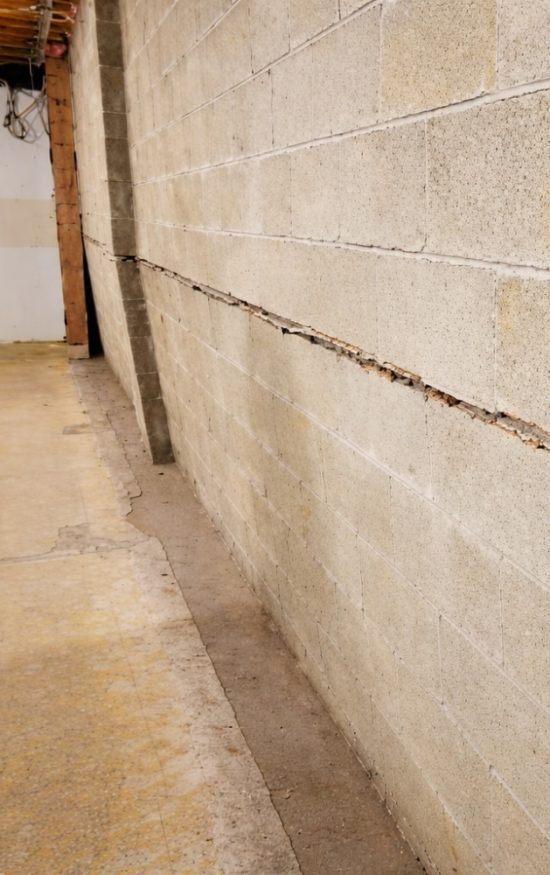
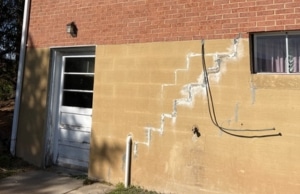
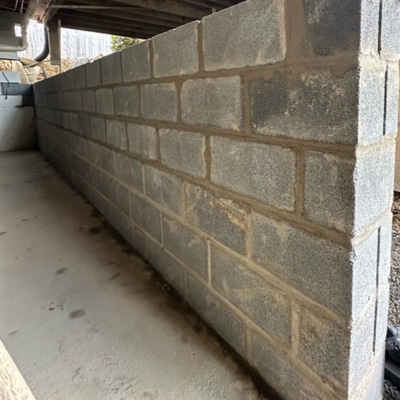
Concrete block wall bowing inward with visible horizontal crack showing what a bowing foundation wall looks like in Winchester, VA.

What is a Bowing Foundation Wall?

A bowing foundation wall means external pressure is actively working against your home’s structure. Foundation walls most commonly bow inward under lateral soil and hydrostatic pressure, but in some cases, walls bow outward when the foundation can no longer support the weight bearing down from above.

This movement is driven by soil that has absorbed too much water or clay that expands against the wall face. In Northern Virginia, where clay-rich soil and wet winters are common, foundation walls that are bowing are a frequent and serious structural problem.

A wall bowing does not pause between seasons. Every cycle of rain, expansion, freeze, and thaw pushes it further. The earlier it is identified, the more effective the repair options for stabilizing and reinforcing the foundation walls.

Signs You Have a Foundation Wall Bowing Inward

Foundation wall bowing shows up differently depending on the wall type and where in the home you are looking. These are the signs to watch for:

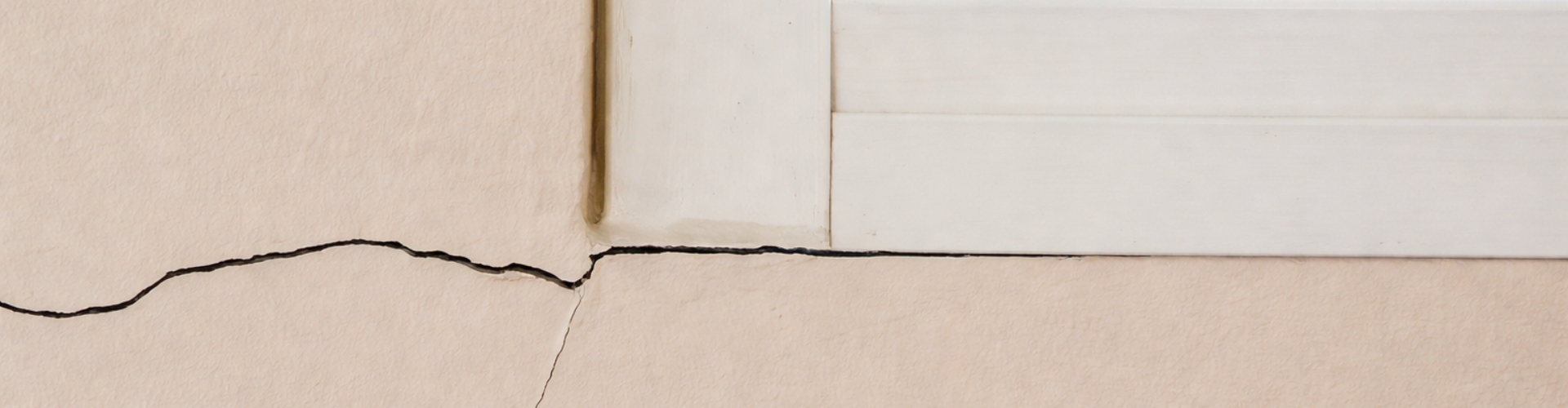
  • Horizontal cracks running across the middle of a foundation wall.
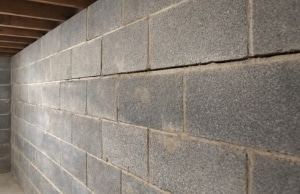
  • Visible leaning or inward curve when you look down the length of the wall. 
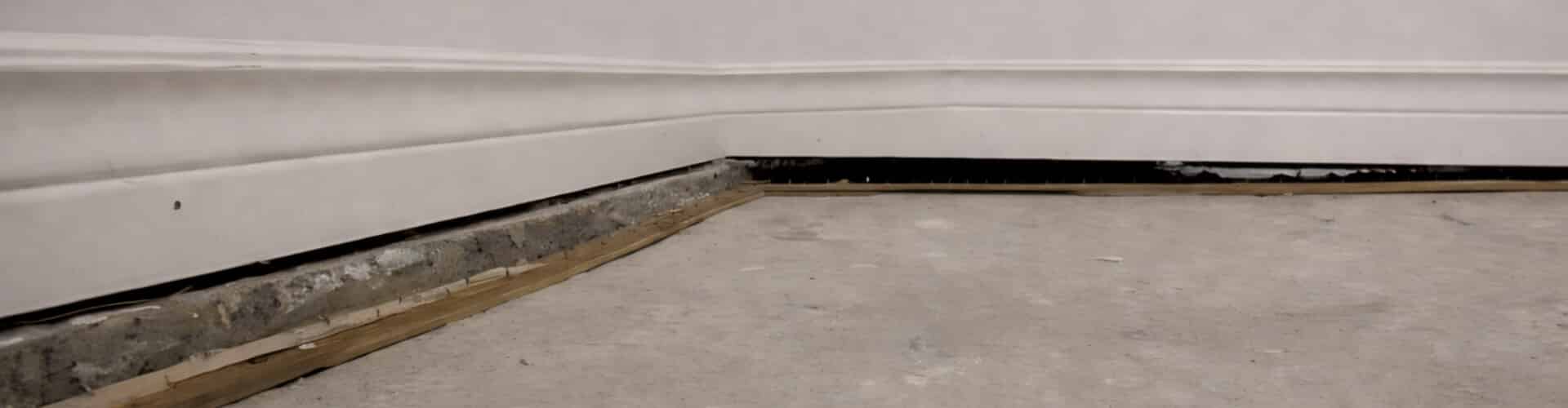
  • Gaps between the foundation wall and the floor sill plate or rim joist above it. 
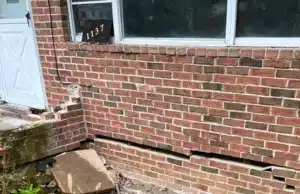
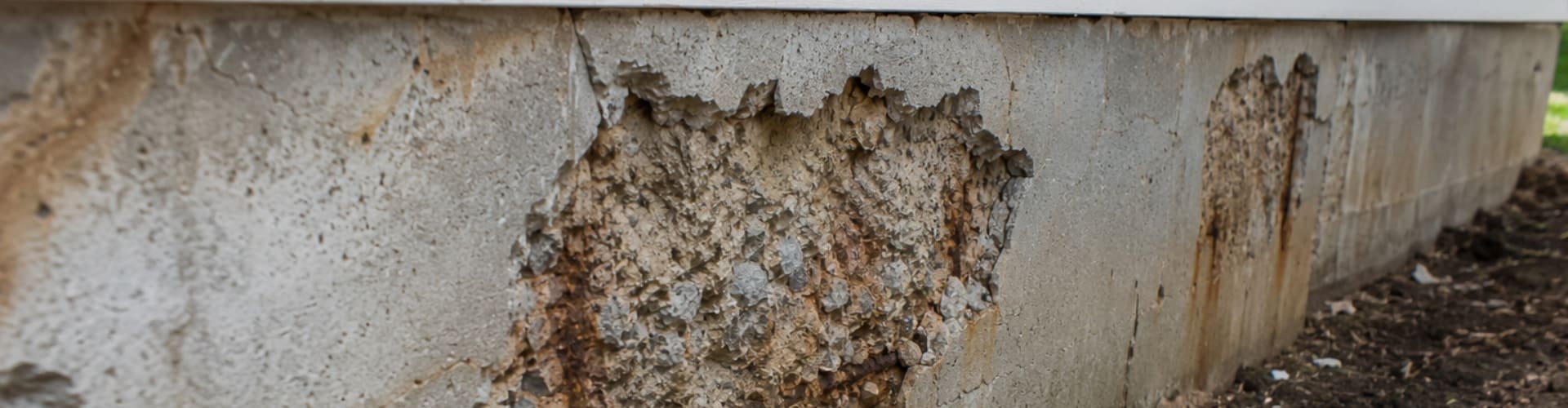
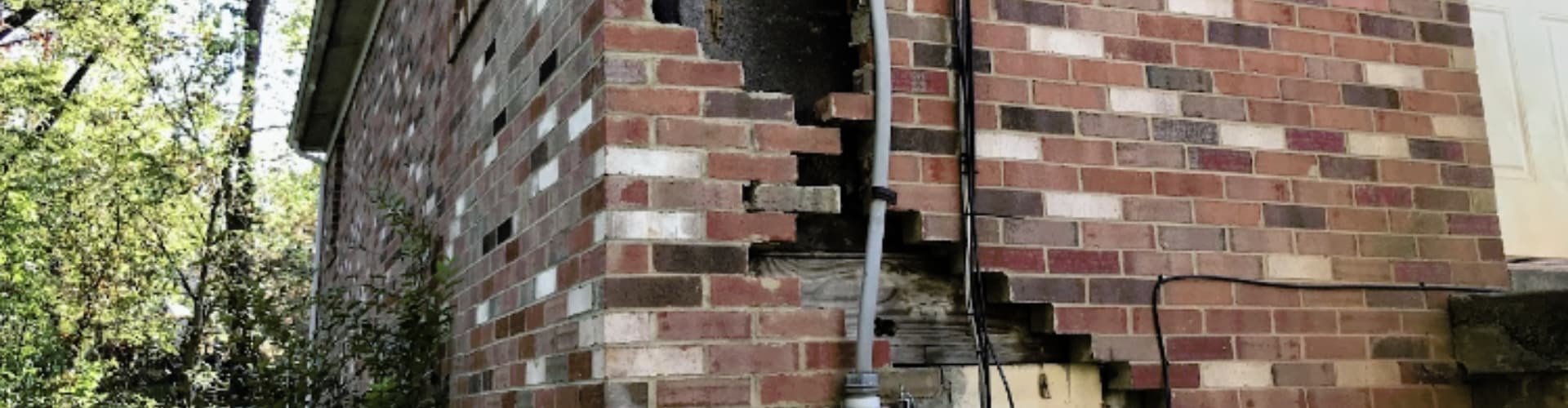
  • Stair-step cracks in exterior brick or block following the mortar joints. 
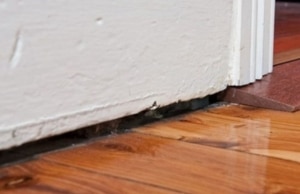
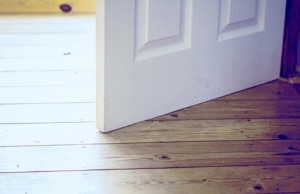
  • A door that recently started dragging at the top or bottom, or a window that no longer latches the way it used to. 
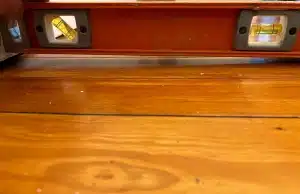
  • Uneven or sloping floors that developed alongside other foundation wall symptoms.

If any of these signs are visible in your crawl space, on your exterior walls, or anywhere in your home’s foundation, contact professional help. The earlier the movement is identified, the more repair options are available.

What Causes a Foundation Wall to Bow?

Foundation walls bow when the lateral pressure from outside the wall exceeds the wall’s ability to resist it. In Northern Virginia, the most common causes are:

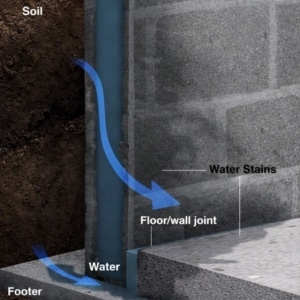
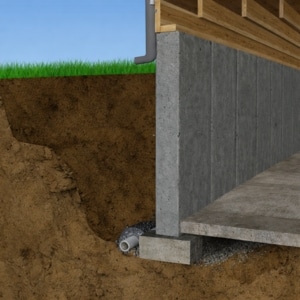
Diagram showing hydrostatic pressure building against a block foundation wall causing bowing foundation wall in Fairfax, VA.

Hydrostatic Pressure

After heavy rainfall, the soil surrounding your foundation absorbs water until it has nowhere left to drain, and that weight begins to push against the wall from the outside. Foundation walls at grade level and crawl space walls are particularly vulnerable because water accumulates against them during every wet season. Poor yard grading that slopes toward the home makes this significantly worse with each rainfall.

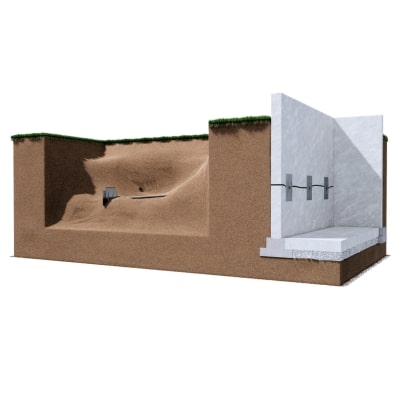
Illustration showing expansive clay soil pressing against a foundation wall causing bowing foundation wall in Alexandria, VA.

Expansive Soils

Northern Virginia has widespread clay soil deposits. Clay does not filter water easily and becomes quickly saturated. Clay soils expand by 10 percent or more when wet. That repeated expansion cycle pushes directly against the foundation wall face with each rainfall, compounding the lateral pressure season after season.

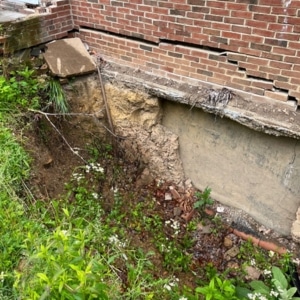
Exposed foundation footing with visible soil erosion and undermining beneath, causing bowing foundation wall in Harpers Ferry, WV.

Soil Erosion and Footing Undercutting

When water erodes the soil directly beneath or beside a foundation footing, the wall loses the lateral support it depends on. Without that soil mass holding it in position, the wall begins to rotate or lean outward. This is more common in foundation walls on sloped lots or near drainage channels, where water flow is concentrated around the base of the structure.

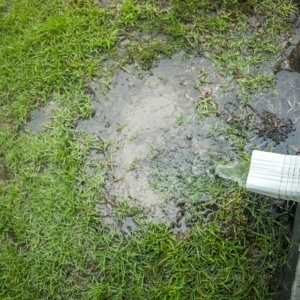
Standing water pooling near foundation from poor drainage, causing oversaturation and bowing foundation wall in Ashburn, VA.

Poor Drainage and Oversaturation

Clogged gutters, downspouts discharging near the foundation, and yard grading that slopes toward the house all direct water into the surrounding soil. That oversaturation increases hydrostatic pressure and creates the lateral force that causes foundation walls to bow. Fixing drainage problems is a necessary first step before any wall repair is undertaken.

Our Solutions for Bowing Foundation Wall

The right solution depends on how much the wall has moved, the available access, and the underlying soil conditions. LUX Foundation Solutions inspects each situation on-site and uses engineered repair systems matched to the severity and cause of each bowing foundation wall.

The crack in my foundation wall is small, and the wall has only moved slightly. Should I still get it fixed?

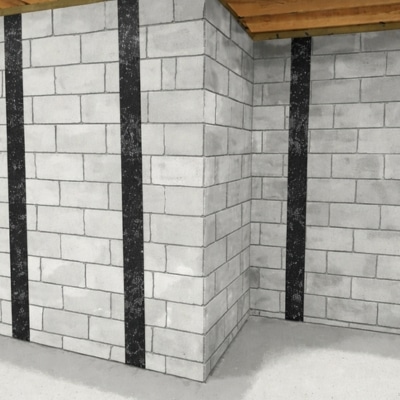
Carbon fiber straps are the best solution for early-stage bowing where the foundation wall has moved 2 inches or less. Bonded vertically to the wall surface with epoxy, carbon fiber provides high-strength reinforcement without excavation or yard disruption. It works well on crawl space walls and exterior foundation walls with limited access.

My foundation wall has been bowing for a while, and the movement is more than minor. What is the most effective solution?

Wall anchors are one of the most effective solutions for bowing foundation walls that have deflected more than 2 inches, up to 6 inches, with at least 10 feet of clear exterior access. Steel plates are secured to the interior wall face and anchored in stable soil outside, preventing further movement and bowing. This works for crawl space walls and exterior block foundation walls.

My foundation wall is bowing, but there is no room to dig outside, fence on one side, utilities on the other. What can be done?

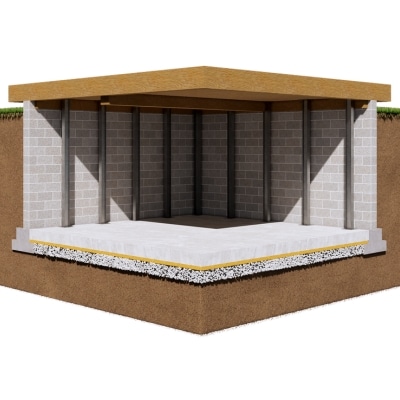
Wall Stabilizer I-Beams and Wall Rebar Pins both work without digging outside the wall. Steel I-beams mount vertically from floor to ceiling on the interior wall face, with both ends anchored. 

Wall rebar pins are best suited for walls with intact block cores and moderate bowing, providing reinforcement from within the wall rather than floor-to-ceiling bracing. Both suit foundations with fences, utilities, or tight side clearances.

My foundation wall is on a sloped lot, and the soil pressure seems deeper than normal. What repair works in this situation?

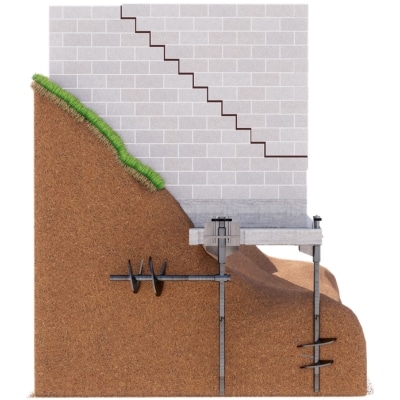
Helical tiebacks are the right solution for this situation. They are drilled through the foundation wall and screwed into stable soil well beyond the end of the active pressure zone, providing deep, permanent anchorage for foundation walls under significant lateral loads.

They are suited for exterior walls on sloped lots where soil pressure extends deep below the surface.

My foundation wall has moved significantly, and I have been told it may be too far gone to repair. Is replacement my only option?

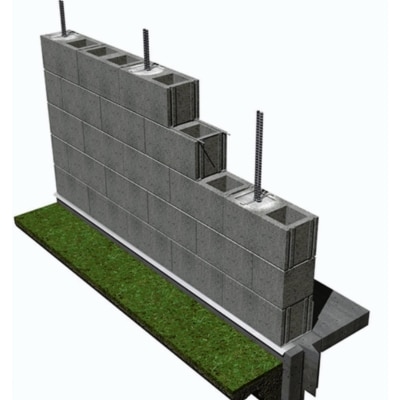
Wall replacement is required when a foundation wall has deflected beyond what stabilization methods can address, typically beyond 6 inches, or when the structural damage is too advanced. The wall is fully demolished and rebuilt to current standards. 

A professional evaluation will determine whether replacement is necessary during the free on-site evaluation.

Contact LUX Foundation Solutions for Bowing Foundation Wall Repair

Most homeowners who find a bowing foundation wall spend days researching before making a call. They are not sure whether what they see is severe or manageable, active or settled. That uncertainty is the most expensive part, because every week spent guessing is a week the pressure behind the wall keeps building.

LUX Foundation Solutions does not just stabilize the wall; we determine whether the movement is active, what is driving it, and the right repair for your wall’s actual condition. One free on-site evaluation replaces all the guessing with a clear, honest answer from a specialist who has seen and repaired this before, with no obligation required.

Contact us at 540-508-8982 to schedule your free evaluation today. LUX serves foundation repair in Northern Virginia, Shenandoah Valley, North Central Virginia, West Virginia, and surrounding areas.

Request a free Estimate

Bowing Foundation Wall FAQs

How do I know if my bowing foundation wall is still actively moving?

Active bowing means the wall continues to shift beneath ongoing soil pressure, while historic bowing may have stabilized years ago and poses a different level of risk. New or widening cracks, doors and windows that have only recently become difficult, and gaps that seem to grow between visits are the signs you are dealing with the active movement.

A professional on-site evaluation is the only reliable way to confirm whether movement is ongoing and what level of intervention is required.

Is a bowing foundation wall fixable, or should I walk away from the property?

A bowing foundation wall is fixable in most situations, and walking away is rarely necessary. Walls with up to 2 inches of deflection can be stabilized with carbon fiber straps, while walls between 2 and 6 inches may require wall anchors, I-beams, helical tiebacks, or rebar pins. 

Beyond 6 inches, full wall replacement is typically needed, but a professional evaluation is essential before making any decision.

How serious is 6 inches of bowing in a foundation wall?

Six inches of bowing in a foundation wall is severe and typically requires full wall replacement. At that level of deflection, stabilization methods like carbon fiber straps and wall anchors are no longer effective. 

If you are purchasing a property with 6 inches of bowing, negotiate a repair credit before closing because waiting at this stage significantly increases the risk of structural failure.

Beyond 6 inches, full wall replacement is typically needed, but a professional evaluation is essential before making any decision.

Can a bowing foundation wall be fixed without replacing the entire foundation?

Yes, most bowing foundation walls can be repaired without full foundation replacement. Carbon fiber straps, wall anchors, steel I-beams, helical tiebacks, and rebar pins are all proven methods for stabilizing a bowing wall, and which one is right depends on how far the wall has moved, available access around the structure, and the underlying soil conditions. 

A foundation specialist will assess the wall and recommend the repair tailored to your specific wall and situation.

Is it safe to live in a house with a bowing foundation wall?

Yes, most homes with a bowing foundation wall are still safe to live in. The real question is not whether to fix it but how soon. And that depends on how far the wall has moved, whether the movement is ongoing, and whether the rest of the house is starting to show the effects through sloping floors or sticking doors and windows.

A foundation specialist can assess the severity and tell you exactly what level of urgency applies to your situation. Schedule a free evaluation to get a clear answer.

Related Signs

Thank you! Your form has been successfully submitted. You may receive service-related text messages from Lux Foundation Solutions, including appointment updates, reminders, and one-time verification codes if needed. Message frequency may vary. Msg & data rates may apply. Reply HELP for help. Reply STOP to opt out.

Examples of messages you may receive:

Lux Foundation Solutions: Your appointment has been scheduled. You will receive service-related updates as needed.

Lux Foundation Solutions: Reminder — your scheduled service is approaching. Reply STOP to opt out.

Lux Foundation Solutions: Your verification code is 739214. This code expires in 10 minutes.