Written By Bridget Stieb, Director of Marketing at LUX Foundation Solutions • Reviewed by LUX’s foundation repair specialists serving Northern Virginia & Florida
Does your home have a musty smell that won’t go away?
You might have tried lighting every candle in the house or running the air purifiers on high, but the lingering musty scent persists. If the air feels heavy, the problem isn’t your living room. It is likely coming from the dark, damp space beneath your feet.
Many homeowners think the crawl space is a separate part of the house that doesn’t affect them. This couldn’t be further from the truth. Because of how houses are built the way they are, the air down there eventually becomes the air you breathe in your kitchen and bedroom.
Identifying the root cause for bad crawl space odor is the first step toward improving your home’s indoor air quality and keeping it healthier for your family.
1. Excess Moisture and High Humidity (The “Musty” Smell)
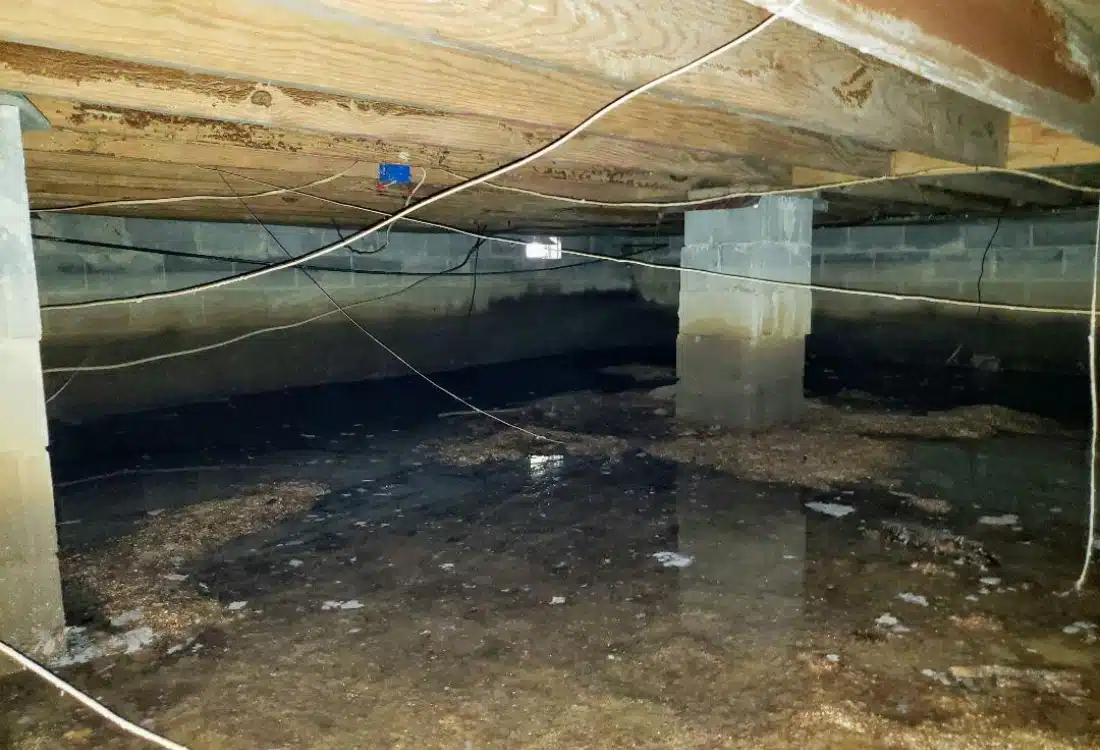
The most common reason for a bad smell is crawl space moisture. Most crawl spaces have naturally damp dirt floors. Even if you don’t see puddles, water is constantly evaporating from the ground into the air.
When the relative humidity in your crawl space stays above 60%, condensation forms on cool surfaces, such as your plumbing pipes or in your HVAC ducts. This stagnant water sits there and gets “stale.” It creates that classic musty smell that people associate with old, damp buildings.
In Northern Virginia, clay-rich soil tends to hold water for long periods after heavy rain, and homes in low-lying areas are especially prone to groundwater seepage. Without a proper drainage system, rain pools beneath the house and becomes a breeding ground for bacteria, adding a swampy, organic layer to the odor.
2. Mold and Mildew Growth (The “Earthy” Odor)
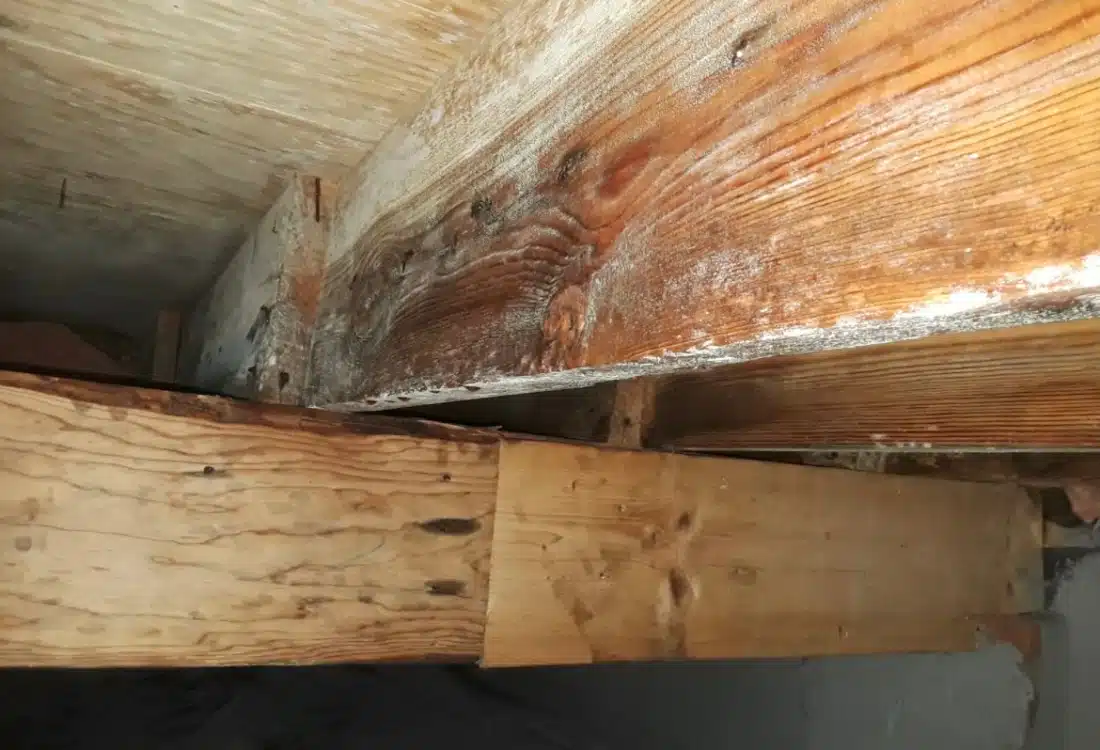
If the smell is musty or more “earthy” or smells like rotting forest floor, you are likely smelling mold. Mold doesn’t just sit there. It is a living organism that eats organic material, like your wooden floor joists or the paper backing on your insulation.
As mold grows, it releases Microbial Volatile Organic Compounds (mVOCs). These are gases that are produced during the mold’s metabolic process. Essentially, the smell is the gas mold released as it digests the organic material in your crawl space. These gases are strong enough to penetrate through floorboards and carpets into your living space.
In Northern Virginia, active mold grows in crawl spaces across the region every season. White, black, and green colonies on floor joists are among the most consistent findings during our free on-site inspections. If you see fuzzy patches on your wood, mold in your crawl space is already well-established.
3. Vapor Barrier Off-Gassing and Soil Ammonia (The “Cat Urine” Smell)
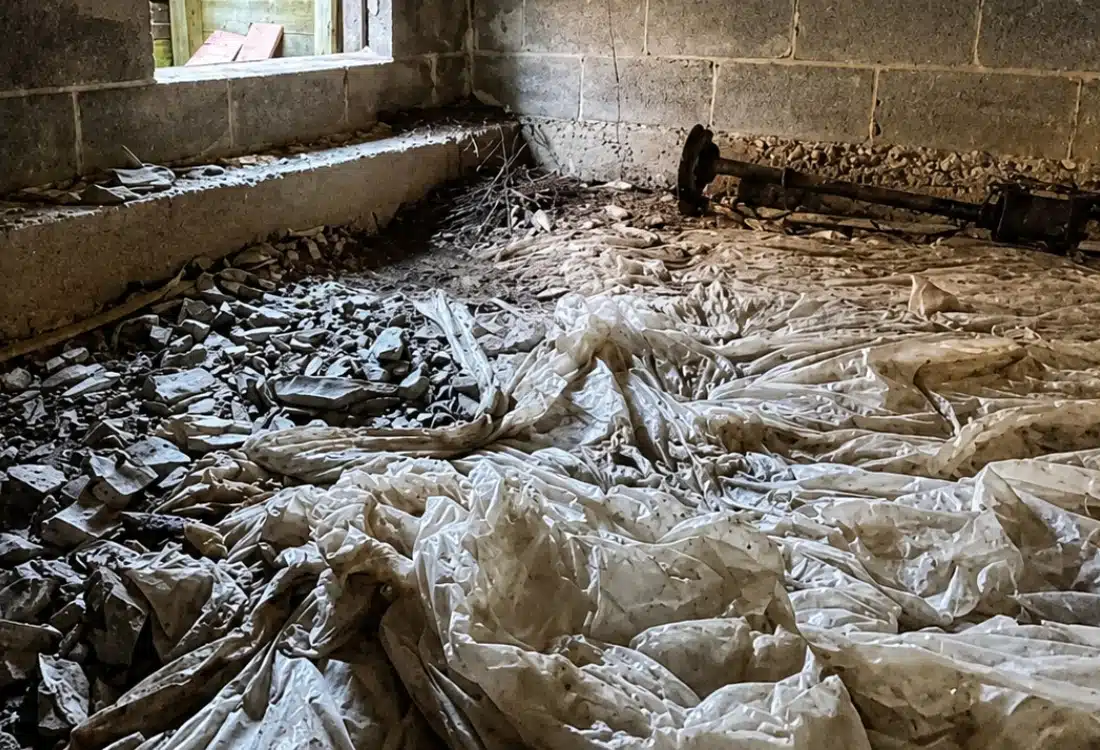
This is one of the most frustrating smells for homeowners. You might not even own a cat, yet your house smells like a litter box. Most people assume a stray cat or a neighborhood animal found its way under the house. While that happens sometimes, it is rarely the actual cause.
There are two main technical reasons for this specific odor:
Low-Cost Vapor Barriers: Low-grade reinforced plastic vapor barriers contain a polyester or nylon string mesh inside to strengthen them. When these subpar vapor barriers are exposed to constant moisture and low oxygen levels, the plastic begins to break down.
This chemical reaction, known as off-gassing or delamination, smells exactly like cat urine. In Northern Virginia homes built before 2010, deteriorating vapor barriers are one of the most common sources of unexplained crawl space odor our team identifies.
Soil Ammonia: Some soils have a high pH level and contain specific bacteria. Northern Virginia clay soil is particularly prone to this condition. When these bacteria break down nitrogen in the damp soil, they release ammonia gas that rises through the dirt and fills the crawl space with a sharp, pungent odor.
4. Pest Infestations and Decaying Organics
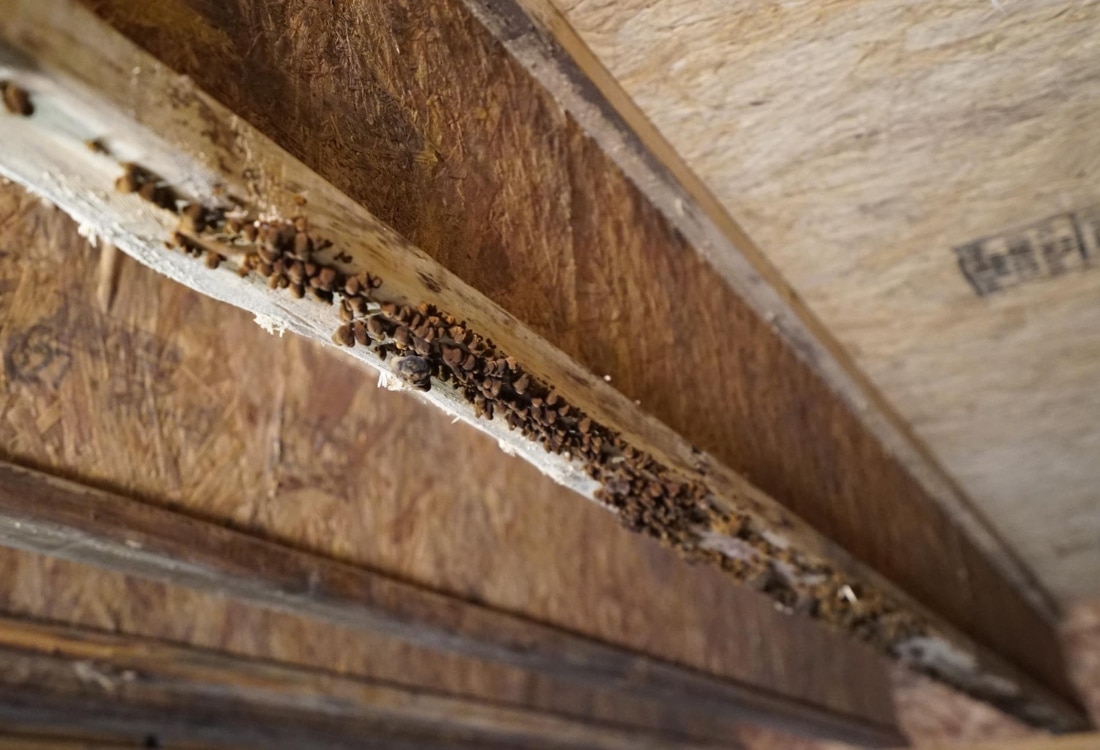
Crawl spaces attract rodents, insects, and sometimes snakes because they’re dark, quiet, and often damp. Mice in crawl spaces, along with rats and raccoons, frequently use the soft fiberglass insulation as nesting material.
As these pests live under your home, they leave behind urine and feces. Over time, these waste products and organic debris soak into the wood and insulation, creating a heavy, ammonia-like smell that lingers for years. Even worse, pests often die inside the walls or under the floor. A decaying carcass creates a sweet, sickly, and overwhelming rot smell that can last for weeks until the animal has fully decomposed.
In Northern Virginia, colder months often drive rodents to seek shelter under homes, which means the issue can develop gradually before any odor becomes noticeable inside the living space.
5. Sewage Leaks and Plumbing Failures (The “Rotten Egg” Smell)
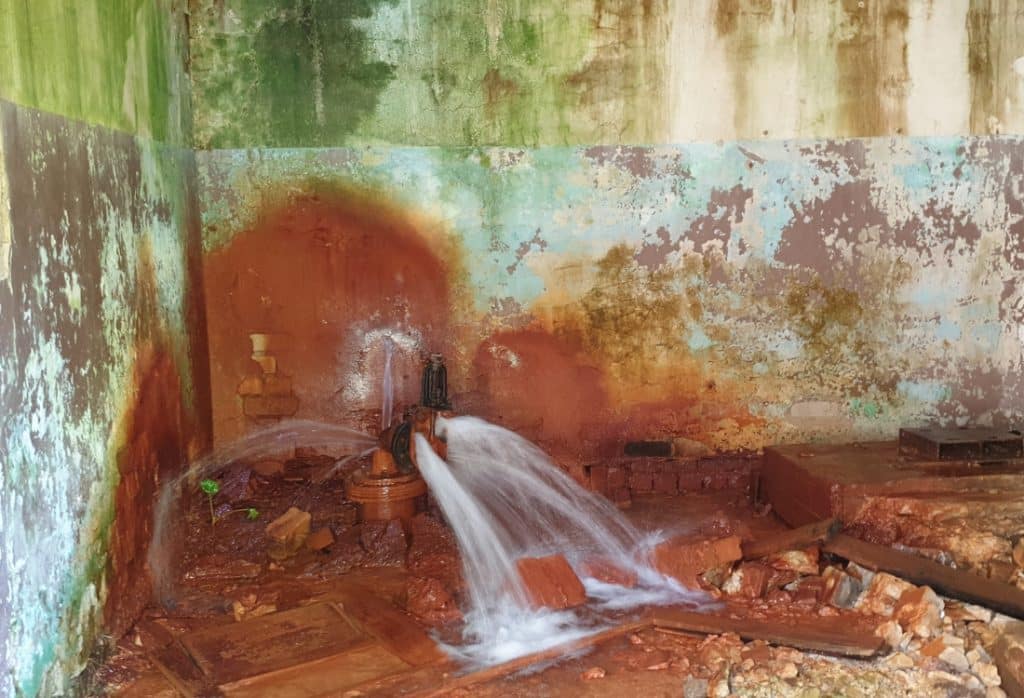
If you smell “rotten eggs” or a “sewer” scent, you have a more serious problem. This smell is typically caused by hydrogen sulfide gas entering the crawl space through one of three specific pathways our team encounters during inspections.
Sewer Line Leaks: A crack in your main sewer line or a loose fitting can cause “black water” to leak directly into your crawl space. This is a major health hazard and creates an unmistakable stench.
Dry P-Traps: If a floor drain in your crawl space or a rarely used bathroom hasn’t been used for a while, the water inside the P-trap can evaporate. Once that happens, the barrier against sewer gases is lost, allowing odors to travel back into the home.
Groundwater Sulfur: In some areas of Northern Virginia and the Shenandoah Valley, groundwater naturally contains high levels of sulfur. When this water seeps into the crawl space and sits, it produces a rotten egg odor as it reacts with the air.
.
6. Wet Fiberglass Insulation (The “Soggy Cardboard” Smell)
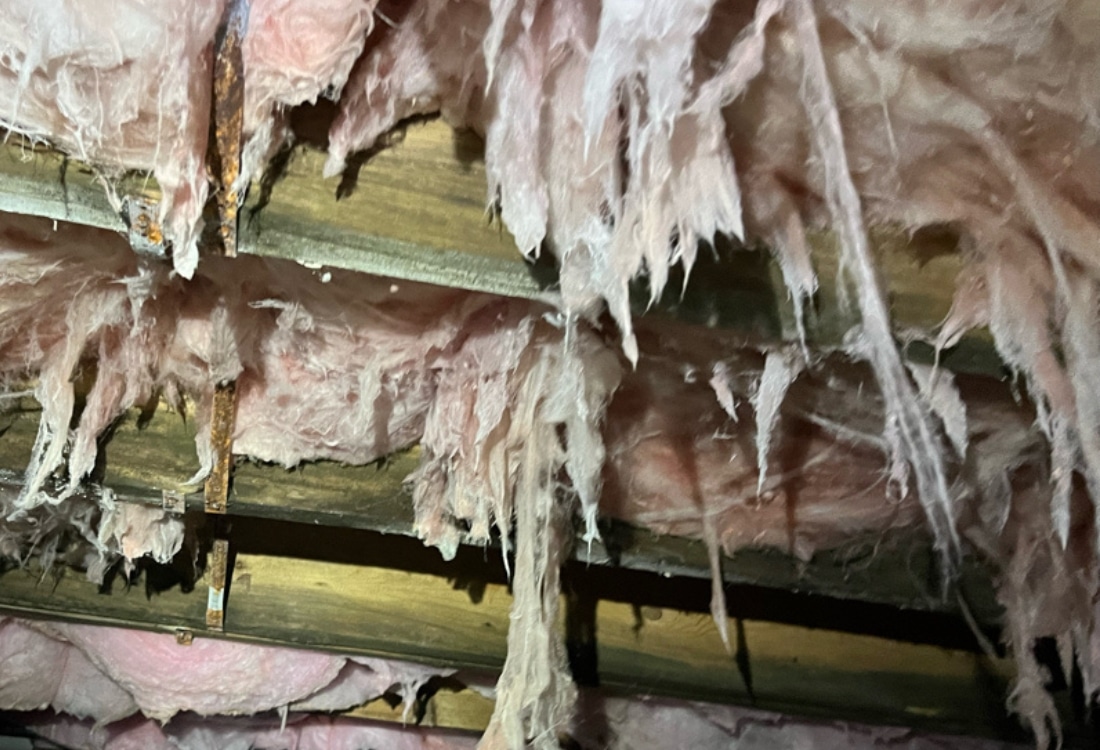
Wet fiberglass insulation is one of the worst materials to have in a damp crawl space. It acts like a giant sponge. It pulls moisture out of the air and holds onto it, creating moisture issues
Once fiberglass insulation gets wet, it can no longer insulate your home properly, and it becomes a breeding ground for problems. The moisture trapped in fiberglass fibers breaks down the glue and paper backing of the insulation, producing a smell similar to wet, rotting cardboard. Because it stays damp for so long, it also traps mold spores and pest pheromones, making it a permanent source of bad odors until it is physically removed.
7. Decaying Construction Debris
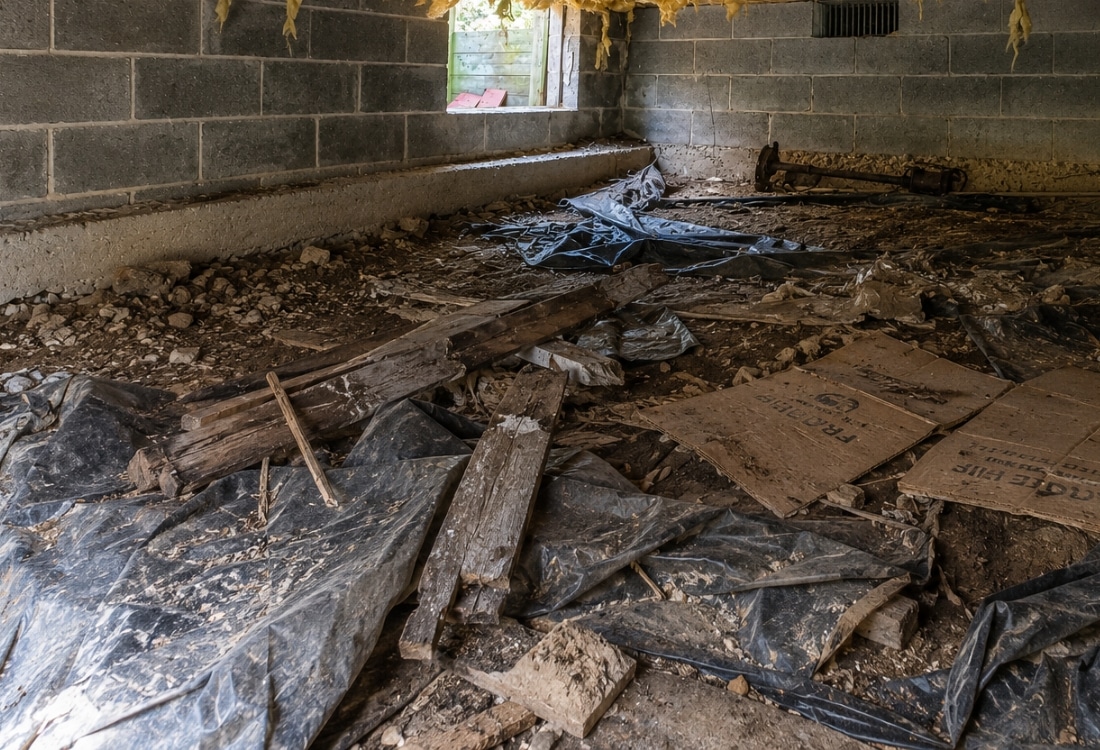
When homes are built, construction crews often leave behind lumber scraps, cardboard boxes, and other debris in the crawl space. Over the years, this material gets covered by soil or a vapor barrier and forgotten until it starts to rot.
Materials like wood and cardboard contain cellulose, which is the favorite food of mold and wood-decay fungi. When this hidden debris gets wet, it begins to decompose, producing a “dumpster” smell or a general scent of decay that is difficult to trace because the source is out of sight, hidden beneath dirt or tucked away in a corner.
Is the Smell Dangerous? Health Risks of Crawl Space Odors
A bad smell is your home’s way of telling you that the air is contaminated. It is not just about comfort; it is about your health. When you smell mold or “musty” air, you are actually inhaling tiny particles and gases.
According to the American Lung Association and the EPA, poor indoor air quality is a major cause of respiratory issues. Exposure to crawl space odors can lead to:
- Allergy Triggers
Mold spores and dust mite waste, which thrive in humid crawl spaces, are major triggers for sneezing, itchy eyes, and skin rashes. In Northern Virginia, where crawl space humidity regularly exceeds 60 percent during summer months, indoor allergy symptoms are often traced to conditions in the crawl space below.
- Asthma Attacks
High levels of moisture and mold in a crawl space can cause more frequent and more severe asthma attacks, particularly in children and elderly family members. Because up to 50 percent of your first floor air comes from the crawl space below, an uncontrolled crawl space environment directly affects the air in every room above it.
- Radon Gas
While radon is odorless, the same gaps that allow smelly soil gases into your home also allow radon to enter. Radon is the second leading cause of lung cancer in the United States, according to the EPA. If your crawl space is not sealed, your home is at a significantly higher risk of radon accumulation.
- Mycotoxins in Existing Mold
Some mold species produce toxic chemical compounds called mycotoxins. Long-term exposure to mycotoxins has been associated with persistent headaches, chronic fatigue, and difficulty concentrating. These compounds are invisible and odorless on their own, and impossible to detect without professional testing.
How to Eliminate the Reasons for Bad Crawl Space Odor
Eliminating bad crawl space odor permanently requires changing the environment beneath your home so that the conditions that create odors cannot develop in the first place. Surface treatments and air fresheners address the symptom, not the source. Here is what actually works:
Crawl space encapsulation
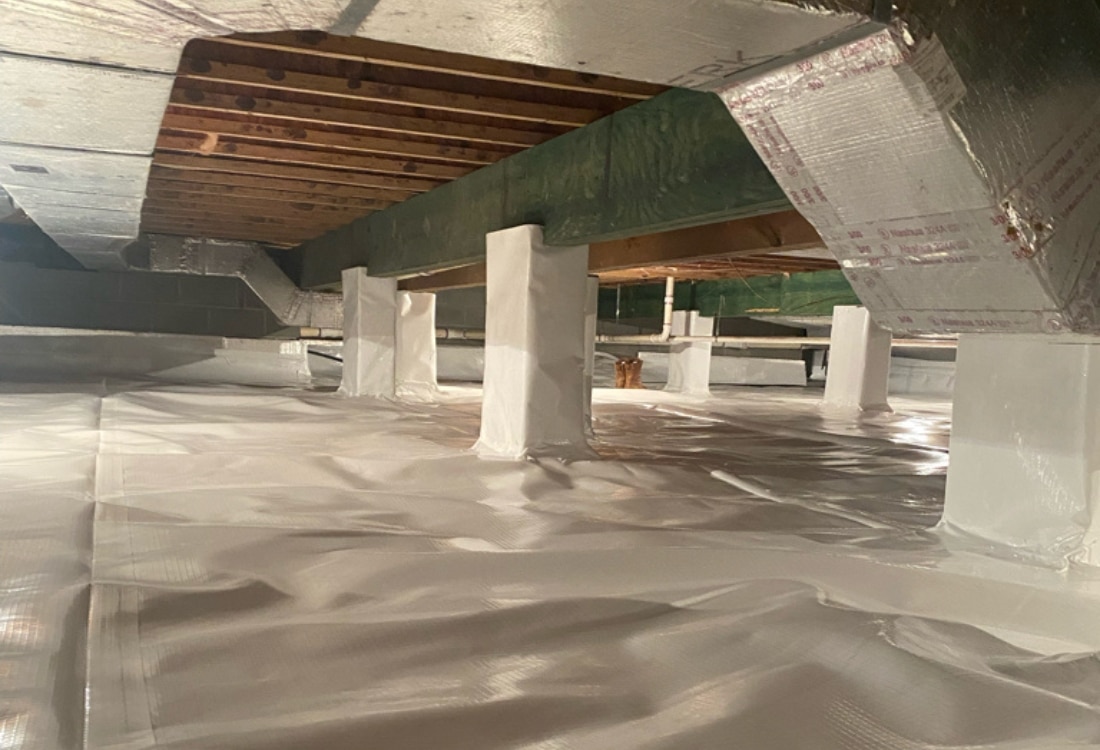
The most effective way to permanently stop crawl space odors is professionally installed crawl space encapsulation. Sealing the crawl space helps create a controlled dry environment by isolating it from outside air and ground moisture. Crawl space vents are sealed to reduce humidity swings.
High-Quality Vapor Barriers
Not all vapor barriers perform the same. Thin 6-mil plastic tears easily and degrades under constant moisture, producing the off-gassing odor described in the cat urine cause above.
A professionally installed 20-mil virgin resin vapor barrier is made from new, high-quality material rather than recycled plastic. It creates a stronger, longer-lasting moisture seal and is designed to hold up for years without the same risk of breakdown or odor issues.
Dehumidification
Even with a vapor barrier, moisture levels can still rise if air exchange or ground evaporation continues. A professionally installed crawl space dehumidifier keeps humidity around 50 percent, which is low enough to stop mold growth and make conditions unsuitable for dust mites. These systems are also designed to self-drain and are properly sized for the space, unlike most consumer-grade units, which aren’t built to handle self-drainage.
Crawl space mold removal
When mold is the source of the odor, professional mold removal is required before any other solution can deliver lasting results. LUX experts use EPA-certified BAC Botanical Antimicrobial Cleaner to eliminate mold colonies at the root, penetrating wood surfaces to remove mold where surface treatments cannot reach. Addressing mold through professional removal first ensures that encapsulation and dehumidification maintain a clean, odor-free environment long term.
Proper Drainage
If you have standing water, you need a sump pump, and an interior drainage system is required before encapsulation can be effective. The drainage system collects groundwater and directs it away from your foundation, ensuring the crawl space stays dry and odor-free year-round.
Removing Old Materials
Encapsulation cannot eliminate odors if you do not remove debris and contaminated materials from the crawl space first. Saturated fiberglass insulation, moldy debris, pest waste, and construction scraps, must be removed before a new system is installed. Attempting to encapsulate over contaminated materials is one of the most common reasons DIY encapsulation fails to eliminate the odor permanently.
Let LUX Foundation Solutions Find the Source of Your Bad Crawl Space Odor
A bad crawl space odor is not just unpleasant; it’s harmful. It is a signal that something beneath your home needs attention. Whether the source is mold, moisture, pests, or a plumbing failure, the odor will not resolve on its own. The longer it goes unaddressed, the more it affects your indoor air quality, your family’s health, and the structural integrity of your home.
LUX Foundation Solutions has been helping homeowners identify and eliminate crawl space odors across Northern Virginia, the Shenandoah Valley, North Central Virginia, and West Virginia. Our team will assess your specific crawl space conditions, identify the source of the odor, and recommend the right solution for your home.
Call 540-616-3900, or fill out our online estimate form to schedule a free on-site assessment today.
ABOUT THE AUTHOR

FAQ’s
What does a bad crawl space smell mean?
A bad crawl space smell means something is actively wrong beneath your home. It is almost always a sign of excess moisture, mold growth, pest activity, or a plumbing failure.
Because of the stack effect, whatever is causing it below is also affecting the air your family breathes indoors every day. The longer the source goes unaddressed, the more it affects your indoor air quality and your home’s structural health.
Why does my crawl space smell like sewage?
A sewage smell in your crawl space is caused by one of three problems: a cracked sewer line leaking into the space, a dry P-trap allowing sewer gases to rise back through your pipes, or groundwater that is naturally high in sulfur.
All three release hydrogen sulfide gas into your crawl space and home. This is one of the few crawl space odor problems that poses a direct health risk and requires immediate professional assessment.
Why does my crawl space smell musty?
A musty smell in your crawl space is almost always caused by excess moisture, mold, or mildew with a humidity level above 60 percent. As mold grows, it releases Microbial Volatile Organic Compounds (MVOCs), which are gases that travel through your floorboards and into your living space, producing the earthy odor you notice indoors.
In Northern Virginia, musty crawl space odors are one of the most common issues our team encounters during inspections.
How do I get rid of the bad smell in the crawl space?
The only way to permanently get rid of bad crawl space odor is to identify and fix the source first. Treating the smell without addressing the underlying cause will not produce lasting results.
Depending on the source, the solution may involve crawl space encapsulation, a drainage system, mold remediation, or removal of contaminated insulation and debris. LUX Foundation Solutions offers free on-site assessments to identify the specific cause and recommend the right fix for your home.
Is a bad crawl space smell dangerous?
Yes. A bad crawl space smell can indicate conditions that are genuinely dangerous to your family’s health and your home’s structure.
Mold releases airborne spores that cause respiratory problems and allergies.
Sewage gases, including hydrogen sulfide, are toxic at high concentrations.
Persistent moisture leads to structural wood decay, compromising your floor system over time.
If you notice a persistent crawl space odor, a professional assessment is the most important first step.
Can charcoal or baking soda fix a bad smell in a crawl space?
No. Charcoal and baking soda may temporarily help reduce odors, but they do not address the source of the problem. As long as moisture, mold, or soil gases are present beneath your home, the smell will keep returning regardless of what you place in the space.
Eliminating bad crawl space odor permanently requires removing or neutralizing the source, not masking it with absorbents that need constant replacing.
Will a bad crawl space smell go away on its own when the weather gets dry?
No. A bad crawl space smell will not go away on its own even during dry weather. Mold spores and odor-producing bacteria do not die when the air dries out; they go dormant and wait. As soon as humidity rises again, whether from seasonal weather, rainfall, or even daily household activity like cooking and showering, the odor returns.
In Northern Virginia, changing seasonal humidity often causes crawl space odors to fade during drier months, only to come back even stronger in the spring and summer if the underlying issue is not professionally addressed.