Crack in Crawl Space Foundation
Not all cracks in your crawl space foundation mean trouble, but some signal serious structural issues caused by soil movement, poor drainage, or shifting foundations beneath your home. For Northern Virginia homeowners, the size, shape, and location of the crack reveal exactly how serious it really is.
What a Crack in Crawl Space Foundation Actually Means for Your Home
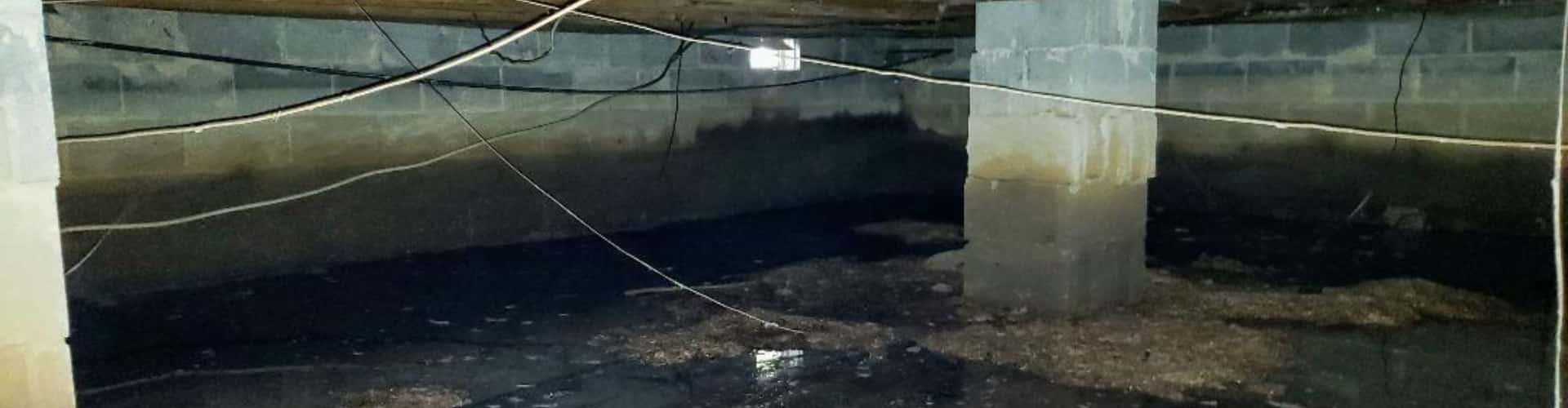
A crack in your crawl space foundation forms in the concrete or block walls and footings that support your home from below, not in the visible foundation walls above ground. Because crawl spaces stay hidden and humid, these cracks often go unnoticed for far longer than cracks elsewhere in the house.
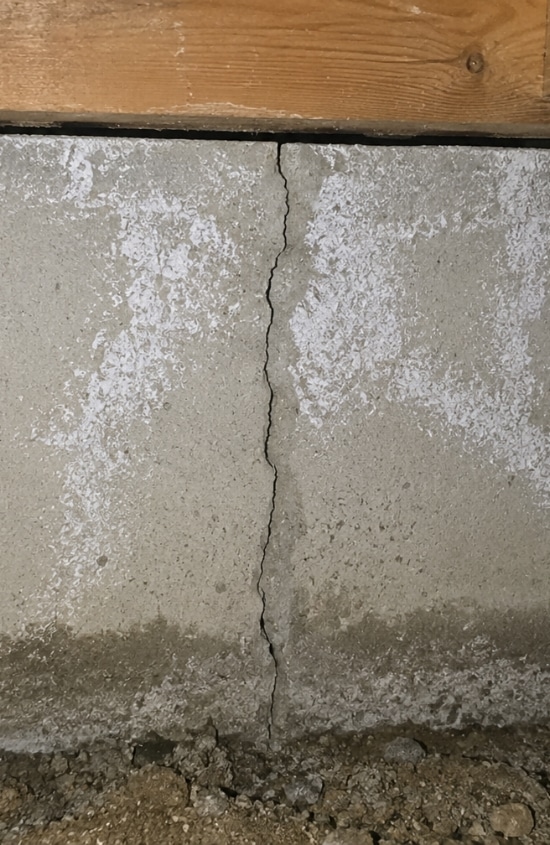
Size, shape, and location reveal how serious it really is. Hairline cracks under 1/16 inch are usually just normal settling. Cracks wider than 1/4 inch, horizontal cracks, or cracks that form near corners and support posts often indicate a more serious foundation problem underneath your home.
In Northern Virginia, expansive clay soil and seasonal moisture swings make crawl space foundations especially prone to this movement, something our LUX Foundation Solutions team sees in homes across the region in every inspection.
Signs of a Crack in Crawl Space Foundation
A crack in your crawl space foundation rarely shows up alone. It usually comes with a few other warning signs that the damage is progressing. Here’s what to look for:
- A cracked foundation wall often appears as vertical cracks running along the concrete or block walls lining your crawl space.
- Stair-step cracks along block or mortar joints follow the mortar lines between blocks in a zigzag pattern, usually indicating uneven foundation settlement.
- Cracks at the base of the foundation wall, where it meets the footing, often appear first since this is where the structure absorbs the most pressure from shifting soil.
- Cracks in support footings mean the piers supporting your floor joists may no longer be properly supporting the load they carry.
- Bowing or leaning crawl space walls tend to crack first at the point of greatest pressure, usually near the middle or base of the wall.
- Gaps where crawl space walls meet the floor often signal that the foundation wall is pulling away from the slab.
Spotting one or more of these signs often points to a specific cause beneath your home, since not all foundation cracks behave the same way. Knowing what’s causing the crack is what determines whether it’s a quick fix or a sign of a bigger structural issue.
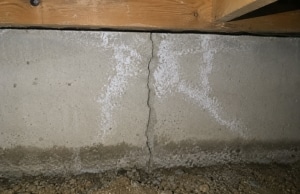
Cracked foundation wall
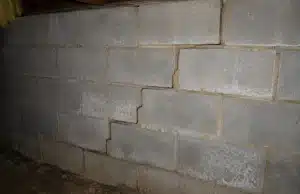
Stair-step cracks
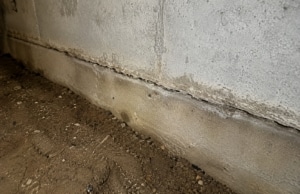
Cracks at the foundation wall base
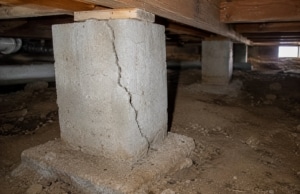
Cracks at support footings
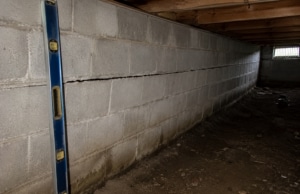
Crawl space wall cracks from bowing or leaning
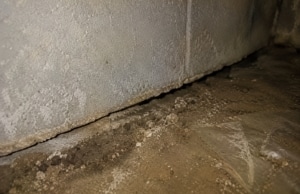
Gaps where walls meet the floor
Why Cracks Form in Crawl Space Foundations
Crawl space foundation cracks do not appear randomly. They are the visible result of forces acting on the concrete or masonry over months and years, gradually testing the structural integrity of your home. Understanding what’s causing the crack makes it easier to determine how much it affects your home’s structural stability and what type of repair may be needed.
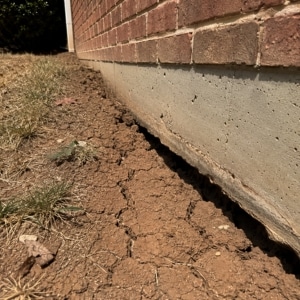
Shifting and Settling Soil
Northern Virginia expansive clay soil swells when wet and shrinks when dry, putting constant pressure on the concrete and block walls of your crawl space. Nearby tree roots can intensify this by unevenly pulling moisture from the soil. As one section of the foundation settles faster than another, the foundation walls crack to relieve the stress, usually starting at the weakest point.
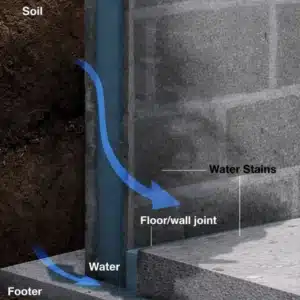
Hydrostatic Pressure
When groundwater builds up around your crawl space foundation, it exerts a force on the walls from the outside that concrete and blocks were never designed to withstand in the long term. Over time, this constant pressure causes significant movement in the walls, leading them to bow, crack, or lean inward, especially after heavy rain when the soil surrounding your crawl space becomes fully saturated and swollen.
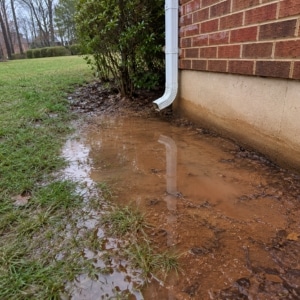
Poor Drainage and Water Damage
Gutters that overflow, downspouts that empty too close to the house, or grading that slopes toward the crawl space foundation all funnel excess water directly into the soil around your crawl space. That water softens the soil’s ability to support the foundation evenly, accelerating the settling and pressure that eventually lead to visible cracking in the walls and floor.
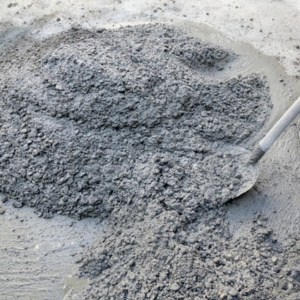
Poor Construction or Design
Crawl space foundations built without proper reinforcement, inadequate footings, or a poor concrete mix are far more likely to crack under normal soil pressure than a foundation built to handle Northern Virginia’s shifting clay soil. Even small construction shortcuts made during the original build can leave a crawl space vulnerable to cracking years before it reasonably should.
Once you know what’s driving the crack, the next step is matching it to the right crawl space crack repair, since a crack left without immediate attention can leave the underlying problem to get worse
Our Proven Repairs for a Crack in the Crawl Space Foundation
Once LUX knows what’s causing the crack, we match effective solutions to the problem, sometimes one repair, sometimes a combination of several working together to stabilize your home and stop the cracking for good. Here are the proven methods we use most often:
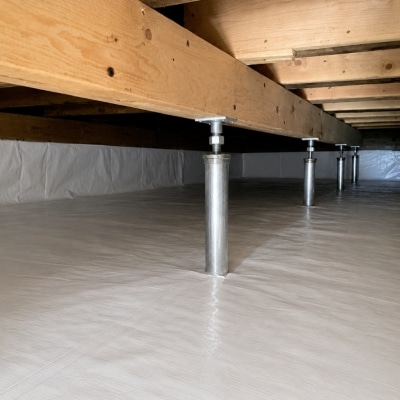
Crawl Space Support Posts
When floor joists above your crawl space start to sag or sink, we install stabilizer posts that add direct support beneath them, transferring the weight onto a stable footing instead of the compromised soil underneath. This relieves the pressure that causes cracks to spread and stops the floor above from settling any further.
Installed one at a time along the affected area, these posts work without requiring major excavation or disruption to your home, making them one of the more straightforward, cost-effective fixes we offer for sagging support beneath a crawl space foundation.
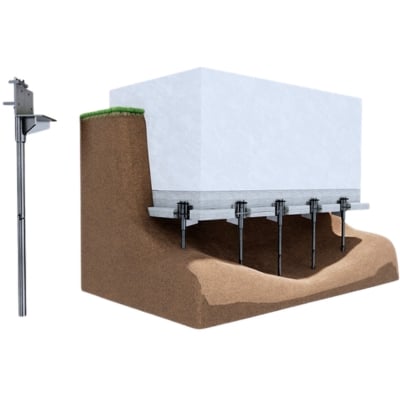
Push Piers
If uneven soil has caused your crawl space foundation to settle and crack, we install push piers beneath the foundation until they reach stable load-bearing soil or bedrock. This provides the support needed to stabilize your home and help prevent further settlement.
As we install the piers, hydraulic pressure lifts, and stabilize the crawl space foundation, we close existing cracks and prevent the settling that caused them from worsening. Because push piers transfer weight directly to stable ground rather than relying on the surrounding soil, they remain one of the most reliable repair options we recommend.
Wall Anchors
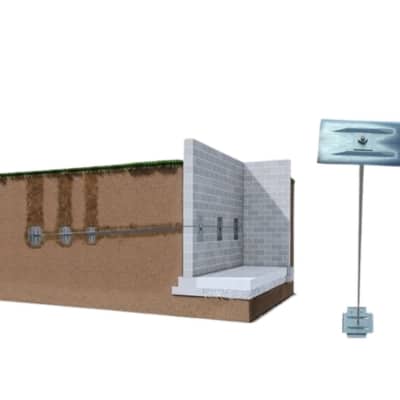
For crawl space foundation walls that are bowing or leaning inward from outside pressure, we install wall anchors that connect the crawl space foundation wall to stable soil several feet away from your home, using steel rods and an exterior anchor plate to gradually pull the wall back toward its original position. This stops the inward pressure that causes crawl space foundation walls to crack and keeps them from bowing further over time.
When hydrostatic pressure or saturated soil is causing the wall to move, we use wall anchors to stabilize it by addressing the source of the pressure instead of simply covering the cracks.
Crawl Space Encapsulation
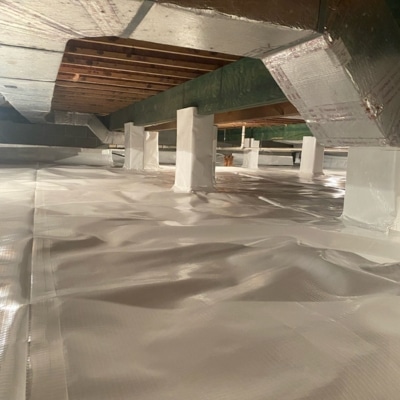
When moisture intrusion in your crawl space keeps softening the soil and driving the swelling and shrinking behind so many foundation cracks, we install a heavy-duty vapor barrier through encapsulation to seal it out for good. Keeping water and humidity out of the crawl space entirely protects the structural repairs above it and helps prevent new cracks from forming in the years ahead.
For Northern Virginia homes built on expansive clay soil, we often pair encapsulation with other repairs to address both the structural damage and the ongoing moisture problem causing it.
Concrete Crack Repair
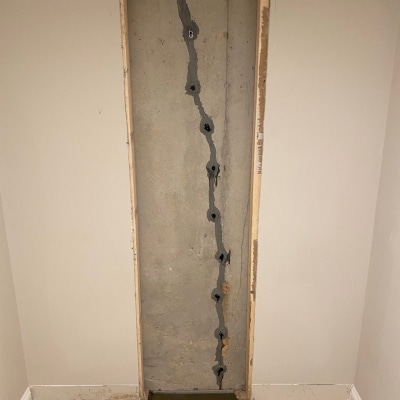
Once the underlying movement is stabilized, we seal the crack itself using epoxy or polyurethane sealant, depending on whether the crack is still active or has stopped moving. Sealing the crack helps strengthen the concrete and prevents water from entering through the opening, which is especially important in crawl spaces where moisture can easily build up.
Crack injection is rarely a standalone fix, since sealing a crack without addressing its cause usually means it returns. But when paired with stabilization, it provides a complete, lasting repair.
Ready to Get Your Crawl Space Professionally Assessed
The cause behind your crawl space foundation crack will not fix itself. Left unaddressed, the underlying cause keeps working against your home, causing further damage the longer it goes unrepaired, the more it can cost to fix.
The team at LUX Foundation Solutions will inspect your crawl space and foundation, identify what’s causing the problem, and recommend the repair solution that best fits your home. We offer crawl space repair services across Northern Virginia, Shenandoah Valley, North Central Virginia, West Virginia, and surrounding areas.
Contact our team today at 540-616-3900 or fill out our online estimate request form to schedule a free, on-site inspection.
Request a free Estimate
Crack in Crawl Space Foundation FAQs
Structural cracks are typically wider than 1/4 inch, run horizontally, or are accompanied by wall movement, water leaking through the gap, or floor problems above.
A cosmetic crack is usually a narrow, vertical hairline that has been stable for years with no associated symptoms. If you are unsure, mark the crack with a date and check it over 60 days. Any growth, displacement, or new symptoms during that period need a professional evaluation.
Yes. A crawl space foundation crack forms in the concrete or block walls and footings beneath your home’s foundation, an area that stays hidden, humid, and harder to inspect than the visible foundation walls above ground. Because of this, crawl space cracks often go unnoticed longer and are more directly exposed to groundwater and soil pressure, which can cause them to progress faster if left unaddressed.
It depends on the cause. A crack caused by normal settling tends to stabilize and stay roughly the same size. A crack caused by ongoing soil movement, hydrostatic pressure, or poor drainage typically continues to widen, since the underlying force has not been resolved. The safest way to know is a professional inspection that identifies what is driving the crack.
Not usually. Most crawl space foundation cracks can be repaired by stabilizing the structure with piers or anchors and sealing the crack itself, without replacing the entire foundation. Replacing the entire foundation is usually only needed when there is severe structural damage affecting multiple areas. In most cases, foundation cracks are limited to specific sections and can be repaired without a full replacement.
Cost depends on the cause, the extent of the damage, and which repair methods are needed. A single crack sealed with injection costs far less than a repair requiring piers or wall anchors to address underlying soil movement. The most accurate way to know your cost is a free inspection, since pricing without seeing the crawl space is only a rough estimate.
Sealing a small, stable crack with a DIY concrete patch may temporarily hide it, but it does not address whatever is causing the foundation to crack in the first place. If the underlying cause is soil movement, water pressure, or settling, the crack will likely return, often larger than before. A professional inspection identifies the cause before any repair begins.