IA fluid applied air barrier is a liquid coating that cures into one continuous membrane over the exterior walls of a building. It stops air movement through the wall, and some products also add water resistance. Builders use it mostly on commercial projects, and it is starting to appear in higher-end new homes.
Air that slips through gaps in an exterior wall carries moisture with it. That moisture intrusion is where mold, rot, and wasted energy can start. A fluid applied barrier seals those gaps.
This page covers how it works, how it compares with sheet applied barriers, where it fits alongside exterior waterproofing, and when to use one.
What Is a Fluid Applied Air Barrier?
A fluid applied air barrier is a liquid coating applied to an exterior wall that cures into a continuous membrane. Once cured, it blocks air from moving through the wall.
Because it goes on as a liquid, it follows uneven substrates and wraps around corners, pipes, and rough openings, leaving no seams. It bonds to common wall materials such as sheathing, concrete, and metal.
If you are comparing it to waterproofing, here is the difference. The air barrier controls air moving through the wall, and waterproofing keeps liquid water out. Some fluid applied products do both jobs and act as a seamless moisture barrier, so ask which one you are getting.
How Does a Fluid Applied Air Barrier Work?
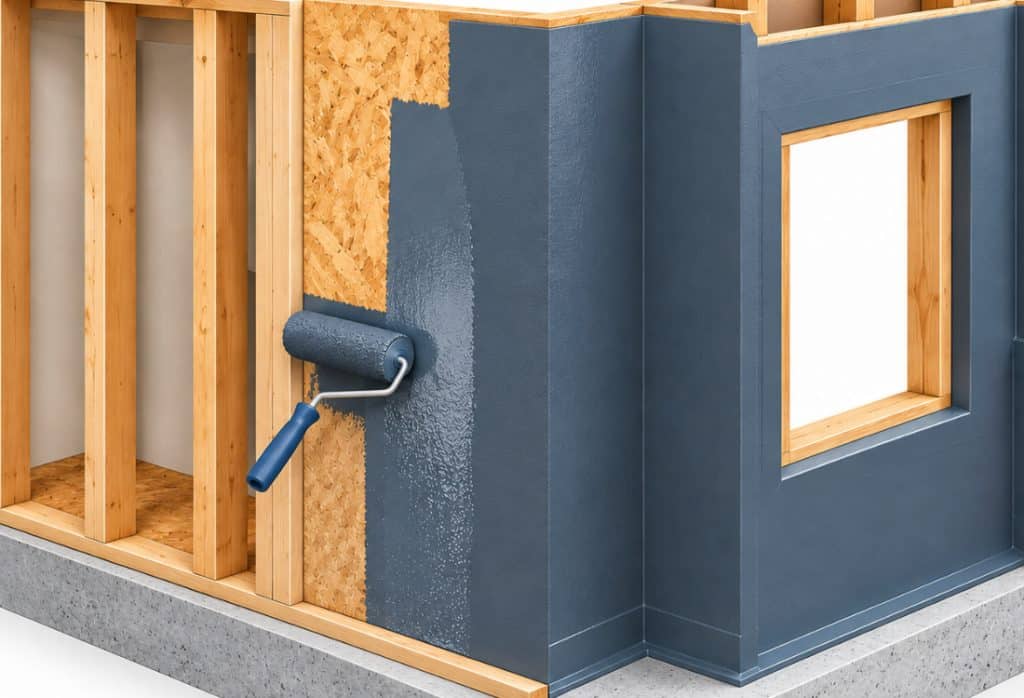
A fluid applied air barrier works by sealing the wall in a single continuous layer. With no seams or open gaps, air has nowhere to get through.
Here is how the job goes:
- Prep the surface: The wall is cleaned and primed so the coating adheres well.
- Apply the coating: The liquid goes on evenly, sprayed or rolled over the whole wall.
- Let it cure: The coating forms a continuous, durable membrane over the entire wall.
Coverage matters more than anything else. A missed spot or a thin patch becomes a leak path. The surface also needs to be clean and dry first, so weather and timing play a part.
Once the barrier cures, siding or other cladding goes over it.
Fluid Applied vs Sheet Applied Air Barriers
Both types of air barrier materials do the same job: they stop air from moving through the wall. The difference is how they go on.
A sheet applied barrier comes in rolls and is stuck to the wall in pieces, with the edges overlapped and sealed. A fluid applied barrier goes on as a liquid membrane and cures into one layer.
| Fluid applied | Sheet applied | |
|---|---|---|
| Seams | None | Overlaps that must be sealed |
| Corners and wall openings | Wraps around them | Cut and patched at each one |
| Thickness | Depends on how it is applied, so even coverage matters | Set at the factory |
Neither one wins on every job. The right choice depends on the wall design, the product, and the project plan. If you are choosing between them, ask how each one handles seams, corners, and thickness.
How a Fluid Applied Air Barrier Fits With Exterior Waterproofing
Exterior waterproofing and a fluid applied air barrier protect different parts of the same building. Exterior waterproofing covers the foundation walls below ground, where soil and groundwater press against them. The air barrier covers the walls above ground, where air and wind-driven rain are the problem.
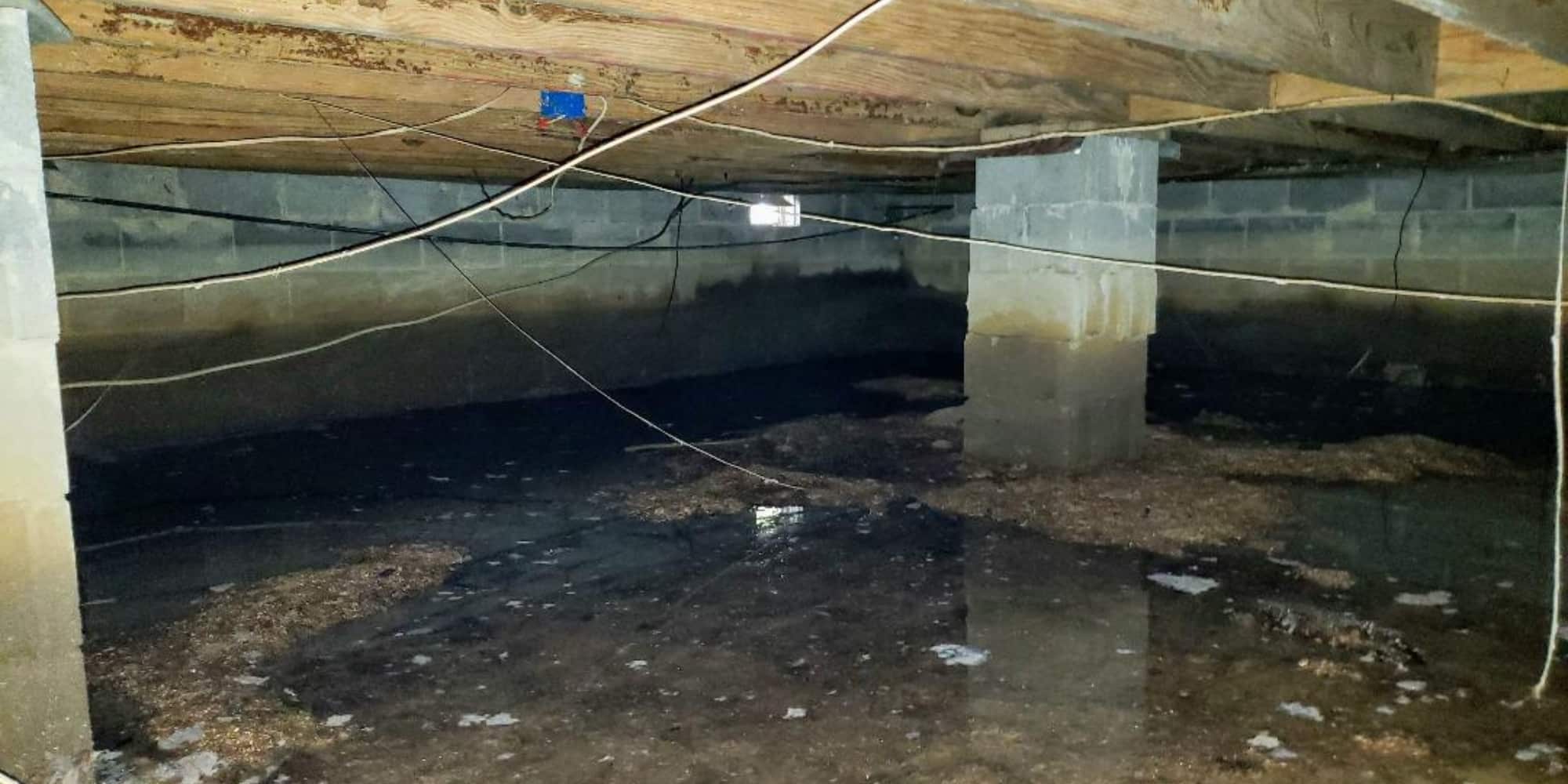
In Virginia, clay soil holds water against the foundation, and heavy rain keeps it there. Below ground, that calls for waterproofing. Above ground, the same storms push air and moisture at the wall.
One does not replace the other. A dry foundation can sit under a wall that leaks air, and a sealed wall will not keep groundwater out of a basement. Where the two meet near the ground line, the details need to line up.
If you are planning a new build or a major exterior project, ask your builder how the two will connect.
What Are the Benefits of a Fluid Applied Air Barrier?
A fluid applied air barrier can help a building in four ways:
- Less air leakage: Sealing the wall keeps heated and cooled air in the building’s interior and outside air out, which can help improve energy efficiency.
- Less moisture in the wall: Air carries water vapor, so stopping airflow can reduce damp conditions where mold and rot start.
- A longer-lasting wall: Less moisture carried into the wall can slow weather damage over time.
- A more comfortable space: Fewer drafts and steadier indoor temperatures, especially in extreme weather.
Results depend on the product, the wall design, and proper installation. The Air Barrier Association of America emphasizes the need for effective air sealing in construction.
When to Use a Fluid Applied Air Barrier
A fluid applied air barrier makes the most sense when the exterior wall is open, and the barrier can be applied before the siding or other cladding is installed. That usually means one of three situations:
- New commercial construction: This is where it is used most. You can see an example in the bank project below.
- Higher-end new homes: Builders are starting to use fluid applied membranes on these homes. If you are building one, ask whether the plans call for a continuous air barrier.
- Major exterior renovations: If the cladding is coming off an existing building, the bare wall can take a barrier.
Drafts, uneven temperatures, and damp walls can be signs of air leaks. But if the wall is staying closed and nothing is coming off, a fluid applied barrier is usually not the fix.
Project Example: Enhancing New Bank Construction in Stephens City, VA, with Fluid Applied Air Barriers
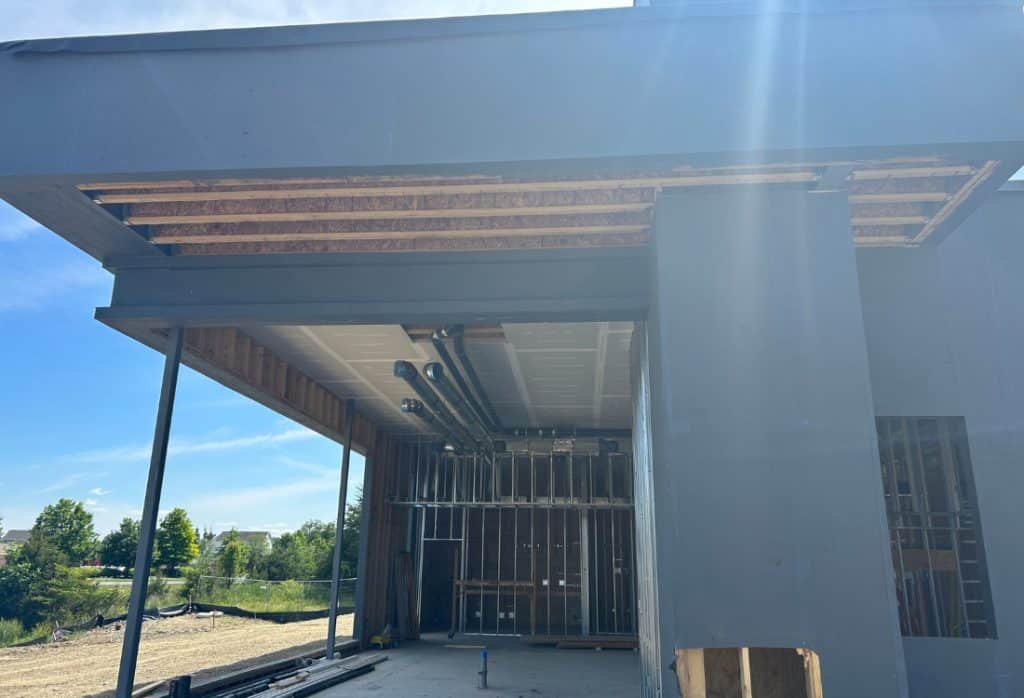
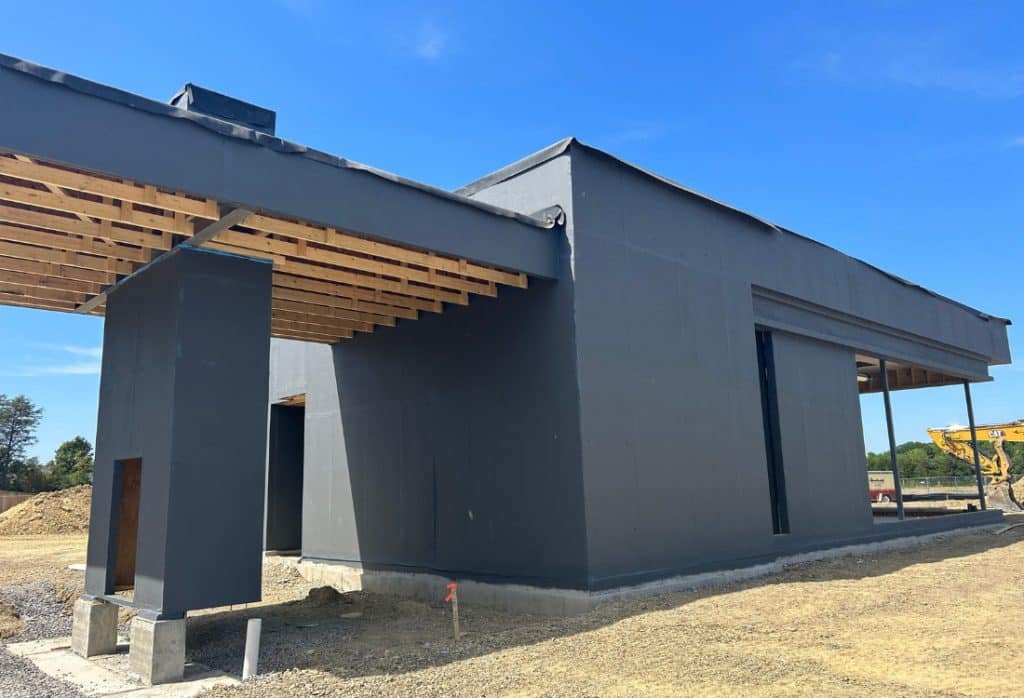
In May 2023, LUX Foundation Solutions applied a fluid applied air barrier to the entire exterior of a new bank in Stephens City, VA.
The goal was an exterior sealed against water and air infiltration. That meant covering the whole exterior framing system, edge to edge, with no gaps.
Here is how the job went:
- Prep: The exterior framing was cleaned and primed so the coating would bond.
- Application: The liquid air-barrier coating was applied evenly across the entire exterior, forming a single continuous membrane.
The result is an air- and waterproof membrane over the building’s full exterior framing system.
Building or Renovating an Exterior? Ask About the Air Barrier Early
A fluid applied air barrier seals the exterior wall in one continuous layer, and it goes on while the wall is still open. It works alongside exterior waterproofing: waterproofing below ground, the air barrier above. It fits best on new commercial construction, higher-end new homes, and major exterior renovations.
If you are weighing one for a new build or an exterior project, talk to LUX Foundation Solutions before the walls close up. Call 540-616-3900 or use the contact form to start the conversation.
Frequently Asked Questions
Is a fluid applied air barrier the same as waterproofing
No. A fluid applied air barrier controls air leakage through an exterior wall, while waterproofing keeps liquid water out. Some products work as an air and water barrier system and may also serve as the water resistive barrier, so the product data sheet shows what it is rated to do.
How does a fluid applied air barrier work on a wall?
A fluid applied air barrier seals an exterior wall in a single continuous layer. The liquid is applied to a cleaned, primed wall at an even thickness and cures into a seam-free membrane, so air cannot pass through. Siding or other cladding goes over the fluid applied system once it has cured.
Is a fluid applied air barrier the same as a liquid applied air barrier?
Yes. Both names refer to the same type of coating: an air barrier applied as a liquid, often liquid synthetic rubber, that cures into a continuous membrane. Product names vary by manufacturer, and some are single component products, so check the data sheet.
How does a fluid applied air barrier compare with a sheet applied one?
A fluid applied air barrier is applied as a liquid and forms no seams, while a sheet applied air barrier is installed in overlapping sheets. Fluid applied depends on complete coverage, and sheet applied has a factory-set thickness, so the right choice depends on the wall design and the product, including whether it is a vapor permeable air barrier.
What wall surfaces can a fluid applied air barrier be applied to?
A fluid applied air barrier can be applied to common exterior wall surfaces such as sheathing, concrete, and metal. The surface needs to be clean, and the product data sheet lists which surfaces and primers it works with.
Can a fluid applied air barrier go on an existing building?
A fluid applied air barrier can be installed in an existing building when the cladding is removed and the bare wall is exposed. If the wall stays closed, it is usually not an option because the coating needs direct access to the wall surface.