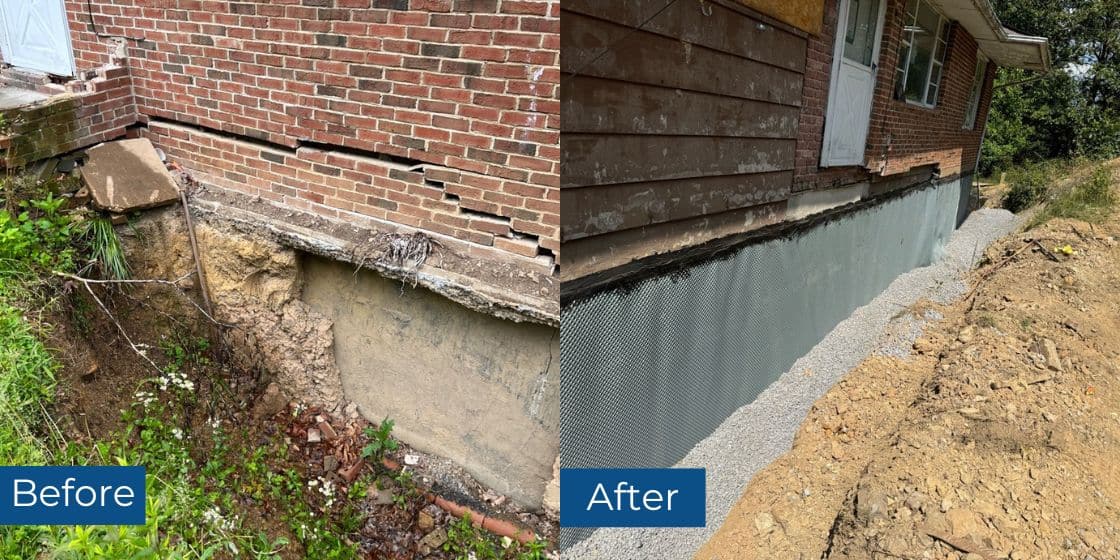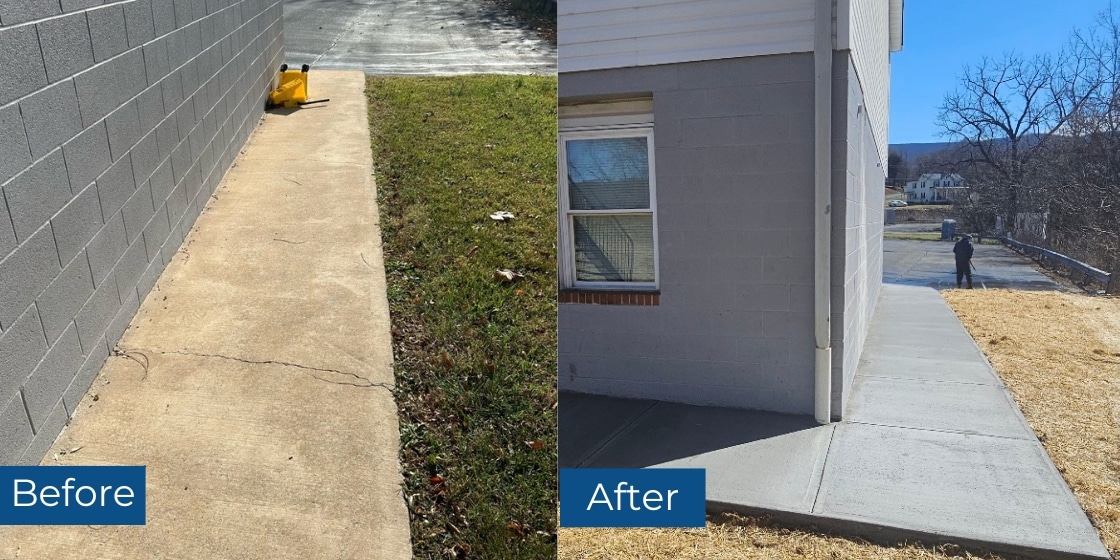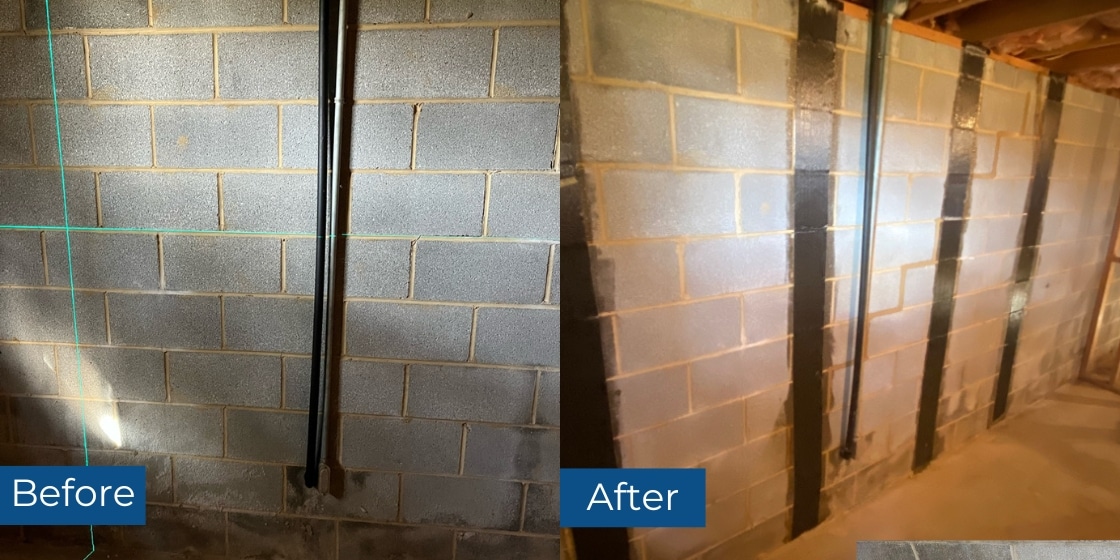
Could the soil around your home be causing foundation problems? If you’re noticing new cracks, uneven floors, or other signs of movement, expansive soil could be contributing to the foundation damage beneath your home.
Expansive soil contains clay minerals that absorb moisture, swell when wet, and shrink as they dry. As this cycle repeats, the ground moves, placing stress on your foundation and contributing to significant damage. If you live in Virginia, where this kind of soil is common, understanding how it affects your foundation can help you catch problems early instead of after they’ve already caused real damage.
This guide explains how expansive soil causes foundation damage, what signs to watch for, and when your foundation may need professional evaluation.
Key Takeaways
- Expansive soil swells and shrinks with moisture, putting repeated pressure on your foundation.
- Repeated soil movement can place stress on your foundation and contribute to cracks, shifting walls, and uneven floors.
- Not every sign of soil movement means you need professional stabilization right away.
- Local soil conditions in Virginia make this a common concern for homeowners.
- Addressing the underlying cause is important when soil movement is causing foundation damage.
What Is Expansive Soil?
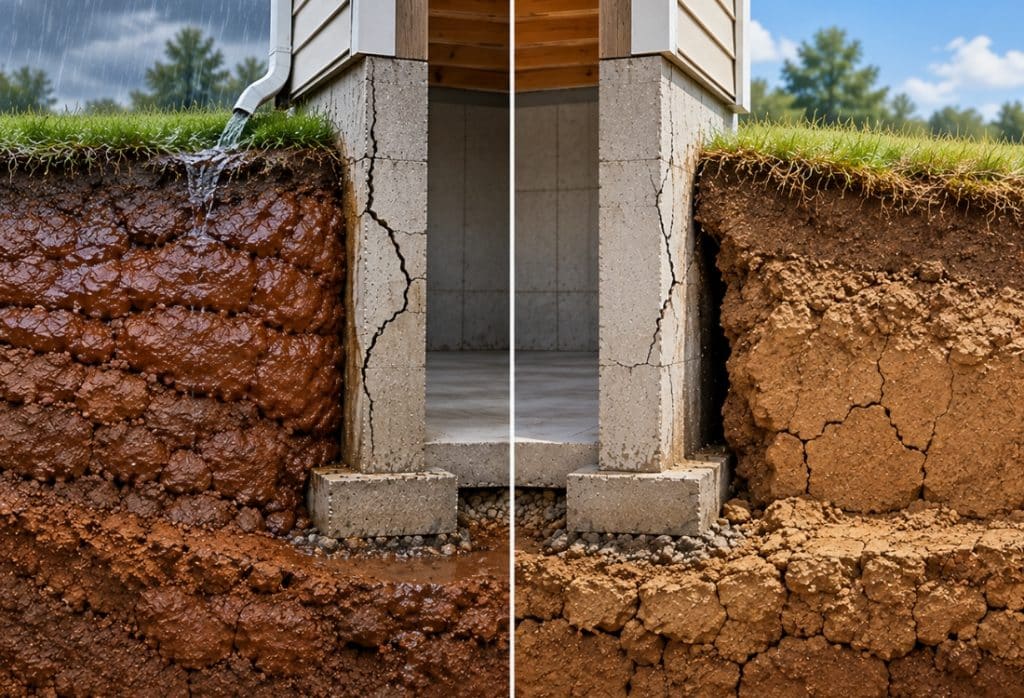
Expansive soil is made up of expansive minerals with a high shrink swell potential that undergo volume changes as their moisture content changes, a pattern documented by Virginia’s Department of Geology and Mineral Resources. It absorbs water, as water molecules bond with the clay, and swells, then shrinks as it dries. This repeated cycle can cause movement in the ground beneath or around your home.
Not all soil behaves this way. Clay-rich expansive soil is more sensitive to moisture changes because of its chemical composition and soil properties. During wet conditions, the soil can expand, putting pressure on your foundation. During dry conditions, it can shrink and change the support around or beneath it.
Trees and large plants can also affect moisture levels in the surrounding soil because their roots draw water from the ground. Over time, repeated changes in soil moisture can contribute to movement that affects your foundation, which is common in homes with challenging soil foundations.
How Expansive Soil Movement Causes Foundation Damage
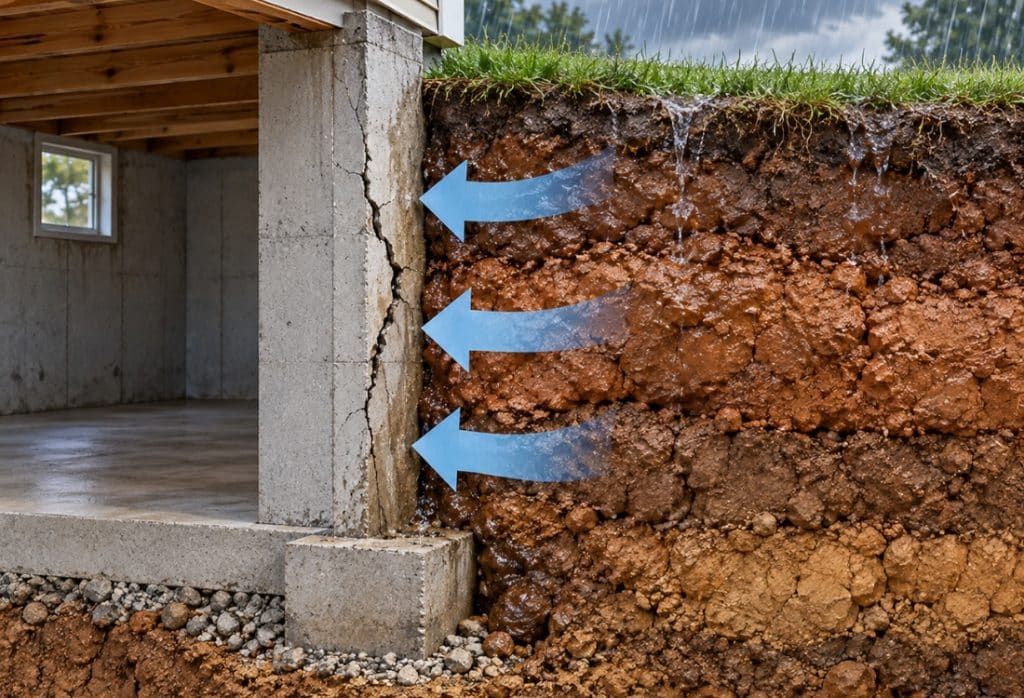
Expansive soil can affect your foundation in more than one way. The main concern is how the soil changes as it gains and loses moisture. When the ground expands, shrinks, or moves unevenly, it can change the pressure against your foundation or the support beneath it. Knowing these different effects can help you recognize how soil movement may contribute to foundation damage.
1. Soil Expansion Pressures Your Foundation
When expansive soil absorbs moisture, especially during rainy seasons or after floods, it swells and pushes outward against your foundation. That pressure doesn’t stay constant either, since water sitting in the soil around your foundation adds hydrostatic pressure on top of the soil’s own expansion, pushing even harder against foundation walls until something gives.
This pressure often shows up first at the edges of your foundation, a pattern known as edge lift, sometimes visible as surface heave, causing cracks in the drywall and along the outer edges of the foundation. As moisture works its way deeper beneath the surface, it can reach the center of the foundation as well, known as center-lift, which allows floor slab on grade foundations to shift out of place through vertical movement.
2. Soil Shrinkage Pulls Away From Your Foundation
The opposite problem happens when the soil dries out. As moisture leaves the clay, it shrinks and pulls away from your foundation, creating gaps where the soil no longer provides the support your foundation depends on. Without that support, sections of the foundation can settle unevenly.
Expansive soil usually does not cause just one isolated problem. Each wet season adds pressure, each dry season removes support, and your foundation absorbs both extremes over time.
3. Repeated Soil Movement Places Ongoing Stress on the Foundation
When expansive soil absorbs moisture, it swells and pushes outward against your foundation. Water sitting in the soil around your foundation adds hydrostatic pressure on top of that expansion, pushing even harder against foundation walls.
This isn’t a one-time event either. Every wet cycle adds more pressure on top of stress your foundation may already be carrying from the last one.
4. Uneven Soil Movement Can Cause Different Parts of Your Foundation to Move
Soil pressure rarely affects your entire foundation the same way. When it first appears at the edges, it’s called edge lift, and it can cause cracks in the drywall and along the outer edges of your foundation. When moisture reaches further underneath and affects the center, it’s called center-lift, which can cause floor slabs to shift out of place.
Because different parts of your foundation move at different rates, the damage often shows up as cracking or unevenness caused by differential movement rather than a single, uniform shift.
5. Moisture Changes Can Make Existing Foundation Problems Worse
If your foundation already has cracks or areas that have moved, changes in soil moisture can put more stress on those areas. This does not mean expansive soil is always the original cause of the problem, but continued soil movement can contribute to further changes in an already affected foundation.
What Are the Signs of Expansive Soil Foundation Damage?
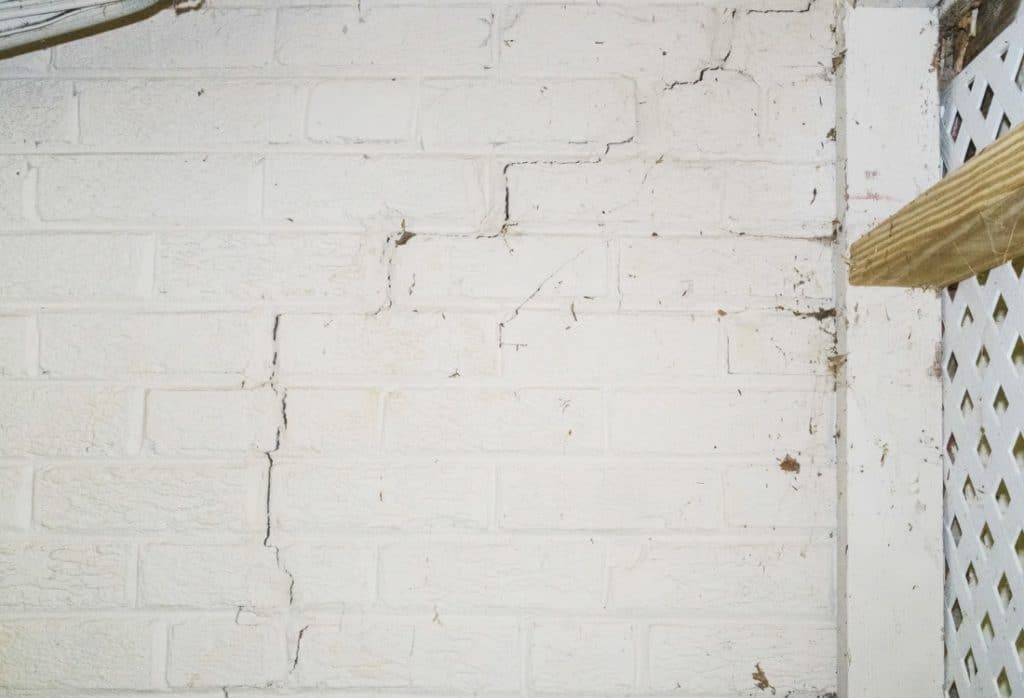
Expansive soil does not always make it obvious that it is affecting your foundation. You may notice the effects before you connect them to changes happening in the soil. Here are some common signs worth watching for:
- Cracks in concrete floors, often appearing under carpets or tile grout.
- Cracked or leaning chimney bricks.
- Cracks in foundation wall.
- Cracked or loose bathroom and kitchen tiles.
- Sloping or uneven floors.
- Sticking doors and windows that no longer close properly.
- Cracks in interior drywall, especially near corners.
- Visible gaps where soil has pulled away from your foundation.
- Mold or musty odors caused by moisture entering through foundation cracks.
These signs can have several possible causes, so they should not automatically be attributed to expansive soil. Looking at soil type, moisture changes, drainage, and other factors together provides a better basis for determining what may be affecting your home, since soil causing foundation cracks isn’t always the only explanation.
A professional inspection can confirm what’s causing the damage and determine how extensively the foundation may be affected.
How Can Expansive Soil Foundation Problems Be Addressed?
Not every sign of soil movement means your foundation needs immediate stabilization. Minor, hairline cracks that remain the same size over time are often just part of a home settling naturally and may not indicate an ongoing problem.
When the signs continue to worsen, it may be time to look into the soil movement beneath your home. These patterns suggest the soil beneath your home is still actively moving rather than settling into a stable state.
If your home has experienced this kind of ongoing movement, a few approaches may apply, depending on what an expert assessment finds:
- Replacing unstable soil with more stable fill material before further construction or repair.
- Installing foundation piers to stabilize or reinforce affected areas when the foundation has experienced movement or settlement.
- Managing soil moisture levels to reduce the swelling and shrinking cycle.
- Applying expansive soil treatment methods that help the ground hold its structure despite moisture changes.
Get Expansive Soil Foundation Damage Addressed the Right Way
Expansive soil damages can build gradually as moisture conditions change, repeatedly stressing your foundation. If you are seeing cracks, uneven floors, shifting walls, or other signs of movement, a professional evaluation can help identify the cause and assess the extent of damage to your foundation.
LUX Foundation Solutions can evaluate your foundation, explain the findings, and help you understand the appropriate expansive soil foundation repair steps based on your home’s condition.
Schedule your free foundation evaluation and get a clearer understanding of what may be affecting your home.
Frequently Asked Questions
Can the soil around my home actually cause my foundation to crack or move?
Yes, expansive soil can cause your foundation to crack or move. It swells as water content increases and shrinks back toward its original volume as it dries, and this repeated movement puts pressure on your foundation that can lead to cracks, uneven floors, or shifting walls over time.
How do I know if my home has expansive soil?
Signs of expansive soil issues include recurring cracks, sticking doors and windows, sloping floors, and visible gaps where soil has pulled away from your foundation, differences that often stand out compared to most natural soils, which tend to stay more stable. A professional inspection can take a deeper look to confirm it.
Does expansive soil affect an entire foundation at once?
No, expansive soil often affects different parts of a foundation at different rates, which is one reason expansive soil foundation problems can appear uneven rather than uniform. Homes with shallow foundations may show these effects sooner than those with deep foundations. Uneven moisture and drainage around a home can cause one section to shift more than another, leading to uneven cracking rather than uniform movement.
Is expansive soil common in Virginia?
Yes, expansive soil is common in Virginia. It is found across several regions, including the Coastal Plain and the Shenandoah Valley, making it a frequent concern for homeowners in the state.
Do I need foundation stabilization if I have expansive soil?
Not always. Minor, stable cracks may not require stabilization, but progressing signs like widening cracks or increasingly uneven floors should be evaluated by a professional, since foundation design also affects how much movement a structure can tolerate before stabilization is needed.
What happens if expansive soil foundation damage is left untreated?
Left untreated, expansive soil foundation damage can worsen over time. Repeated cycles of swelling and shrinking can turn small cracks into larger structural issues, making the foundation less stable and repairs more extensive.