Cracks in Basement Floor
Cracks in your basement floor range from hairline surface fractures to early signs of serious foundation movement. Knowing which type you have and what is causing it determines the right fix. Learn the signs, causes, and solutions the LUX expert team uses to repair basement floor cracks across Northern Virginia and surrounding regions.
Written By Bridget Stieb, Director of Marketing at LUX Foundation Solutions •
Reviewed by LUX’s foundation repair specialists serving Northern Virginia & Florida
What Do Cracks in Your Basement Floor Mean?
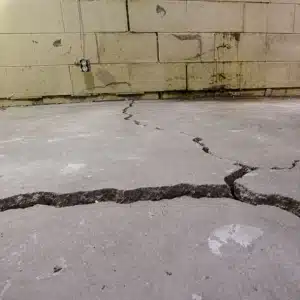
Have you begun seeing cracks in your basement floor? Not every basement floor crack is a serious problem. But some are. The size, shape, and pattern of a crack are what determine whether you are looking at a cosmetic issue or an early warning sign of foundation damage.
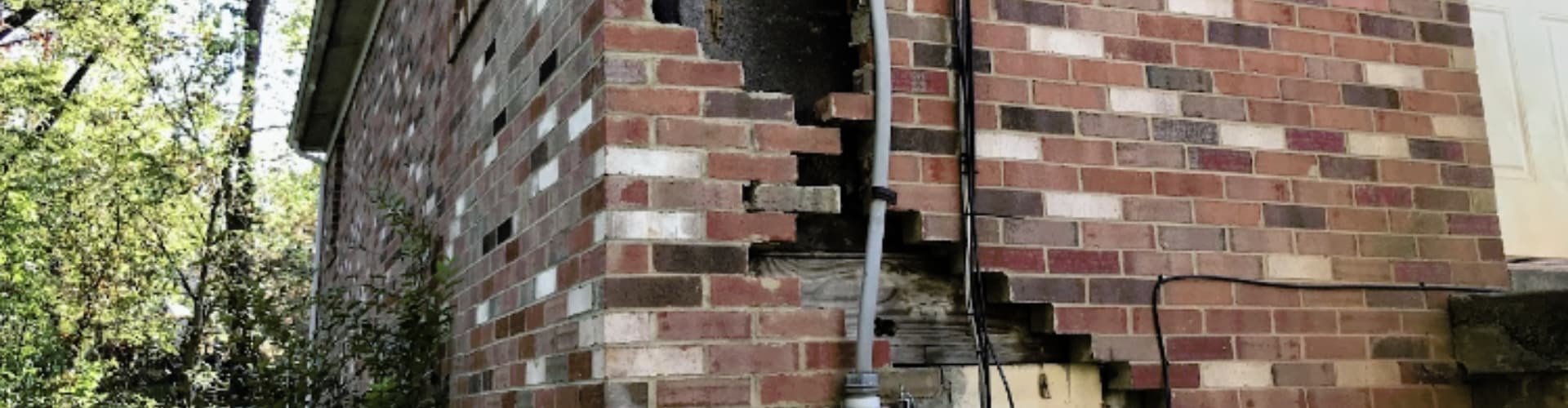
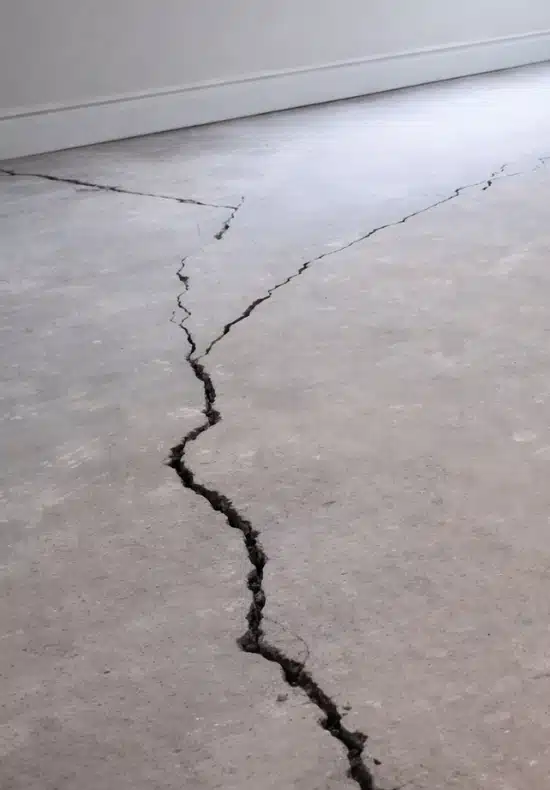
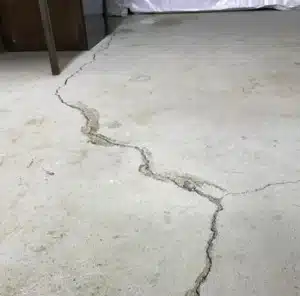
Basement floor cracks appear in different forms: hairline, diagonal, horizontal, stair-step, and spiderweb patterns.
Hairline cracks under 1/16 inch wide typically form as concrete shrinks during curing. They are common and rarely structural.”Cracks wider than 1/4 inch, cracks with one side higher than the other, or cracks that are actively growing signal foundation movement that need professional attention.
In Northern Virginia and the Shenandoah Valley, clay-heavy soils and seasonal freeze-thaw cycles create the exact ground conditions that cause basement slabs to crack, settle, and shift, making it important to understand what your crack is telling you.
Do These Cracks in Basement Floor Signs Seem Familiar?
If you have cracks in your basement floor, watch for these signs that the problem may be affecting other parts of your home:
- Visible cracks such as lines, spiderweb patterns, or diagonal fractures appearing on your concrete floor surface, ranging from hairline to wide gaps.
- Uneven or sloping concrete floor sections that feel raised, sunken, or slope in one direction when walking across them.
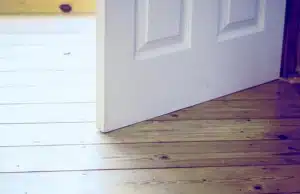
- Doors and windows that have recently become difficult to open, close, or latch properly without an obvious cause.
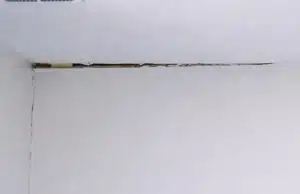
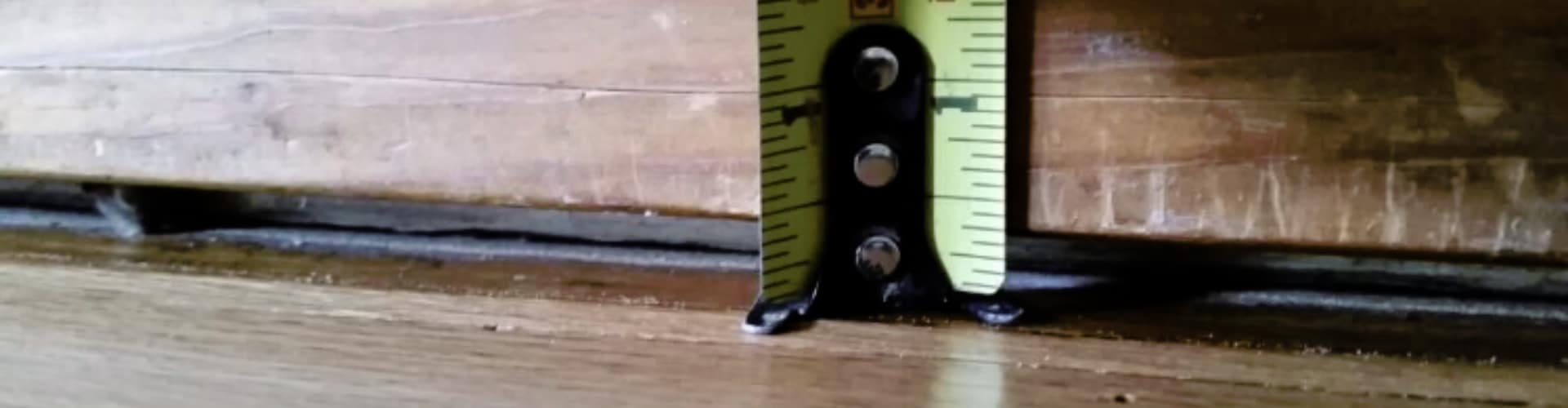
- Gaps between walls and ceilings where your basement walls meet the ceiling or floor joists above.
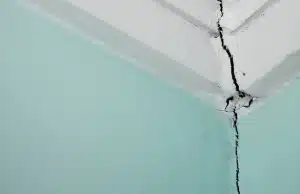
- Cracks in drywall or along window and door frames on floors above the basement.
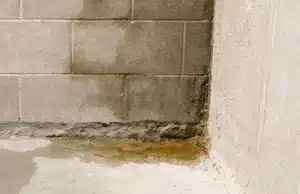
- Water seepage or damp spots appear on the floor surface or walls, especially after heavy rain or snowmelt.
Recognizing these signs early gives you the best chance of addressing the problem before it worsens. Each of these signs points to an underlying cause, and knowing the cause determines the right fix.

Visible cracks

Uneven floor

Doors and windows that stick

Gaps between walls and ceilings

Cracks in drywall or along frames

Water seepage
What Causes Cracks in Basement Floor
There are several reasons basement floor cracks develop. Here are the most common causes found in homes across Northern Virginia and surrounding regions.
Soil Settlement
When the soil beneath your foundation shifts or becomes unstable, the concrete slab above loses support and begins to crack. Uneven weight distribution accelerates the process. In Northern Virginia, clay-heavy soil that expands when wet and contracts when dry is a frequent driver of this.
Hydrostatic pressure
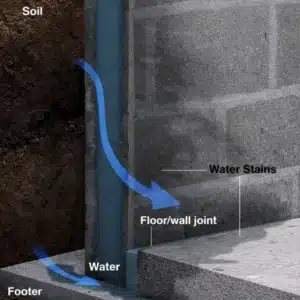
Water that accumulates in the soil around your foundation builds pressure against the slab from below. Over time, this pressure forces cracks upward through the concrete floor. Northern Virginia’s heavy seasonal rainfall makes this especially common in homes without proper drainage systems.
Poor construction
If your home’s foundation was built on improperly compacted soil or with subpar materials, cracks will more easily occur over time. Even minor environmental changes can trigger significant cracks in the basement floor. This is more common in older Northern Virginia properties built before current construction standards.
Shrinkage
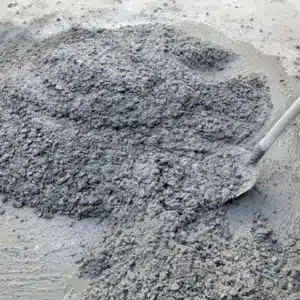
Concrete consists of two main ingredients: cement and water. Upon pouring, it gradually hardens into a solid state. Concrete naturally shrinks as moisture evaporates during curing.
A drop in temperature during curing can cause cracks, while high temperatures can dry the concrete too quickly, leading to cracking. Northern Virginia’s seasonal temperature swings make shrinkage cracking more common than in milder climates.
Frost Heave
During colder months, the soil beneath your basement slab freezes, expands, then thaws and contracts. This repeated movement shifts and cracks the concrete above. Northern Virginia’s seasonal freeze-thaw cycles make frost heave a consistent cause of basement floor cracking, particularly in homes closer to the Shenandoah Valley.
Our Solutions to Fix Cracks in Basement Floor
The right solution depends on what is causing your basement floor to crack. Here are the two most effective options LUX uses to permanently fix this problem.
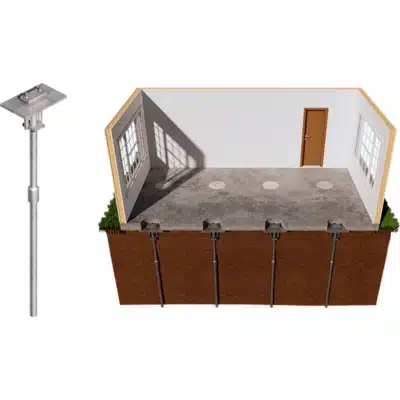
When soil settlement or shifting causes your basement slab to sink, crack, or become uneven, our slab piers installation is the permanent fix. We drive piers into stable soil beneath the slab to restore support and stop further movement. Our slab pier system addresses the root cause, not just the surface crack.
In our experience inspecting homes across Northern Virginia and the Shenandoah Valley, settlement-related floor cracks are most common in properties built on clay-heavy soil that was not adequately compacted during original construction.
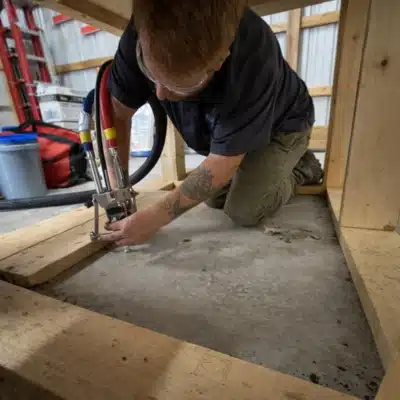
When cracks form from voids beneath the slab or minor surface fractures with no structural movement, our polyurethane foam injection is the solution. We inject the foam beneath the slab where it expands to fill voids, lifts the concrete back to level, and seals the crack from further water infiltration.
Across Northern Virginia, where hydrostatic pressure and seasonal moisture are the most frequent drivers of subslab voids, our polyurethane foam method gets the job done in a single visit with minimal disruption to your home, preventing further water infiltration in your finished living space.
Stop Basement Floor Cracks Before They Become Foundation Damage
The longer basement floor cracks go unaddressed, the more expensive they become to fix. Our team has seen this pattern repeatedly across Northern Virginia. What starts as a minor crack becomes a settlement problem that costs significantly more to repair once the damage spreads.
During our free on-site assessment, our team inspects the size, pattern, and location of your cracks, identifies the underlying cause, and gives you a clear written repair plan before any work begins. No obligation, no pressure.
LUX Foundation Solutions provides basement floor crack assessments and repairs across Northern Virginia, Shenandoah Valley, North Central Virginia, and West Virginia.
Call 540-508-8982 or fill out our online estimate form to schedule your free assessment today.
Request a free Estimate
About the Author

Bridget Stieb
Bridget is the Director of Marketing at Lux Foundation Solutions, bringing firsthand knowledge of the foundation repair, basement waterproofing, crawl space repair, concrete repair, and seawall needs of homeowners across Northern Virginia, the Shenandoah Valley, North Central Virginia, West Virginia, and Florida. She works closely with structural repair specialists to translate real-world inspection and repair data into homeowner guidance on foundation, basement, crawl space, and concrete issues. With a deep understanding of local homeowner concerns in both regions, she is committed to delivering clear, trustworthy content that helps families protect their homes. When she is not working on a marketing strategy, Bridget enjoys spending time with her family, friends and being outdoors.
Cracks in Basement Floor FAQ’s
Some are. Hairline cracks under 1/16 inch wide are common in concrete floors and typically result from normal shrinkage during curing. They are rarely structural. What is not normal are cracks wider than 1/4 inch, cracks where one side sits higher than the other, horizontal cracks, or any crack that is actively growing. Those patterns signal foundation movement that needs professional evaluation.
You should take action when cracks are wider than 1/4 inch, when one side of the crack is higher than the other, when you notice water seeping through the crack after rain, or when the crack is visibly growing over weeks. Diagonal cracks running from corners and stair-step patterns are also warning signs of foundation settlement that should not be ignored.
Not always. Hairline and shrinkage cracks are common and rarely indicate a structural issue. However, cracks accompanied by uneven floors, sticking doors or windows, gaps between ceilings and walls, or water intrusion point to something more serious beneath the surface. The size, pattern, and location of the crack and whether other symptoms are present determine whether you are dealing with a foundation problem.
Yes. Even small cracks in the basement floor can allow water to seep in, accelerating damage to the slab and the soil beneath it. Left unaddressed, small cracks widen over time as soil movement and seasonal pressure continue.
Repairing cracks early is always less expensive than addressing the foundation damage that results from ignoring them. A professional assessment determines which repair method is appropriate for your specific crack.
When basement floor cracks are ignored, water can seep through the slab and saturate the soil beneath, causing the ground to shift and settle further. As that movement continues, existing cracks often widen while new ones begin to appear.
Over time, this can cause floors to become uneven, walls to shift, and doors or windows to stick, and in more serious cases, major foundation damage. What may seem like a minor surface crack at first can turn into a much larger, more expensive foundation repair issue if left untreated.