Published: September 28, 2023 • Updated: March 25, 2026
Basement walls bow when the soil and water pressure outside your foundation pushes harder than the wall can handle. It usually starts small with a slight lean or a crack, and without reinforcement, the pressure keeps building until the wall becomes unstable.
Bowing does not stabilize on its own. Every inch of movement reduces your repair options and increases the cost of fixing it. The earlier a bowed basement wall is reinforced, the more solutions are available and the less invasive the repair tends to be. This guide covers all six proven bowed basement wall repair methods to help you choose the right one for your home.
How To Repair A Bowed Basement Wall: 6 Effective Repair Solutions
If your basement wall is bowing, you have several repair options, depending on how severe the movement is and the access you have around your foundation. One important thing to understand before comparing methods: some repair solutions stop the wall from moving further, while others can actually pull it back toward its original position.
Here is a breakdown of all six proven methods for repairing bowed walls, with their pros, cons, and best use cases to help you choose the right solution for your situation.
| Repair Method | Bowing Severity | Corrects Bowing? | Space Required | Durability |
| Carbon Fiber Strips | Under 2 inches (minor) | No — stops movement only | No exterior access needed | 50+ years |
| Wall Anchors | 2 to 4 inches (moderate) | Yes — gradual correction | Requires yard access | 30+ years |
| Steel I-Beams | 4+ inches or limited yard access | No — stops movement only | Interior only | Long-term |
| Wall Rebar Pins | Block wall movement (any severity) | No — stabilizes in place | No exterior access needed | 25+ years |
| Helical Tiebacks | 4+ inches (severe) | Yes — immediate correction | Some exterior access needed | Long-term |
| Wall Replacement | Structural failure | Yes — complete rebuild | Full exterior excavation | Permanent |
Method 1: Carbon Fiber Strips – For Minor Bowing
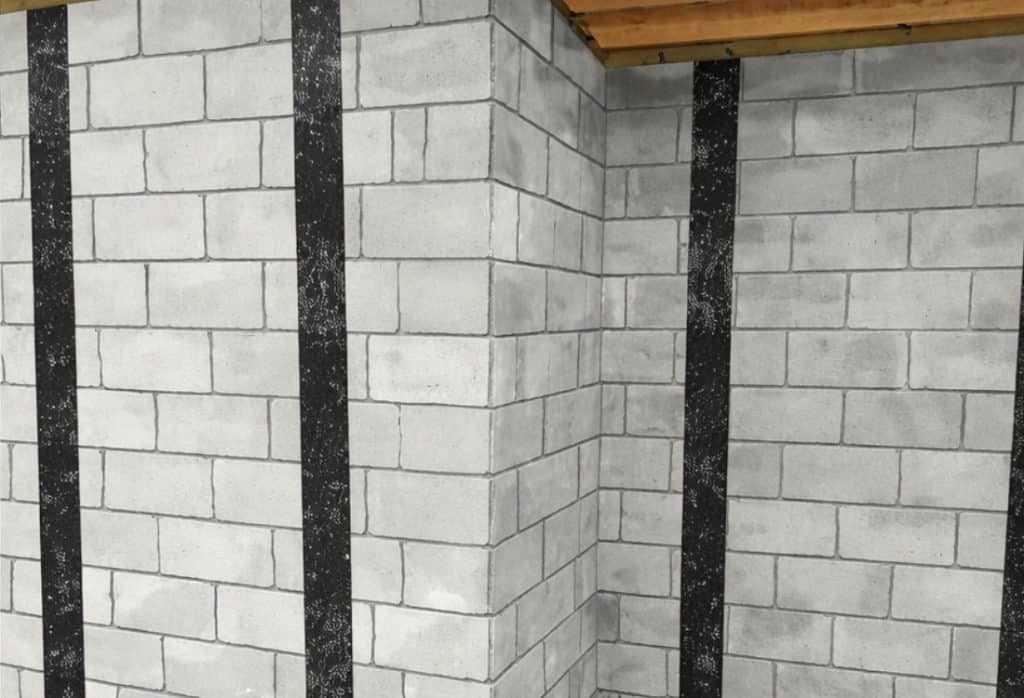
The most straightforward method for stabilizing and reinforcing bowed basement walls is to use high-strength carbon fiber straps. For small cracks or bowing less than 2 inches, this method is the fastest and most cost-effective way to reinforce the basement wall.
These high-strength strips bond directly to the block or poured concrete wall, preventing further movement without excavation or major disruption.
How It Works:
- The wall surface is cleaned and prepared.
- Epoxy resin is applied to the wall in a pattern that matches the straps.
- Carbon fiber straps are bonded vertically at 4-foot intervals along the wall.
- Epoxy cures, permanently locking the reinforcement in place.
Pros
- No excavation or disruption to the basement space
- Fast installation, most projects completed in one day.
- Paintable and low-profile once installed.
- Cost-effective for early-stage bowing.
Cons
- Prevents further movement only, does not push the wall back into position.
- Not suitable for walls bowing more than 2 inches.
Best For: Walls with minor bowing under 2 inches. Best early-intervention option before movement worsens.
Full Details: See our carbon fiber foundation repair page for full specifications and installation details.
Method 2: Wall Anchor System – For Moderate Bowing
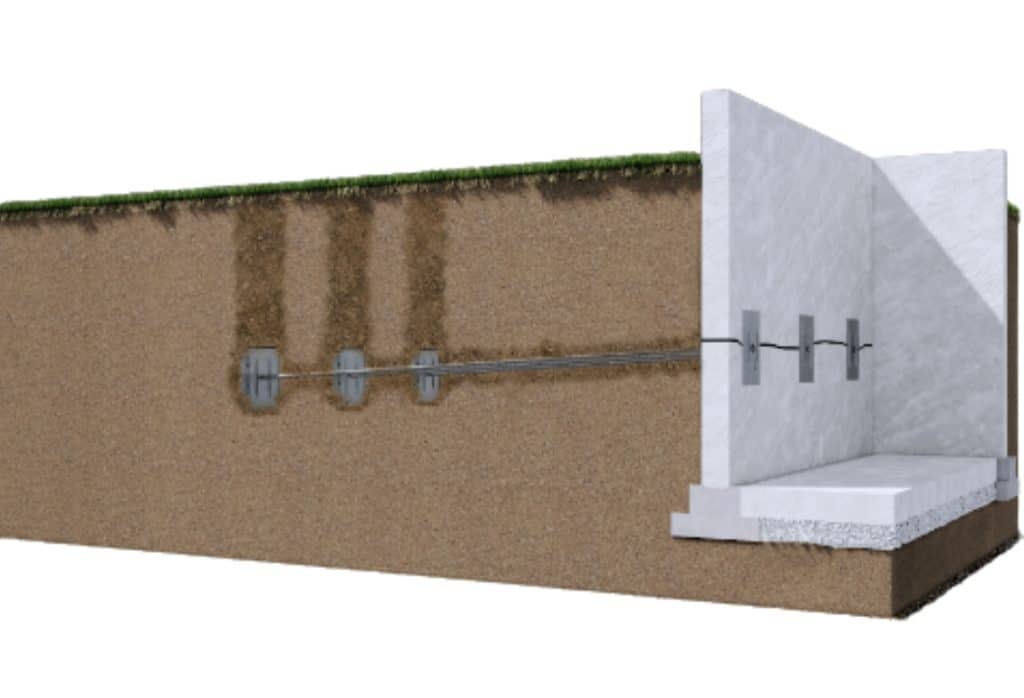
If your concrete wall bows more than 2 inches, steel wall anchors add the support needed to prevent further movement. Anchors connect your wall to stable soil outside, gradually pulling it back into alignment.
How It Works
- Small holes are drilled through the basement wall.
- Anchor and bury large steel plates in undisturbed soil at least 10 feet outside the foundation
- Steel rods connect the interior and exterior plates.
- Tension is gradually increased over time to pull the wall back into position.
Pros
- Can gradually correct existing bowing over time.
- Adjustable, tension can be increased at future service visits.
- Corrosion-resistant and long-lasting.
- Interior plate is low-profile and can be finished over.
Cons
- Requires outdoor yard space, not suitable for all properties
- Wall straightening happens gradually over several months, not right away.
- Requires periodic adjustment visits
Best For: Moderate bowing between 2 and 4 inches, with yard access available and long-term correction as the goal.
Full Details: See our wall anchors solution page for full specifications and installation details.
Method 3: Steel I-Beams – For Severe Bowing or Limited Yard Access
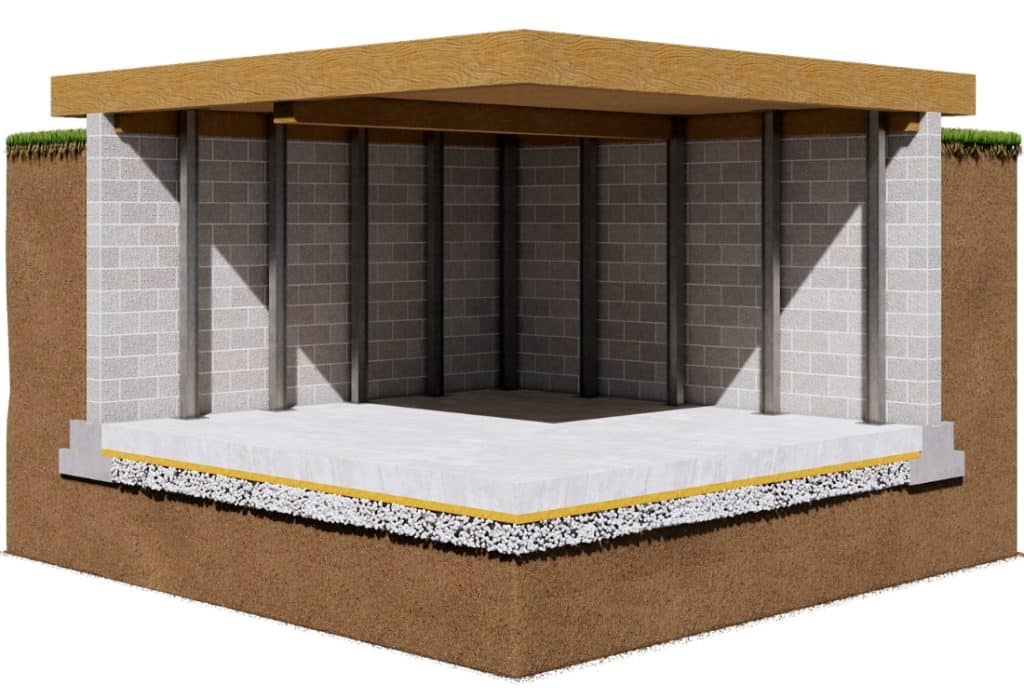
When excavation is not possible, steel I-beams are used to reinforce and support the bowed basement wall, providing structural strength from the inside. They brace the wall vertically, preventing collapse and redistributing pressure.
They are spaced at intervals of about 4 feet. This spacing ensures that the wall receives even support along its entire length for basement wall reinforcement.
How It Works
- I-beams are measured and cut to fit the wall height.
- Beams are positioned vertically along the bowed wall at 4-foot intervals.
- Each beam is secured to the floor joist above and anchored to the basement floor below.
Pros
- Works without exterior yard access.
- Immediate stabilization on the day of installation.
- Suitable for poured concrete, block, and brick foundations.
- Lifetime transferable warranty.
- Only 4 inches from the wall, easy to frame and conceal.
Cons
- Does not correct existing bowing, stops movement only.
- Steel beams occupy some interior wall space.
Best For: Severe bowing over 4 inches, or any bowing situation where yard access is limited.
Full Details: See our steel I-beam solution page for full specifications and installation details.
Method 4: Wall Rebar Pins – Cost-Effective Reinforcement
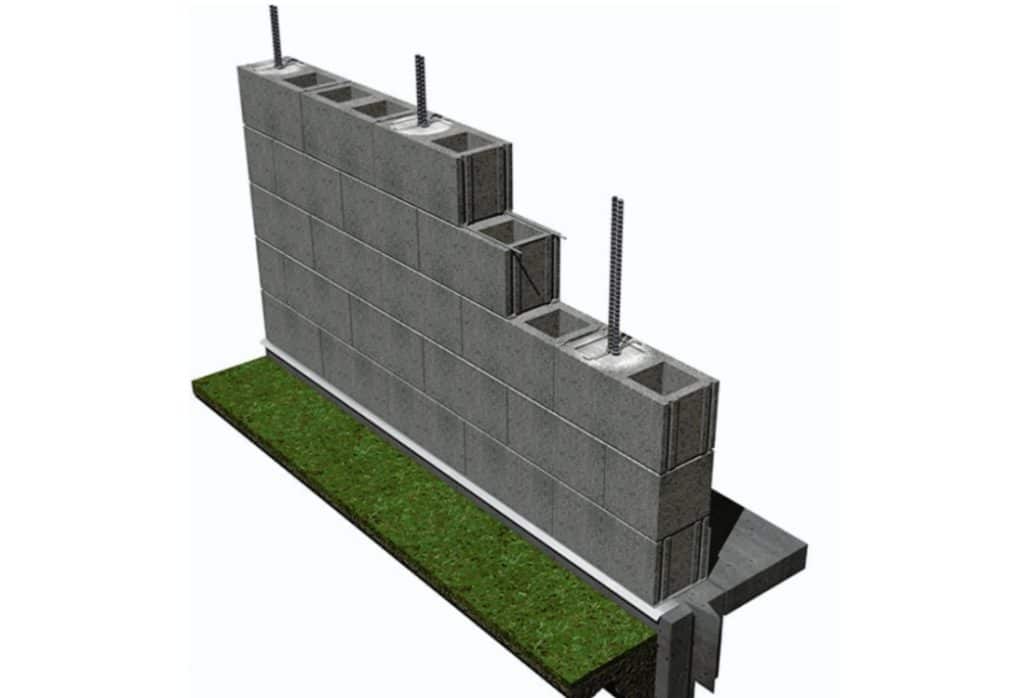
Wall rebar pin installation is a unique technique for addressing basement wall bowing, using rebar (reinforcing steel) and non-shrink grout or concrete to strengthen and stabilize a bowed wall. This technique is effective for stabilizing block walls and for long-term wall anchoring.
How It Works
- The foundation is inspected to identify the blocks where reinforcement is needed.
- Holes are drilled into the concrete or cinder blocks at calculated points.
- Rebar pins are inserted and secured with non-shrink grout, locking the wall solid.
Pros
- Cost-effective compared to anchor or tieback systems.
- Non-intrusive, no loss of basement floor space.
- Addresses bowing, leaning, and shearing in block walls.
- Meets or exceeds modern building codes.
Cons
- Designed specifically for block walls, it is less applicable to poured concrete.
- Stabilizes the wall in its current position, does not correct existing bowing.
Best For: Concrete block basement walls experiencing bowing, leaning, or shearing.
Full Details: See our wall rebar pins solution page for full specifications and installation details.
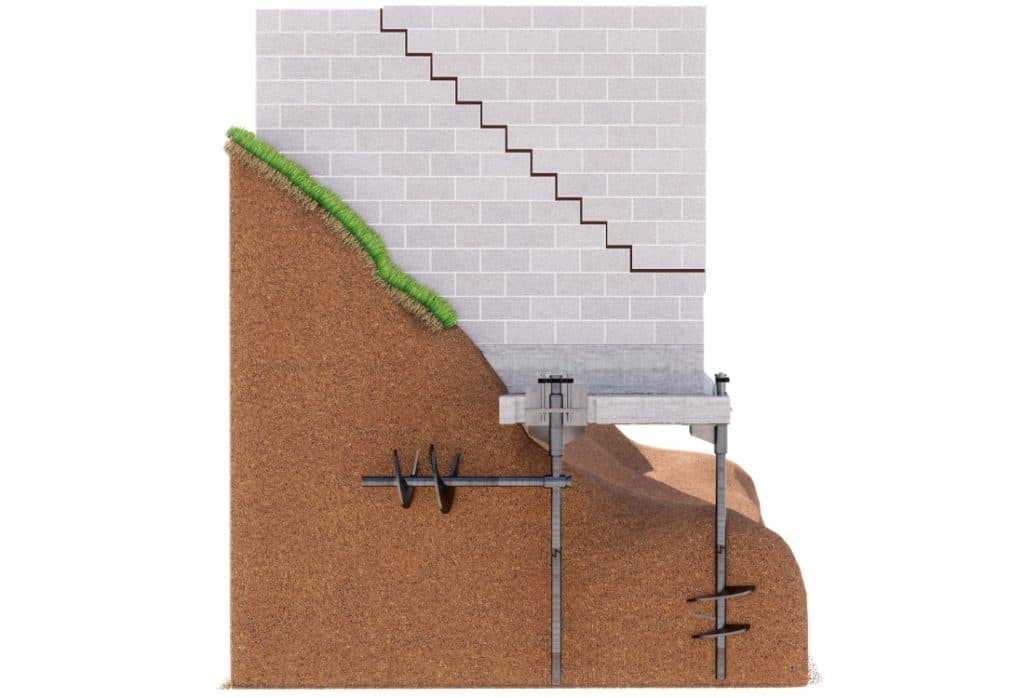
Method 5: Helical Tieback Anchors – Deep Structural Reinforcement
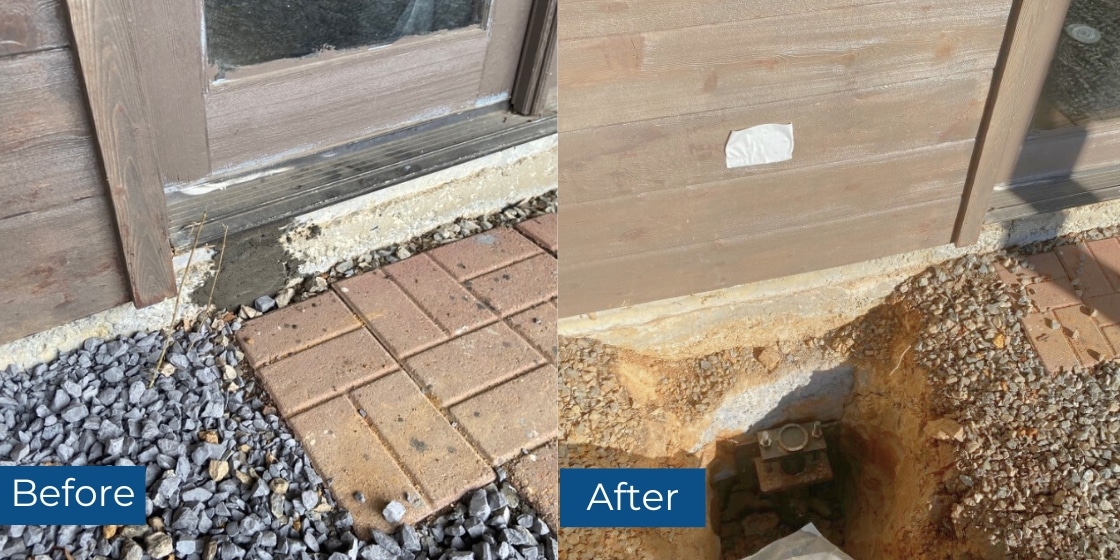
For extreme pressure or retaining wall failure, helical tiebacks provide heavy-duty stability. Installed at an angle into surrounding soil, they anchor your wall back into position — with minimal yard disruption.
Helical Tieback Anchors are the most comprehensive option for addressing severe basement wall bowing, yet they are also the least intrusive and most invisible.
How It Works
- Holes are drilled downward through the basement wall at an angle.
- Helical tieback anchors are driven through the wall and into stable soil using specialized equipment.
- Interior plates are attached and tensioned to pull the wall and stabilize it.
Pros
- Can provide immediate structural correction, not just stabilization.
- Completely hidden below grade once installed.
- Minimal disturbance to lawn and landscaping.
- Suitable for heavy structural loads.
- Year-round installation possible.
Cons
- Requires specialized equipment for installation.
- Higher cost than carbon fiber or wall pins.
- Some exterior access is still required for drilling.
Best For: Severe bowing or retaining wall situations where immediate correction is needed and a discreet installation is preferred.
Full Details: See our helical tiebacks solution page for full specifications and installation details.
Method 6: Foundation Wall Replacement – For Collapsed or Unsafe Walls
In rare, severe cases, a complete wall replacement is the safest and most permanent solution for basement wall stabilization. This involves rebuilding the damaged section with new, reinforced materials to restore full structural integrity.
How It Works
- The damaged section of the wall is carefully removed.
- A new reinforced wall is constructed using structurally sound materials.
- The new wall is properly backfilled and waterproofed to prevent future bowing.
Pros
- Complete structural resolution, not a repair but a full rebuild.
- Includes waterproofing as part of the process.
- Permanent solution for walls beyond reinforcement.
Cons
- Most invasive and highest-cost method.
- Requires significant excavation and site preparation.
- Longer project timeline than reinforcement methods.
Best For: Walls that have reached structural failure and cannot be safely reinforced by any other method.
Full Details: See our foundation wall replacement solution page for the full process.
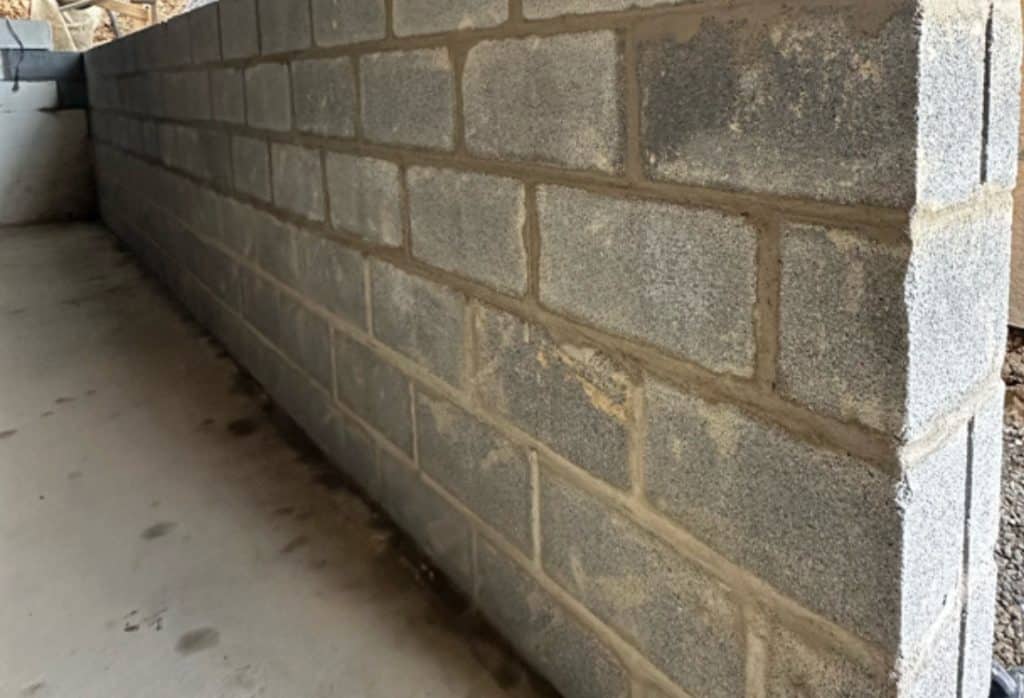
What Causes Basement Walls to Bow?
Understanding what causes basement walls to bow helps you recognize when early intervention is possible and how to protect your foundation going forward.
Here are the most common causes:
- Hydrostatic pressure. Water that collects in the soil around your foundation exerts a significant outward force on your basement walls. After heavy rain or snowmelt, saturated soil can exert hundreds of pounds per square foot of pressure on an unprotected wall.
- Poor drainage or grading. Clogged gutters, downspouts aimed too close to the house, or ground that slopes toward the foundation all push water toward your walls instead of away from them. Over time, that trapped moisture increases soil pressure and accelerates wall movement.
- Expansive clay soil. Clay soils soak up water and expand when wet, pushing directly against your basement walls. In regions like Northern Virginia, where clay-heavy soils are common, this is one of the leading causes of wall movement. As the soil dries out, it pulls back, leaving gaps under and around the foundation.
- Foundation settlement. Uneven foundation settling causes cracks and weak points, making walls more vulnerable to bowing.
- Unstable or waterlogged soil. Weak soil composition or trapped moisture adds weight and pressure over time.
If you notice early signs of bowing basement walls, such as horizontal cracks, stair-step block patterns, or slight inward leaning, contact the foundation repair experts at LUX for a free assessment and to fix the walls before the damage worsens.
Get a Free Bowed Basement Wall Evaluation
The sooner a bowed basement wall is addressed, the more repair options are available and the lower the overall cost tends to be. Delaying can lead to substantial expenses, extensive damage, and even pose safety risks in the event of a collapse.
Not sure which bowed basement wall repair method your home needs? LUX Foundation Solutions provides free on-site evaluations for homeowners across Northern Virginia, the Shenandoah Valley, North Central Virginia, and West Virginia. Our experienced foundation repair contractor will assess your bowed basement walls, identify the most appropriate repair method, and explain exactly what the fix involves with no pressure and no surprises.
Contact us at 540-508-8587 or fill out our online estimate request form to schedule your free evaluation today.
FAQs About Bowed Basement Walls
Is a bowed basement wall dangerous?
Yes. The repair options for a bowing basement wall depend on how far the wall has moved. Carbon fiber strips work for minor bowing under 2 inches, wall anchors or steel I-beams address moderate to severe cases, and full wall replacement for structural failure.
Contact a foundation repair professional immediately to inspect and stabilize your bowed basement walls before the damage worsens.
Can a bowing basement wall be fixed?
Yes. A bowing basement wall can be repaired using several proven methods, depending on the severity of the movement. Options range from carbon fiber strips for minor bowing to wall anchors, steel I-beams, helical tiebacks, and full wall replacement for more serious cases.
LUX Foundation Solutions provides free evaluations to assess your wall and recommend the right bowed basement wall repair solution.
How much basement wall bowing is acceptable?
Any visible bowing in a basement wall should be taken seriously. Even minor inward movement can signal foundation stress from soil or water pressure. Always have a structural engineer or foundation expert inspect your basement to determine the right bowed basement wall repair solution before the problem grows.
Should I buy a house with bowed basement walls?
Only purchase a home with bowed basement walls after a professional inspection from a licensed foundation specialist or structural engineer. Bowed walls signal active structural stress on the foundation, and repair costs vary significantly based on severity and the required method.
A professional evaluation before purchase provides an accurate picture of the scope of bowed basement wall repair and the associated costs so that you can make an informed decision.
How much to fix bowed basement walls?
The cost of bowed basement wall repair depends on the severity of the bowing, the required repair method, the wall type, site conditions, and the extent of any additional structural damage.
Carbon fiber strip installation is generally the most affordable option, while helical tiebacks and wall replacement involve more labor and materials. Schedule a free evaluation with LUX Foundation Solutions to receive a precise estimate for your home’s condition.