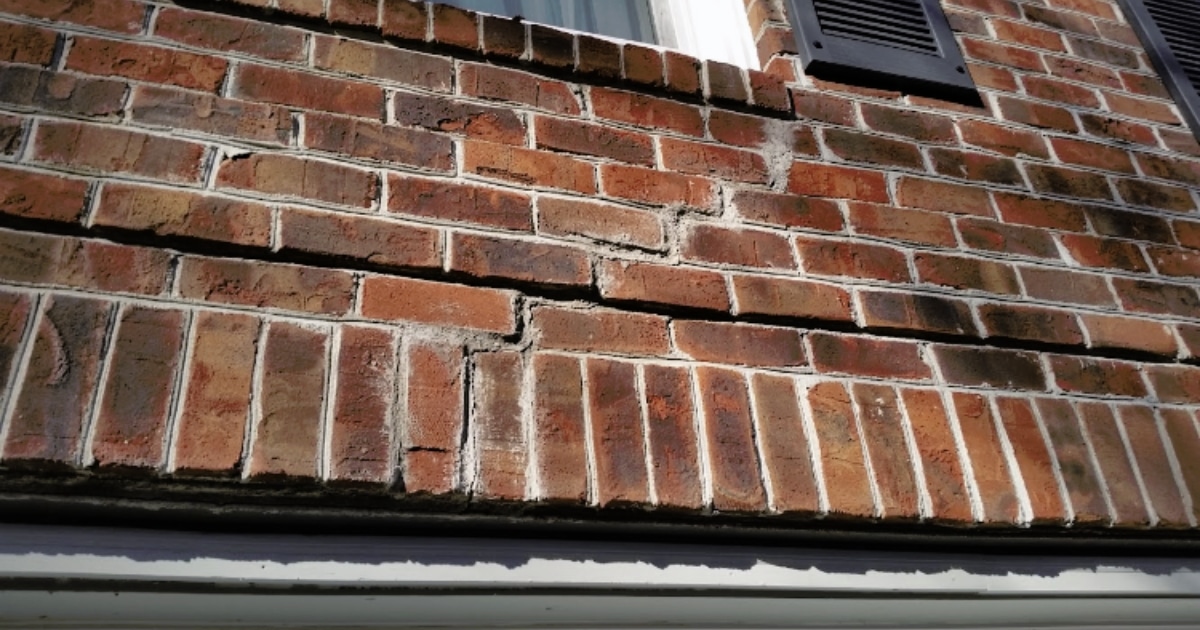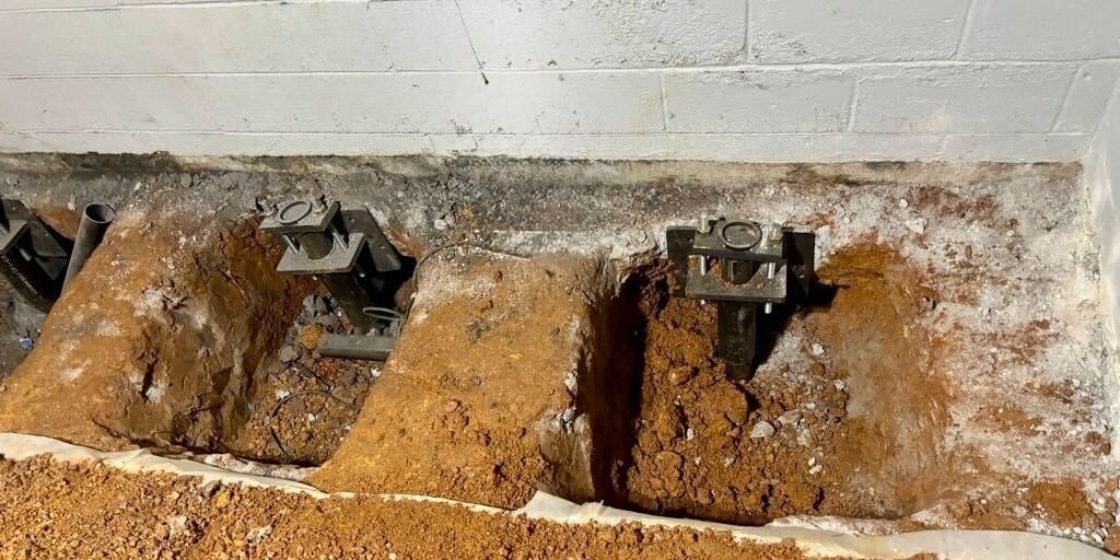
Sloping floors, sticking doors, and cracks that continue to spread can be signs of foundation settlement, and the repair you choose matters. Push piers, also called resistance piers, are steel supports driven down to reach stable soil or bedrock so your home’s weight no longer rests on weak soil near the surface.
This guide walks through the five benefits of push piers, the Northern Virginia homes they fit best, and the cases where a different repair is needed. By the end, you will know whether push piers suit your home and what to weigh before you call a contractor.
Key Takeaways
- Push piers can stabilize a settled foundation and often lift it back toward level, depending on your home.
- They anchor your home to stable soil or bedrock below the layer causing the problem.
- Installation needs minimal digging and works in tight spaces, with less disruption to your yard.
- A documented repair can help protect your home’s value when you sell.
- Wall cracks and bowing walls usually need a different repair, such as wall anchors or carbon fiber.
Which Homes Are a Good Fit for Push Piers?
Push piers work best when a few conditions line up. If your home matches the three below, they are worth a serious look.
- Heavy or brick homes: Push piers use your home’s weight as the force that drives the steel down. Heavier structures, such as two-story and brick homes, give the push pier system the resistance it needs to reach stable ground.
- Tight or limited access: Installation needs only small excavations at each pier location, so push piers can go where larger equipment cannot, such as narrow side yards or spots close to porches and additions.
- Stable soil deeper down: Push piers need load-bearing soil or bedrock within reach below the weak layer. In Northern Virginia, where clay soil swells and shrinks with the seasons, that deeper layer gives your foundation steadier support.
5 Benefits of Push Piers for Your Home
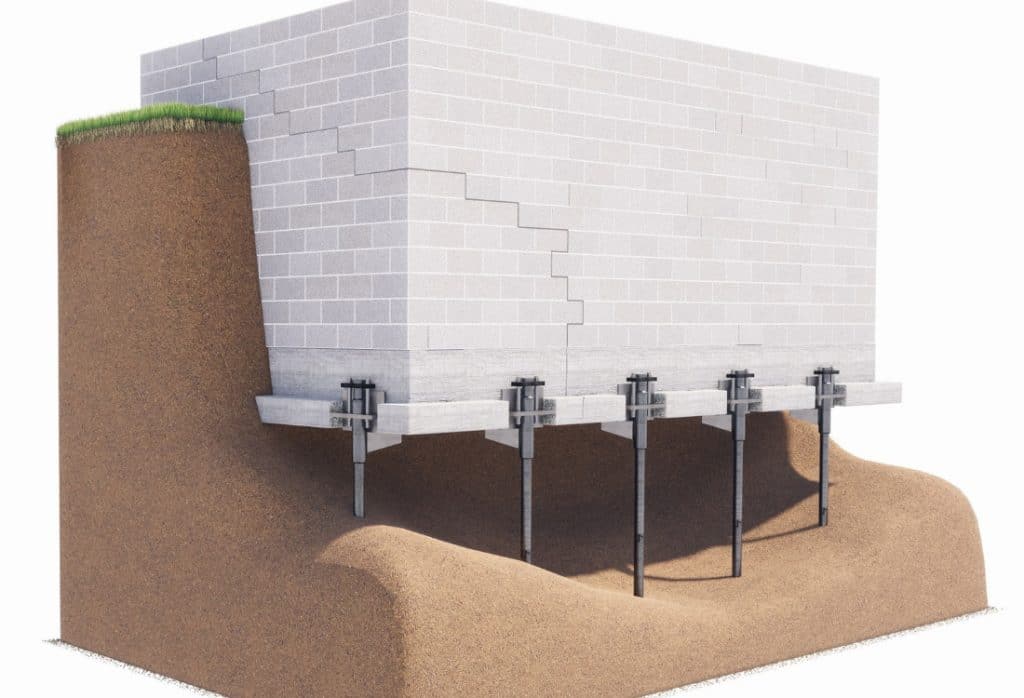
The many benefits of push piers go beyond stopping foundation settlement. Below are the five advantages push piers can offer your Northern Virginia home when you compare foundation repair options. Results depend on your soil and the installation, so an inspection confirms what applies to your home.
1. Stabilizes Foundation Settlement and Can Lift Your Home
Foundation settlement usually does not stop on its own. When part of the foundation rests on soil that cannot support its load, it may continue to sink, leading to further damage and costly repairs, from cracks and sticking doors to sloping floors. Push piers transfer that load to steel supports resting on stable ground, so the foundation can stop moving.
Lifting is an optional step. Hydraulic equipment can raise a settled section back toward its original position, but how much lift is possible depends on how long the settlement has been going on and the condition of the structure. An inspection shows how much lift, if any, to expect for your home.
2. Reaches Load-Bearing Soil or Bedrock Below Weak Soil
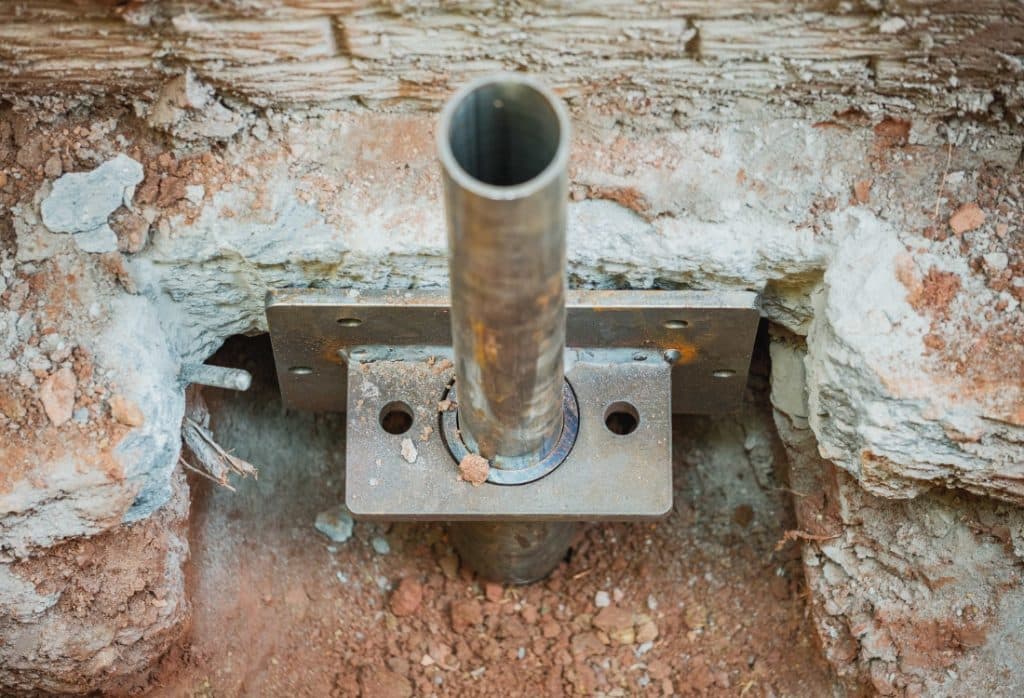
Push piers are driven down through the weak soil under your footing until the tip meets firm, load-bearing ground or bedrock. From there, the pier carries your home’s weight mainly at its tip, so the foundation no longer has to rely on the soil that was moving.
That matters in Virginia, where soil moisture swings can do real damage. The Virginia Department of Energy explains that expansive soils change volume as their moisture changes, with effects that range from jammed doors and windows to ruptured foundations. Piers that bypass that layer are far less exposed to those swings.
The system also works with poured concrete, block, and brick foundations.
3. Installs With Minimal Excavation in Tight Spaces
Push piers go in at specific points along the foundation, not along the whole perimeter. Crews dig a small access area at each pier location to expose the footing, attach the bracket, and drive the pier down. Depending on the home, the work can be done from outside or from inside the structure.
Because the digging stays small, your lawn and landscaping take less of a hit than they would with repairs that need heavy equipment or extensive excavation. The access areas are filled in when the work is done. It is typically a shorter, cleaner project, though some temporary disturbance around each pier is normal.
4. Verifies Pier Capacity Through Load Testing
The soil under a house cannot be seen, so the question behind every pier is whether it is actually sitting on something solid. Push piers answer that during installation. Because they are driven with hydraulic force, the installer can test each pier and verify it has reached firm load bearing strata or rock that can carry the design load.
That gives you a measured result for each pier. When you compare contractors, ask what load each pier was driven to and whether you will get the installation records.
5. Helps Protect Your Home’s Resale Value
Foundation problems often become an issue when a home is put up for sale. Buyers may notice sloping floors and cracks, while home inspectors may include them in their reports, potentially leading to renegotiation or delays in the sale. After a push pier repair, you have documentation showing what work was completed, where the piers were installed, and what was checked during installation.
Keep the paperwork. Installation records, inspection reports, and warranty details can show the next buyer that the problem was addressed. If available, a transferable warranty can provide additional reassurance. A repair does not guarantee a higher sale price, but it can remove a concern that might otherwise affect the sale
Are Push Piers Suitable for All Types of Homes?
No. Push piers solve one specific problem, a foundation sinking into weak soil, so other methods may be the better match in these cases:
- Walls that bow or crack from soil pressure: Pressure pushing inward on a basement wall is a different problem from settlement. Wall anchors or carbon fiber straps are usually the better fit.
- Lighter structures: Push piers need the weight of the building to drive them down. A lightweight structure, such as a small addition, may not provide enough resistance, and helical piers, which are screwed into the ground, are often used instead.
- New construction: Push piers repair existing foundations, so new builds on weak soil more often use helical piers.
An inspection sorts out which cause you are dealing with, and some homes need more than one repair. If you are weighing push piers against helical piers, our helical piers guide explains how they work and when they fit.
Discuss Push Piers Options with an Expert
Steel push piers stabilize a settling foundation by carrying your home’s weight down to stable ground, with minimal excavation and a load test on every pier. Done right, that gives you a repair you can document, which also helps when you sell. They are not the answer to all foundation issues, though, and the right choice depends on your soil, your foundation, and what is causing the movement.
If you need foundation repair in Northern Virginia, LUX Foundation Solutions offers free inspections to see which repair fits your home. Contact us to talk with our team about your push pier questions.
Frequently Asked Questions
Are push piers worth it?
They can be when the problem is foundation settlement, and stable ground is within reach below your home. Push piers offer a way to stabilize the foundation by reaching stable ground, and each pier can be load tested during installation. Whether they are a cost effective choice for your home depends on what is causing the movement, so get an inspection and a written estimate before you decide.
How long do push piers last?
Push piers use high-strength steel with a coating that helps protect them from corrosion and are designed to last for decades, often for the life of the home. Actual lifespan depends on soil types and the quality of the installation process, so ask your contractor what warranty comes with the work.
Are push piers the same as resistance piers?
Yes. Resistance piers are another name for push piers. The name comes from how they work: the pier is driven down against the structure’s weight until it meets firm soil or rock. Helical piers are a different product, installed by screwing them into the ground.
Can push piers be installed on brick or block foundations?
Yes. Push piers work with poured concrete, block, and brick foundations. Steel brackets attach to the footing, so the state of the footing and the soil conditions beneath it matter more than the wall material. An inspection confirms whether your foundation is a good candidate.
Can I buy push piers and install them myself?
Push piers are engineered systems, and installing push piers is generally done by trained contractors, with hydraulic equipment and a way to verify each pier has reached firm ground at the required depth. If you are comparing providers, ask about licensing, installation records, and warranty.
Will push piers lift my foundation back to level?
Sometimes. Stabilizing the foundation is the main goal, and lifting is an optional step that depends on how long the settlement has been happening and the condition of the structure. An inspection shows how much lift, if any, to expect.