If you have noticed cracks in your walls, sticking doors, or floors that feel uneven, clay soil may be affecting your foundation. Clay soil is the most common cause of foundation movement in Virginia. Its tendency to swell when it gets wet and shrink when it dries puts your foundation under steady, ongoing pressure.
The most effective way to stabilize a foundation on clay soil is to bypass the clay layer entirely. Push piers are steel supports that are hydraulically driven deep into the ground until they reach solid, load-bearing soil or bedrock. This permanently transfers your foundation’s weight to stable ground, preventing further movement.
This guide explains how clay soil damages your foundation, what signs to watch for, and how push piers solve the problem permanently.
What is Clay Soil and How Does It Affect Your Foundation?
The relationship between clay soil and foundation instability is one of the most common problems Virginia homeowners face. Clay soil absorbs water easily, swelling when wet and shrinking when dry. This repeated cycle pushes against your foundation walls from below, then pulls away, leaving voids beneath the foundation that cause it to settle unevenly.
This shrink-swell cycle, repeated season after season, is what makes clay soil so damaging to residential foundations in Northern Virginia. Over time, even a well-built foundation can begin to crack, tilt, or sink under the cumulative stress of clay soil movement. For a deeper look at how Virginia’s clay soils behave and why they are particularly problematic, see our complete guide to expansive soil.
Signs Your Foundation May Be Affected by Clay Soil
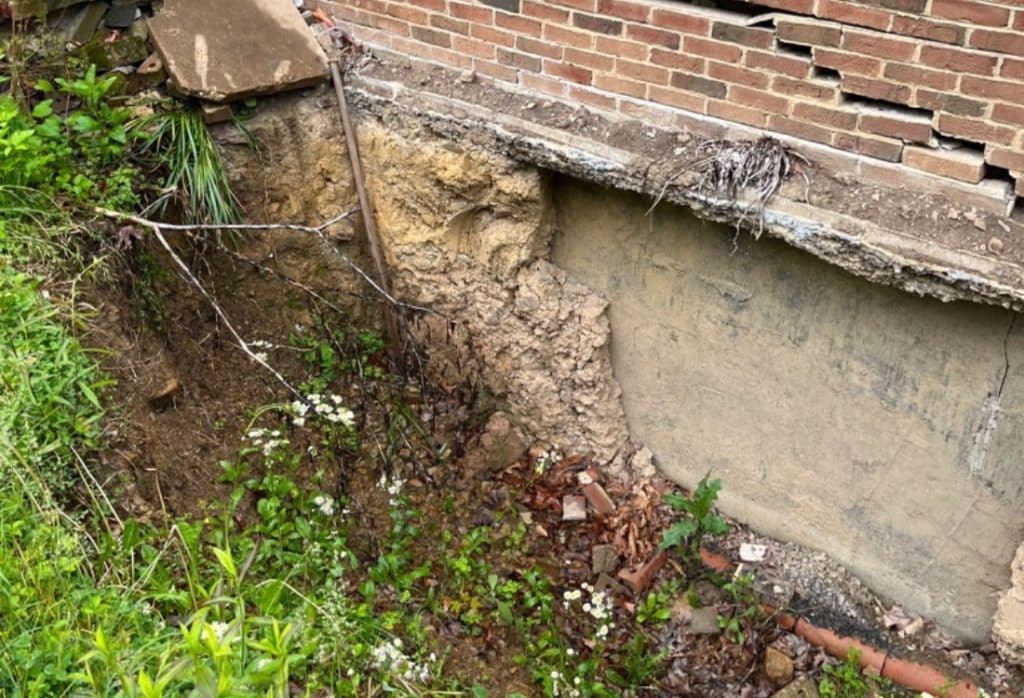
Clay soil foundation issues often develop gradually, which means homeowners may notice small symptoms for months or years before realizing they point to a foundation problem. In some cases, bowing or leaning walls may also develop, eventually requiring wall stabilization for foundations affected by lateral clay soil pressure.
Here are the most common signs that clay soil foundation problems may be present:
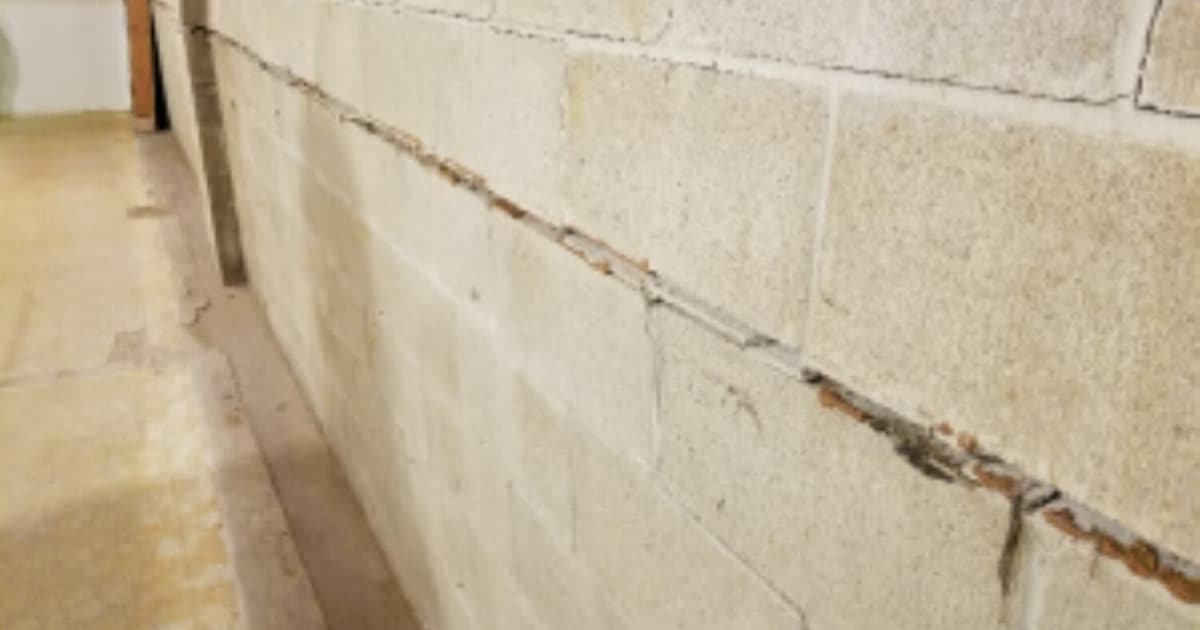
- Diagonal or stair-step cracks in walls or floors near corners and door frames often indicate uneven foundation movement due to clay soil.
- Difficulty operating doors or windows, including sticking or misalignment, often indicates frame displacement resulting from underlying foundation movement.
- Gaps developing along wall edges where they meet the ceiling or floor suggest structural components are separating as the foundation shifts.
- Water pooling around the foundation perimeter after rain accelerates clay soil movement and is an early warning sign of foundation stress.
If you notice one or more of these symptoms, especially if they are worsening or occurring together, your foundation may be experiencing clay-soil-related movement that warrants professional evaluation. For a complete overview of warning signs, see our complete foundation problem signs.
How Push Piers Stabilize a Foundation on Clay Soil
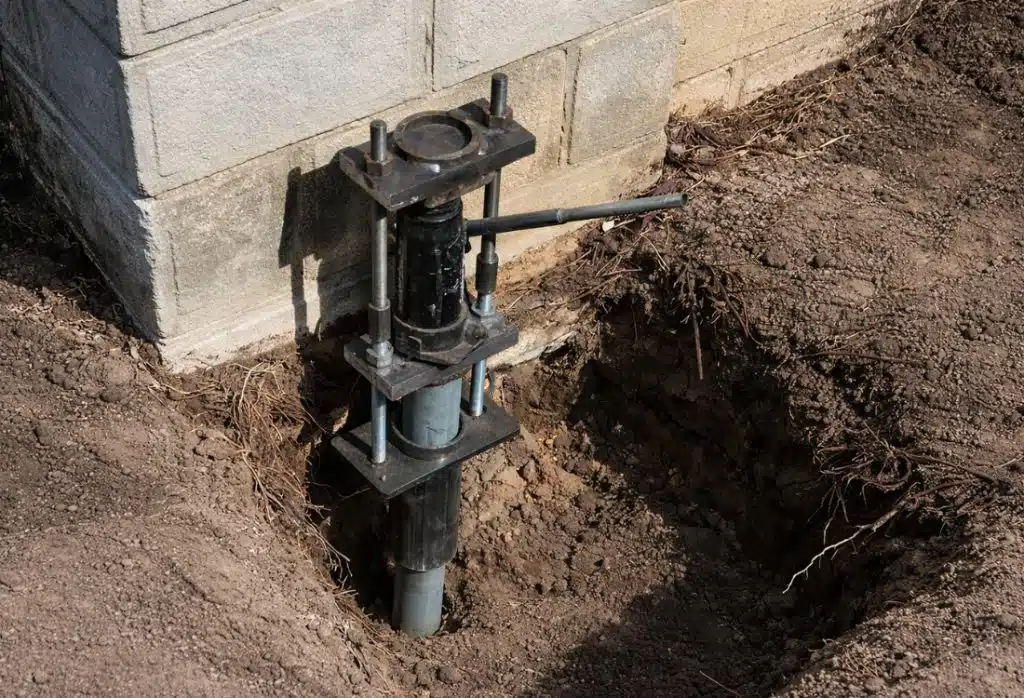
To stabilize a foundation on clay soil, it needs to move past the clay entirely rather than be reinforced against it. Push piers do exactly that.
Push piers, also called resistance piers, are heavy-duty steel tubes driven hydraulically deep past the unstable clay layer until they reach load-bearing soil strata or bedrock. Steel brackets then connect the piers to your foundation footing, transferring your home’s weight from the shifting clay to the solid ground beneath it.
This permanently removes the foundation’s dependence on clay soil. The ground can continue to expand and contract with the seasons, but your foundation no longer moves with it. For installation details on the GripTite Push Pier System used, see how LUX push piers work.
Why Push Piers Are the Best Foundation Solution for Virginia Clay Soil
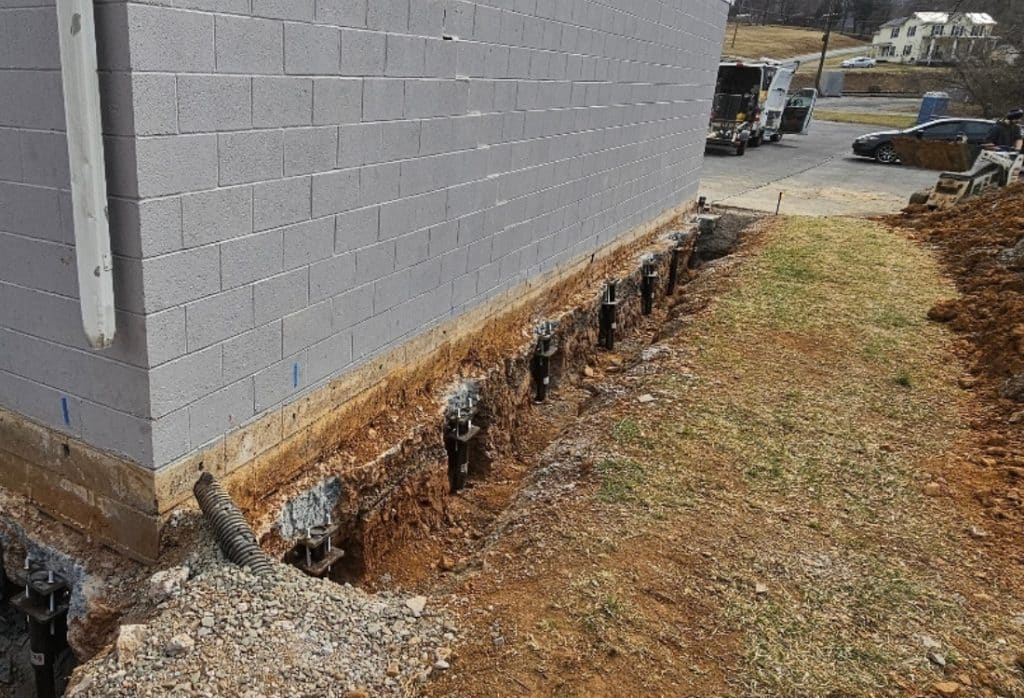
Push piers are particularly well-suited for Virginia’s clay-heavy soils because they bypass the problem entirely. Rather than reinforcing the foundation against clay soil movement, they transfer the structure’s load to stable ground well below the active clay layer. So seasonal expansion and contraction no longer affect the foundation at all.
LUX push piers are built from high-strength steel with corrosion-resistant coatings, designed to last over 125 years in typical soil conditions and backed by a warranty. Each pier is load-tested during installation to confirm its capacity.
Get a Free Foundation Evaluation From LUX
If your home is showing signs of clay soil foundation movement, a professional evaluation is the right first step. Surface repairs will not stop the underlying problem, and waiting typically leads to more extensive damage over time.
LUX Foundation Solutions provides free on-site evaluations for homeowners across Northern Virginia, the Shenandoah Valley, North Central Virginia, and West Virginia. Contact us at 540-616-3900 or fill out our online estimate request form to schedule yours today.
Frequently Asked Questions
Is push pier installation right for my foundation?
Push piers work best for existing foundations that have already settled or sunk into clay soil. They are effective for most residential foundation types, including poured concrete, block, and brick. For new-construction homes on clay soil, helical piers are typically the better option.
A free on-site evaluation is the most reliable way to confirm which solution is right for your home.
Why is clay soil problematic for foundations?
When clay soil absorbs moisture, it swells, and as it dries out, it pulls back, a cycle that puts your foundation under continuous stress through every season. That ongoing movement gradually leads to cracking, shifting, and uneven settling beneath your home.
Because Virginia experiences significant rainfall variability throughout the year, this remains a stubborn and widespread concern for homeowners across the state.
How do push piers stabilize a foundation on clay soil?
Push piers are driven past the unstable clay layer to reach solid, load-bearing ground below, and then connected to the foundation via steel brackets that permanently transfer the structure’s weight off the shifting clay.
This removes the foundation’s dependence on clay entirely. The ground can continue to move with the seasons, but your foundation no longer does.
Are push piers a permanent solution for foundation problems in clay soil?
Yes. Push piers transfer your foundation’s load to stable ground below the clay layer, so seasonal soil movement no longer affects your foundation. LUX installations come with a 25-year to lifetime warranty.
How do I know if my foundation needs push piers vs another solution?
The right solution depends on your foundation type, the extent of clay soil movement, and site conditions that only a professional evaluation can assess accurately.
LUX Foundation Solutions provides free on-site evaluations to determine the most appropriate solution for your home.
Can clay soil foundation problems be prevented?
Managing drainage through proper grading, gutters, and downspout extensions can reduce the moisture swings that cause clay soil to swell and shrink. That said, once settlement has begun, improving drainage alone is not enough to stabilize the foundation. Push piers go further by shifting the entire load of your foundation past the unstable clay and onto solid ground below.