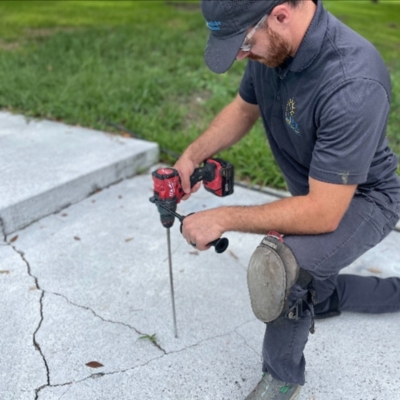
Sinking Concrete Slab
A sinking concrete slab in your basement is more than a cosmetic issue. Uneven or sunken concrete often points to soil movement, moisture problems, or loss of support beneath the slab. Identifying the cause early helps prevent further damage and costly repairs.
Sinking Concrete Slab Repair in Northern Virginia
Sinking concrete slabs result from voids and soil erosion beneath your concrete, causing sections to drop or settle unevenly. This often occurs due to clay-rich soils common in Northern Virginia, fluctuating moisture levels, and drainage issues that degrade soil stability over time.
When a sunken concrete slab occurs, it can affect how the space is used and signal deeper structural or moisture-related concerns that develop gradually and worsen over time if left unaddressed.
At LUX Foundation Solutions, we specialize in diagnosing and repairing settling concrete slabs using advanced techniques to level and stabilize your concrete floor, ensuring your home remains safe and secure.
Do These Sinking Concrete Slab Signs Look Familiar?
The symptoms
A sunken concrete slab often shows warning signs before major damage occurs. Common signs of sinking and settled concrete include:
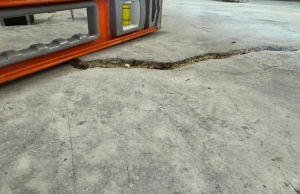
- Sunken areas or slab dips where parts of the floor sit lower than surrounding sections.
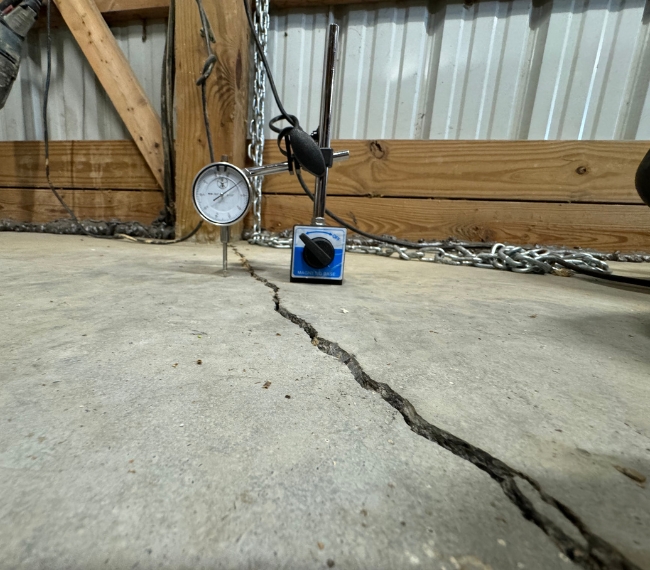
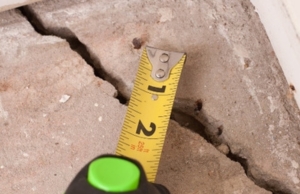
- Cracks in the concrete with visible height differences from one side to the other
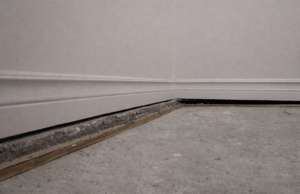
- Gaps forming between the slab and basement walls as the concrete settles downward.
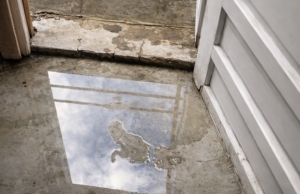
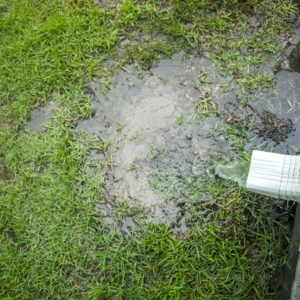
- Water collecting in low spots after rain or plumbing use.
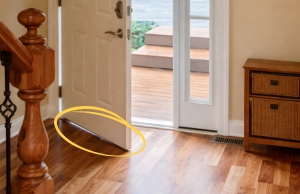
- Doors and windows in the basement are difficult to open or close because an uneven slab affects frame alignment.
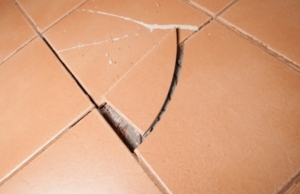
- Tiled or finished floors in the basement may buckle or pop up due to an uneven slab beneath them.
If you notice one or more of these signs, our professional evaluation can help determine whether the slab is sinking and what’s causing the movement.

Uneven or Sunken Areas

Cracks With Height Difference

Gaps Between Slab and Basement Walls

Water Collecting in Low Spots

Doors and Windows Misaligned

Buckling or Popping Finished Floors
What Causes a Concrete Slab to Sink?
Concrete slabs don’t sink on their own. Movement usually starts beneath the slab, where soil conditions or changes in moisture reduce support. Identifying the cause is critical because the right repair depends on why the slab is sinking, not just how it looks.
Soil Erosion Beneath Concrete
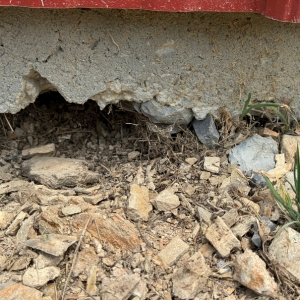
Water washing away soil beneath your concrete slab creates voids that cause the concrete to sink and settle. Poor drainage, heavy rainfall, or groundwater flow erodes the soil supporting your concrete.
As voids form and expand beneath the slab, the unsupported concrete settles downward into these spaces, creating sunken sections, concrete subsidence, and uneven concrete surfaces throughout your basement.
Poor Fill Soil Under Concrete Slab
Poorly compacted fill soil beneath your concrete slab continues compressing over time, causing the concrete to sink and settle. When construction crews use low-quality fill or fail to properly compact soil before pouring concrete, the soil settles under the concrete’s weight.
This creates voids and allows concrete sections to drop unevenly, resulting in sinking concrete, concrete subsidence, and surface irregularities.
Expansive Soils
Expansive clay soils cause problems because they swell when wet and shrink when dry, creating repeated movement beneath your concrete slab.
This constant change in soil volume creates gaps and voids as the soil contracts. When soil shrinks away from the concrete, unsupported sections sink into the spaces, causing uneven concrete settlement and sunken areas throughout your basement floor.
Freeze-Thaw Cycles
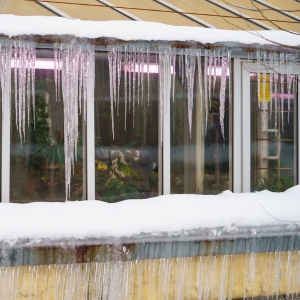
Winter freeze-thaw cycles cause soil beneath your concrete to expand when frozen and contract when thawed. This repeated expansion and contraction creates soil instability and voids beneath the slab.
Over multiple freeze-thaw seasons, these voids grow larger, allowing concrete sections to sink progressively as the supporting soil base weakens and settles unevenly beneath your basement floor.
Inadequate Drainage
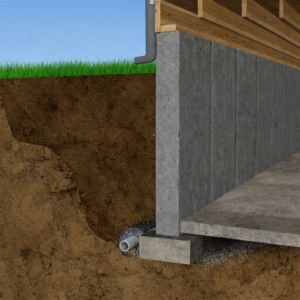
Poor drainage around your home allows water to accumulate beneath your concrete slab, eroding soil and creating voids. Without proper drainage systems, water flows under the concrete, washing away soil particles and weakening the base.
This ongoing soil erosion creates expanding voids beneath the slab, causing concrete sections to sink into unsupported areas and settle unevenly over time.
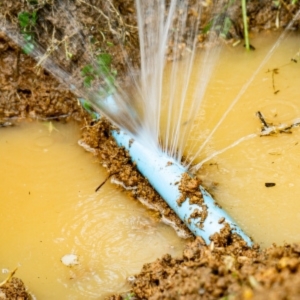
Plumbing Leaks
Undetected plumbing leaks beneath your concrete slab gradually wash away soil, creating voids and weakening support. Water from leaking pipes erodes the soil beneath your concrete, leaving gaps.
Over time, these voids cause the concrete slab to sink into the unsupported areas, creating concrete settlement, subsidence, and height differences between concrete sections in your basement.
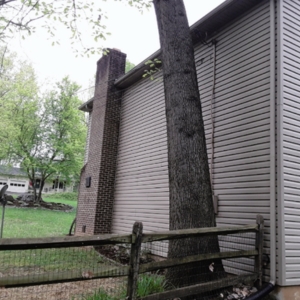
Tree Roots and Soil Disturbance
Tree roots seeking moisture can disturb soil beneath your concrete slab, creating voids or lifting pressure. As roots grow beneath concrete, they displace soil and create gaps.
When roots die or retract during dry periods, voids remain beneath the slab. This soil disturbance causes concrete sections to sink, settle unevenly, develop sunken areas, or crack due to uneven support beneath.
It’s essential to consult with professionals to accurately diagnose the cause of your uneven basement slab. We provide comprehensive inspections to identify the root cause and offer tailored solutions to address the problem effectively.
Our Solutions
A sinking concrete slab doesn’t always require the same fix. The right solution depends on why the slab is sinking, how much movement has occurred, and what’s happening below the concrete. That’s why every recommendation at LUX Foundation Solutions starts with a professional evaluation.
Below are the most common repair options we recommend based on the slab’s specific conditions.
Yes, in many cases it can.
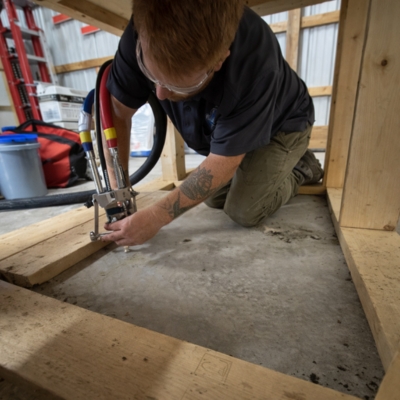
When a concrete slab has sunk due to voids, soil washout, or minor settlement, LUX often recommends polyurethane foam injection concrete repair as a minimally invasive repair option.
We inject high-density foam beneath the slab. As the foam expands, it fills voids, stabilizes the soil, and gently lifts the concrete back toward its original position.
The moisture-resistant foam ensures long-lasting stability without demolition or slab replacement.
When a slab sinks unevenly or continues to settle over time, it’s often a sign of deep soil instability or long-term loss of support beneath the concrete.
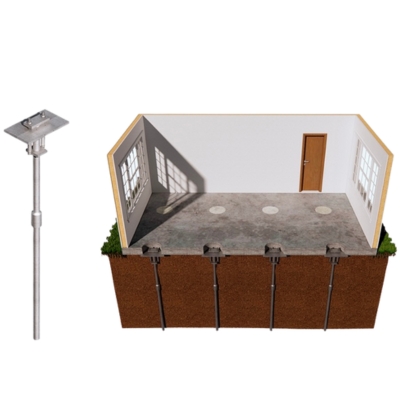
In these situations, LUX may recommend slab piers.
Slab piers are steel supports installed beneath the concrete slab and driven into stable soil or load-bearing strata. They transfer the weight of the slab away from weak soil and help stabilize areas experiencing ongoing settlement.
We typically recommend slab piers when:
- The slab has sunk significantly or unevenly.
- Soil conditions below the slab are unstable.
- Long-term structural support is needed, not just surface leveling.
Before recommending slab piers, our team evaluates soil conditions, slab movement patterns, and overall structural impact to ensure this solution is truly necessary.

Small cracks in a sinking concrete slab may seem minor, but they often allow water intrusion that accelerates soil erosion and slab movement.
In these cases, LUX may recommend professional concrete caulking as a preventative measure.
Concrete caulking involves sealing cracks and joints with flexible, high-performance Polyflex, designed to move with the slab. This helps keep moisture out and slows further deterioration.
It’s important to note:
- Concrete caulking does not level a slab.
- It works best as part of a broader repair or prevention strategy.
- It helps protect repaired or stabilized slabs from future damage.
We recommend concrete crack repair when cracks are in an early stage, and the slab remains structurally stable.
Fix Sinking Concrete Slabs - Contact LUX Foundation Solutions
A sinking concrete slab shouldn’t be ignored—it compromises safety and will worsen without professional concrete lifting and repair. LUX Foundation Solutions provides expert sunken concrete slab repair, concrete leveling, and concrete stabilization in Northern Virginia, Shenandoah Valley, North Central Virginia, and West Virginia.
Our experienced team thoroughly assesses your sinking concrete, identifies the cause of settlement, and provides customized concrete-raising solutions that deliver long-term results and protect your home.
Contact us at 540-508-8587 to schedule a free, no-obligation estimate for your sinking concrete slab repair.
Request a free Estimate
FAQ's
In Northern Virginia and surrounding areas, heavy rain can oversaturate the soil beneath a concrete slab. When water washes away or softens the soil, the slab loses support and begins to sink. Clay-rich soils and poor drainage make this issue more common.
A professional evaluation helps identify whether drainage improvements, soil stabilization, or structural concrete repair is needed.
A sinking concrete slab can become a safety concern over time. Uneven surfaces increase trip hazards, and continued settlement can place stress on foundation walls, plumbing lines, or finished flooring above.
While not every sunken slab is an emergency, ignoring it allows the problem to progress. Early evaluation helps prevent more costly structural issues later.
Replacement is not always necessary. In many cases, a sinking concrete slab can be repaired using slab piers or polyurethane foam injection, depending on the cause and severity of settlement.
At LUX Foundation Solutions, we only recommend replacement when the slab is structurally compromised beyond repair. Our goal is to restore stability using the least disruptive, long-term solution.
Fixing a sinking concrete slab starts with identifying why it’s sinking. Solutions may include stabilizing the soil, lifting the slab, or addressing drainage issues that caused the problem. Because the underlying cause isn’t always visible, repairs should be based on a professional assessment rather than guesswork.
DIY fixes may temporarily improve appearance but rarely address the root cause of slab settlement. Without proper evaluation, DIY methods can trap moisture, worsen soil instability, or delay necessary repairs. For long-term safety and performance, it’s best to have a licensed professional assess the slab and recommend the appropriate solution.
A sinking slab may or may not indicate a larger foundation issue. Signs such as wall cracks, doors that stick, or separation between the slab and foundation walls may indicate broader structural movement. A professional assessment can determine whether the problem is isolated to the concrete slab or part of a larger foundation concern.