
Posted: December 15, 2021 • Updated: February 9, 2026
A damp basement isn’t just an inconvenience—it’s a threat to your home’s structural integrity and your family’s health. If your basement feels damp, smells musty, or shows signs of water intrusion, the right drainage system matters more than you might think.
There are different types of basement drainage systems designed to control groundwater, relieve pressure around your foundation, and prevent moisture from becoming long-term structural problems. These systems are divided into two categories: interior and exterior.
Understanding the different types helps you make confident, informed decisions before damage spreads. In this guide, we break down every basement drainage system option, how they work, when to use them, and what homeowners should expect in terms of performance, cost, and long-term protection.
Why Basement Keeps Getting Wet (And Why It Won’t Stop on Its Own)
If your basement keeps getting wet, you may have tried sealing cracks, running a dehumidifier, or covering stains, only to see the problem return after the next heavy rain. That’s because basement moisture issues rarely fix themselves. Water constantly looks for the easiest path into your home.
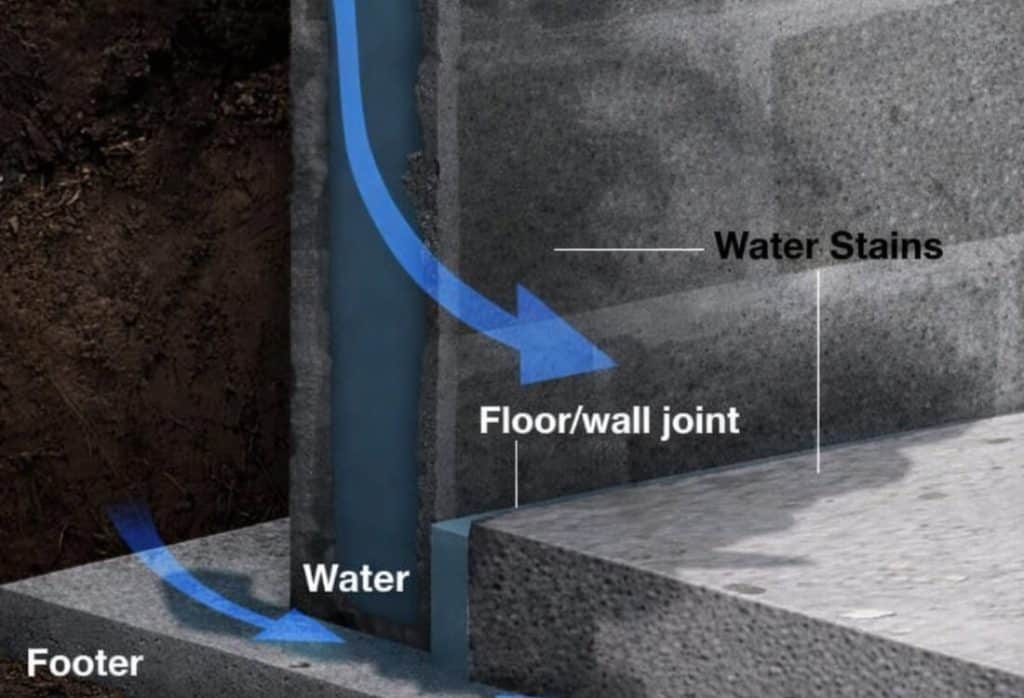
The key to a long-term solution is understanding where that water is coming from. In most homes, basement moisture is caused by one or more of the following:
- Groundwater pressure is pushing against foundation walls and floors.
- Improper yard grading that directs water toward the foundation.
- Small foundation cracks that widen over time due to temperature changes.
- Gutters or downspouts releasing roof water too close to the home.
- Naturally high water tables that keep soil around the foundation saturated.
- The wall-to-floor joint (cove joint), a common entry point for basement leaks.
Once a professional evaluation identifies the source of the water, the appropriate drainage for the basement can be selected to address the root cause rather than just manage the symptoms.
Types of Basement Drainage Systems
Not all types of basement drainage systems work the same way, and choosing the wrong one can leave moisture problems unresolved. The right system depends on how water is entering your basement, the soil conditions around your home, and whether the issue is happening inside, outside, or both.
Basement drainage systems generally fall into two main categories: interior drainage systems and exterior drainage systems. In some cases, combining both provides the most reliable long-term protection.
Below, we’ll break down the most common basement drainage options and when the LUX team typically recommends each.
Interior Basement Drainage Systems
Interior basement drainage systems are designed to manage water after it enters the basement, redirecting it safely away before it can damage floors, walls, or finished areas. Rather than stopping water at the soil, these systems control it at the point of entry.
These solutions are often recommended when water pressure is coming from below the foundation or when exterior excavation isn’t practical. These systems are common in older Northern Virginia homes built before modern waterproofing standards.
Here are the interior basement drainage options and when to use them.
1. Interior French Drain ( Basement Perimeter Drains)
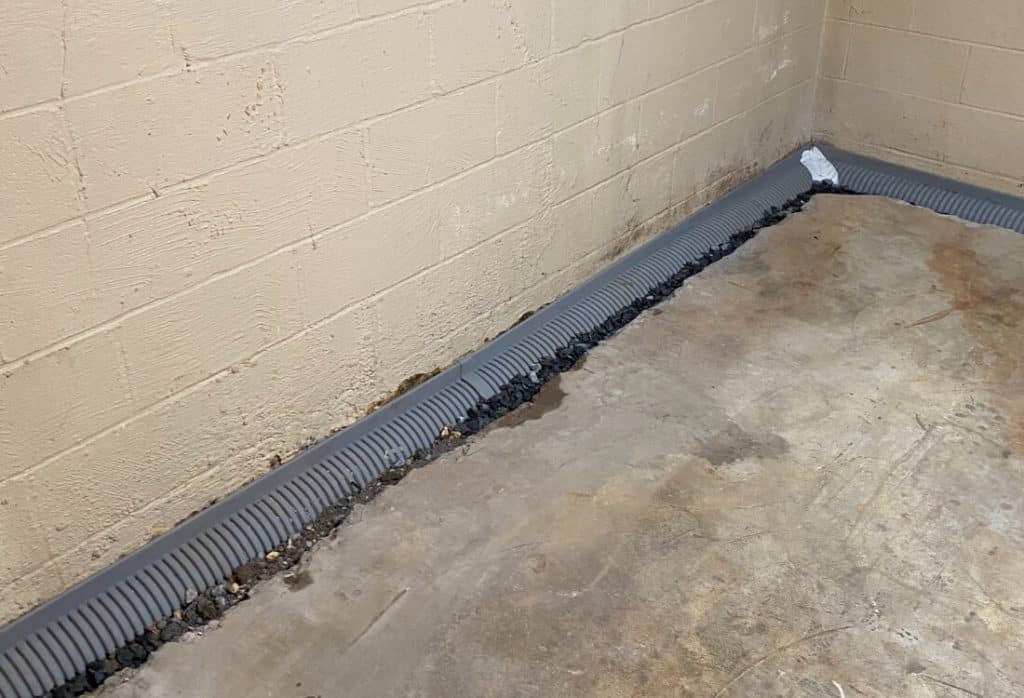
An interior French drain system, also called a perimeter drain, is installed along the inside edge of the basement floor where the wall meets the slab. This seam, known as the cove joint, is the common entry point for groundwater, especially during heavy rain or periods of high soil moisture.
Where water typically enters
- Along the cove joint where the basement wall meets the floor.
- Through small cracks caused by pressure from saturated soil.
- Up through the slab when groundwater levels rise.
How it works:
- A shallow trench is installed along the inside perimeter of the basement
- A perforated drain pipe is placed in gravel to collect groundwater
- Water is directed toward a sump pump and safely discharged away from the home
- The concrete floor is restored, leaving the system hidden but active
At LUX Foundation Solutions, we typically recommend an interior French drain when:
- Water seeps in during heavy rain or snowmelt.
- Hydrostatic pressure is pushing moisture through walls or floors.
- Exterior excavation would be disruptive or cost-prohibitive.
- Long-term moisture control is needed without cosmetic disruption.
This drainage system for the basement allows us to manage water consistently while protecting the foundation and finished spaces above.
2. Basement Sump Pump System
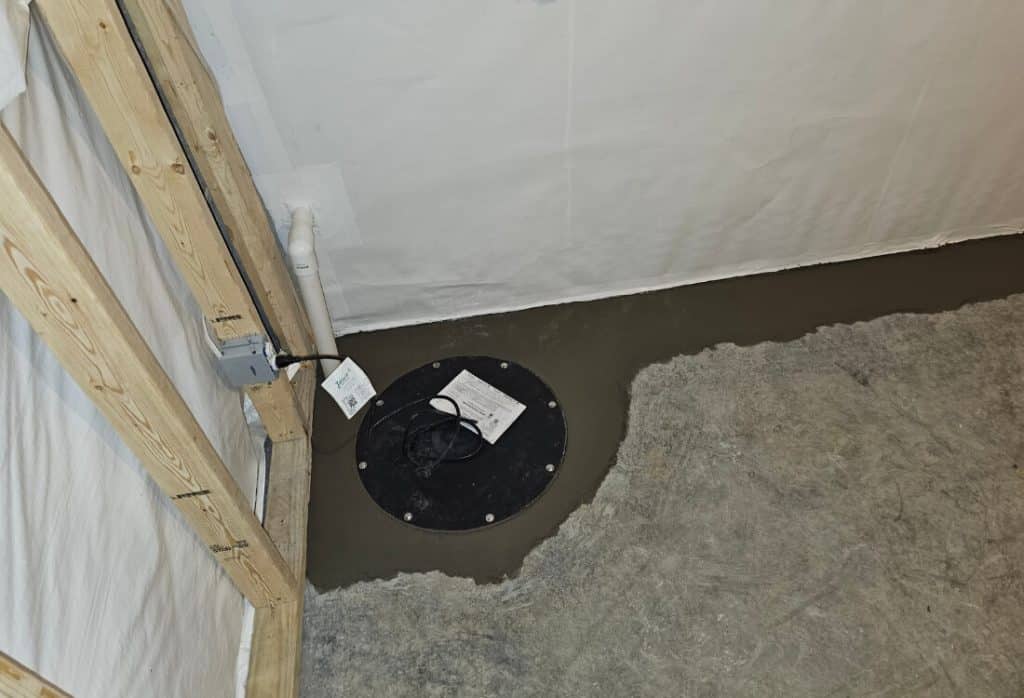
A sump pump system works alongside interior drainage to actively remove water from your basement before it can build up or spread. While drains collect groundwater, the sump pump moves the water away from the foundation.
In many Northern Virginia homes, sump pumps are essential because groundwater levels can rise quickly during heavy rain, snowmelt, or prolonged wet seasons.
How a sump pump system works:
- Water collected by interior drains flows into a sump basin installed at the lowest point of the basement.
- As the basin fills, the pump activates automatically.
- Water is discharged through a pipe that directs it safely away from the foundation.
- The system cycles on and off as needed to keep water from accumulating.
Types of sump pumps we commonly install:
- Submersible sump pumps sit inside the basin and are quieter and more discreet.
- Pedestal sump pumps keep the motor above the basin, making them easier to service.
At LUX Foundation Solutions, we typically recommend a sump pump when:
- Water intrusion is frequent or occurs during storms.
- Groundwater rises quickly around the foundation.
- Interior drainage is installed and needs an outlet.
- Basement flooding risk needs active control, not just passive drainage.
During our inspection, our team evaluates pump capacity, discharge location, and backup needs. We don’t oversize or undersize systems. We recommend options appropriate for your home, soil conditions, and risk level so your basement stays protected long-term.
3. Basement Floor Drain System
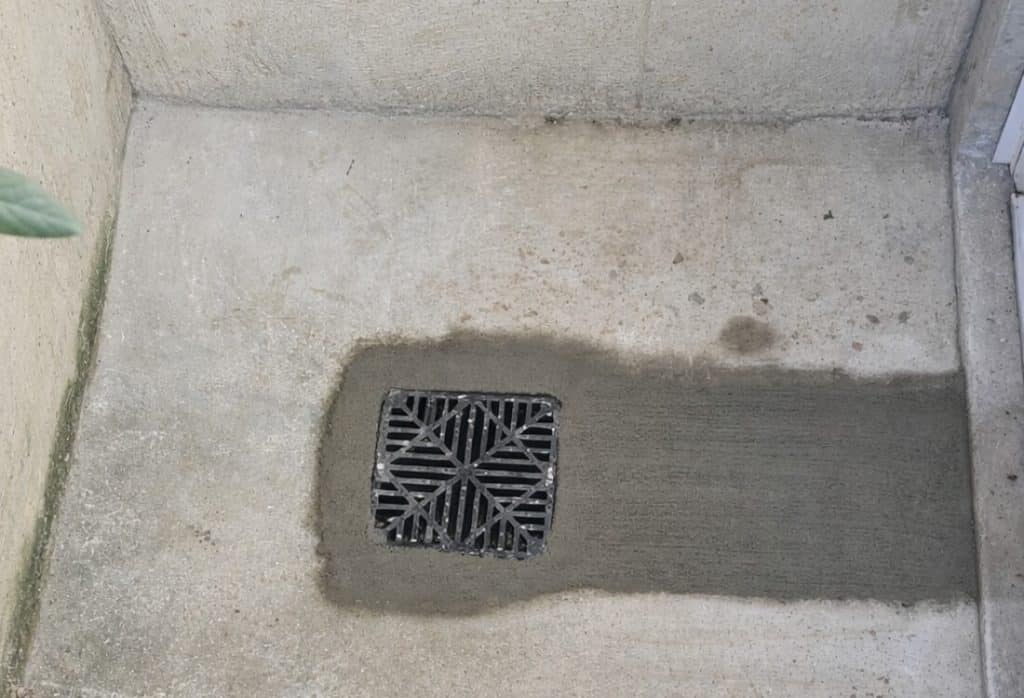
Floor drain systems are designed to manage small amounts of water that reach the basement floor and direct it into an existing drainage or sewer system. These drains are typically installed directly into the basement slab and are most effective when water issues are limited and predictable.
Unlike perimeter drains or sump pumps, a floor drain for basement doesn’t manage groundwater pressure. They work best as a secondary drainage option rather than a primary waterproofing solution.
How floor drains work:
- A drain is installed flush with the basement floor.
- Water flows naturally toward the drain by gravity.
- The drain connects to the home’s drainage or sewer line.
- Minor water events are carried away before spreading across the floor.
At LUX Foundation Solutions, we may recommend a floor drain when:
- Water intrusion is occasional and limited in volume.
- Moisture comes from appliance leaks, condensate, or minor seepage.
- The basement already has a properly functioning drain connection.
- Floor drains are being added to supplement another drainage system.
Exterior Basement Drainage Systems
Exterior basement drainage systems are designed to prevent water from reaching your foundation walls. Instead of managing water after it enters the basement, these systems prevent it from entering the basement and redirect surface runoff to the soil level.
These solutions typically recommend that when water intrusion is ongoing, excavation is feasible and long-term protection is needed. These systems work especially well for Northern Virginia homes facing heavy rainfall, clay soils, and persistent foundation wall pressure.
1. Exterior French Drain (Curtain Drain)
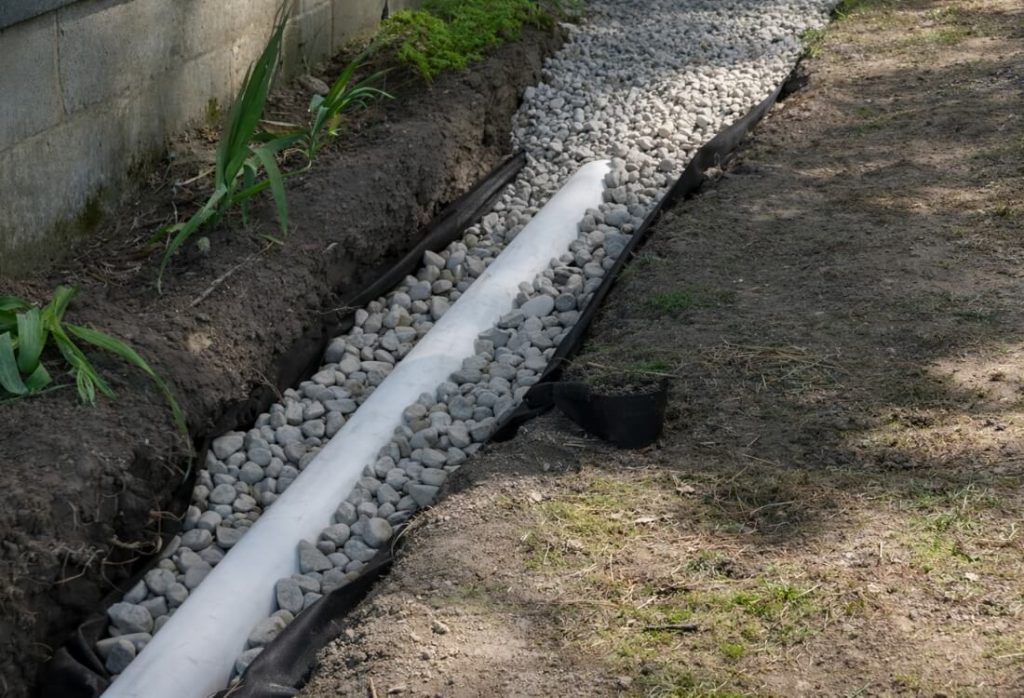
An exterior French drain, often called a curtain drain, is installed outside the foundation to redirect water moving through the soil toward the home. This system captures groundwater before it can press against foundation walls.
How it works:
- A trench is excavated around the foundation or along the side of the home where the problem is occurring.
- A perforated pipe is placed in washed gravel to collect groundwater.
- Filter fabric helps prevent soil from clogging the system.
- Water is redirected away from the foundation to a safe discharge point.
At LUX Foundation Solutions, we typically recommend exterior French drains when:
- Persistent standing around the foundation wall is building up.
- Basement leaks occur during or shortly after heavy rainfall.
- Hydrostatic pressure is causing wall seepage or foundation stress.
- Long-term groundwater control is needed outside the home.
Exterior French drains reduce pressure on the foundation, which helps protect walls, footings, and interior spaces over time.
2. Exterior Waterproofing Membranes and Drain Tile
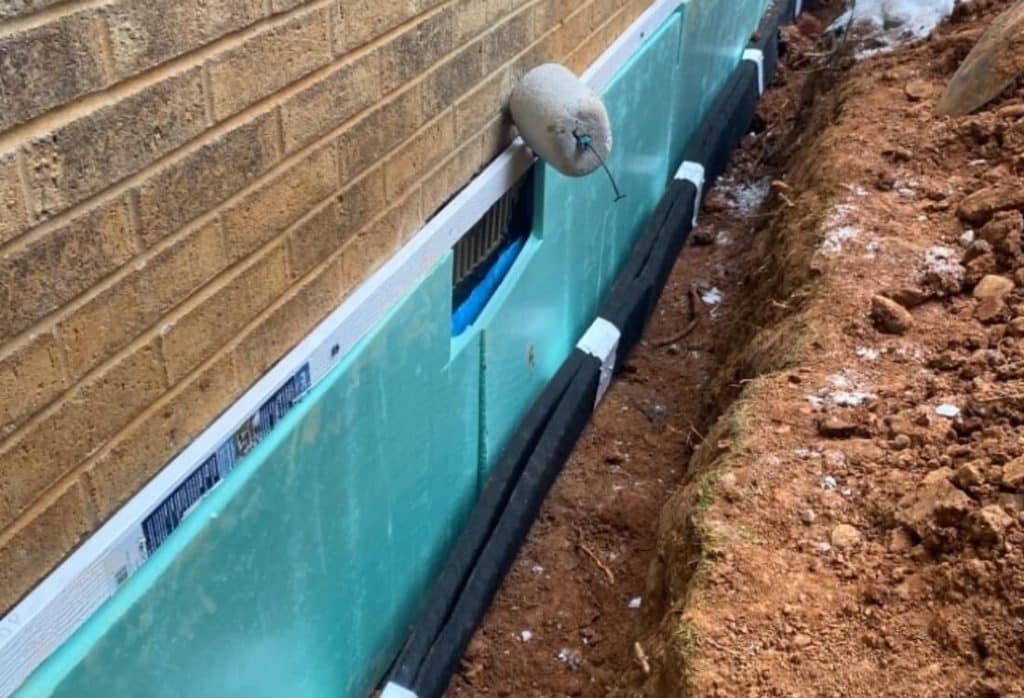
Exterior waterproofing membranes are applied by sealing foundation walls and managing water at the footing level. This approach combines drainage with a physical barrier to block moisture intrusion.
How it works:
- Foundation walls are excavated and cleaned.
- Cracks or weak points are addressed.
- A waterproof membrane is applied to the exterior wall surface.
- Exterior drain tile is installed at the footing to redirect groundwater.
- Soil is backfilled, and grading is restored.
When LUX recommends exterior waterproofing membrane:
- Basement walls show chronic moisture intrusion or seepage.
- Cracks allow water to pass directly through foundation walls.
- Interior drainage alone isn’t enough to control water pressure.
- Homeowners want the highest level of long-term protection.
Exterior waterproofing is one of the most comprehensive solutions available. While it requires more excavation, it protects the structure at its source and helps keep basements dry for the long term.
Which Types of Basement Drainage System is Best for Your Home?
Every basement water problem is different. The right and best basement drainage system depends on where the water is coming from and how severe the issue is.
The table below provides a high-level comparison to help you understand how each type of basement drain system differs in terms of purpose, investment, installation time, and longevity.
Basement Drainage System Comparison
| System Type | Installation Time | Best Used When |
| Interior French Drain | 1–3 days | Water enters at the wall-floor joint or rises from below. |
| Sump Pump System | 1 day | Active water collection is needed to remove groundwater. |
| Floor Drain | 1 day | Utility areas or minor water management. |
| Exterior French Drain | 5–7 days | Groundwater needs to be intercepted before reaching the foundation. |
| Exterior Waterproofing Membrane | 5–7 days | Foundation walls need long-term moisture protection. |
*Investment costs ranges vary based on home size, foundation depth, soil conditions, and accessibility.
Final Thoughts
Basement water problems rarely have a one-size-fits-all solution. The right drainage system depends on where water enters, how often it occurs, and the conditions around your foundation.
At LUX Foundation Solutions, we help homeowners understand the factors through a free, professional evaluation. Our team takes the time to explain what’s happening, walk you through your options, and recommend solutions designed for long-term protection.
Investing in the right basement drainage system isn’t just about fixing today’s moisture issues. It’s about protecting your home’s structure, comfort, and peace of mind for years to come.
If you’re ready for clear answers and an honest plan, contact a LUX professional at 540-508-8587 to schedule a free basement evaluation.
FAQ’s
How much does a basement drain cost in Northern Virginia?
Basement drain costs in Northern Virginia depend on the type of drainage system, the foundation layout, soil conditions, and the amount of water management required. Interior perimeter drain systems are typically a lower investment than exterior drainage systems, which require excavation and more labor.
At LUX Foundation Solutions, we don’t believe in one-size-fits-all pricing. A professional evaluation allows our team to identify the source of water intrusion and recommend a solution that’s properly installed, effective in the long term, and appropriate for your home—without unnecessary work or guesswork.
How do you remove two inches of water from a basement?
Standing water is usually removed using a temporary pump or wet vacuum, but that only addresses the immediate issue. If water keeps returning after heavy rain, the cause of the water damage should be identified first. A permanent drainage system, such as an interior perimeter drain with a sump pump, is often needed to manage water away from the foundation over the long term and protect the foundation.
What is the best type of basement drainage system for heavy rainfall in Northern Virginia?
Homes in Northern Virginia that experience heavy rainfall often benefit from a combination of systems. Interior perimeter drains manage water seeping into the walls, while exterior drainage or grading corrections help prevent water from reaching the foundation. The right solution depends on where the water is coming from and how often it occurs.
Can a drain be added to existing concrete basement floors?
Yes. Interior basement drains can be installed in existing concrete floors by cutting a narrow trench along the perimeter. After installation, the concrete is restored, leaving the system hidden while actively managing water beneath the slab.
Should there be water sitting in a basement drain?
No. While moisture may pass through a drainage system during heavy rain, standing water inside a basement drain can indicate a blockage, a pump issue, or an improper slope. If you notice water sitting in the drain, it’s a sign that the system should be inspected to ensure it’s working as intended.