Posted: February 23, 2021 • Updated: March 23, 2026
A leaking basement wall is one of the most common and most costly problems homeowners face. What starts as a minor damp patch or hairline crack can escalate into mold growth, structural failure, and foundation damage if left unaddressed.
With decades of experience diagnosing and repairing water leaks in basement walls, we have seen firsthand how early identification prevents the most expensive repairs. This guide covers the causes, warning signs, and seven proven solutions so you know exactly what you are dealing with and what to do about it.
What Causes Leaky Basement Walls?
Water finds its way through basement walls for a number of reasons, most of which come down to soil conditions, moisture levels, or the physical state of the wall itself. Below are the most common causes:
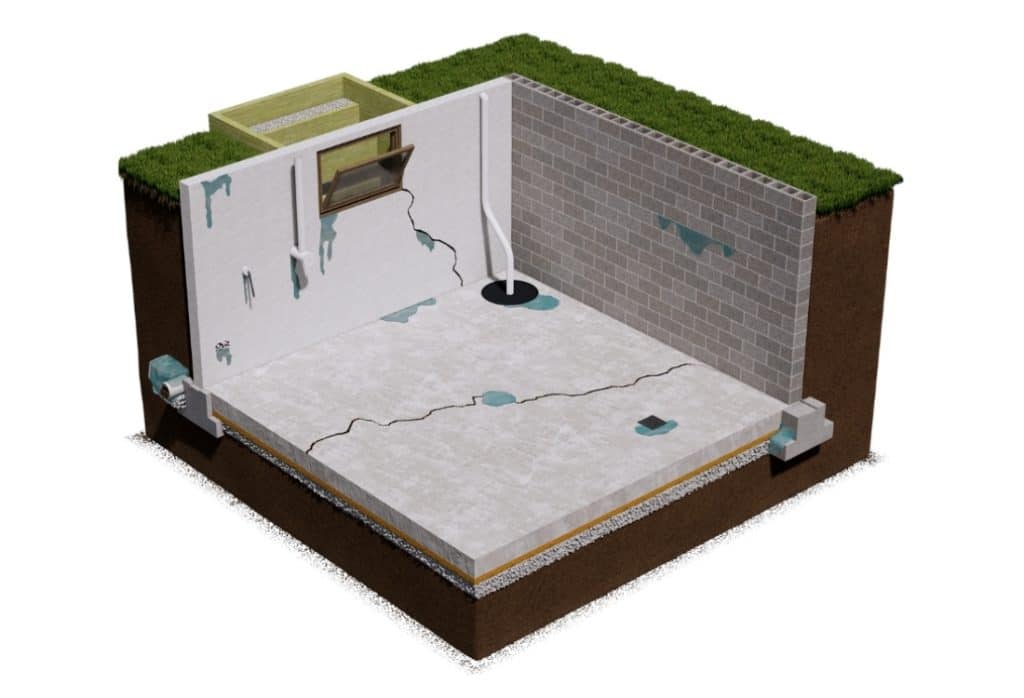
Groundwater Flow
Groundwater moves naturally through soil toward lower elevations. If your home sits in a low-lying area or near a water source, groundwater can flow toward your foundation and collect against the walls. Unlike rainwater, groundwater is a year-round source of pressure. It does not need a storm to cause basement leaks.
Expansive Clay Soil
Clay soil absorbs water and expands, then shrinks back when it dries out. That push-and-pull cycle repeats every single season, putting steady stress on your basement walls. Over time, existing cracks get wider, new ones form, and the wall gradually weakens. Homes on clay-heavy soil face this problem every year.
Cracks in Walls or Foundation
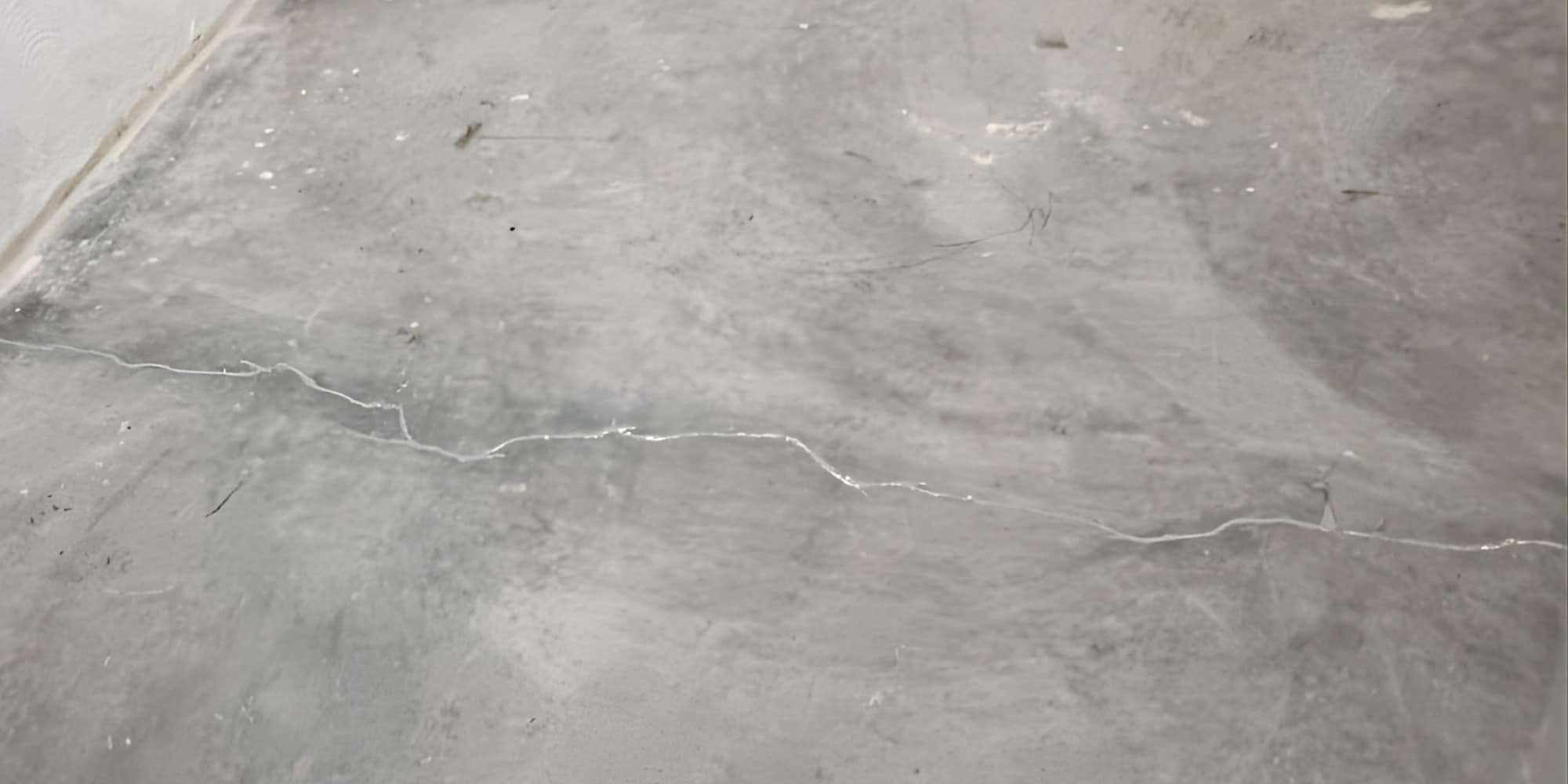
Cracks are the most direct path for water into your basement wall. Vertical cracks usually come from normal settling or concrete shrinkage. Horizontal cracks are more serious and typically signal lateral soil pressure pushing the wall inward. Any crack that is actively growing or shows moisture should not be ignored.
Failed or Deteriorated Waterproofing
Most foundation walls were coated with a waterproof layer at the time of construction to keep moisture out. Over time, that layer breaks down, cracks, and peels away. Once it fails, the concrete or block wall is fully exposed to groundwater. Water passes through the porous material and eventually appears on the inside.
Old and Poor Drainage Systems
Old, clogged, or poorly designed gutters, downspouts, and yard drainage systems send water directly toward your foundation instead of away from it. Over time, that misdirected water saturates the soil around your basement walls and keeps pressure against them consistently high, making leaks far more likely to develop.
What Are the Signs of Leaking Basement Walls?
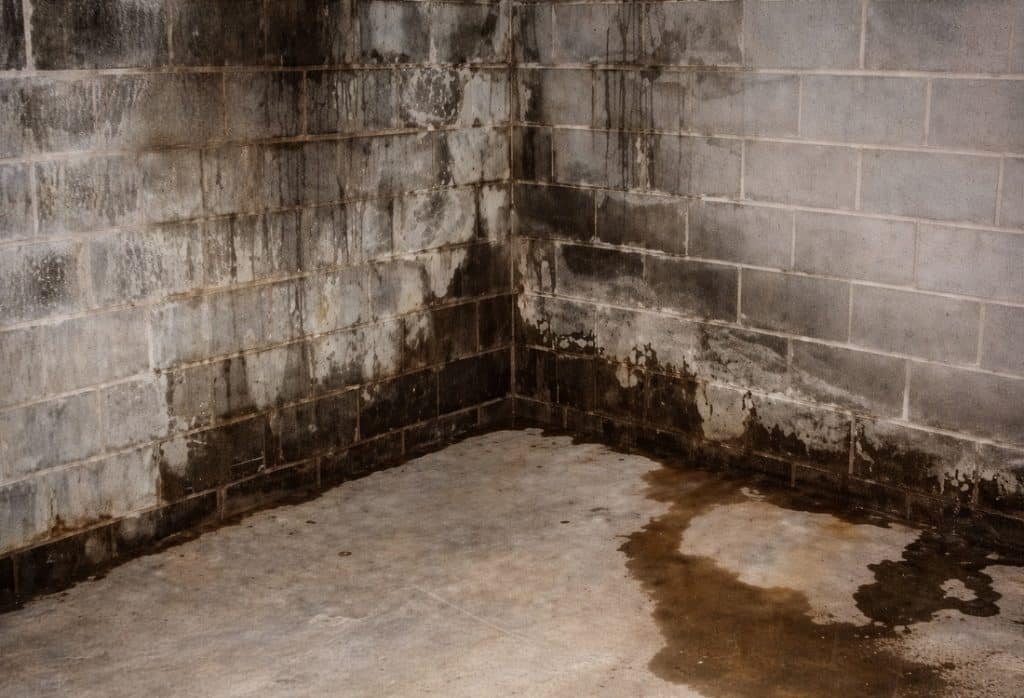
Basement walls do not always leak in obvious ways. Water often seeps in slowly through tiny cracks or porous concrete, leaving clues for months before a puddle ever appears. Catching those clues early is the difference between a manageable repair and a major structural job.
Here’s a checklist to spot the warning signs early:
- Cracks in the wall
- Efflorescence (white chalky deposits on the wall surface)
- Mold growth
- Musty odor
- Wet or stained drywall
- Damp or wet wall-floor joint
- Water pooling on the basement floor
- Warped wood or peeling paint
- Uncontrollable humidity or condensation
- Bowing or leaning walls
Seeing more than one of these signs? That is a strong signal that water is actively moving through your wall. The next step is a professional inspection to find where it is coming from and what is driving it.
How to Fix a Leaking Basement Wall
The fix depends on the cause. A crack from settling requires a different approach than a bowing wall caused by soil pressure. Using the wrong solution wastes money and leaves the problem in place. A professional inspection first identifies the root cause.
Here are seven moisture control solutions for fixing your leaking basement:
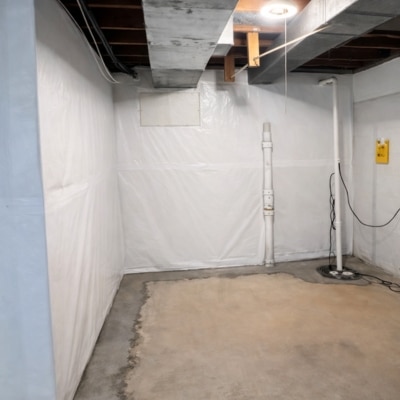
1. Interior Basement Waterproofing
Interior waterproofing captures water seeping through the wall and redirects it safely away before it can damage your home. It works from the inside without excavation, making it one of the least disruptive options available. It is most effective for homes with chronic seepage caused by hydrostatic pressure and works best when paired with a sump pump system.
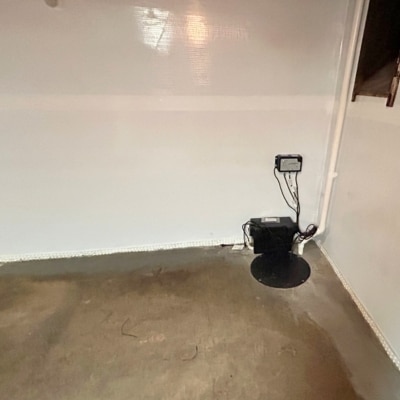
2. Basement Sump Pump
A sump pump is installed in a pit (the sump) on your basement floor. It collects water that enters the pit and pumps it away from your home. Sump pumps are essential for homes with high water tables or homes prone to flooding.
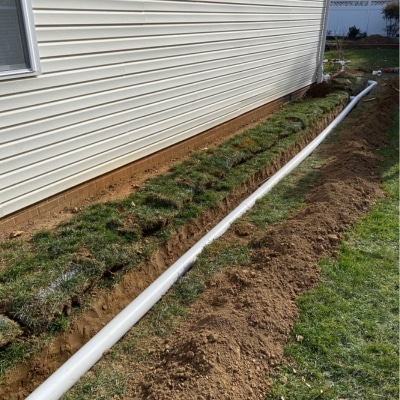
3. Landscape French Drains
A French drain is a gravel-filled trench with a perforated pipe that intercepts and redirects water away from your foundation. It reduces the volume of groundwater that reaches your foundation by intercepting it before it can build up against the wall. It can be installed around the perimeter of your home or in specific areas where water tends to accumulate.
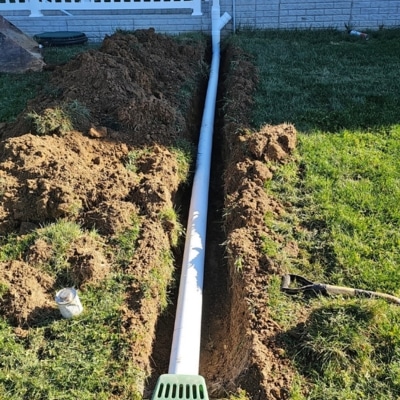
4. Downspout Extensions
Downspout extensions redirect roof runoff away from the foundation before it can saturate the soil against your wall. They reduce one of the most consistent sources of water pressure against basement walls and are one of the most cost-effective preventive steps a homeowner can take.
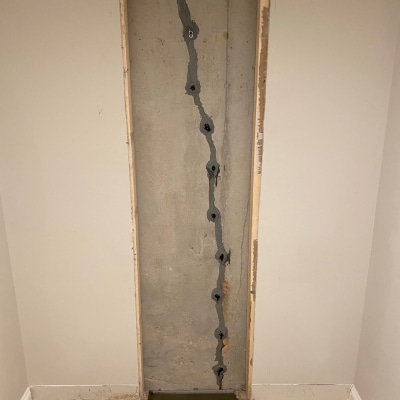
5. Basement Crack Repair
Crack repair seals target the exact spot where water is entering the wall, using a polyurethane-based sealant to stop active leaks. This approach works well for cracks of any size and can be completed quickly with minimal disruption to the space.
If the crack was caused by ongoing soil movement, crack repair works best alongside a solution that also addresses the pressure behind the wall.
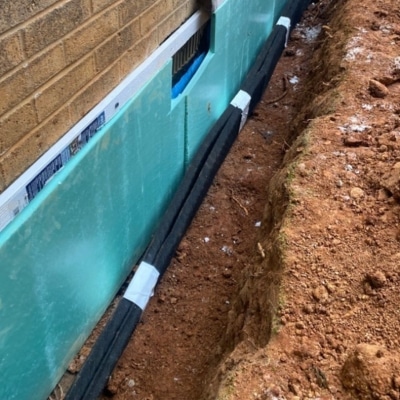
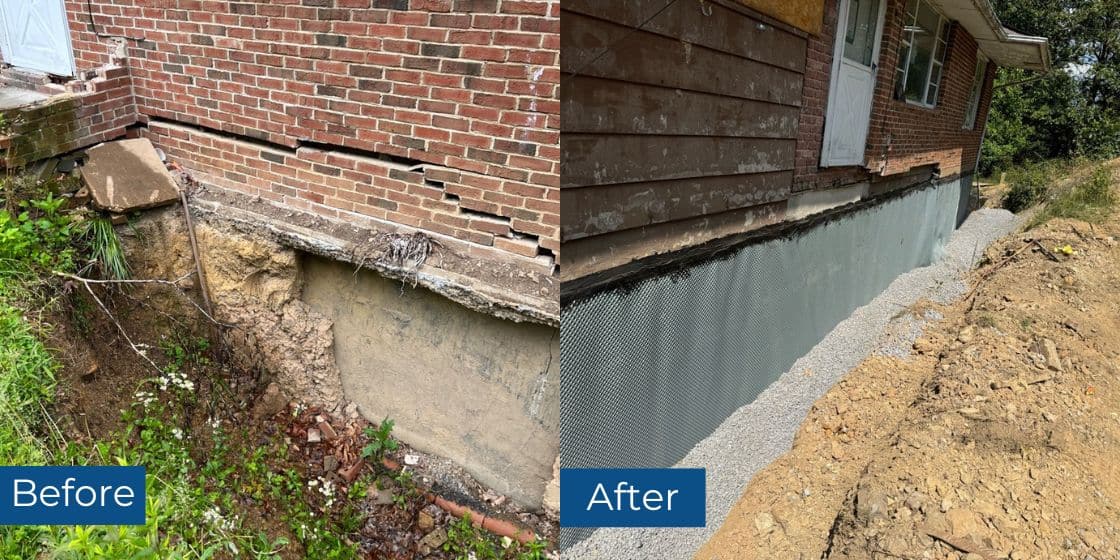
6. Exterior Basement Waterproofing
Exterior waterproofing protects the wall at the source by blocking water before it ever reaches the foundation. It involves excavating around the outside of your foundation and applying a waterproof membrane or coating to the walls.
It is the right choice when interior methods alone have not resolved the problem or when the leak is severe enough to require a complete solution.
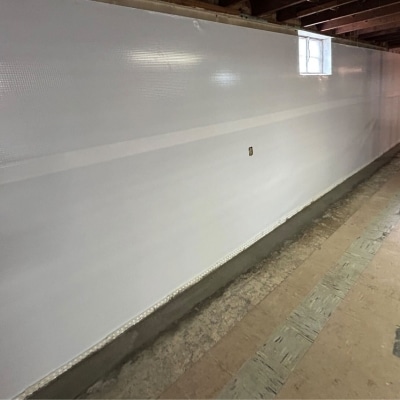
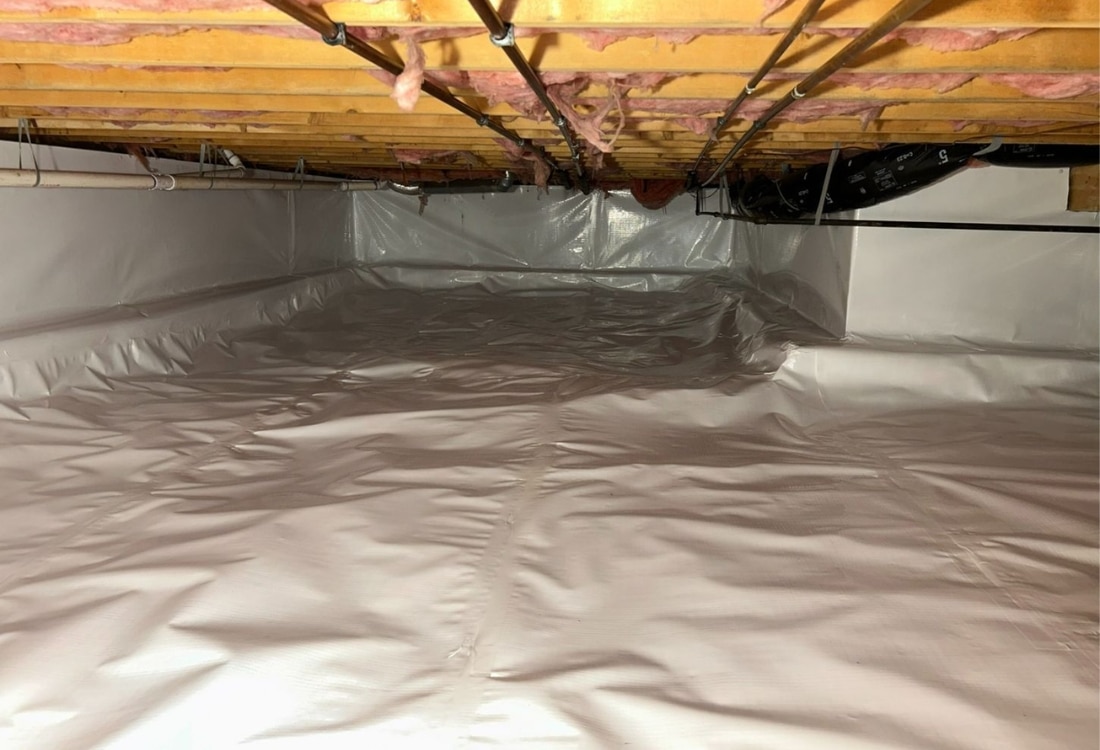
7. Basement Wall Vapor Barrier
A vapor barrier is a plastic sheet installed on the interior walls of your basement to block moisture from seeping through. A wall vapor barrier works best as part of a broader interior waterproofing system rather than as a standalone solution. It is most effective when seepage is ongoing but manageable rather than severe.
How to Prevent Basement Wall Leaking After Heavy Rain
Most basement wall leaks are preventable. These are the most effective steps you can take before storm season:
- Extend downspouts at least 6 feet away from the foundation to keep roof runoff from saturating the soil against your walls.
- Regrade the soil around the foundation to slope at least 6 inches over the first 10 feet away from the house.
- Clean gutters at least twice a year. Clogged gutters overflow and send water directly against the foundation
- Install a French drain to intercept groundwater before it builds up against your basement walls.
- Test your sump pump before storm season and consider a battery backup for power outages during storms.
- Seal visible cracks in basement walls and floors with hydraulic cement or polyurethane injection before the wet season.
- Check that window wells drain properly and install fitted covers to keep rain out.
Need Basement Wall Leak Repair? Contact LUX Foundation Solutions
A leaking basement wall does not fix itself. Each wet season that passes without a repair usually means more damage and a bigger job. Finding and fixing the source early saves money and prevents a manageable problem from becoming a structural one.
LUX Foundation Solutions has spent over 50 years diagnosing and providing basement waterproofing services across Northern Virginia, Shenandoah Valley, North Central Virginia, and West Virginia. With more than 1,000 completed projects, our team finds the root cause of the problem before recommending anything. You get the right repair for your specific situation, not a one-size-fits-all fix.
Call us at 540-508-8587 or fill out our online form to schedule a free estimate. We will inspect your basement wall, identify the source of the water, and provide you with a clear written repair plan.
Leaking Basement Walls FAQ’s
Is a leaking basement wall a serious problem?
Yes. Even minor wall seepage can lead to mold, wood rot, structural damage, and real loss in property value if nothing is done. The longer a wall leak goes unaddressed, the worse it gets. What starts as a small repair becomes a big one. Getting on top of it early is almost always cheaper and less disruptive than waiting.
Can I fix a leaking basement wall myself?
There are things you can do yourself. Regrading soil away from the house and keeping gutters clean all reduce the amount of water reaching your wall. But DIY sealants do not fix the underlying cause. If the crack came from soil pressure or structural movement, it will reopen within a season or two; all need a licensed professional.
A proper professional evaluation costs far less than the damage that builds up when those problems are left alone.
How do I stop a basement wall from leaking on the inside?
From the inside, you have several options: crack injection with epoxy or polyurethane sealant, interior drainage channels that collect and route water away, application of a waterproof membrane on the wall surface, and installation of a vapor barrier.
Interior repairs are less disruptive than digging outside and work well for managing chronic seepage. A professional evaluation tells you which approach fits your situation.
How do I fix a leaking basement wall from the outside?
From the outside, the process involves digging up the soil around the affected wall, repairing any cracks or damage, and applying a waterproof membrane directly to the foundation.
A drainage board and gravel backfill are installed before the soil is replaced to keep water away. It is the most thorough option for persistent or severe leaks. It requires professional excavation and is not a DIY project.
How much does it cost to fix a leaking basement wall?
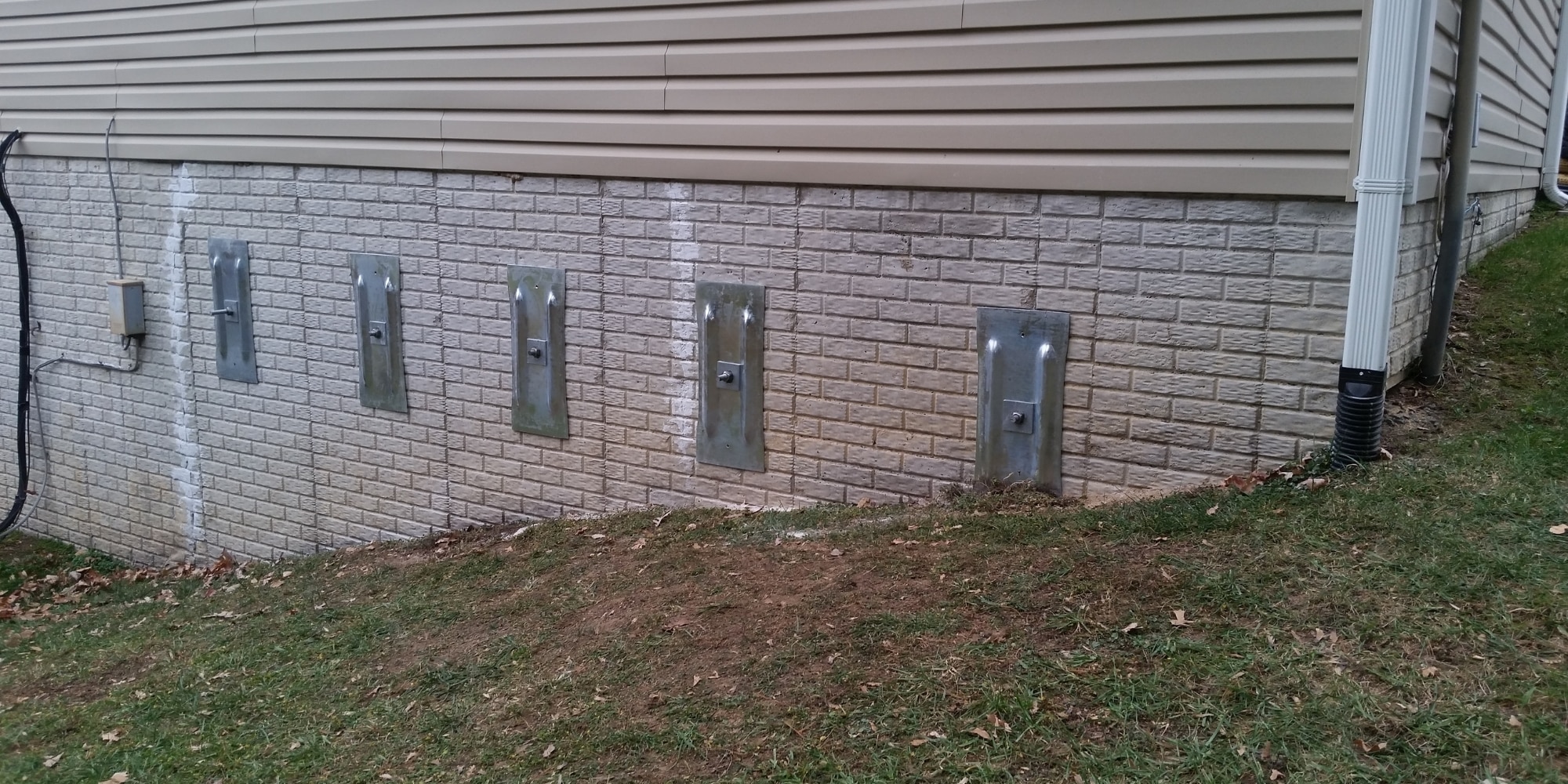
Costs vary depending on the extent of the damage, the required repair method, and how much of the wall is affected. Crack injection for a minor leak costs considerably less than wall anchor installation or exterior excavation.
LUX Foundation Solutions offers free, no-obligation written estimates. Contact us to get an accurate number for your situation.
Who should I call for a leaking basement wall in Virginia?
Look for a licensed basement waterproofing or foundation repair contractor with experience in your area and with your soil type. LUX Foundation Solutions serves homeowners across Northern Virginia and West Virginia. Contact us for a free estimate.