If you’ve spotted a crack in a concrete wall, the instinct is to ask what it means and how to fix it. But not every crack calls for the same repair, and choosing the wrong approach can mean paying to fix the same problem twice.
The right repair depends on more than how the crack looks. It depends on the crack’s condition, whether the wall is still moving, whether water is involved, and what caused the damage.
Knowing what to look for can help homeowners understand their repair options and determine when a professional evaluation is appropriate.
Key Takeaways
- Concrete wall crack repair isn’t a single procedure; the right approach depends on the specific conditions affecting that wall.
- Five factors determine the right repair: the crack’s condition, whether the wall is still moving, water intrusion, the wall’s overall condition, and the cause of the damage.
- Patching alone often fails when the underlying cause, movement, water, or a previous failed repair, is still active.
- Common repair approaches range from simple crack sealing to foundation stabilization, depending on what’s actually happening.
- A professional evaluation doesn’t commit you to a specific repair; it identifies which of these factors apply before any decision is made.
What Is Concrete Wall Crack Repair?
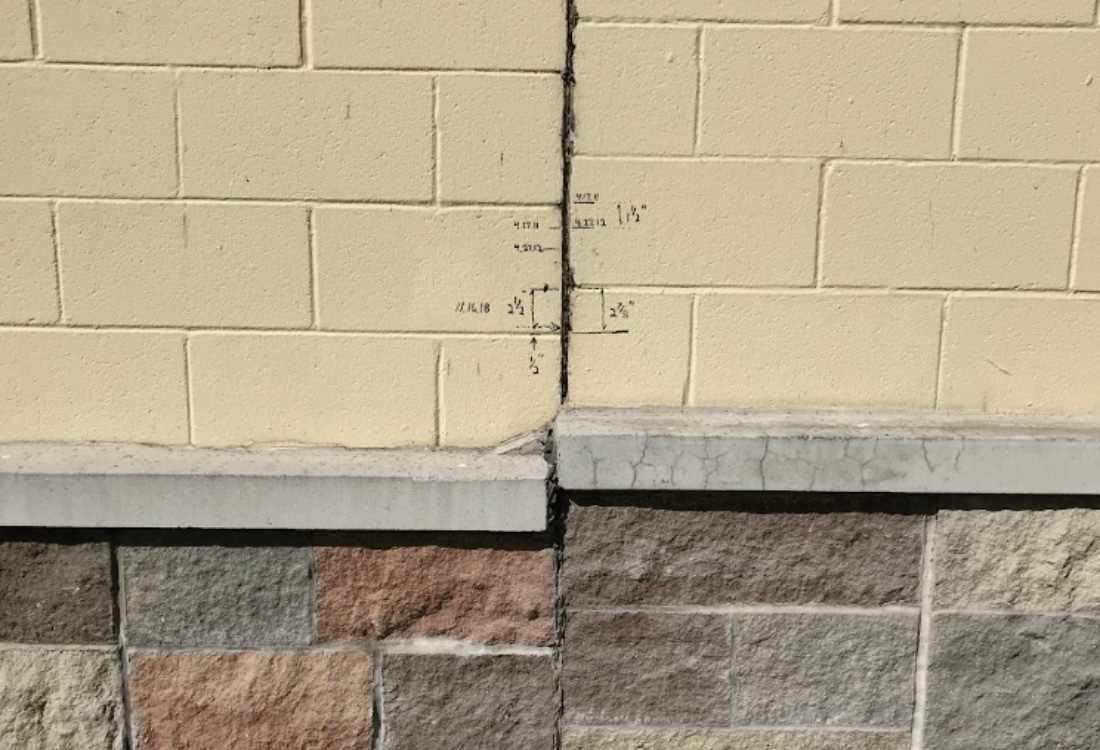
Concrete wall crack repair isn’t a single, standard procedure. It’s a broad term for the range of approaches used to address a crack, and the right one depends entirely on what’s actually happening with that specific wall. This isn’t just a practical observation; it’s how the industry approaches it: the American Concrete Institute’s own standard on crack repair emphasizes evaluating a crack’s cause and behavior before choosing how to repair it.
A crack that’s stable, dry, and cosmetic calls for a very different response than one that’s widening, letting in water, or tied to a wall that’s still shifting. Repairing the crack means more than filling the visible opening. The cause of the damage beneath and around the crack also needs to be addressed so the repair can last.
It could be sealing a hairline crack or stabilizing a wall under ongoing pressure. Knowing which situation you’re in is what determines the right path forward.
5 Factors That Determine the Right Concrete Wall Crack Repair Approach
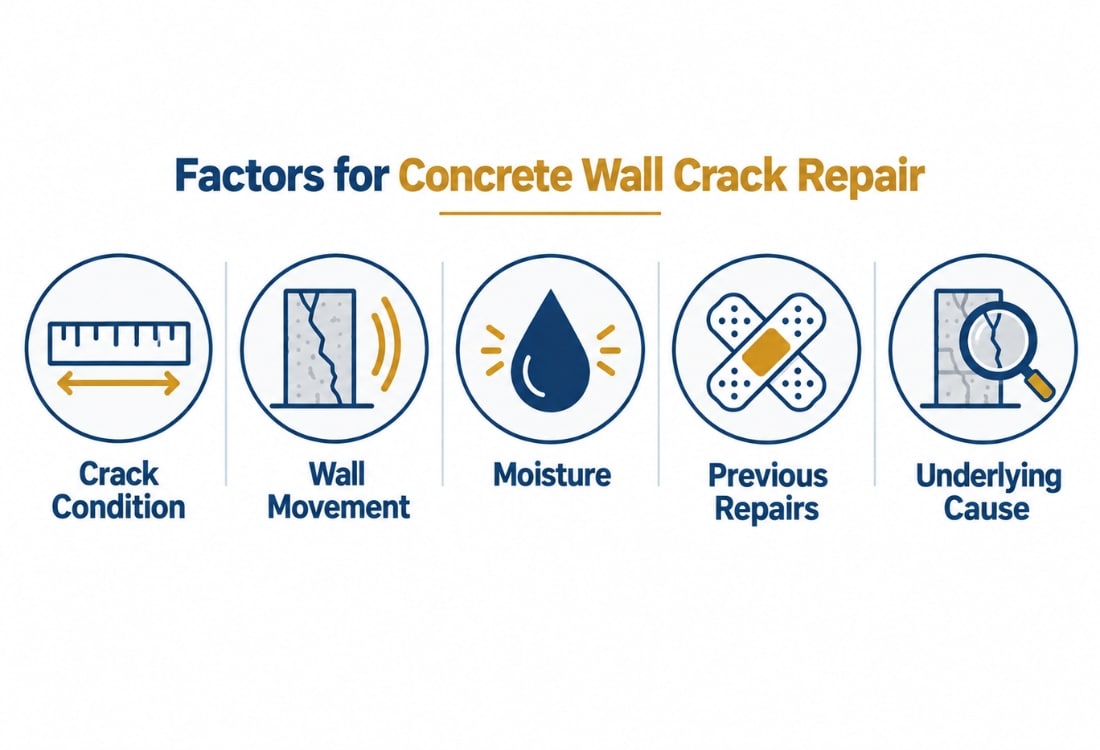
No single formula exists for repairing a concrete wall crack. The right approach depends on several conditions, including what caused the crack and how much damage it has done. These details can help determine which repair method is most likely to hold up over time.
Here’s what to weigh before deciding how to address the damage.
1. The Condition of the Crack
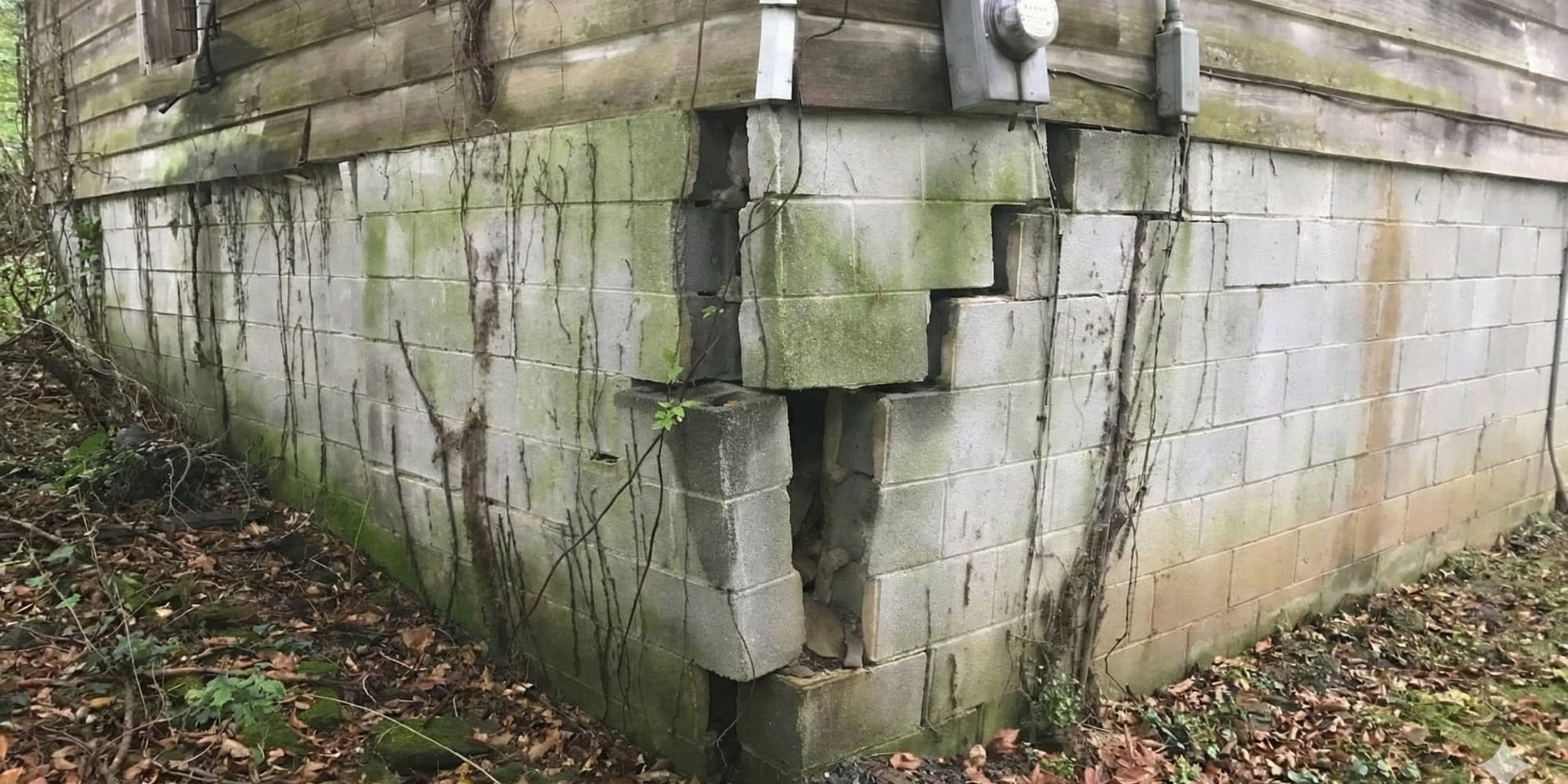
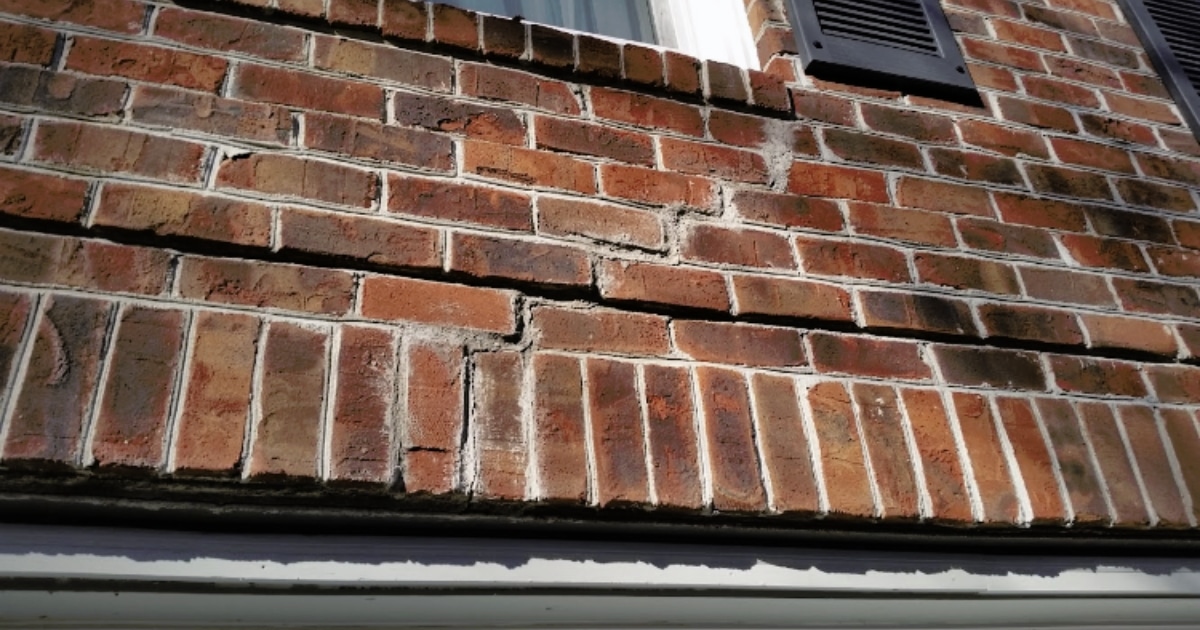
Is the crack stable, or has it changed since you first noticed it? A crack that’s the same width and length it’s always been behaves very differently than one that’s widening, lengthening, or showing displacement, where one side sits higher than the other. Recurring or actively changing cracks usually point to something still in motion, which changes what kind of repair makes sense.
If it would help to see which of the common crack types this matches, that comparison can clarify what you’re dealing with before you decide on a repair.
2. Whether the Wall Is Moving
A crack is often just the visible sign of something happening in the wall itself. If the wall is still shifting, bowing, or under ongoing pressure, sealing the crack alone won’t address what’s causing it to move. The repair needs to account for the wall’s actual condition, not just the opening.
3. Water or Moisture Intrusion
A dry crack and one that lets water leak through call for different solutions. When water gets through the crack, the repair should address both the crack and the source of the moisture. Otherwise, the problem may come back.
Persistent moisture can also raise other concerns for homeowners, including elevated radon gas levels that can find a path through an unsealed opening.
4. Previous Repairs
If a crack has already been patched but has reopened, the previous repair may have addressed only the visible damage. Understanding why the repair failed can help determine what to address before repairing it again.
5. What Caused the Damage
The repair should address whatever caused the crack, not just the crack itself. Knowing what caused the crack can help determine whether a targeted repair is enough or whether something more is needed.
Why Patching The Concrete Wall Cracks May Not Solve the Problem
Patching a crack changes how it looks, but it doesn’t always change what caused it. If the underlying problem is still active, a patch may only provide a temporary fix.
A few situations worth recognizing:
- The crack comes back, often along the same line, meaning the original cause was never resolved.
- The wall keeps moving, so a surface repair has nothing to hold onto.
- Water keeps finding its way in, since the patch stops it in one spot but not at the source.
- The damage keeps getting worse, widening or lengthening even after being patched.
- The same repair has already been done more than once, with the same result each time.
This does not mean patching is never appropriate. For a stable, dry crack with no indication of ongoing movement, a targeted repair may be sufficient. The important consideration is whether the repair addresses the condition affecting the wall, rather than simply covering the visible crack.
Concrete Wall Crack Repair Approaches
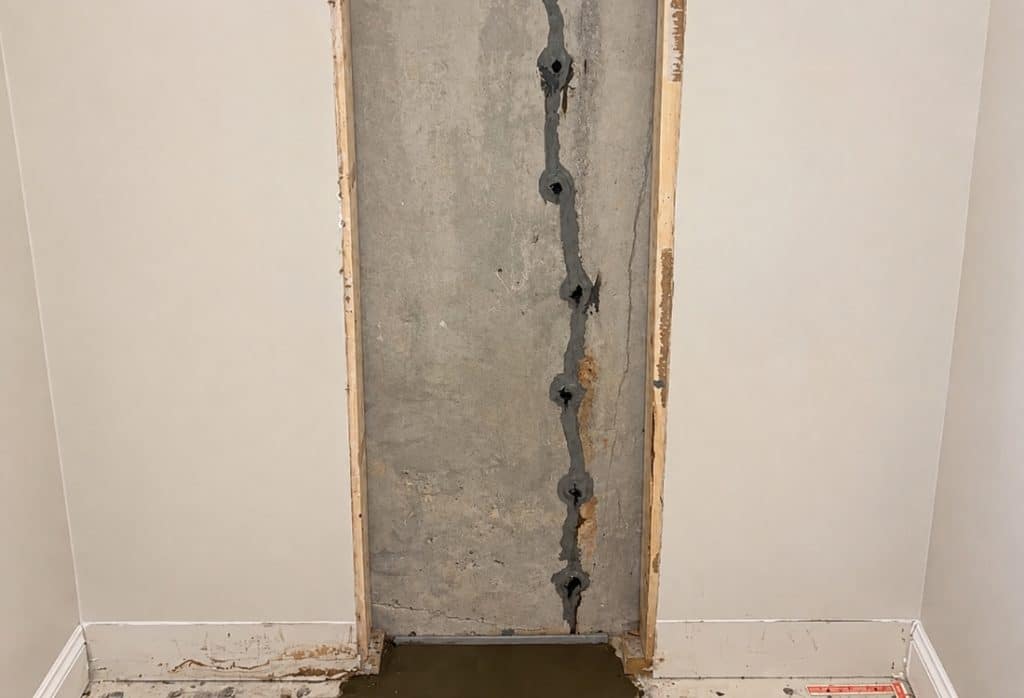
The right repair depends on the factors above, but in general, professional concrete wall crack repair falls into a few broad categories:
- Crack sealing or injection, using materials such as epoxy, for cracks that are stable and primarily need to be closed against moisture.
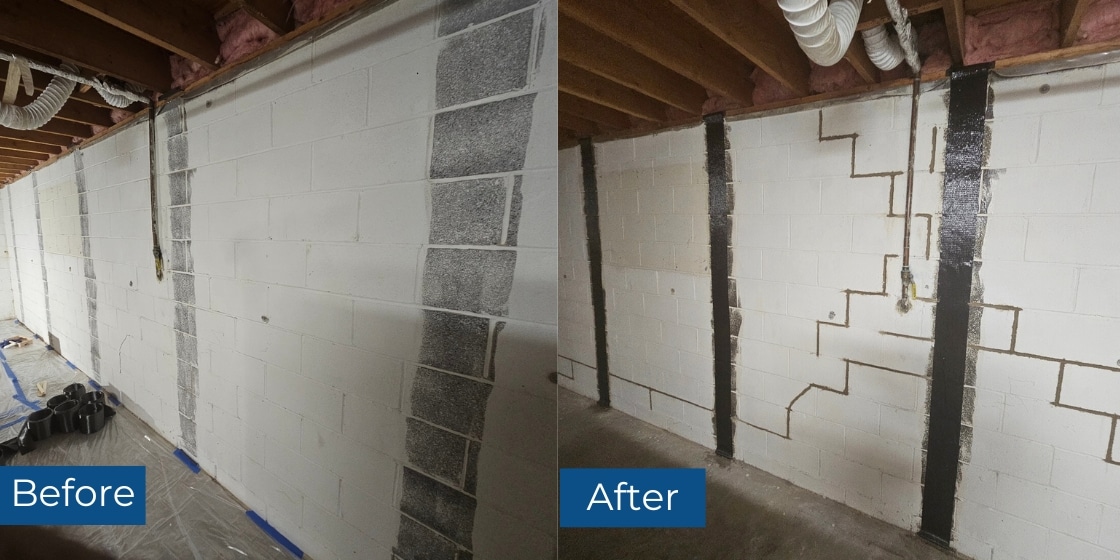
- Reinforcement, such as carbon fiber straps, for cracks where the surrounding concrete needs additional strength to prevent further movement.
- Wall stabilization, such as wall anchors, when the wall itself is bowing or under ongoing pressure, not just cracked.
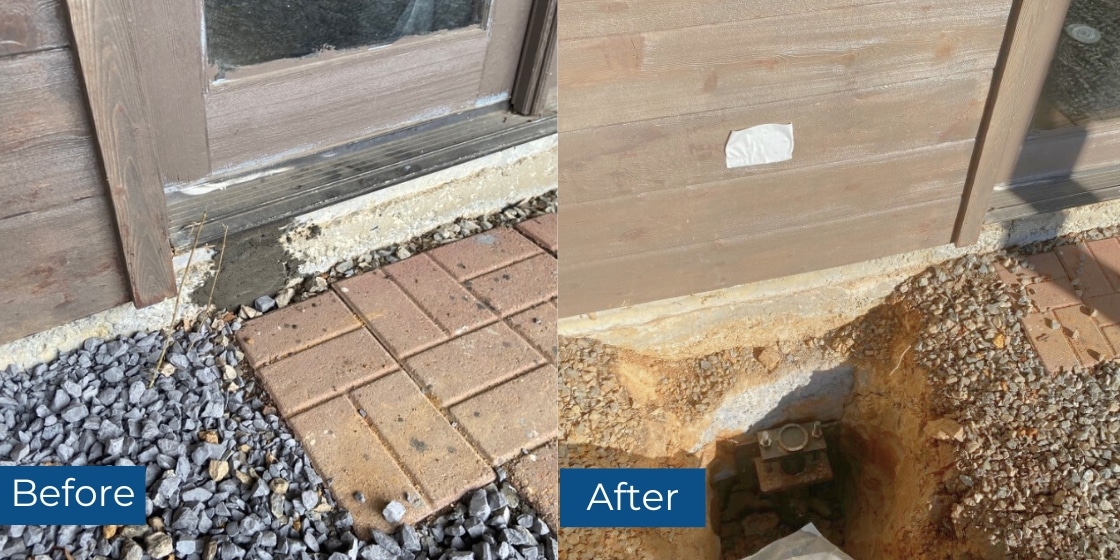
- Foundation stabilization, such as push piers or helical piers, when the movement causing the crack originates below the wall.
- Waterproofing or drainage work, such as exterior drainage or basement waterproofing, when water intrusion is driving the damage.
Which of these applies, if any, depends on the specific conditions covered above. A professional evaluation is what determines the right combination for your situation.
When to Have a Concrete Wall Crack Professionally Evaluated
You don’t need to wait for a crack to get dramatically worse before having it looked at. A professional evaluation is worth considering when:
- The crack has changed since you first noticed it, becoming wider, longer, or visibly displaced.
- Water is getting through, even if the intrusion only happens occasionally.
- Other changes are present, such as a sagging floor, sticking door, or gaps elsewhere in the home.
- A previous repair has failed and the crack has returned.
- You’re unsure what you’re seeing and want to understand whether the crack signals a foundation problem or something more.
A professional evaluation does not automatically mean a specific repair is needed. It helps determine which conditions are affecting the wall and whether repairing the visible crack is enough or whether the underlying problem also needs to be addressed.
Get the Right Repair for Your Concrete Wall Cracks
A crack in a concrete wall isn’t something to diagnose from how it looks alone. The right repair depends on the condition of the crack, whether the wall is still moving, whether water is involved, and what’s actually causing the damage, factors that are hard to assess without a closer look.
If you’re not sure what your crack needs, LUX Foundation Solutions can evaluate your concrete wall and determine what’s causing the damage. This helps identify whether the crack itself needs repair or whether an underlying foundation or moisture issue also needs attention.
Don’t guess at the right fix. Schedule an evaluation and get a repair approach based on your home’s condition.
Frequently Asked Questions
Does every concrete wall crack need professional repair?
No, not every crack requires professional repair. A crack that’s stable, dry, and shows no signs of movement is often fine to monitor or address with a simple seal, while a crack that’s changing, letting in water, or tied to a shifting wall typically needs a closer look.
Can repairing cracks in a concrete wall be done without knowing what caused it?
It can be patched without knowing the cause, but the repair may not last. If the underlying condition that created the crack is still active, sealing the surface alone usually doesn’t stop it from returning.
How do I know if repairing cracks needs more than patching?
A crack likely needs more than patching if it’s widening, showing displacement, letting in water, or has already been patched once and come back. These signs may indicate that an ongoing issue is affecting the wall, rather than the crack being an isolated problem.
Is it normal for concrete repair to fail and the crack to come back?
It’s not uncommon, but it usually means the original repair addressed the surface rather than the cause. A crack reopening along the same line typically means whatever was driving the damage is still active.
Does water coming through a crack always mean a structural problem?
Not necessarily; water intrusion and structural movement are related but separate issues. A crack can leak without being structurally serious, but the moisture itself still needs to be addressed to prevent further damage.
What happens during a professional concrete wall crack evaluation?
An evaluation identifies what’s causing the crack, whether the wall is still moving, whether water is involved, and which repair method fits the situation, rather than assuming a repair based on appearance alone.