Cracks in a concrete driveway do not always require the same type of repair. Some can be addressed with localized crack repair, while a driveway that has shifted, sunk, settled, or lost support may require concrete lifting. In more severe cases, replacement may be the more appropriate option.
Understanding your concrete driveway crack repair options starts with looking at the condition of the concrete and what is happening beneath it. This guide explains when crack repair, concrete lifting, or replacement may be appropriate, so you can better understand what your driveway needs before deciding on a repair.
Key Takeaways
- Concrete driveway crack repair options depend on the condition of the concrete and whether the driveway has shifted, settled, or deteriorated.
- Hairline cracks or a few small cracks in an otherwise stable driveway may be addressed with crack repair or sealing.
- Concrete lifting is an option when sunken sections of a driveway have shifted, settled, or become uneven.
- Extensive deterioration or damage affecting the structural integrity of the driveway may make replacement more appropriate than localized repairs.
- Repairs may not last if settlement, soil movement, or drainage problems continue to affect the driveway.
- A cracked driveway does not necessarily indicate a foundation problem, but certain conditions may warrant further evaluation.
- Understanding the cause and condition of the damage can help determine which approach to concrete driveway crack repair is appropriate.
What Are the Concrete Driveway Crack Repair Options?
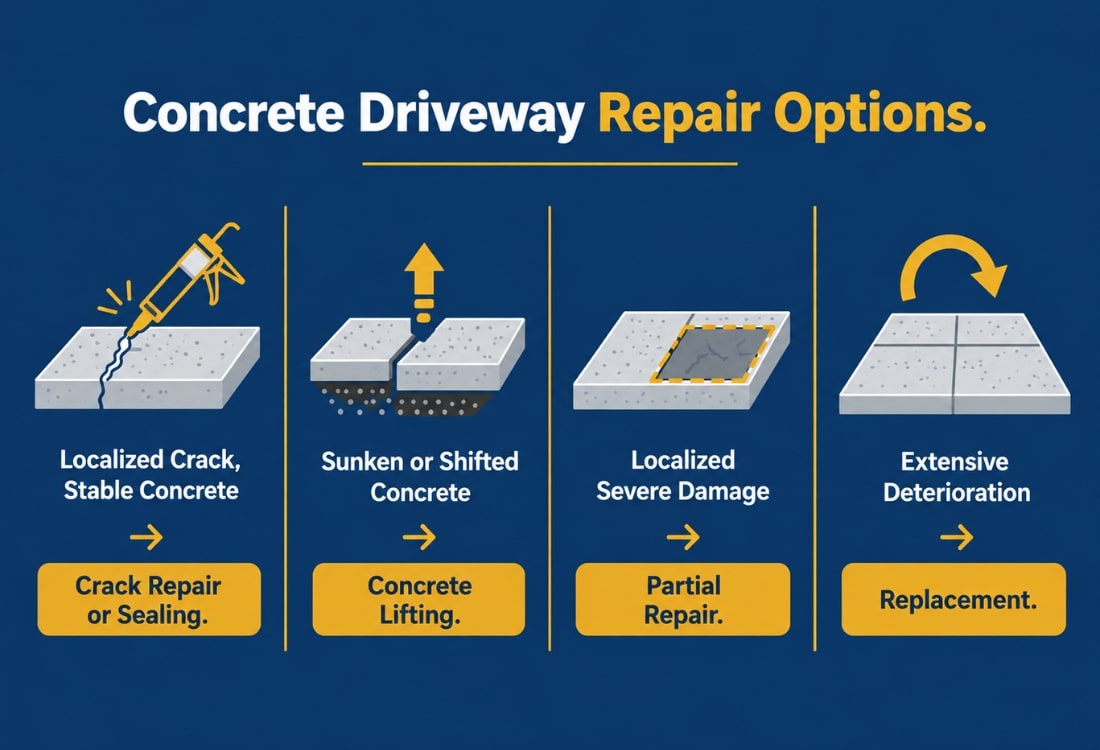
A cracked concrete driveway does not always need to be completely replaced. The appropriate repair depends on the concrete’s condition, the extent of the damage, and whether the driveway has shifted or settled. Here’s a quick look at each before we get into when they apply.
Concrete Crack Repair or Sealing
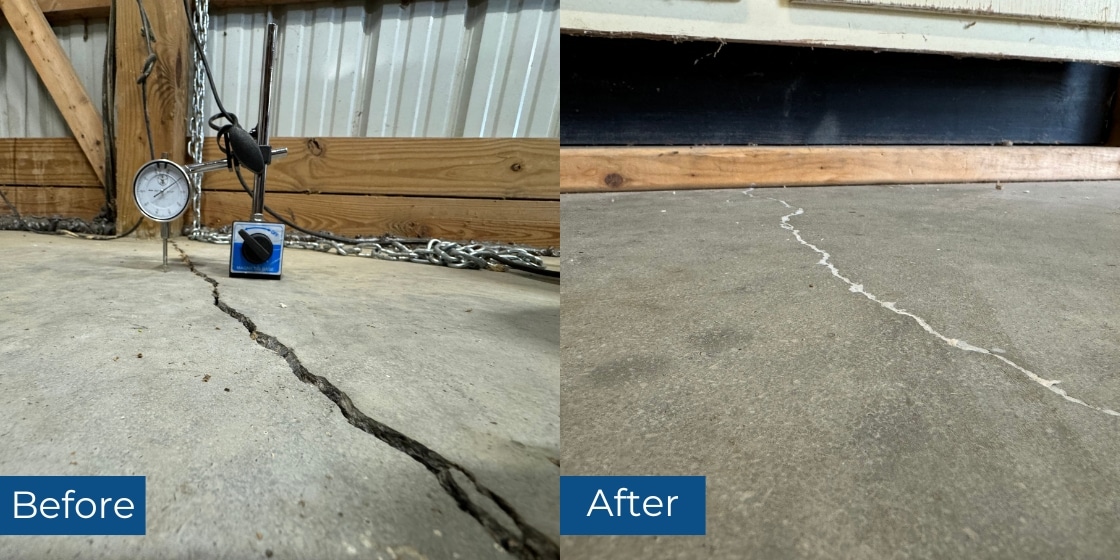
Localized cracks in stable concrete can be addressed through crack repair or concrete caulking when the surrounding slab remains stable and the damage is limited. A concrete sealer or liquid concrete crack filler can help fill cracks and limit water from entering, which can help prevent cracks from widening further.
Concrete Lifting
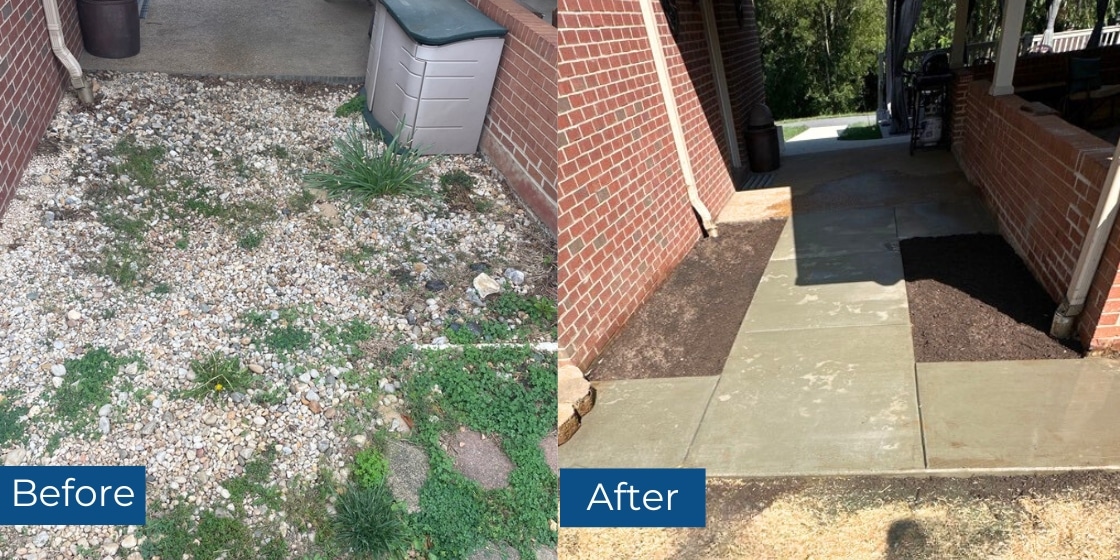
If sections of the driveway have shifted, sunk, or become uneven, filling the visible crack may not address the underlying problem. Concrete lifting raises settled sections and restores a more level surface when the existing concrete is suitable for lifting.
Partial Concrete Repair
When damage is limited to specific areas, repairing only the affected sections is the option. The condition of the surrounding concrete needs to be considered to determine whether localized repair is appropriate.
Driveway Concrete Replacement
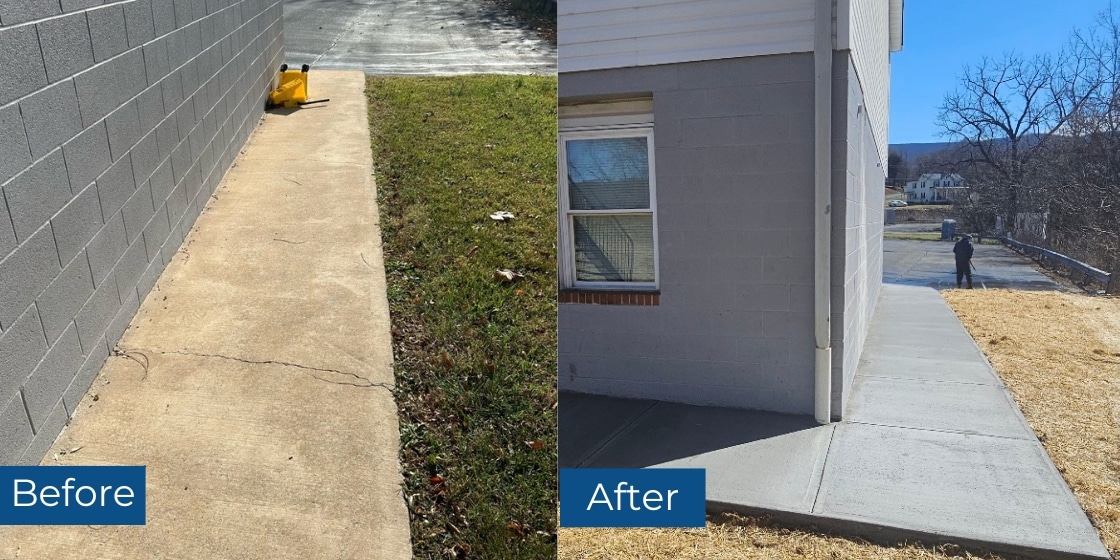
Replacement can be considered when the concrete has extensive deterioration or damage that cannot be adequately addressed through localized repair or lifting. The overall condition of the driveway should be evaluated before deciding that replacement is necessary.
When Is Crack Sealing Enough for a Concrete Driveway?
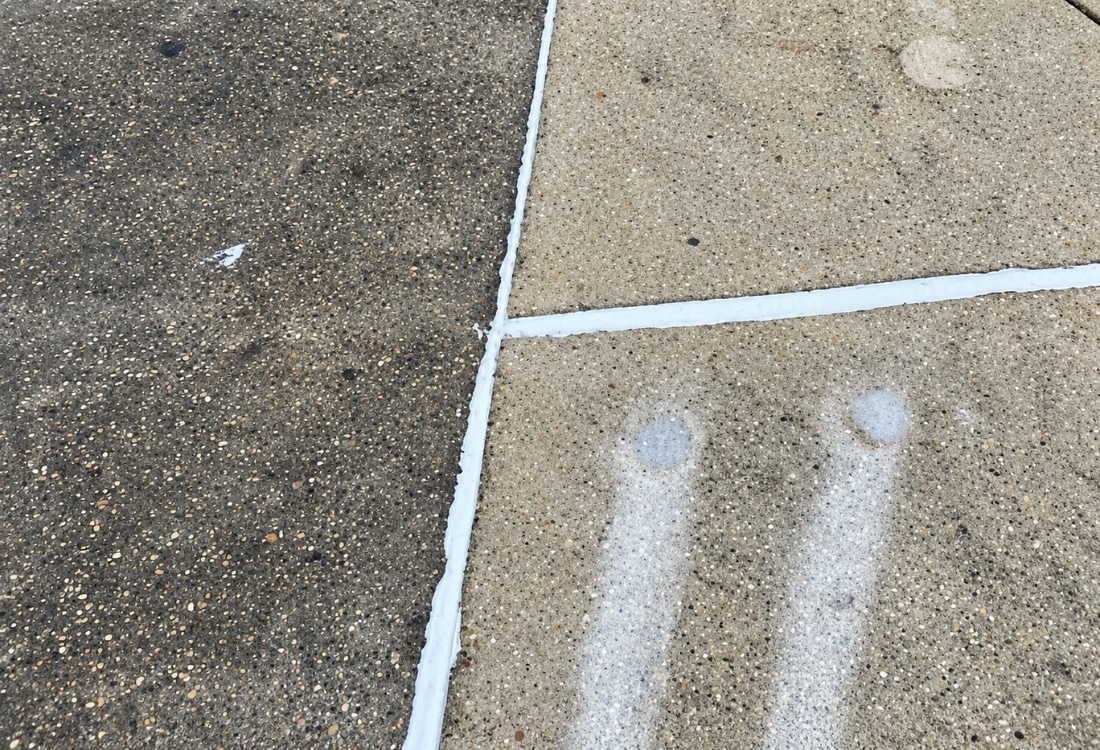
Not every driveway crack means the entire concrete needs to be lifted or replaced. Concrete sealing of driveway crack is appropriate when the damage is limited to minor cracks and the surrounding concrete remains stable. In these situations, addressing the crack can help protect the entire surface without replacing concrete that is otherwise in usable condition.
Crack sealing is suitable when:
- The cracking is localized rather than spread across multiple sections
- The surrounding concrete is otherwise stable, with no sinking, shifting, or unevenness nearby
- There’s no significant settlement affecting the slab
- The deterioration is limited to the crack itself, not extending into the surrounding surface
- The crack is the primary problem, not a symptom of movement beneath the driveway.
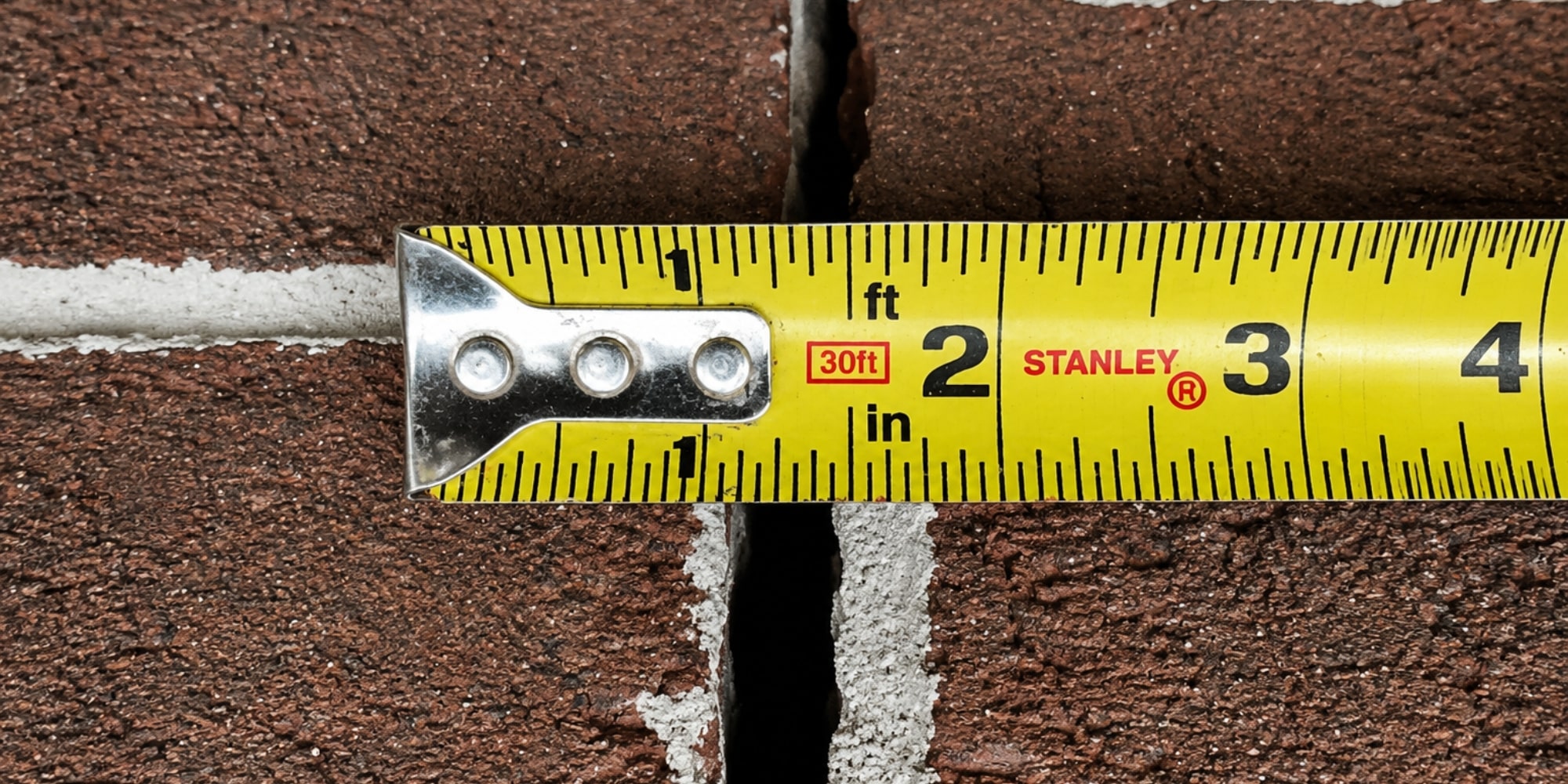
Larger cracks, or cracks with loose debris around the edges, often point to more significant damage beneath the concrete surface. When cracking occurs alongside sinking, shifting, or uneven concrete, repairing the crack alone may not address the condition affecting the slab. In that situation, the repair approach needs to address the concrete’s own movement.
When To Consider Driveway Concrete Lifting?
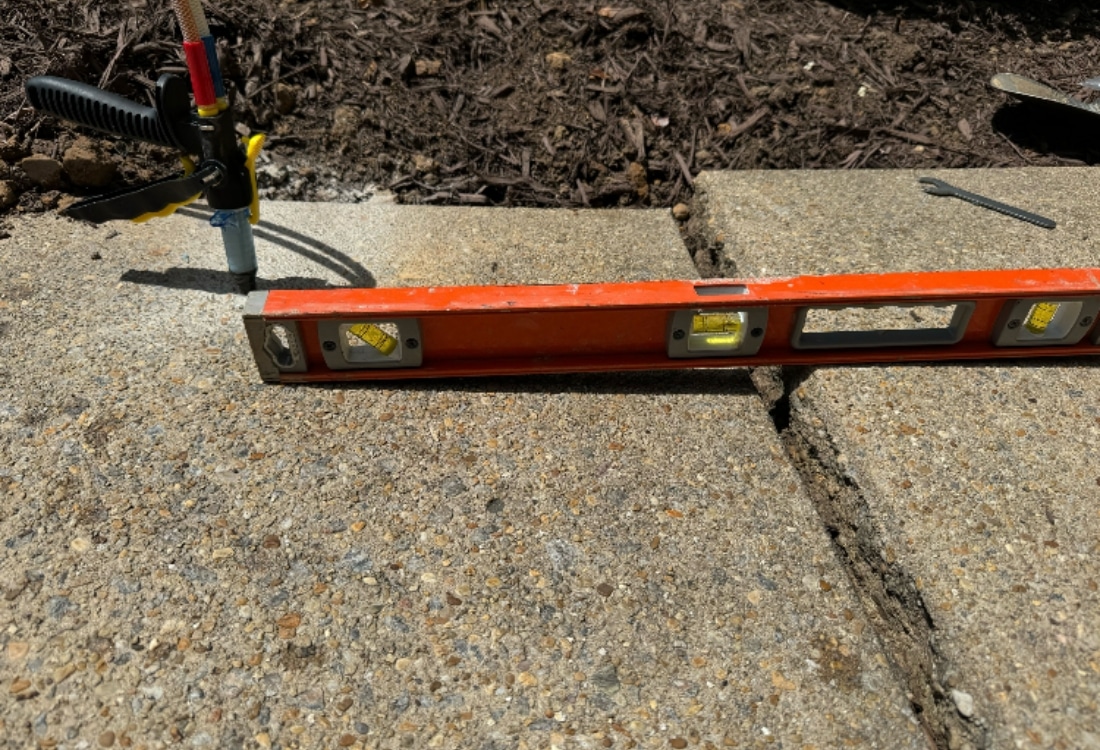
Concrete lifting is appropriate when a cracked driveway is also sinking, shifting, or uneven. In these situations, the crack may be related to the movement of the concrete rather than being an isolated surface problem. Repairing the visible crack alone may not correct the uneven section or the condition causing it to move.
Consider concrete lifting when:
- A section of the driveway has sunk or settled unevenly compared to the rest of the slab.
- Concrete driveway shifting is visible, with one part sitting higher or lower than an adjacent section.
- The driveway is cracked and sinking, rather than just cracked on the surface.
- Voids have formed beneath the slab, often from soil erosion or settlement.
- Uneven sections are creating a trip hazard.
- The cracking is settlement-related rather than an isolated surface issue.
In these situations, driveway settling repair through concrete lifting addresses what’s actually happening beneath the surface, restoring support and raising the slab back into position, rather than just sealing the crack over an active problem.
When Does a Cracked Driveway Need Replacement?
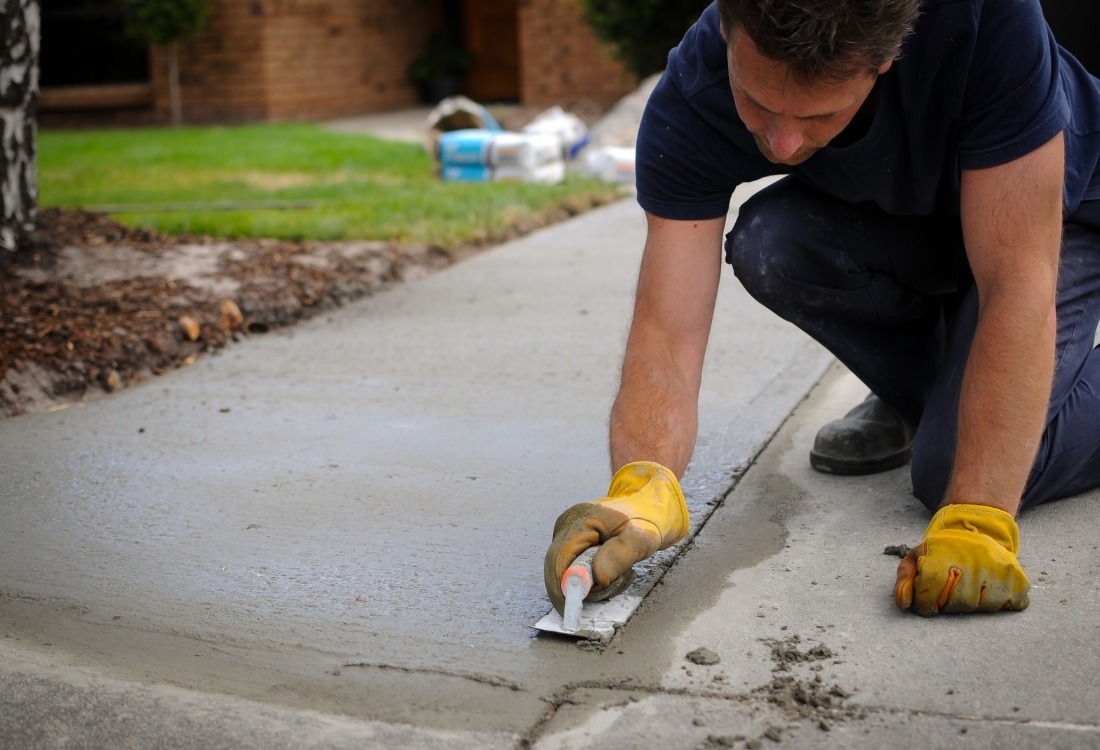
Replacement becomes the appropriate option when a concrete driveway has extensive damage, weather conditions-related deterioration, or other damage that cannot be adequately addressed through localized crack repair or concrete lifting, and structural repairs to the entire concrete may be needed instead. A few cracks alone do not necessarily mean the entire driveway needs to be replaced. The overall condition of the concrete is what matters.
Replacement may be more appropriate when:
- Deterioration is extensive rather than limited to a single crack or section.
- Damage is severe enough that patching or lifting wouldn’t restore the driveway’s condition.
- Cracking is widespread across multiple sections rather than being isolated.
- Major sections of the slab are compromised, not just a localized area.
- Repairing or lifting the affected areas wouldn’t adequately address the concrete’s overall condition.
If the existing driveway can be appropriately repaired or lifted, those options may avoid full replacement. When the damage is too extensive, however, replacement may be a more appropriate way to address the driveway’s condition.
A professional concrete evaluation is what determines whether a driveway has reached that point, rather than guessing based on how the cracking looks from the surface.
What Can Make Concrete Driveway Crack Repairs Fail?
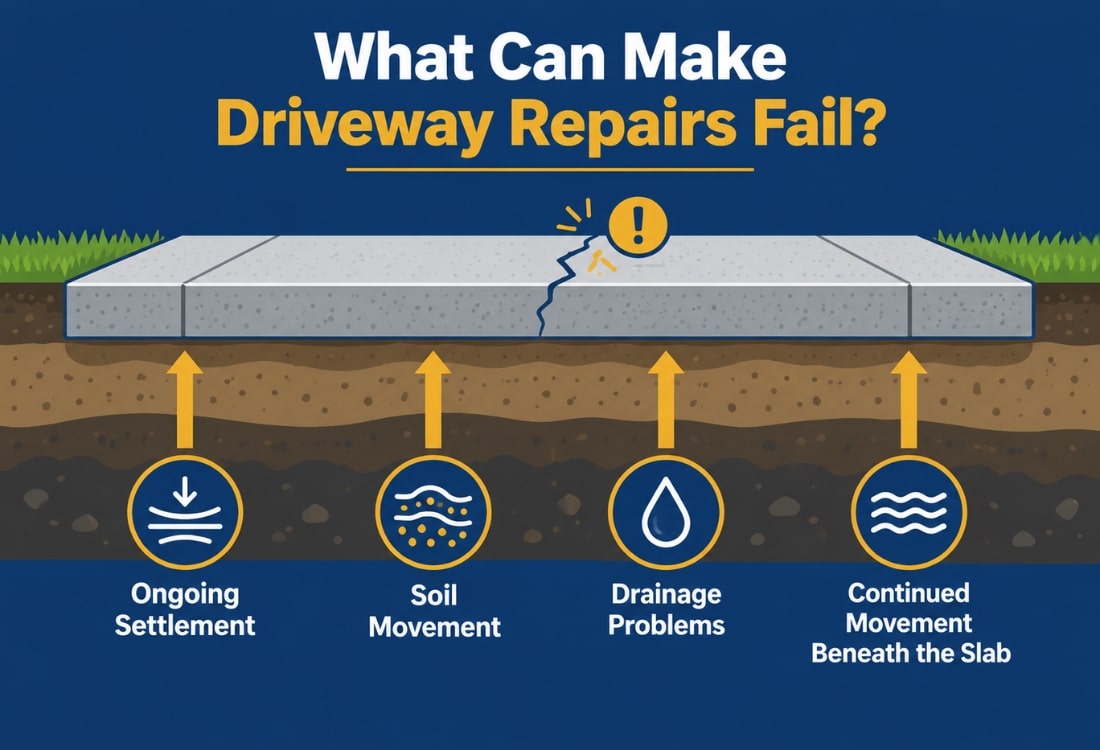
Repairing the visible crack doesn’t always correct the underlying condition that caused the concrete to move in the first place. A few underlying conditions can cause a repair to fail or a crack to return, even when the repair itself was done correctly.
Ongoing Settlement
If the ground beneath the driveway is still settling, sealing or patching the surface won’t stop the slab from continuing to shift. The repair holds only as long as what’s underneath it stays stable.
Soil Movement
Expansive or shifting soil beneath the driveway can keep exerting pressure on the concrete long after a crack has been repaired, causing the same area to crack again.
Drainage Problems
Water that isn’t draining away properly can continue softening the soil beneath the slab, undermining a repair from below, even when the surface looks fine. A downspout extension can help keep that water from reaching the soil near the driveway in the first place.
Continued Movement Beneath the Slab
Any ongoing movement, whether from settlement, drainage, or soil conditions, means the repair only addresses what’s visible, not what’s actually causing the damage.
This lines up with the American Concrete Institute’s crack repair guidance, which emphasizes addressing the cause of a crack, not just its appearance, before deciding on a repair.
This is why choosing between concrete driveway crack repair options requires more than looking at the crack itself. If movement or settlement is contributing to the damage, the repair may need to address the condition affecting the slab, to help prevent further damage from developing nearby, rather than only the visible crack.
How to Choose the Right Concrete Driveway Repair Option
The visible crack alone isn’t always enough to determine the right fix. Choosing among concrete driveway crack repair options comes down to matching the driveway’s actual condition to the appropriate solution, rather than reacting to how the damage appears on the surface.
| Driveway Condition | Potential Repair Direction |
|---|---|
| Localized cracks and stable concrete | Crack repair or sealing |
| Sunken or shifted concrete | Concrete lifting |
| Localized severe damage | Partial repair |
| Extensive deterioration | Replacement |
This framework is a starting point, not a diagnosis. Two driveways with similar-looking cracks can need entirely different repairs depending on what’s happening beneath the surface. That’s why it should be evaluated based on the condition of the concrete as a whole, not the crack alone.
If you’re unsure which category your driveway falls into, a professional concrete inspection can help determine whether the damage is limited to the cracks or whether movement, settlement, or deterioration is affecting the concrete.
.
When Should a Cracked Concrete Driveway Be Evaluated?
Even with a general framework for choosing among repair, lifting, and replacement, some situations are hard to judge accurately without a professional inspecting the driveway directly.
Consider an evaluation if:
- Cracks continue to return after previous repairs.
- Cracks are widening or appearing in multiple areas.
- Sections of the driveway are sinking or shifting.
- The surface has become noticeably uneven.
- It’s unclear whether movement is occurring beneath the surface, since this can’t be determined from the crack alone.
- You are unsure whether crack repair, lifting, or replacement is appropriate.
A professional assessment can help determine whether the damage is limited to the cracks or whether settlement, movement, or deterioration is affecting the driveway. This can help identify the appropriate concrete driveway crack repair option for the concrete’s condition.
Find the Right Fix for Your Cracked Concrete Driveway
A cracked driveway does not always require the same type of repair. Choosing between crack repair or sealing, concrete lifting, partial repair, or replacement depends on the concrete’s condition and whether movement or settlement is affecting the slab.
If you’re unsure which concrete driveway crack repair option is appropriate, a professional evaluation can help identify the problem and determine the best repair approach for your driveway’s condition. This can help you make a decision based on the condition of the concrete rather than on the appearance of a crack alone.
Get the clarity you need for your driveway. Contact our team to schedule your free concrete evaluation and let our experts help you determine the appropriate repair approach.
Frequently Asked Questions
Can you repair a concrete driveway without replacing it?
Yes. A concrete driveway can sometimes be repaired without full replacement when the damage is localized, and the surrounding concrete remains stable. Crack repair, sealing, or partial repair may be appropriate depending on the condition of the affected area. Extensive deterioration may require replacement instead.
What is the best repair for a cracked concrete driveway?
The appropriate repair depends on the condition of the driveway. Localized cracks in stable concrete may be suitable for crack repair or sealing, while a cracked driveway that is sinking, shifting, or uneven may require concrete lifting. Extensive deterioration may call for partial repair or replacement.
When should a cracked driveway be lifted instead of repaired?
A cracked driveway may be a candidate for concrete lifting when sections have sunk, shifted, or become uneven. In these situations, repairing the visible crack alone may not address the movement or loss of support beneath the slab. The condition of the existing concrete and underlying support determines whether lifting is appropriate.
Does a cracked driveway mean there are foundation problems?
Not necessarily. Driveway cracks can result from settlement, soil movement, tree roots, drainage issues, weather, or other conditions affecting the concrete. However, cracking accompanied by significant settlement or movement may warrant an evaluation to determine whether a larger foundation or soil-related issue is involved.
Can driveway cracks come back after repair?
Yes. Cracks can return if the condition affecting the concrete continues after the initial repair. Ongoing settlement, soil movement, drainage problems, or continued shifting can place stress on repaired areas. Repeated cracking may indicate that the driveway needs to be evaluated beyond the visible damage.
How much does concrete driveway crack repair cost?
The cost varies depending on the extent of the damage, the size and number of affected areas, the repair method, and whether settlement or other conditions also need to be addressed. Localized crack repair may involve different costs than concrete lifting, partial repair, or full replacement.