If your crawl space is damp, musty, or has a bare dirt floor, you have probably heard that encapsulation can help. But what is crawl space encapsulation, and how is it different from laying plastic on the ground?
Crawl space encapsulation seals the space under your home from the ground and the outside air, so moisture, mold growth, and pests have a harder time getting in. Because air from a crawl space can move up into your living areas, what happens down there can affect your comfort and indoor air quality.
In Virginia, humid summers and heavy rain can keep a crawl space damp. In this guide, you will see how the process works, which materials are used, and how long it lasts, so you know what to expect before you talk to a contractor.
What Is Crawl Space Encapsulation?

Crawl space encapsulation turns a vented, often damp crawl space into a sealed, controlled space. A contractor covers the ground and walls with a heavy-duty plastic liner, seals the vents and gaps that let in outside air, and manages any remaining humidity. Most systems include these parts:
- Vapor barrier: a thick polyethylene liner over the crawl space floor and up the walls and piers to keep ground moisture out.
- Sealed openings: crawl space vents, gaps, and access points are sealed to prevent humid outside air from flowing in.
- Wall insulation: added or repaired on the crawl space walls to help control temperature.
- Air and humidity control: a dehumidifier or another method, when the space needs it.
This is different from laying plastic on the dirt. A plain ground cover only covers the floor, so the vents and walls stay open, and moisture can still get in. It also differs from a traditional vented crawl space, which relies on outside air to dry the area and can bring in humid air during warm months.
Why Encapsulate a Crawl Space?

Most of the benefits come from one change: keeping ground moisture and humid outside air out of the area beneath your home. That helps build a healthy home in several ways.
- Better air quality. Mold spores, musty odors, and allergens can travel from a damp crawl space into the rooms above. Sealing the space can reduce how much of that reaches your living areas, improving indoor air quality.
- Protected wood. Damp air keeps wood joists, beams, and the subfloor wet, which can lead to rot over time. A dry crawl space helps slow that damage and protect structural integrity.
- More stable energy use. Humid or cold outside air no longer flows freely under the floor, so your HVAC system may not have to work as hard, which improves energy efficiency. How much you save depends on the home, and ENERGY STAR has guidance on sealing and insulating spaces like this.
- Fewer pests. Termites, insects, and rodents are drawn to damp, open crawl spaces. Closing gaps and keeping the space dry make it less inviting, though neither guarantees a pest-free home.
- More comfortable floors. Less damp, cold air under the house can make floors feel warmer and reduce that musty smell.
Many of these benefits of sealing a crawl space only last if the moisture source is fixed first, so a contractor should check for standing water, drainage problems, or mold before sealing anything.
How Does the Crawl Space Encapsulation Process Work?

The exact crawl space encapsulation process depends on the condition of the space, but most professional installations follow this order:
- Inspection. The contractor looks for the source of the moisture, standing water, mold, pests, wood damage, and the state of any existing insulation.
- Clean-up and repairs. Debris and damaged insulation are removed, and pests, mold, or damaged wood are dealt with first. Sealing over these problems can trap them under the liner.
- Water control, if needed. If water is getting in, drainage or grading problems are fixed before anything is sealed, since a liner alone will not stop a leak.
- Sealing air leaks. Vents, gaps around pipes and ducts, and access points are closed so humid outside air stops moving through the space.
- Vapor barrier installation. A durable vapor barrier goes over the floor and up the walls, with seams overlapped and sealed so ground moisture cannot pass through.
- Wall insulation and air control. Insulation is added or repaired on the walls, and a dehumidifier or another method is added if the space needs it to stay dry.
Each step protects the next one, which is why skipping the early steps is where many installations fail. A contractor offering crawl space encapsulation services should explain which of these steps your space needs after an inspection.
What Materials Are Used in Crawl Space Encapsulation?
The quality of the crawl space encapsulation materials affects how long the system holds up. Four materials do most of the work, and each has something worth checking:
- Liner: Thickness and reinforcement affect how well the plastic resists tears and punctures. Thin sheeting can rip the first time someone crawls through the space, which lets moisture back in.
- Seam tape and sealants: A liner is only as tight as its seams. Tapes and sealants made for moisture should be used at the seams, walls, piers, and pipes.
- Wall insulation: Rigid foam board is common on crawl space walls because it tends to hold up better in damp conditions than fiberglass batts.
- Dehumidifier: A unit designed for crawl spaces and sized for the area usually works better than a household model, which could struggle in high humidity levels. A crawl space dehumidifier is often added when sealing alone does not keep humidity under control.
Ask each contractor to list the products in writing so you can compare quotes on the same materials.
Why Does Professional Crawl Space Encapsulation Matter?
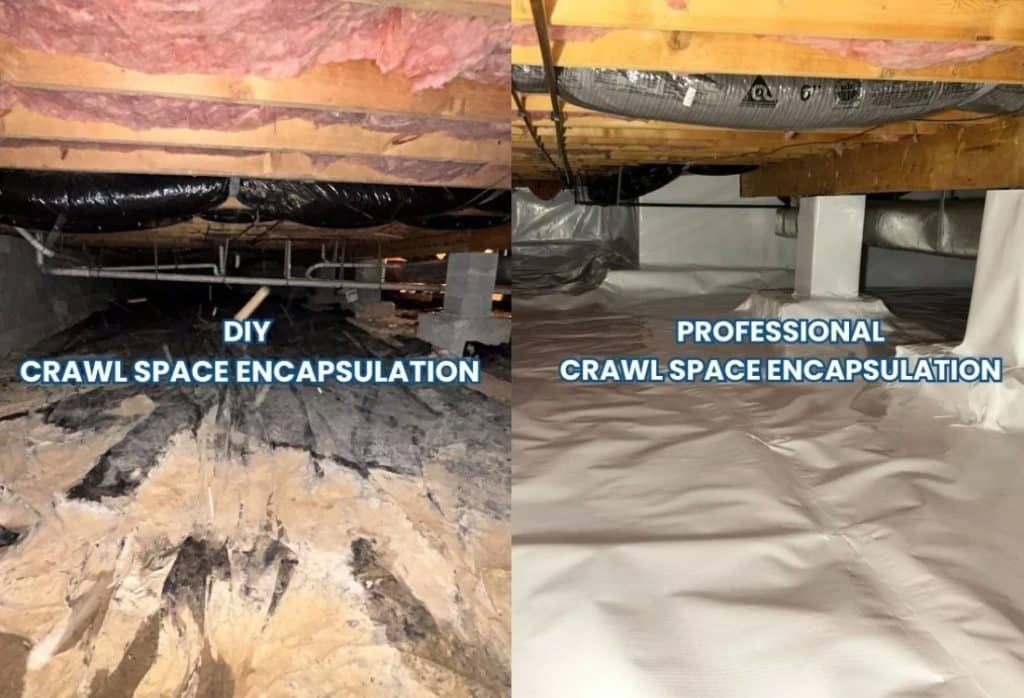
Encapsulation of a crawl space is more than laying plastic, and most of the work that decides whether it lasts happens before the liner goes down. A professional inspection looks for the source of moisture, whether it is standing water, a leak, poor drainage, or humid air moving through open vents. If the source is not fixed, the liner ends up covering an active problem.
An expert also checks for structural damage that is easy to miss, such as mold, wood rot, pests, or weakened supports. Mold, in particular, needs to be addressed before sealing, because removing crawl space mold can be harder once the space is covered.
Proper installation helps keep humid air out. Gaps around seams, wall liner edges, piers, and pipe openings can let moisture back into the crawl space. The size of the space and its current condition will determine what type of moisture control is needed. A professional should explain these choices and put the scope in writing, including what any warranty covers.
How Long Does Crawl Space Encapsulation Last?
There is no single lifespan because how long an encapsulated crawl space lasts depends on the materials, installation, and home conditions. A well-installed system with a durable liner can offer long term protection for a crawl space, but it is not a one-time fix you can forget about. .
How long the system lasts depends on several factors. A thicker, reinforced liner with sealed seams resists wear better than thin plastic. If water keeps entering the crawl space, the system has to keep up with it, so drainage or leak issues should be fixed first. Dehumidifiers and sump pumps require regular maintenance, and a liner can later be punctured by plumbers, HVAC technicians, or pests.
Routine inspections, such as a yearly check of the liner, the seams, and the humidity level, help catch small problems before they spread. If you want an expected lifespan for your home, ask your contractor how long the materials and workmanship are expected to last and what the warranty covers.
Is Crawl Space Encapsulation Worth It?
It is worth it when your crawl space already shows signs of moisture problems, such as dampness, a musty smell, mold, rotting wood, or pests. In that case, sealing out the moisture protects the wood framing and keeps that air out of the rooms above for a healthier indoor environment, and acting early can help you avoid water damage and larger repairs later.
If your crawl space is dry, well-sealed, and in good shape, you may not need it yet. It might only need monitoring, which is why an inspection should come before any decision. A contractor who recommends encapsulating the crawl space should be able to point to their findings and explain why they apply to your home.
Cost is part of the decision, too. The cost of crawl space encapsulation depends on the size of the space, its condition, and any required repairs, so it helps to know what an inspection finds before you compare quotes.
Get a Crawl Space Inspection for Your Virginia Home
A damp, musty crawl space rarely fixes itself, and the longer moisture stays under your home, the more it can cost you in repairs. The first step is an inspection that shows what your space actually needs, whether that is encapsulation, water control, or simply monitoring.
LUX Foundation Solutions inspects crawl spaces across Northern Virginia, West Virginia, North Central Virginia, and the Shenandoah Valley. Call 540-508-8587 or contact us online to schedule your crawl space inspection, and we will explain what we find and recommend a plan that fits your home.
Frequently Asked Questions
Does crawl space encapsulation add value to a home?
It can, but it is not guaranteed. Buyers and home inspectors often look at the condition of the crawl space, and a dry, sealed crawl space with documented work can make a sale easier than an open question about moisture. How much value it adds depends on the home and the market.
What is the difference between a vapor barrier and full crawl space encapsulation?
A crawl space vapor barrier is the plastic liner that covers the ground. Full crawl space encapsulation uses that liner across the floor and up the walls, with sealed seams, closed vents and gaps, and often wall insulation and humidity control. A ground liner alone helps with soil moisture, but it leaves outside air and wall moisture unaddressed.
Is crawl space encapsulation suitable for every type of crawl space?
Most crawl spaces can be encapsulated, but the approach varies by space. Height, access, an existing liner, standing water, and the condition of the wood and supports all affect what is needed. Some spaces need repairs or water control first, and a few may require a different solution, so an inspection should be conducted to determine the appropriate approach.
Can crawl space encapsulation stop water from getting in?
Encapsulation controls moisture and humidity, but it is not a waterproofing system on its own. A liner will not stop standing water, leaks, or heavy groundwater.If water intrusion is a problem in your crawl space, waterproofing or drainage work is usually needed first, and encapsulation is added once the water is under control.
Does crawl space encapsulation prevent termites?
It can help make a crawl space less inviting to termites by cutting off the moisture they rely on and closing gaps they could exploit. It does not eliminate termites or replace termite treatment, though. If you suspect termite damage, have the space inspected by a pest professional before sealing it.
Does an encapsulated crawl space still need vents?
Usually, the foundation vents are sealed, because open vents let outside humidity back in. Instead, the space is kept dry through humidity control or by managing the air inside. Local building code and the home’s conditions affect the details, so a contractor should confirm what applies to your home.