Written By Bridget Stieb, Director of Marketing at LUX Foundation Solutions • Reviewed by LUX’s foundation repair specialists serving Northern Virginia & Florida
If your basement smells musty and you are trying to figure out how to get rid of the musty smell out of your basement, something is holding moisture even if the space looks dry. That damp basement smell usually comes from mold, mildew, or stale air settling in low-ventilation areas. If you don’t address it, the lingering unpleasant odors can spread through the house and even lead to mold growth.
But don’t worry! Following these ten simple, proven steps can help you get rid of the musty smell in basement for good and prevent it from coming back.
Why Your Basement Smells Musty
The first question you will likely ask after noticing musty odors in your basement is where they might come from. A few factors could cause your basement to smell musty, such as:
- Poor ventilation: Poor ventilation lets moisture and stale air sit in one place, and over time, that buildup leads to bad smells and air that just isn’t healthy to breathe inside your home.
- High humidity: Humidity above 50 percent creates the perfect environment for mold and mildew, the main sources of musty odors.
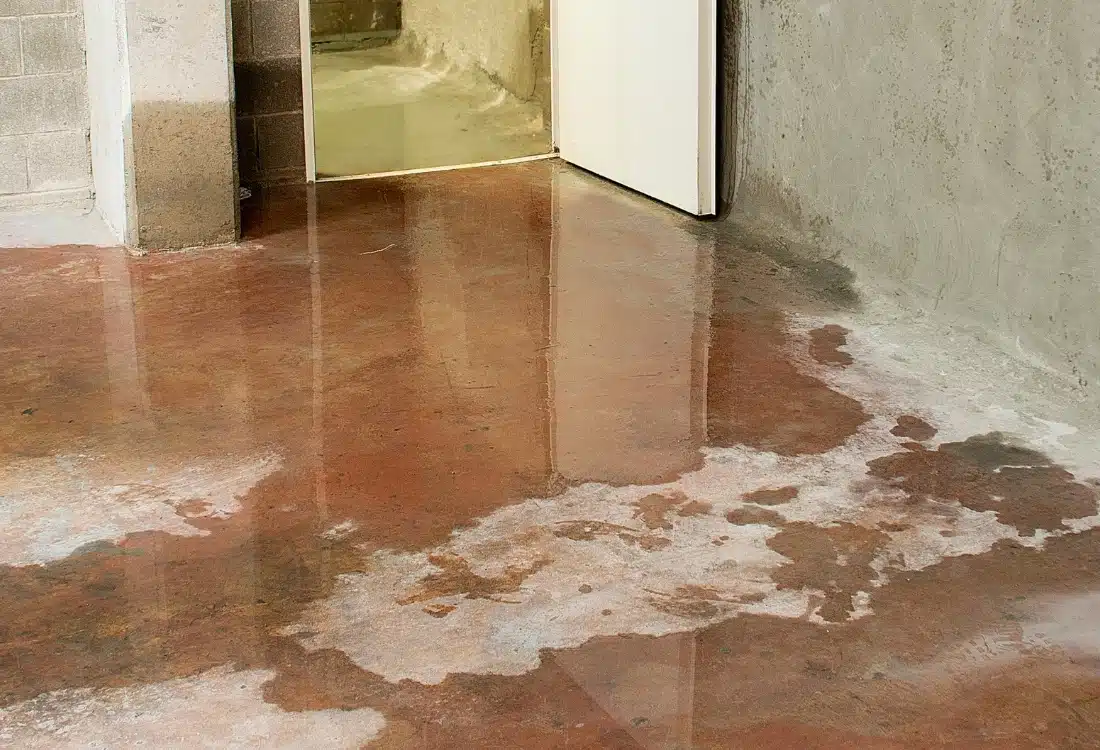
- Water leaks or seepage: Small leaks from foundation cracks, pipes, or windows introduce moisture into your basement that can leave surfaces damp and lead to mold growth.
- Condensation: Warm air hitting cool basement surfaces creates condensation, which leads to dampness and that familiar musty smell.
These factors create a perfect environment for mold and mildew, the primary culprits behind the unpleasant odors you’re experiencing. If you are not sure whether your musty basement smell signals a serious moisture problem, see the full list of warning signs: Why There’s a Musty Smell in Basement: Signs, Causes, and Solutions”
But how to get rid of a musty basement smell? Let’s now discuss below.
How to Get Rid of a Musty Basement Smell Quickly
With these simple 10 steps, you can eliminate musty smells, improve your basement’s smell, reclaim your space, and create a healthier, more inviting atmosphere. We always recommend you hire professionals to carry out these steps.
Step 1: Identify the Source of the Musty Smell
A musty smell always means moisture is present somewhere, even if you don’t see water. If your basement is dry but still smells musty, the source is often hidden, trapped in porous materials, embedded in old drywall, or coming from a poorly ventilated crawl space. Your goal here is to find anything damp, hidden, or trapping odor.
What to look for:
- Stains or damp spots on floor and walls.
- Condensation on pipes or windows.
- White, chalky residue (efflorescence).
- Mold or mildew patches.
- Stronger odors behind stored items or furniture.
- Cracks in the walls or the concrete floor.
How to check:
- Move boxes and shelves away from the walls.
- Use a flashlight to inspect dark corners and low-airflow areas where you are most likely to find mold or water seepage.
- Use a moisture meter if you’re unsure of the humidity level.
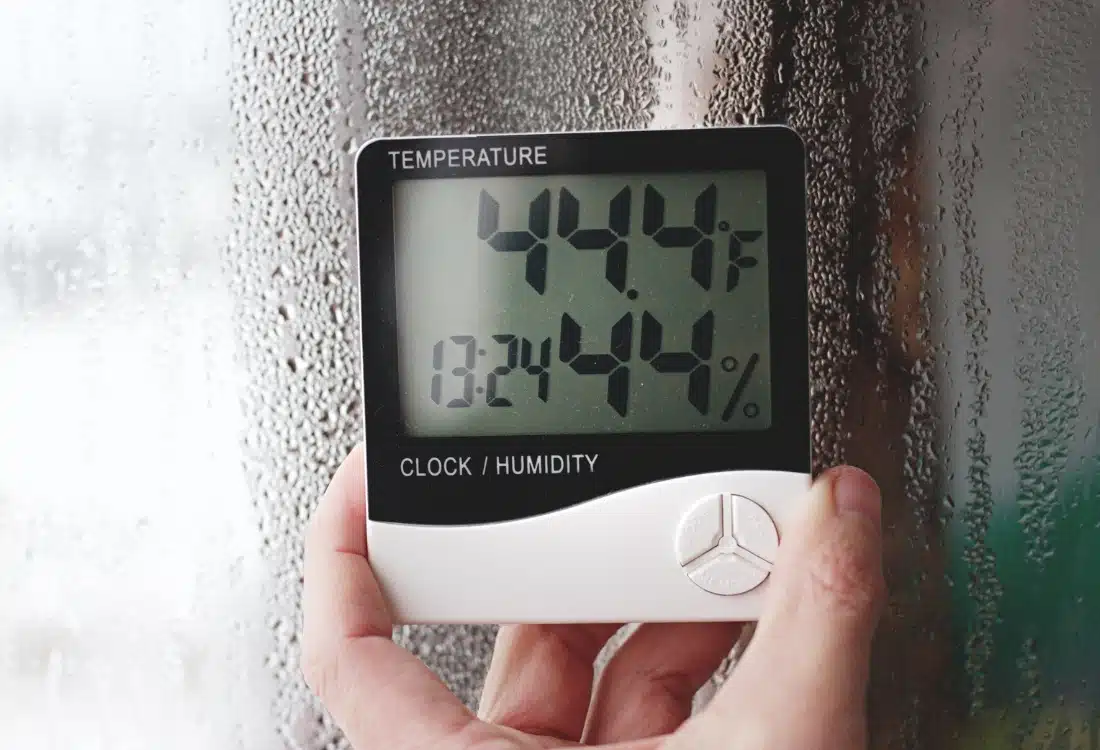
Step 2: Fix Moisture Intrusion and Structural Issues
Upon identifying the sources of excessive moisture, take immediate action to mitigate the problem.
What to do:
- Seal gaps or cracks in your foundation, walls, or floors with hydraulic cement.
- Patch gaps around windows.
- Tighten plumbing connections or replace faulty sections.
- Add pipe insulation if condensation forms.
- Check the sump pump function and clean the pit if necessary.
Step 3: Deep Clean and Disinfect the Basement
Even when your basement is mostly dry, smells can linger around on walls, floors, and other surfaces. A thorough cleaning removes mold spores, dust, and organic buildup that trap smells.
How to clean effectively:
- Scrub walls and floors with a mold-killing solution.
- Wash or remove musty carpets and rugs.
- Wipe down storage bins, shelves, and furniture.
- Vacuum dust and debris before using cleaners.
Cleaning removes the immediate odor, but the smell won’t stay gone unless moisture is controlled.
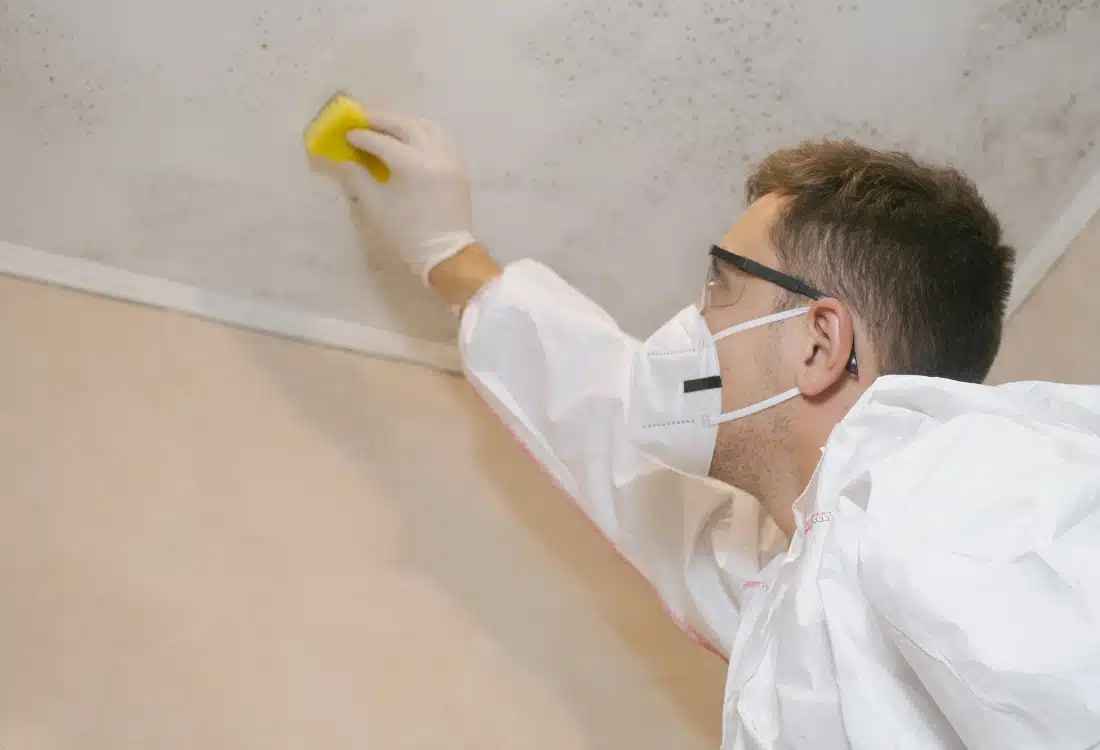
Step 4: Improve Basement Airflow and Ventilation
Once moisture issues have been fixed and the basement area has been cleaned, improving airflow is the simplest way to make your basement smell better.
Ways to boost airflow:
- Open windows when the weather allows.
- Use two fans: one pulling in fresh air, one pushing stale air out.
- Keep the basement door open to mix air with the rest of the house.
- Install an exhaust fan in basements with laundry or bathrooms.
- Move furniture a few inches away from the walls to improve circulation.
Step 5: Install a Dehumidifier for Musty Basement Humidity Control
Humidity above 50% creates the perfect environment for mold and mildew growth, even when surfaces look dry. Installing a dehumidifier pulls moisture out of the air, helping the basement feel fresher within a few days.
How to use a dehumidifier effectively:
- Choose a unit sized for your basement (bigger spaces need higher capacity).
- Set humidity to 45–50%.
- Running it continuously for 3-7 days and consistently reducing moisture are what eliminate the odor problem long term.
- Use a drain hose if you don’t want to constantly empty the tank.
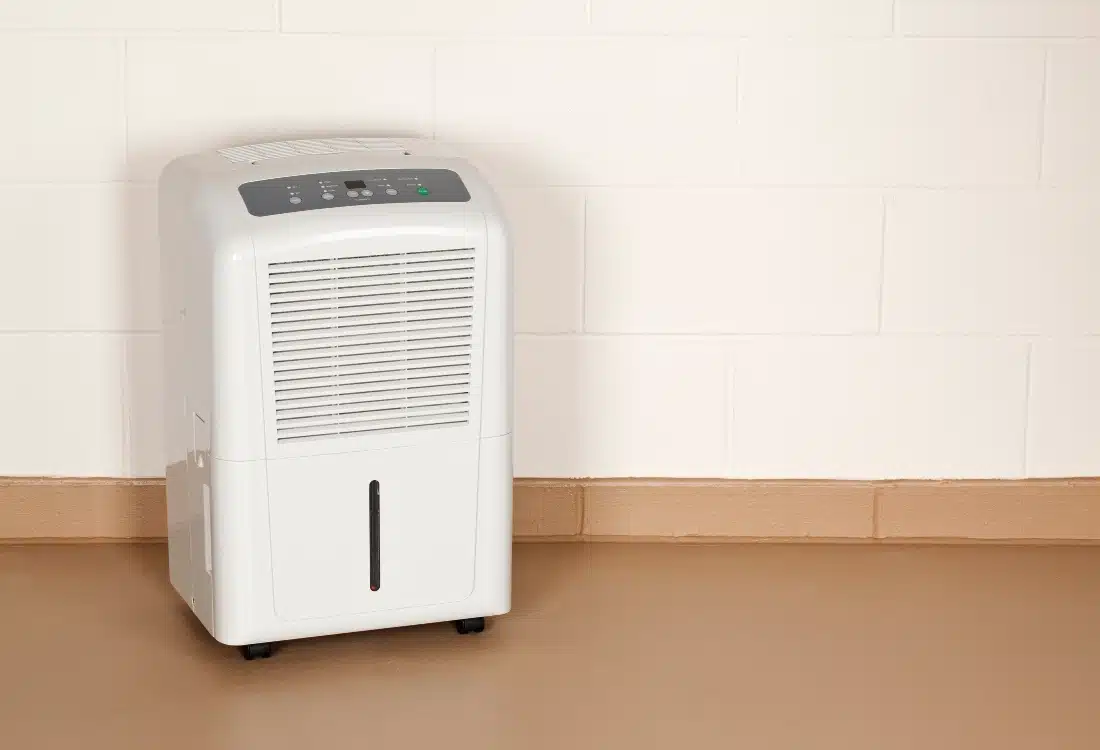
Step 6: Absorb Odors with Natural Remedies
Natural odor absorbers for basements help remove lingering smells while you work on the root cause.
Best odor absorbers:
- Baking soda: great for carpets and fabric.
- Activated charcoal: strong overall odor absorber.
- White vinegar: good for surface odors and mildew.
- Coffee grounds: mild deodorizer for open rooms.
How to use them:
- Place bowls around musty areas
- Leave them for 24–72 hours
- Replace as needed
These won’t fix moisture issues, but odor absorbers help make the basement smell better and freshen the air.
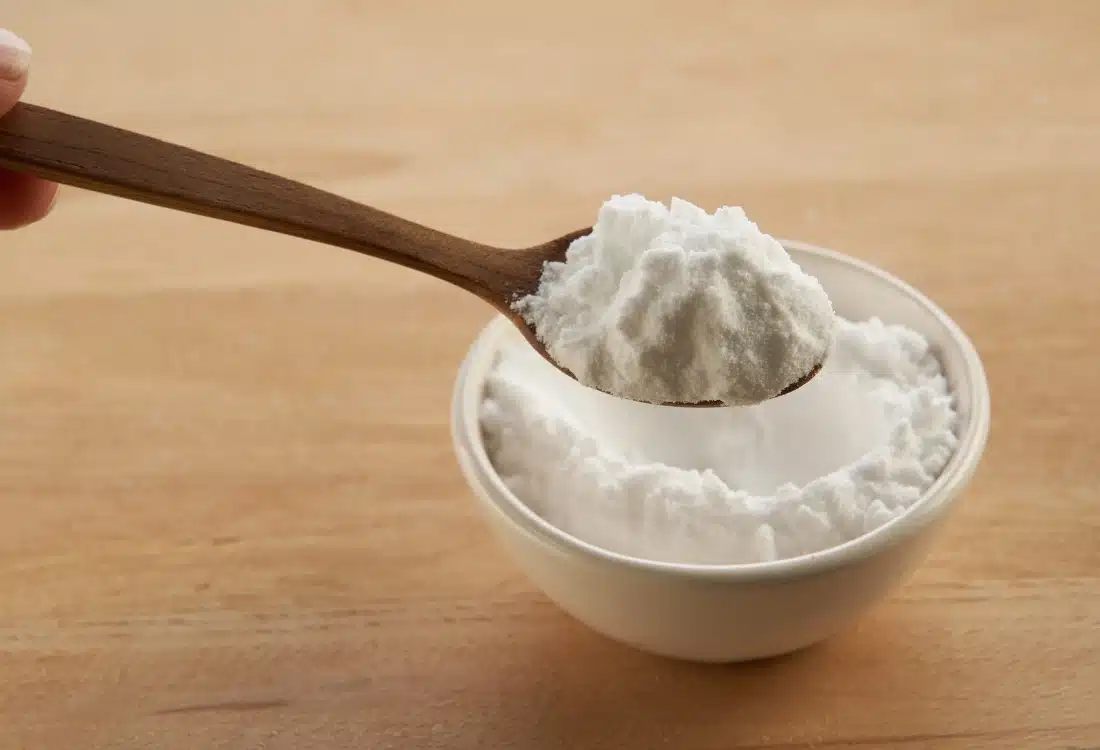
Step 7: Use Odor Eliminating Products (Optional)
If natural deodorizers aren’t enough, commercial odor removers can help.
Options include:
- Odor-neutralizing sprays
- Gel odor absorbers
- Foggers designed for mold and mildew
- Air purifier with HEPA filter for ongoing odor control
Once your basement is clean, don’t skip the next step. Cleaning and store-bought deodorizers only treat the symptom; if moisture keeps coming in, the musty smell will return.
Step 8: Waterproof Your Basement for Long-Term Protection
The most effective way to fix the musty basement smell is to address the root of the problem: moisture.
Long-term waterproofing options:
- Clean gutters, and extend the downspout away from your house.
- Regrade the soil so that water flows away from the foundation.
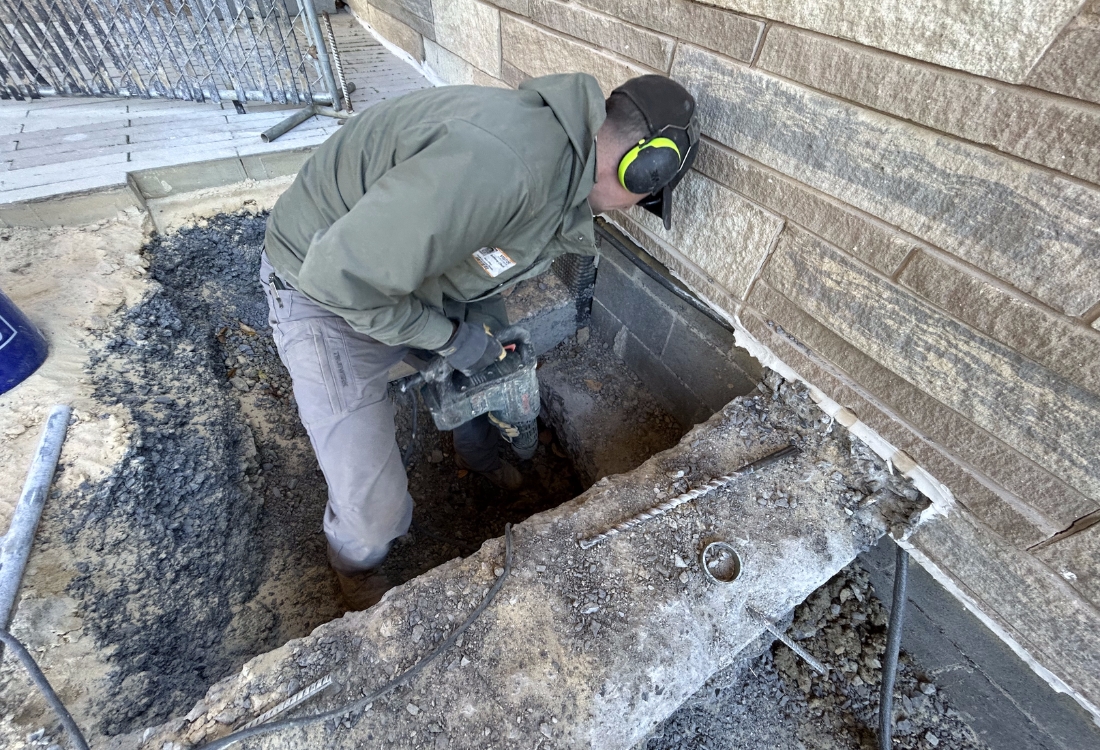
- Install an interior drainage system or basement sump pump.
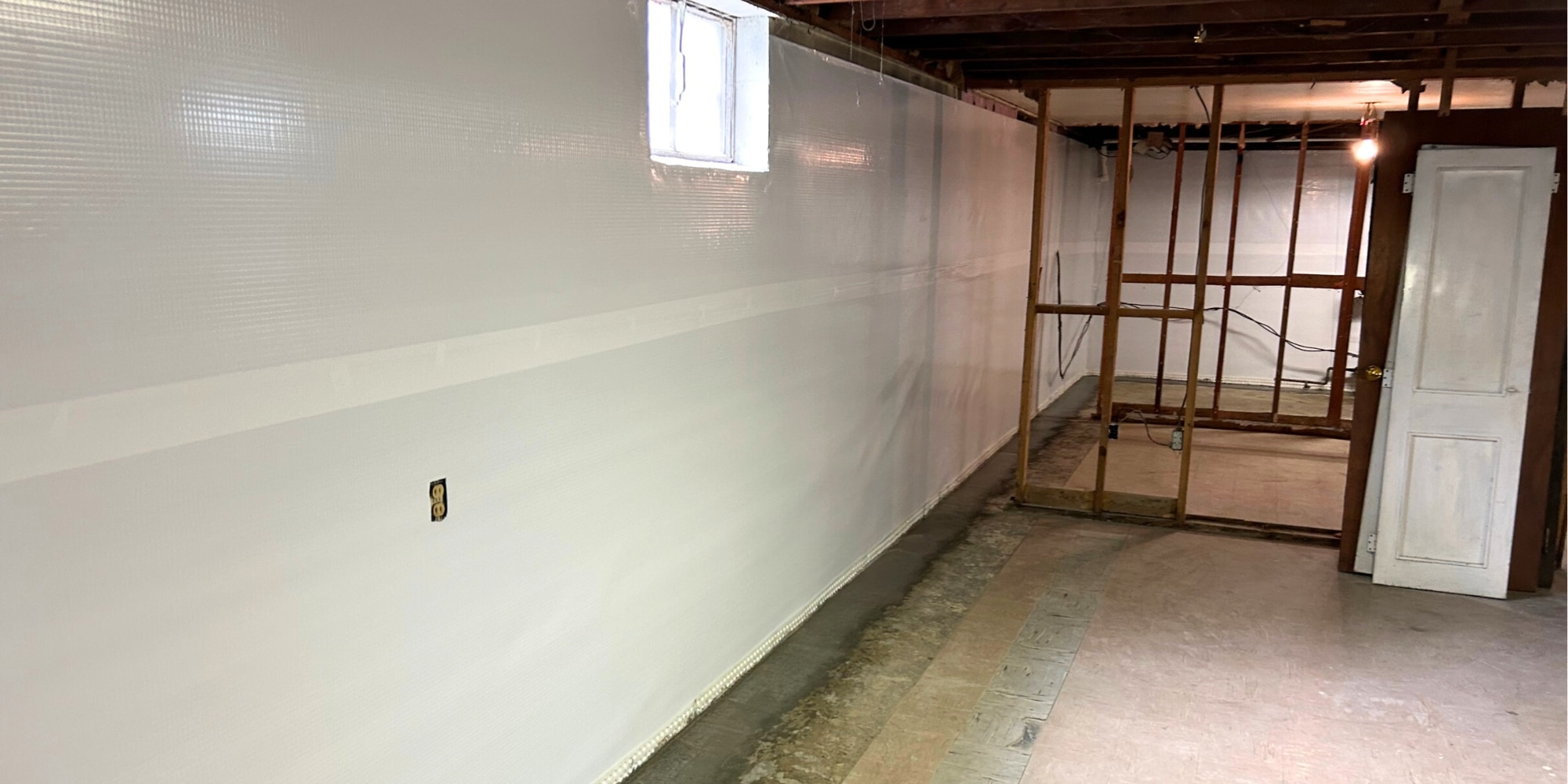
- Add a vapor barrier to the walls.
- Seal cracks and problem areas.
For a permanent musty basement solution, waterproofing addresses the root cause rather than masking the odor.
Step 9: Schedule Regular Cleaning to Maintain a Dry Basement
Maintaining a clean, dry basement is the most reliable long-term way to keep it smelling better year-round. Sticking to a routine and following a healthy basement checklist prevents smells from returning after you’ve eliminated them.
Good habits to follow:
- Vacuum and wipe down surfaces regularly.
- Check for new leaks or damp areas after heavy rain.
- Keep stored items off the floor and in a plastic bin.
- Run a dehumidifier seasonally.
- Improve airflow whenever possible.

Step 10: Consider Professional Help if the Smell Persists
If you have tried these steps and the musty basement smell persists, a professional inspection is the most reliable fix.
When to call a pro:
- Mold present in your basement.
- You smell mustiness but can’t find the source.
- You suspect groundwater seepage.
- Your basement walls are showing cracks or bowing.
- The smell improves but keeps returning every few weeks.
LUX Foundation Solutions can eliminate the musty basement smell permanently by identifying hidden moisture issues and providing long-lasting waterproofing solutions across Northern Virginia and surrounding areas.
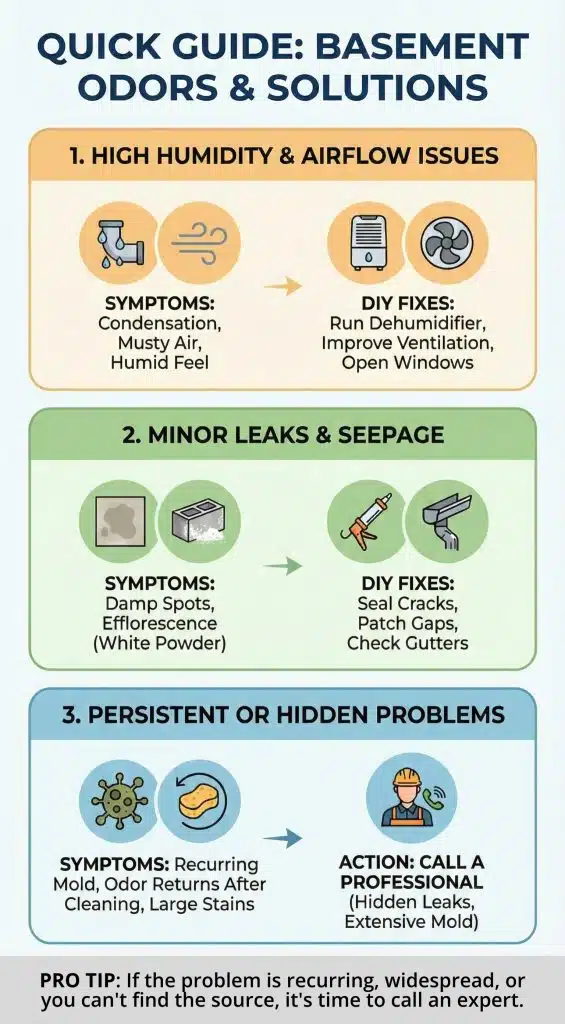
Comparison Table: Musty Basement Problems & Solutions
| Problem / Symptom | What It Usually Means | What You Can Do Yourself | When to Call a Professional |
|---|---|---|---|
| Musty smell but basement looks dry | Hidden humidity, old moisture, or trapped odors | Improve airflow, run a dehumidifier, clean surfaces, use odor absorbers | If smell returns, or you suspect hidden leaks/mold |
| Condensation on pipes or windows | High humidity or poor ventilation | Insulate cold pipes, run a dehumidifier, open windows when dry | If condensation keeps coming back or walls feel wet |
| Damp spots on walls or floors | Minor seepage or water intrusion | Seal small cracks, patch gaps, check gutters & downspouts | If damp areas continue or stains grow over time |
| White, chalky powder on concrete (efflorescence) | Water moving through concrete and evaporating | Scrub affected areas, improve drainage | If efflorescence returns repeatedly — sign of ongoing seepage |
| Mold or mildew on surfaces | Persistent moisture or poor airflow | Clean with vinegar or mold cleaner, remove affected items | If mold covers more than 10 sq. ft. or keeps returning |
| Carpets, boxes, or furniture smell musty | Absorbed moisture or past water damage | Remove carpets, air out or replace stored items, use baking soda | If odor returns even after items are removed |
| Basement humid year-round | Airflow or structural moisture issue | Run dehumidifier consistently, ventilate the area | If humidity stays above 50% even with a dehumidifier |
| Musty smell returns after cleaning | There’s an unresolved moisture source | Re-check leaks, humidity, and stored materials | If you can’t locate the source or suspect wall/floor seepage |
Protect Your Basement With Professional Waterproofing
The most reliable way to get rid of the musty smell in the basement for good is to address the moisture source directly. If the smell keeps returning or you are not sure where it is coming from, a professional evaluation can save you time, damage, and frustration.
LUX Foundation Solutions offers free estimates and long-term waterproofing solutions for homeowners across Northern Virginia, Shenandoah Valley, North Central Virginia, and West Virginia.
If you’re ready for a cleaner, healthier basement, contact us now at 540-616-3900 We’re here to help.
ABOUT THE AUTHOR

Commonly Asked Questions
Will a dehumidifier get rid of a musty smell in the basement?
A dehumidifier can reduce a musty basement smell by lowering humidity and drying out the air. It works best when humidity is above 50% or when condensation forms on pipes, walls, or windows. If the smell comes from an active leak or hidden mold, a dehumidifier won’t fix the root cause.
If the smell persists, our experts at LUX can assess your basement and recommend a comprehensive solution to eliminate musty smells for good.
How long does it take a dehumidifier to remove a musty smell?
A dehumidifier can start reducing a musty smell in 24 to 48 hours, but getting rid of the smell completely can take several days to a week, depending on the basement’s moisture level. If the smell does not improve after a week, there may be hidden moisture or mold that needs professional attention.
If you are unsure what is causing the odor, our experts at LUX can assess the space and recommend the right fix. Schedule a free assessment now.
Does a musty smell in the basement always mean mold?
Not always, but it is a strong indicator. Musty odors are most commonly caused by mold or mildew, which thrive in damp, low-ventilation spaces. However, the smell can also come from stale air, water-damaged materials, or efflorescence on concrete walls.
If the odor is persistent and stronger in specific areas, mold is the most likely cause and warrants a professional assessment to confirm. Request a professional assessment now.
Why does my basement smell musty even if it looks dry?
A visually dry basement can still smell musty because moisture does not need to be visible to cause odors. Mold spores and mildew embedded in drywall, wood framing, or concrete continue to produce odors long after surface moisture has dried.
Poor ventilation traps stale air, and humidity above 50 percent feeds mold growth even without standing water. The source is often hidden behind stored items, inside wall cavities, or within porous building materials.
How can I find the source of the musty smell in my basement?
Identifying the source of the musty smell can be tricky. It could be a hidden leak, condensation, or mold growth in a hard-to-reach area.
LUX offers free assessments to pinpoint the source of the odor and provide tailored musty-basement solutions.
When should I call a professional about a musty basement smell?
Call a professional when the smell persists after completing the cleaning and dehumidification steps, when you see visible mold covering more than 10 square feet, when the odor returns after each rainfall, or when you notice water stains, efflorescence, or cracks in the foundation walls. These signs indicate the source is structural or drainage-related and requires expert assessment rather than DIY remediation.
Share This Guide!
Spread the word about eliminating musty basement odors! Share this guide with your social media friends and family to help them create a healthier, fresher home.