Published: September 14, 2023 • Updated: March 6, 2026
Spotting a crack in your foundation wall or floor can be alarming — but not every crack is a reason to panic. Knowing the difference can save you thousands of dollars in unnecessary repairs or help you catch a serious problem before it gets worse.
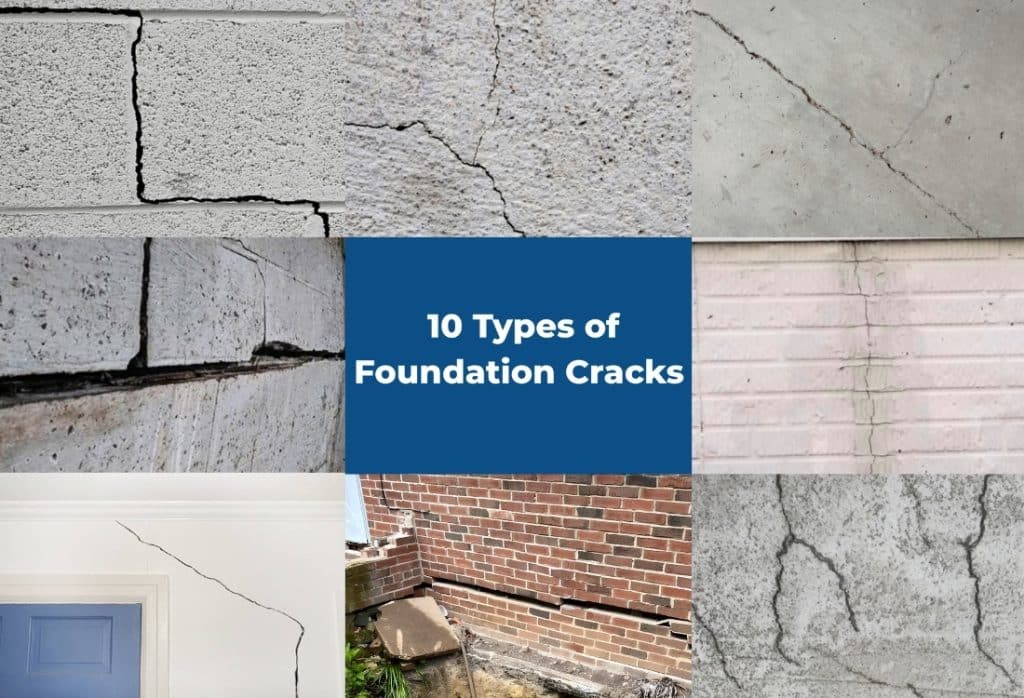
Here are all 10 different types of foundation cracks — what foundation cracks look like, what causes them, how serious they are, and what to do next.
Whether you’re seeing a thin hairline or a wide horizontal gap, use this guide to identify what you’re dealing with before calling a professional.
1. Horizontal Foundation Cracks
What it looks like: A crack runs parallel to the ground across the foundation wall in both poured concrete and concrete block foundations.
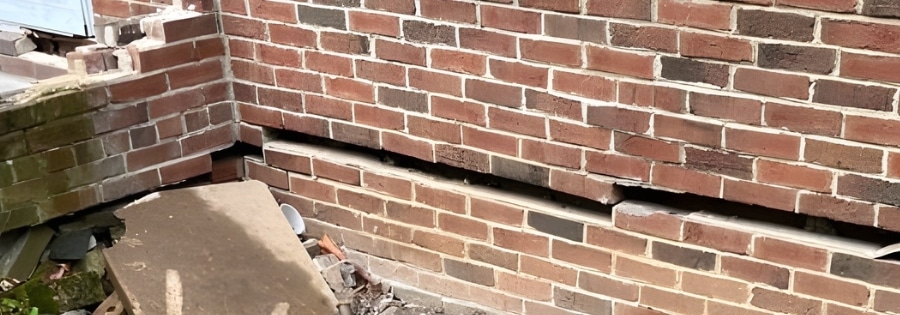
Horizontal cracks in foundation are the most serious type and should never be ignored. They form when saturated soil outside your foundation wall exerts hydrostatic pressure — pushing the wall inward.
In Northern Virginia, clay soils absorb significant moisture during heavy rain and spring snowmelt, and freeze-thaw cycles amplify this pressure every winter. Left untreated, this leads to a bowed or collapsed wall and eventual structural failure.
Causes of Horizontal Cracks
- Hydrostatic pressure from waterlogged soil pushing against the wall
- Poor drainage — improper grading, clogged gutters, missing downspout extensions
- Freeze-thaw cycles and expansive clay soils common in Fairfax, Loudoun, and Prince William counties.
Should You Worry? Yes — immediately. Horizontal foundation cracks are something to be concerned about. Mark the ends with a pencil and date it, then call a foundation specialist the same day. If the wall is already bowing inward, treat it as an emergency.
Repair Options
| Repair Method | Best For |
| Carbon fiber straps | Early-stage bowing walls, preventing further movement |
| Wall anchors | Moderate to severe inward movement |
| Steel I-beams | Severe bowing requiring rigid reinforcement |
| Epoxy or polyurethane injection + reinforcement | Sealing the crack + stabilizing the wall |
| Exterior drainage system | Addressing root cause of hydrostatic pressure |
2. Vertical Foundation Cracks
What it looks like: A crack running straight up and down — or very slightly off-vertical — on the foundation wall. Often narrower at the top and slightly wider at the base.
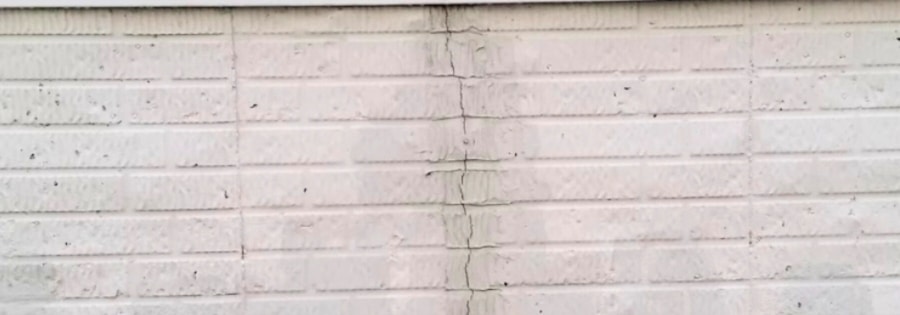
Vertical cracks are the most common cracks in the foundation and are generally the least alarming. They most often appear in newer homes as the foundation concrete cures and the structure settles into the soil.
Cracks up to 1/8 inch wide that are stable and not leaking are typically non-structural. However, even small vertical cracks can allow water to enter during heavy rain, leading to moisture damage and mold over time.
Causes of Vertical Cracks
- Natural settling of the house over time.
- Concrete shrinkage during the curing process (most common in first 1–2 years after construction).
- Differential settlement — one part of the foundation settling faster than another.
Should You Worry? Not usually — if the crack is under 1/8 inch wide, stable (not growing), and dry. Monitor it by marking the ends and dating it. If it is leaking water, wider than 1/8 inch, or has grown since you first noticed it, have it professionally evaluated. Vertical cracks wider than 1/4″ or with any displacement need prompt attention.
Repair Options
| Repair Method | Best For |
| Epoxy or polyurethane injection | Non-structural cracks under 1/8” — seals against water intrusion |
| Carbon fiber straps + injection | Cracks showing movement or slight displacement |
| Professional monitoring | Stable cracks under 1/8” with no water or growth |
3. Hairline Foundation Cracks
What it looks like: Extremely thin cracks less than 1/16-inch wide — sometimes barely visible to the naked eye. They appear as fine lines on basement walls or floors.
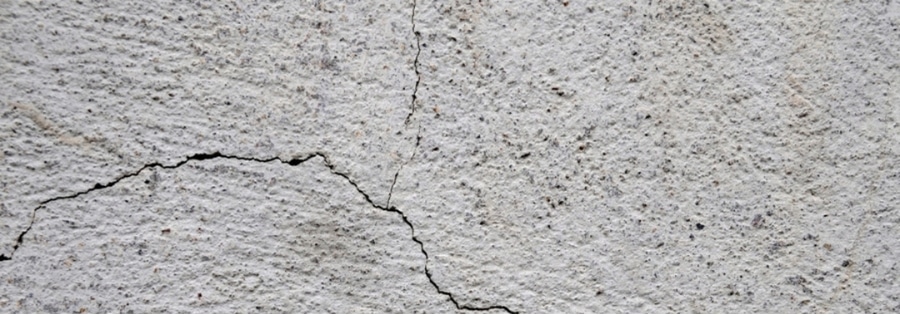
Hairline cracks are the most common type of foundation crack and are typically non-structural. They develop during normal concrete curing as the material dries and shrinks slightly in the days and weeks after being poured.
For a complete guide specifically on hairline cracks in concrete slabs — including when they are normal, what to monitor, and when to act — see our dedicated page: Are Hairline Cracks in a Concrete Slab Normal?.
Should You Worry? Not usually. Monitor periodically — take a photo and check again in 3–6 months. If the crack widens, lengthens, or starts leaking, have it evaluated.
Repair Options
| Repair Method | Best For |
| Waterproofing sealant | Preventing moisture intrusion through very thin cracks |
| Epoxy or polyurethane injection | Hairline cracks showing any signs of water seepage |
| Monitor only | Stable, dry hairline cracks under 1/16” — document with dated photos |
4. Stair Step Foundation Cracks
What it looks like: A diagonal zigzag crack that follows the mortar joints between bricks or concrete blocks — resembling a staircase pattern up the wall.
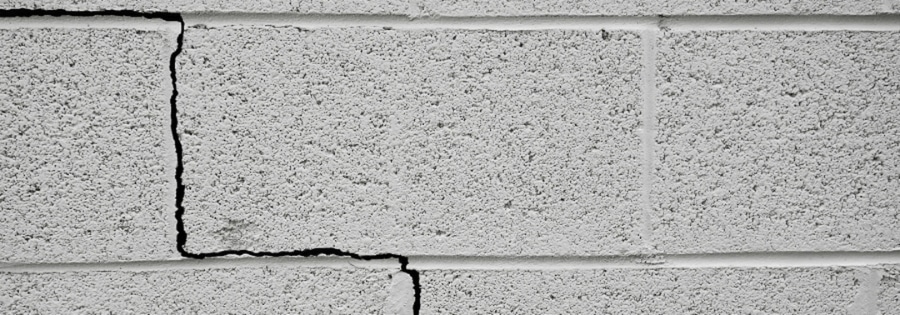
Stair-step cracks are a classic sign of differential foundation settlement — when one section of your foundation is sinking or shifting at a different rate than the rest. Rather than cracking through the blocks themselves (which are harder), the crack travels along the mortar joints, creating the distinctive stair-step pattern.
In Northern Virginia, the clay-heavy soils are particularly prone to seasonal expansion and shrinkage, making differential settlement a common cause of stair-step cracking. Block foundations in older homes across the region are especially susceptible.
Causes of Stair Step Cracks
- Differential foundation settlement — one section sinking faster than another.
- Moisture-related soil movement, particularly in clay-heavy soils.
- Soil shrinkage during dry periods creating voids beneath the foundation.
- Lateral soil pressure shifting the foundation.
- Poor drainage directing water to one area, softening soil unevenly
- Tree roots disrupting soil near the foundation
Should You Worry? Depends on width. If a quarter coin fits into the crack, one side is higher than the other, or it’s visibly growing — call a professional. Small cracks under 1/8″ with no displacement can be monitored.
Repair Options
| Repair Method | Best For |
| Tuckpointing / repointing mortar | Minor cosmetic stair-step cracks with no movement |
| Waterproof sealant application | Sealing against moisture intrusion |
| Helical pier installation | Differential settlement requiring stabilization |
| Push piers | Lifting and stabilizing settled foundation sections |
5. Diagonal Foundation Cracks
What it looks like: A crack running at a 30–75 degree angle from vertical, often starting at the corner of a window or door opening and extending across the wall.
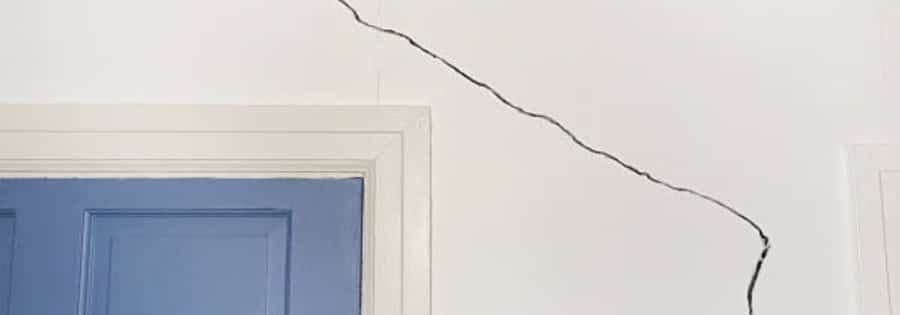
Diagonal cracks are common in poured concrete foundations and often result from normal concrete curing and minor settlement. The key indicator of severity is whether the crack is uniform in width or wider at one end.
A crack that is wider at one end means one section of your foundation has moved more than another — a sign of differential settlement that may be ongoing. In Northern Virginia, diagonal cracks frequently appear at the corners of basement windows, particularly in homes with clay-heavy soil that expands and contracts significantly across seasons.
Causes of Diagonal Cracks
- Natural curing and shrinkage of the concrete foundation wall
- Differential foundation settling — one corner or section sinking unevenly
- Expansive soils exerting uneven pressure across different sections of the foundation
- Tree roots close to the foundation wall shifting soil stability near one section
- Seismic activity (minor tremors do occur in parts of Virginia and West Virginia)
Should You Worry? Depends on the shape. A diagonal crack that is uniform in width (same thickness from top to bottom) is usually low risk — monitor it. But if one end is noticeably wider, you can see displacement (one side higher), or sticking doors and windows have appeared alongside it — these are signs of active foundation movement. Call a professional.
Repair Options
| Repair Method | Best For |
| Epoxy injection | Stable, uniform diagonal cracks — bonds and seals against moisture |
| Carbon fiber reinforcement | Cracks showing movement or wider at one end |
| Push piers installation | Active differential settlement causing ongoing diagonal cracking |
6. Shrinkage Foundation Cracks
What it looks like: A spider web or map pattern of thin, shallow cracks on poured concrete foundations. Usually under 1/8 inch wide and shallow.
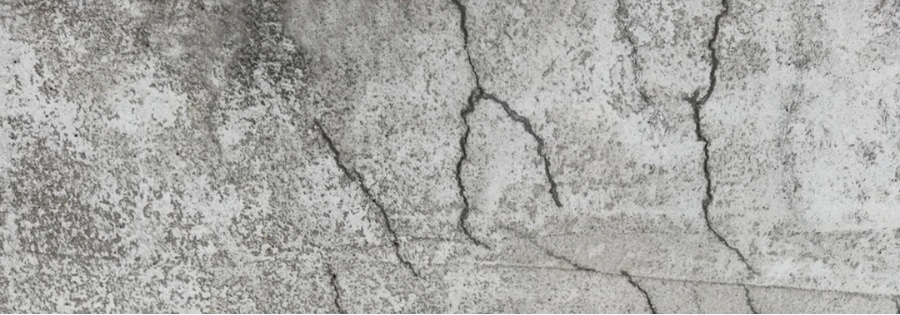
Shrinkage cracks form in the first one to two months after concrete is poured as it loses moisture and dries. They are non-structural and do not threaten your home’s structural integrity.
However, homeowners in Virginia should be aware of one specific risk: radon gas. According to the EPA Radon Zones – Virginia Map, many counties, including Winchester, Frederick, Warren, and Shenandoah, have elevated natural radon levels.
Even tiny shrinkage cracks can allow radon to infiltrate your home from the soil. The EPA recommends testing your home if you have any cracks in the foundation, as radon exposure can increase the risk of lung cancer when the gas is inhaled.
Causes of Shrinkage Cracks
- Rapid concrete drying and a lack of proper control joints or curing during construction.
- Rapid dehydration and evaporation of water from concrete during curing.
Should You Worry? Not structurally, but you should test for radon. If levels exceed 4 pCi/L (EPA action level), radon mitigation is recommended regardless of crack size.
Repair Options
| Repair Method | Best For |
| Waterproofing sealant | Sealing against moisture and radon gas entry |
| Epoxy or polyurethane injection | Wider shrinkage cracks showing any water seepage |
| Radon mitigation system | If radon levels exceed EPA action level — separate from crack repair |
7. Foundation Slab Cracks
What it looks like: Cracks in the horizontal concrete slab floor — in a basement or slab-on-grade home. These are distinct from surface hairline cracks and often indicate movement beneath the slab.
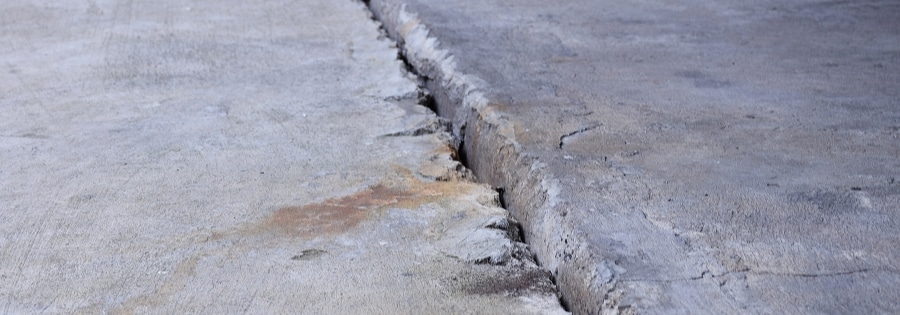
Foundation slab cracks differ from normal surface cracks in one critical way: they can signal movement below the slab — soil voids, settlement, or frost heave — rather than just surface curing.
In Northern Virginia, the freeze-thaw cycle is the leading cause of slab movement in crawl-space slabs at or near grade, while clay soil expansion and contraction affect basement slabs in low-lying areas of the Shenandoah Valley and West Virginia.
Causes of Foundation Slab Cracks
- Soil settlement or voids beneath the slab from poor compaction during construction
- Frost heave — water beneath the slab freezing and expanding during Northern Virginia winters
- Expansive clay soil swelling and shrinking with seasonal moisture changes
- Heavy loads placed on the slab beyond its design capacity
- Changes in drainage patterns directing water beneath the slab
How to Tell If a Slab Crack Is Structural
- One side higher than the other (vertical displacement) — a trip hazard and structural signal
- Width wider than 1/4″ — significant soil movement beneath the slab has occurred
- Growing over time, water seeping upward, or an uneven/sloping floor surface
Should You Worry? Monitor cosmetic slab cracks (uniform, dry, not growing). If any structural signs above are present — displacement, growth, water entry, or an uneven floor — schedule a professional assessment.
Repair Options
| Repair Method | Best For |
| Epoxy injection or patching | Minor, non-structural slab cracks with no displacement or growth |
| Polyurethane foam lifting | Settled or uneven slabs needing lifting and leveling back to grade |
| Push piers installation | Slabs with active settlement requiring permanent stabilization beneath |
| Slab replacement | Severely damaged slabs where repair is not viable |
8. Wet or Leaking Foundation Cracks
What it looks like: Any crack — vertical, shrinkage, hairline — showing visible moisture or active water seeping through after rain or snowmelt.
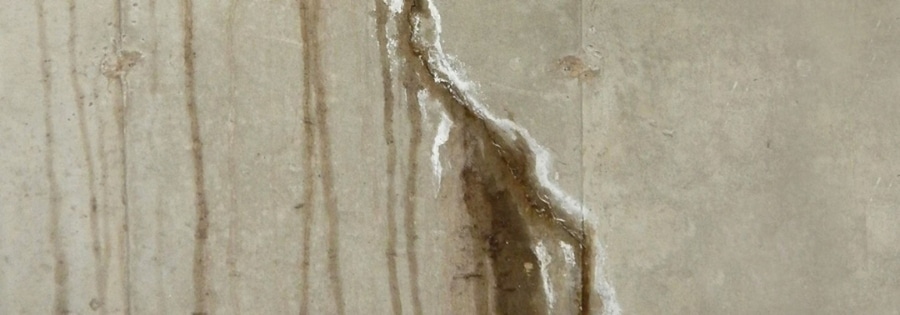
A wet crack is not a separate crack type by shape — it is any crack that has become a water entry point. What makes it distinct and urgent is the active moisture. In Northern Virginia and West Virginia, the highest-risk periods are spring snowmelt and heavy summer rain events that quickly saturate clay soil.
While wet cracks may not always be structural, the water damage they cause — mold growth, wood rot, damaged flooring, and walls — can be far more costly to remediate than the crack repair itself.
Causes of Wet/Leaking Cracks
- Water infiltration through any existing crack during heavy rain or snowmelt
- High water table in low-lying or flood-prone areas of Northern Virginia and West Virginia
- Poor exterior drainage — improper grading, clogged gutters, inadequate downspout extensions
- Aging or failed exterior waterproofing membrane
- Hydrostatic pressure from saturated soil forcing water through any available opening
Should You Worry? Yes — act quickly. Seal the crack as a first step to stop water entry, then address the drainage cause. A foundation inspection will determine whether the problem is due to surface drainage (grading and gutters) or hydrostatic pressure (which requires a drainage system).
Repair Options
| Repair Method | Best For |
| Polyurethane foam injection | Actively leaking cracks — foam expands on contact with water to fill and seal— prevents moisture entry |
| Downspout extensions + regrading | Surface drainage is directing water toward the foundation |
| Interior drainage system + sump pump | Chronic water entry requiring a managed interior drainage solution |
| Exterior waterproofing membrane | Most comprehensive solution — membrane applied at foundation exterior with drainage layer |
9. Non-Structural Foundation Cracks
What it looks like: Thin, vertical or diagonal cracks between 1–2mm wide. No displacement between the two sides of the crack.
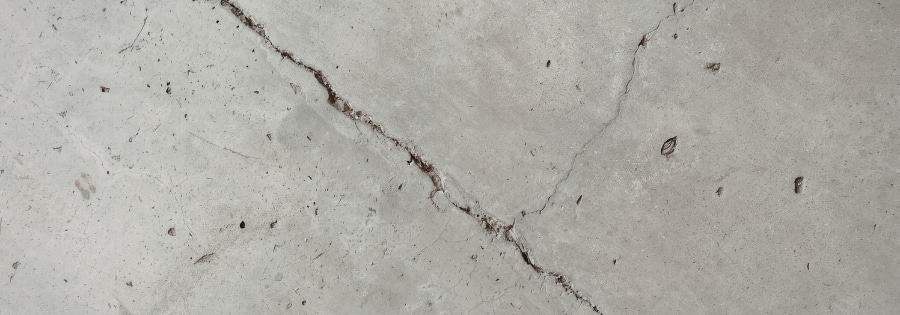
Non-structural cracks do not compromise your foundation’s integrity — they are the normal byproduct of concrete curing being a material that shrinks, cures, and expands slightly over time.
But non-structural does not mean harmless or ignorable. Any open crack — no matter how small — is a potential water entry point. In the damp climate of Northern Virginia, an unsealed crack can become a source of chronic moisture and mold.
How to Identify a Non-Structural Crack
- Width 1–2mm or less (thinner than a dime)
- Runs vertical or diagonal — not horizontal
- No displacement — both sides of the crack are at the same height
- Not growing — same size when checked 3–6 months later
- Dry — no water seeping through
Should You Worry? No structural concern, but should seal it. If you’re not certain whether a crack is structural or non-structural, an assessment removes all guesswork.
Repair Options
| Repair Method | Best For |
| Waterproofing sealant | Simple, dry non-structural cracks — prevents moisture entry |
| Epoxy injection | Slightly wider non-structural cracks to restore surface integrity |
| Monitor only (with photos and dates) | Very thin (<1mm), completely dry, confirmed stable cracks |
10. Structural Foundation Cracks
What it looks like: Defined by behavior, not shape — horizontal cracks of any width, cracks wider than 1/4″, cracks with vertical displacement, active wall movement, or multiple cracks appearing together.
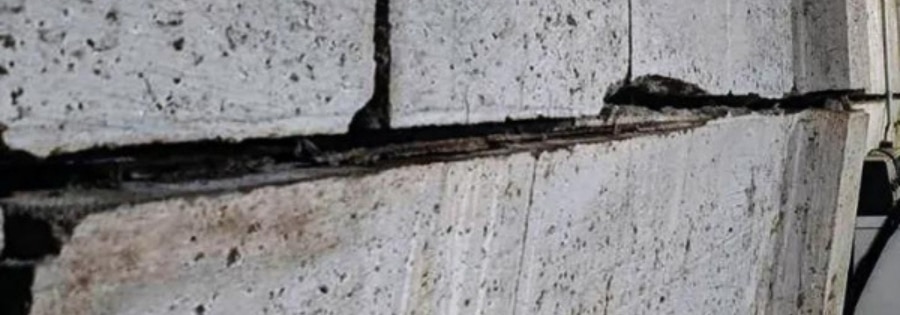
A structural crack is one that compromises the load-bearing capacity or stability of your foundation.
The most important thing to understand: sealing a structural crack without addressing its cause does nothing to stop the movement. Bowing walls, active settlement, and ongoing hydrostatic pressure — these continue working against your foundation until the underlying problem is fixed.
Signs That a Crack Is Structural
- Horizontal orientation — always treat as structural until confirmed otherwise
- Width greater than 1/4″, or vertical displacement (one side higher than the other)
- Visible wall bowing, sticking doors/windows, or multiple new cracks appearing together
- Active growth — measurably longer or wider than 30 days ago
Should You Worry? Yes — immediately. Structural problems do not self-correct. The earlier they are addressed, the less expensive the repair. Contact a foundation specialist for an assessment as soon as possible.
Repair Options
| Repair Method | Best For |
| Carbon fiber straps or wall anchors | Bowing walls with horizontal or structural cracks — stabilizes and in some cases reverses movement |
| Epoxy injection + carbon fiber straps | Structural cracks requiring bonding and surface reinforcement to prevent reopening |
| Helical or push pier installation | Active settlement causing structural cracking — stabilizes foundation at deep stable soil layer |
| Full wall reconstruction | Severely compromised foundation walls beyond reinforcement repair |
What to Do If You’re Seeing Foundation Cracks in Your Home
Cracking in the foundation doesn’t fix itself — but not every crack needs an emergency repair either. What matters most is knowing what you’re dealing with before deciding what to do.
Identifying a problem early is almost always simpler and less costly than waiting. If you’re unsure about what types of foundation cracks you’re seeing, a free assessment removes the guesswork.
At LUX Foundation Solutions, we’ve inspected and repaired foundations across Northern Virginia, Shenandoah Valley, North Central Virginia, and West Virginia. We understand that local conditions affect your foundation differently from those in other regions.
Don’t ignore foundation cracks! Call us at (540) 508-8587 today to schedule a free evaluation and estimate.
Commonly Asked Questions
What does a cracked foundation look like?
A cracked foundation can look different depending on the type.
– Horizontal cracks run parallel to the ground and may be accompanied by a wall bowing inward.
– Stair-step cracks zigzag along mortar joints in block foundations.
– Vertical cracks run straight up and down.
– Diagonal cracks angle from the window or door corners.
Any crack wider than 1/4 inch, with displacement, or with water seeping through is a sign of a serious foundation problem.
What type of foundation cracks to be concerned about?
Horizontal cracks are always the most serious — they indicate lateral soil pressure threatening the wall’s structural integrity and can lead to bowing or collapse if untreated.
Wide diagonal cracks with displacement, and stair-step cracks wider than 1/4 inch in block foundations, are also serious. Structural cracks of any orientation require immediate professional assessment.
What causes cracks in the foundation?
The most common causes are:
– hydrostatic pressure from water-saturated soil,
– freeze-thaw cycles expand soil against the foundation wall,
– expansive clay soil shrinking and swelling seasonally,
– differential settlement where soil beneath the foundation moves unevenly,
– poor drainage directing water toward the foundation,
– tree roots disrupting soil stability,
– and normal concrete curing and shrinkage.
When should I worry about cracks in the foundation?
Worry — and call a professional — when a crack is horizontal, wider than 1/4 inch, has vertical displacement, is actively leaking water, is visibly growing, or is accompanied by bowing walls, sticking doors and windows, or uneven floors. When in doubt, a free assessment is always the right call.
Are horizontal cracks in a foundation bad?
Yes — horizontal cracks in a foundation are always a serious structural problem. They are the most dangerous type of foundation crack, indicating that saturated or frozen soil is pushing laterally against the wall.
Left untreated, horizontal cracks lead to a bowed or collapsed foundation wall. Any horizontal crack requires professional assessment immediately, regardless of its size.
How do I prevent cracks in the foundation?
Proper drainage is the most effective prevention: maintain clean gutters, extend downspouts at least 6 feet from the foundation, grade landscaping away from the house, and avoid overwatering near the foundation.
Schedule a professional foundation assessment every 3–5 years — especially in Northern Virginia and WV, where clay soils and freeze-thaw cycles create high seasonal stress on foundations.