Written By Bridget Stieb, Director of Marketing at LUX Foundation Solutions • Reviewed by LUX’s foundation repair specialists serving Northern Virginia & Florida
If your energy bills keep climbing no matter how much you adjust the thermostat, the answer may be directly beneath your feet.
Unsealed crawl spaces are one of the most overlooked drivers of high energy consumption in homes. When moisture intrusion, cold drafts, and uncontrolled airflow freely exist beneath your floors, your HVAC system constantly compensates by running longer cycles, working harder, and driving up your monthly energy bills.
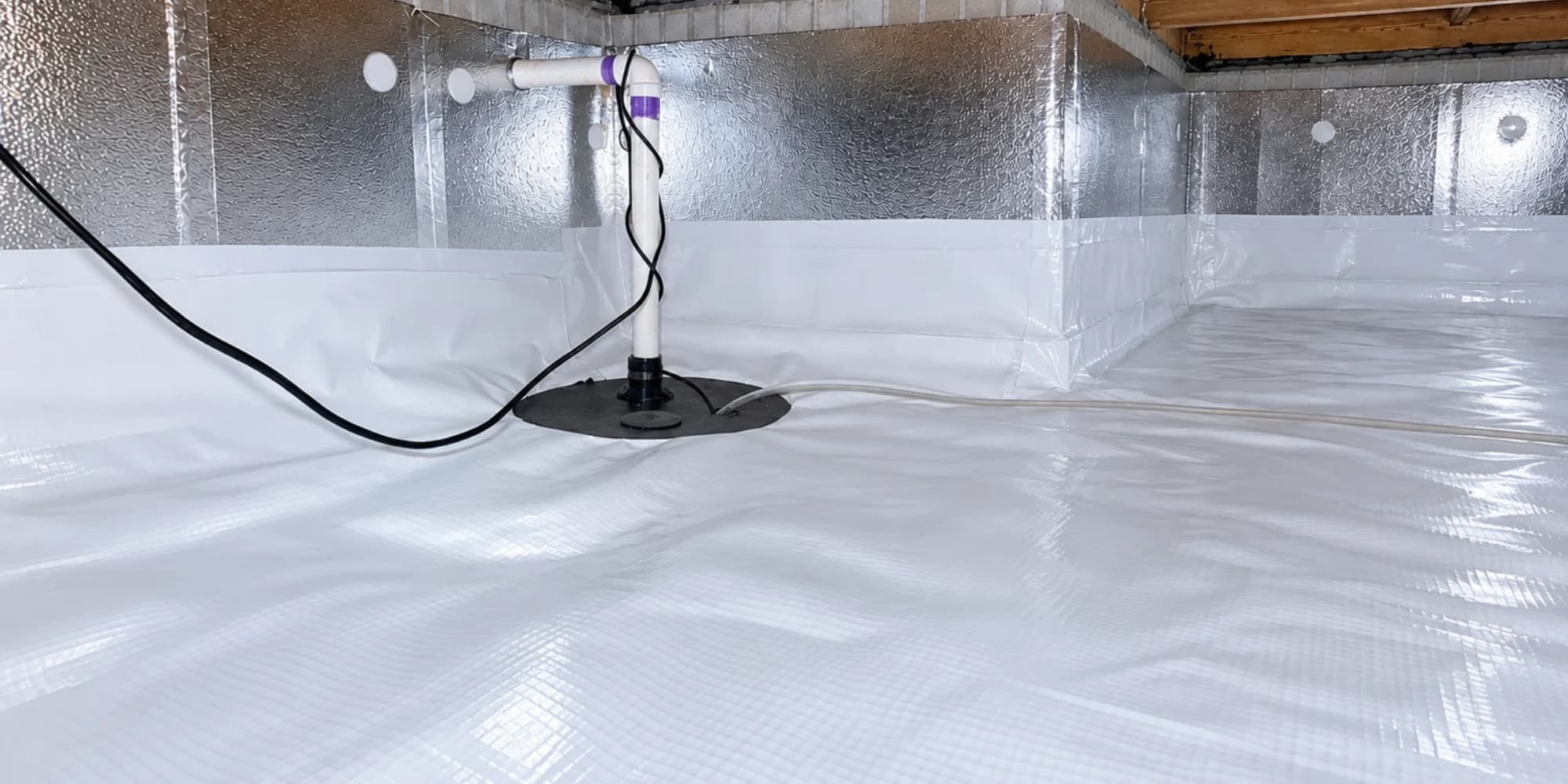
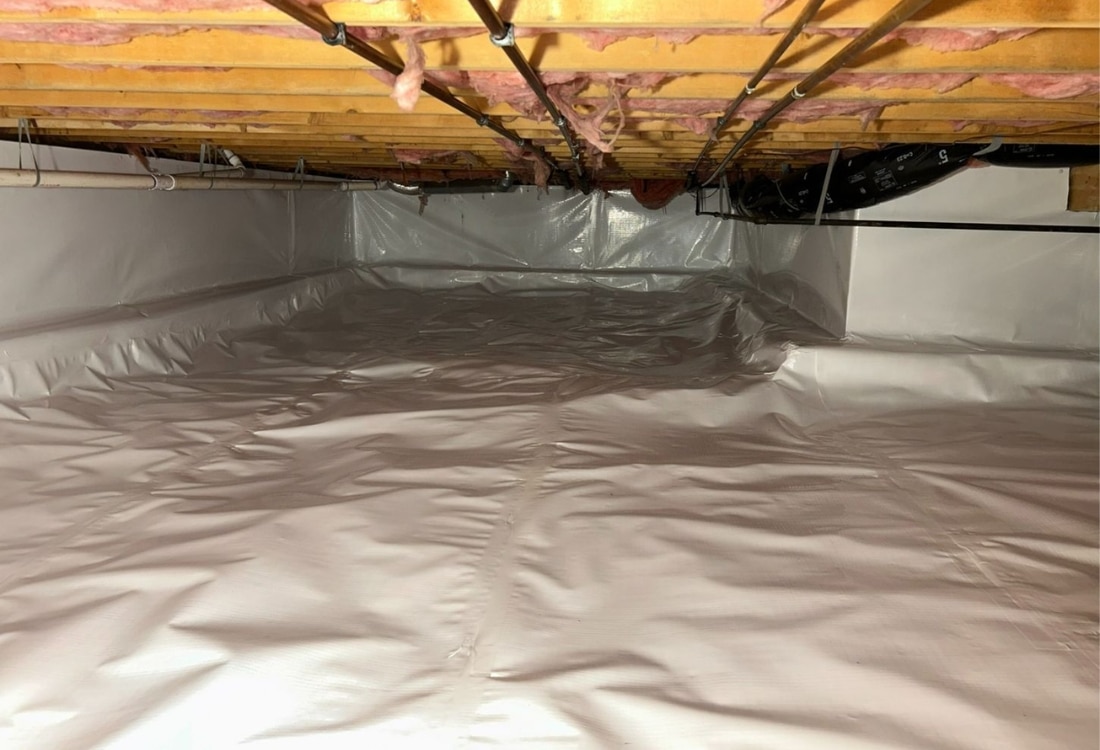
Crawl space encapsulation involves sealing the entire crawl space, transforming an open, uncontrolled environment into a conditioned space that supports an energy-efficient home year-round.
In this guide, we break down the science behind why your crawl space affects your energy bills, how encapsulation solves the problem, and what you can realistically expect to save.
Why Do Unsealed Crawl Spaces Raise Your Energy Costs? The Stack Effect Explained
To understand why encapsulation saves you money, you need to understand how your home actually breathes. This is called the Stack Effect, and it is the main reason your energy bills may be higher than they should be.
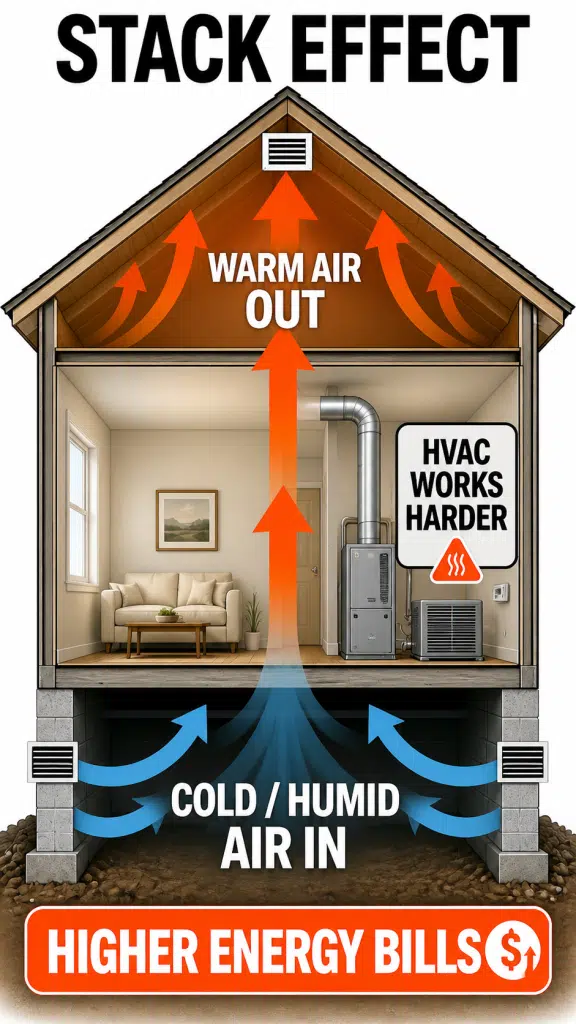
How the Stack Effect works:
Your HVAC system overworks to compensate, raising your energy bills.
- Warm air rises and escapes through your attic.
- Negative pressure pulls cold/humid air in from the crawl space.
- Your HVAC system overworks to compensate, raising your energy bills.
In winter, you turn on your heater. Warm air is lighter than cold air, so it rises toward your ceiling and eventually escapes through tiny gaps in your attic and roof. As that warm air leaves, it creates a vacuum, or negative pressure, in the lower parts of your home. To fill that vacuum, your home pulls in air from the lowest point it can reach.
If your crawl space has open vents, it means a constant draw of freezing-cold winter air or thick, humid summer air straight up through your floorboards and into your living space. Your HVAC system now has to work twice as hard to compensate
How Does Crawl Space Encapsulation Reduce Your Energy Costs?
Encapsulation is not just about putting plastic on the ground. It is a comprehensive system that changes how your home handles energy. Here are the five technical reasons why this process lowers your monthly bills.
1. Eliminating Air Leakage
Standard crawl spaces are built with vents. For decades, building codes required these vents to be open because people thought they helped dry out the space. We now know that was a mistake. In the summer, vents let in hot, humid air. In the winter, they let in cold, freezing drafts.
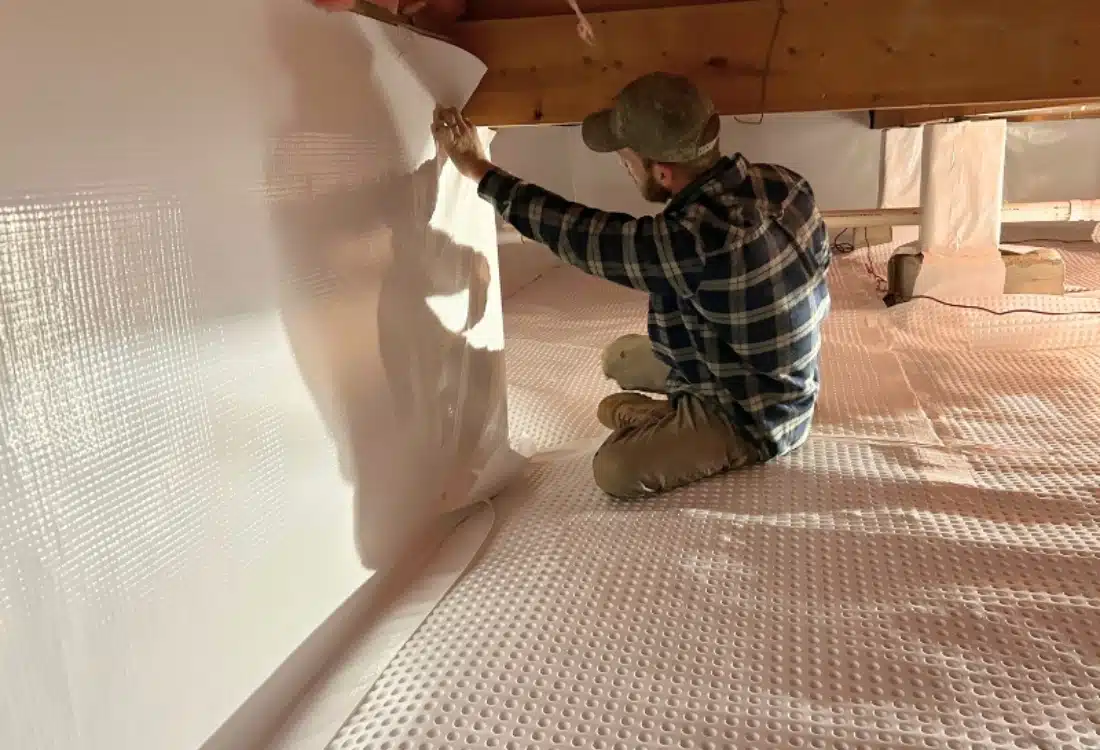
When you encapsulate, you seal the vents and closing gaps along the sill plate, where the wood frame of your house meets the concrete foundation. This stops the constant exchange of air. Instead of trying to heat the entire outdoors, your furnace only has to heat the air inside your living room.
2. Reducing Your Humidity Load
This is a major factor in summer energy savings. Most people think air conditioning is just about temperature. It is not. Humid air holds far more heat than dry air, which means your AC has to do two jobs at once: remove the moisture and lower the temperature. If your crawl space is pumping humidity into your home, your AC stays stuck in “dehumidification mode” and rarely gets a chance to cycle off.
By installing a durable vapor barrier, you stop moisture from evaporating out of the soil. This lightens the load on your AC, allowing it to reach the target consistent indoor temperature much faster.
3. Improving Your Ductwork Efficiency
In many homes, the HVAC ducts run right through the crawl space. If that space is unconditioned, your ducts are in an environment that might be 40 degrees in winter or 90 degrees in summer.
Metal ducts are not perfect insulators. If you are trying to send 70-degree air to your bedroom but the duct runs through a 90-degree crawl space, the air will warm up before it ever reaches the vent. This is a massive waste of energy. Encapsulation brings the crawl space temperature much closer to the temperature inside your home, so your ducts deliver conditioned air to every room without losing efficiency.
The EPA estimates that a typical U.S. home has 23% total system duct leakage. In an unconditioned crawl space, that leakage compounds. Air escaping from ducts is immediately replaced by hot or cold crawl space air, creating a double energy loss. Encapsulation eliminates one side of that equation by conditioning the environment around the ducts. (Source: EPA Energy Star air sealing and insulation savings estimates)
4. Restoring Your Insulation Performance
Most traditional crawl spaces use fiberglass batt insulation tucked between the floor joists. Fiberglass is like a wool sweater. It works great as long as it stays dry. However, fiberglass is porous and holds onto moisture.
When a crawl space is damp, that insulation gets heavy, sags, and loses its R-value. R-value is the measure of how well a material resists heat flow. Wet insulation has almost zero R-value. By encapsulating the area and keeping it dry, your insulation actually does its job.
In many cases, the old fiberglass is replaced with rigid foam insulation on the foundation walls, which withstands moisture and does a far better job of keeping heat where it belongs.
5. Dehumidifier Actively Maintains Humidity Below 55 Percent
A crawl space dehumidifier, paired with encapsulation, keeps humidity at a level where mold growth cannot occur, supports a healthier indoor environment, and keeps your HVAC system running at peak efficiency. This is not the small unit you find at a hardware store. These are industrial machines designed to pull gallons of water out of the air every day.
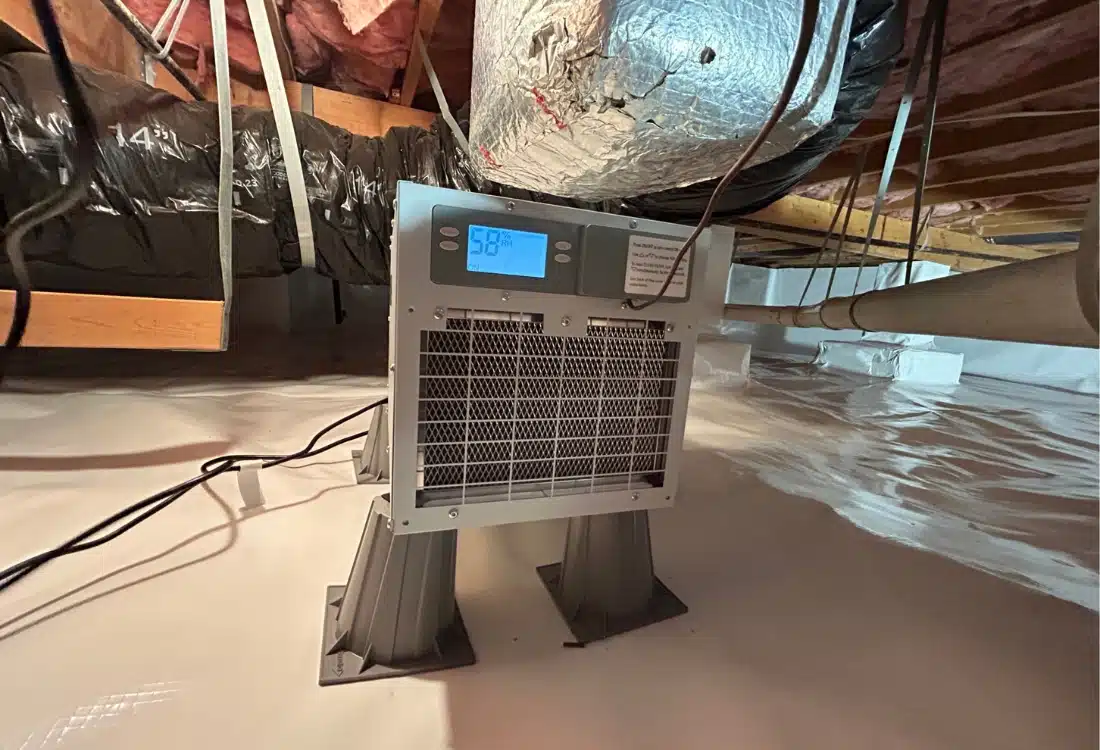
Running a dehumidifier typically adds about $10 to $30 per month to your electricity bill, depending on usage and unit efficiency. But the efficiency gains from your heating and cooling system running fewer cycles typically save $60 to $80 per month. The math works strongly in your favor.
For maximum efficiency, choose an Energy Star-certified crawl space dehumidifier. These units extract more moisture per kilowatt-hour than standard models.
By the Numbers: Can Encapsulation Help Reduce Energy Costs Significantly?
According to the EPA’s Energy Star program, homeowners who air-seal and insulate their attics and crawl spaces can save an average of 15% on heating and cooling costs, or 11% on total energy costs. In older homes with open foundation vents and degraded floor insulation, significant energy savings of 20 to 25 percent are possible.
| Monthly utility bill | 15% savings/month | 20% savings/month |
| $150 / month | $22.50 saved | $30.00 saved |
| $200 / month | $30.00 saved | $40.00 saved |
| $300 / month | $45.00 saved | $60.00 saved |
| $400 / month | $60.00 saved | $80.00 saved |
For most homeowners, the annual energy savings from crawl space encapsulation range between $200 and $600, depending on home size and current crawl space conditions.
The return on investment is not just about the monthly bill. You also have to consider the lifespan of your HVAC system. A system that does not have to fight the stack effect or high humidity will last several years longer than a system that is constantly running at capacity.
Replacing an HVAC system can cost $8,000 to $15,000, so even a few extra years of life are a significant financial win that adds to your long-term savings, on top of the energy savings you’re already realizing.
Professional Crawl Space Encapsulation vs. DIY Options Impact on Energy Efficiency
DIY encapsulation kits exist, and yes, you can find tutorials online to do it yourself. But if your goal is actually lower energy bills, the seal has to be airtight. A partial seal gives you partial savings, sometimes as little as 20% of what a professional installation would deliver.
The areas most homeowners miss are the rim joists and sill plates, the spots where your home’s wood frame meets the concrete foundation. Professionals seal these with closed-cell spray foam that expands into every crack. A DIYer using tape or plastic sheeting will almost always leave gaps. Even a gap the size of a quarter lets hundreds of cubic feet of air through every single day.
Professional crawl space encapsulation also comes with warranties. We always recommend a professional assessment and installation.
Here is what the difference looks like in practice:
| Professional | DIY | |
| Vapor barrier | 20-mil reinforced, tear-resistant | Consumer-grade, shifts and tears |
| Rim joist sealing | Closed-cell spray foam | Tape or mastic, gaps likely |
| Vent sealing | Complete | Often missed |
| Dehumidifier | Correctly sized for your space | Guesswork |
| Warranty | 25 Years | None |
| energy savings | Full 15 to 20% | As low as 20% of potential |
For homeowners who want the full reduction in their monthly energy bills, LUX professional installation uses high-quality materials and sealing techniques for every encapsulation job in Northern Virginia, the Shenandoah Valley, North Central Virginia, and West Virginia, and is backed by solid warranties.
Is Crawl Space Encapsulation Worth the Investment?
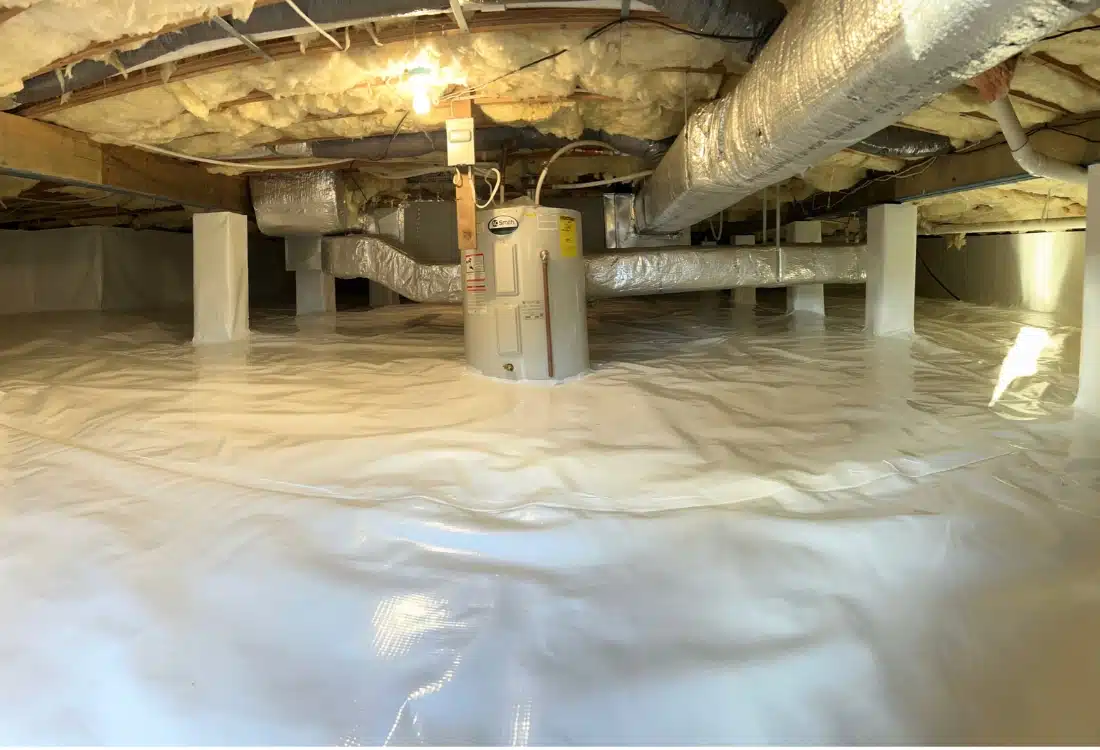
Yes, encapsulation is a worthwhile investment. The upfront investment in crawl space encapsulation is recovered through lower energy costs, avoided costly repairs due to mold growth and wood-rot structural damage, and the positive impact on your home’s resale value.
Today’s buyers are paying closer attention to the condition of crawl spaces, and having one that’s properly encapsulated is widely seen as an upgrade and added home value. It can make a home more energy-efficient and more competitive in the real estate market.
Every month your crawl space remains unsealed, the HVAC system is forced to work harder than necessary, which can drive up energy costs. At the same time, higher moisture levels can build up over time, exposing structural wood to conditions that may lead to rot and mold growth.
Protect Your Home and Reduce Your Energy Costs with Crawl Space Encapsulation
If your energy bills are higher than expected and your home struggles to stay comfortable, it may be time to inspect the crawl space. LUX Foundation Solutions specializes in professional crawl space encapsulation designed to reduce your energy costs, with warranties on every installation.
If you are in Northern Virginia, the Shenandoah Valley, North Central Virginia, or West Virginia and would like to discuss your crawl space conditions, our team is ready to help. Call 540-616-3900, fill out our online estimate form, or talk with our team today to schedule a free on-site assessment.
Now that you know how crawl space encapsulation can reduce your energy costs, want to learn everything about the encapsulation process? Read our complete guide: What is Crawl Space Encapsulation? Complete Guide for Homeowners
ABOUT THE AUTHOR

Commonly Asked Questions
Does encapsulation help reduce energy costs in the summer, too?
Summer is usually when the difference in humidity control becomes most noticeable. An open crawl space can draw in warm, moisture-heavy air, which adds extra strain on your air conditioner as it works to remove that humidity before it can cool your home effectively. By sealing the space, you keep moisture out, letting your AC focus on cooling the air rather than drying it.
Should I encapsulate if I don’t have a moisture problem?
You might not have standing water in your crawl space, but you likely still have “vapor drive.” Moisture constantly evaporates out of the soil, even if the dirt looks dry. This invisible vapor increases the humidity in your home. If your goal is lower utility bills, saving money, and a more comfortable home, encapsulation is still worth it for the air-sealing benefits alone.
Do I need a dehumidifier after encapsulating?
In almost every climate, the answer is yes. Once you seal the vents, you have trapped air inside. Without a dehumidifier, even a small amount of moisture can build up over time because there is nowhere for it to go. To maximize your energy savings, set your dehumidifier to maintain a humidity level between 45% and 55%. This keeps the air “light” and easy for your HVAC system to move and condition.
Can I encapsulate my crawl space myself?
While DIY kits exist, a professional installation ensures a complete, gap-free seal that delivers energy savings and moisture-control benefits. Consumer-grade vapor barrier materials and incomplete penetration sealing leave the crawl space vulnerable to continued moisture intrusion. Professional installation with a warranty is the route most homeowners take to achieve measurable, lasting energy savings.
What is the difference between a vapor barrier and full encapsulation?
A vapor barrier is a single-component system in which a plastic sheet is laid on the crawl space floor to block ground moisture. A full encapsulated crawlspace is a complete system: a durable vapor barrier across the floor and walls, sealed foundation vents, insulated walls, a dehumidifier, and a sump pump, all installed where water intrusion is a risk.
A vapor barrier alone reduces moisture intrusion but does not deliver the full energy savings, air sealing, healthier air, and indoor air quality benefits of a complete encapsulation system.