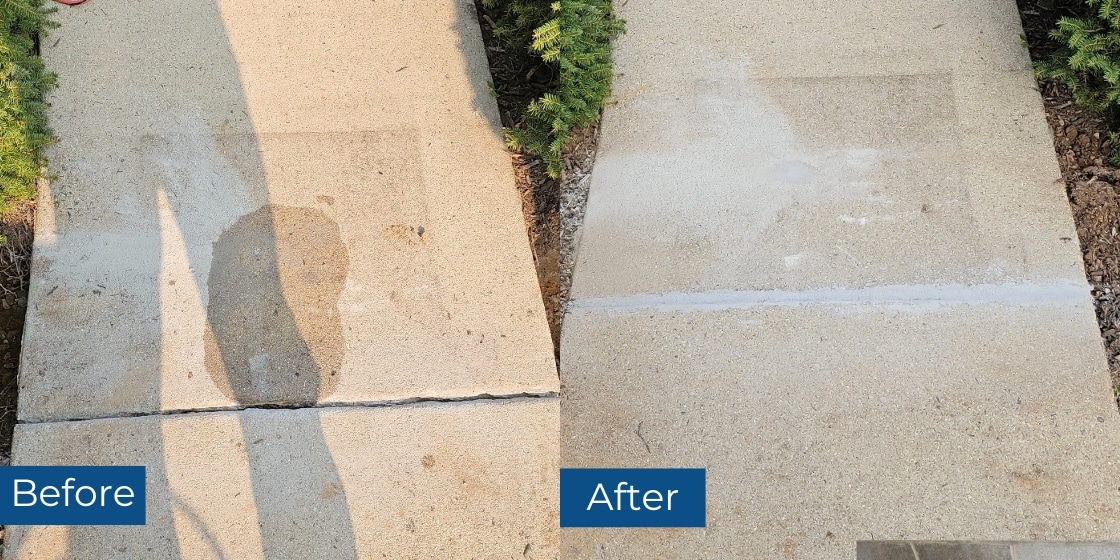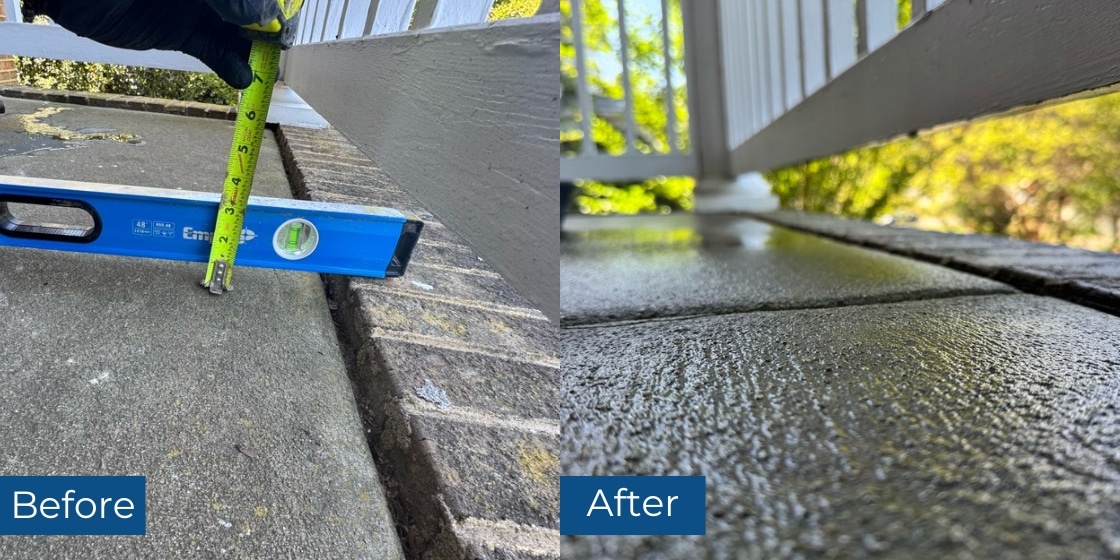
Sunken or uneven concrete can make patios, walkways, slabs, and other surfaces difficult to use and less attractive. Concrete lifting raises settled sections back to its original position, helping create a more consistent surface. This restores the surface’s function and appearance while usually causing less disruption to your property than replacing the entire slab.
Below are 10 benefits of concrete lifting to consider before deciding how to handle sunken or damaged concrete around your home.
Here are 10 benefits of concrete lifting and what they can mean for your home.
Key Takeaways:
- Concrete lifting restores level, functional surfaces without removing the entire slab.
- The repair addresses both appearance and usability with minimal disruption compared to full replacement.
- These benefits can help you decide how to handle sunken or damaged concrete around your home.
Why Consider Concrete Lifting for Sunken Concrete?
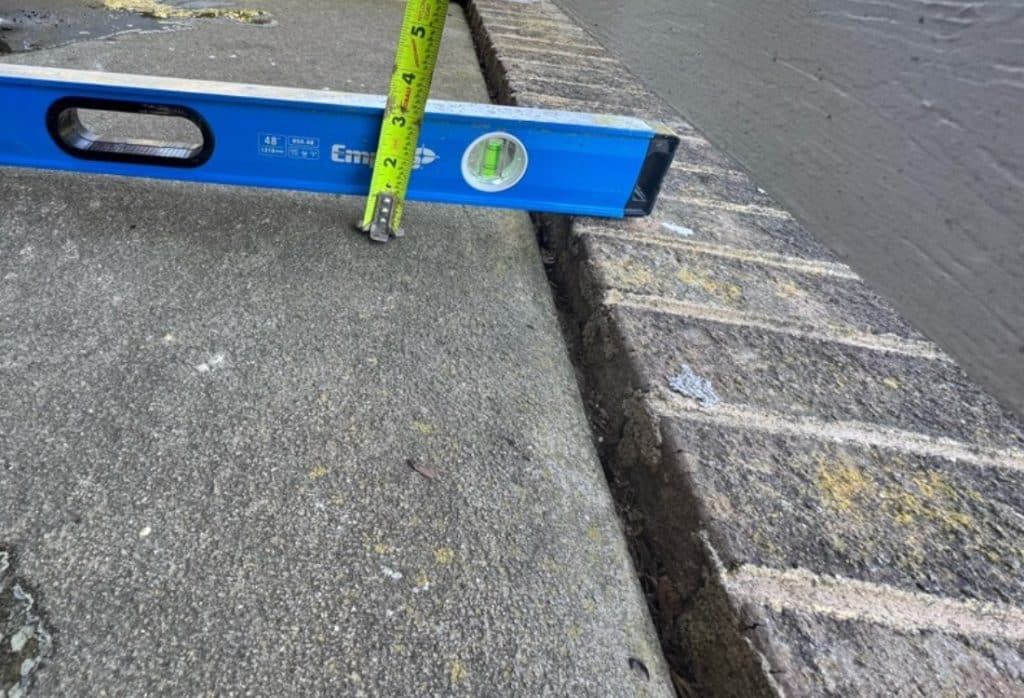
When concrete settles, the surface can become uneven, create trip hazards, collect water, or make an area harder to use. Raising the settled slab through concrete lifting addresses that change in elevation and restores a more level surface.
If you’re dealing with these concrete problems, this offers significant advantages, since the existing concrete may not need to be removed completely. When the slab is suitable for lifting, the repair can reduce demolition, limit disruption around the property, and restore the surface without a full teardown.
10 Benefits of Concrete Lifting
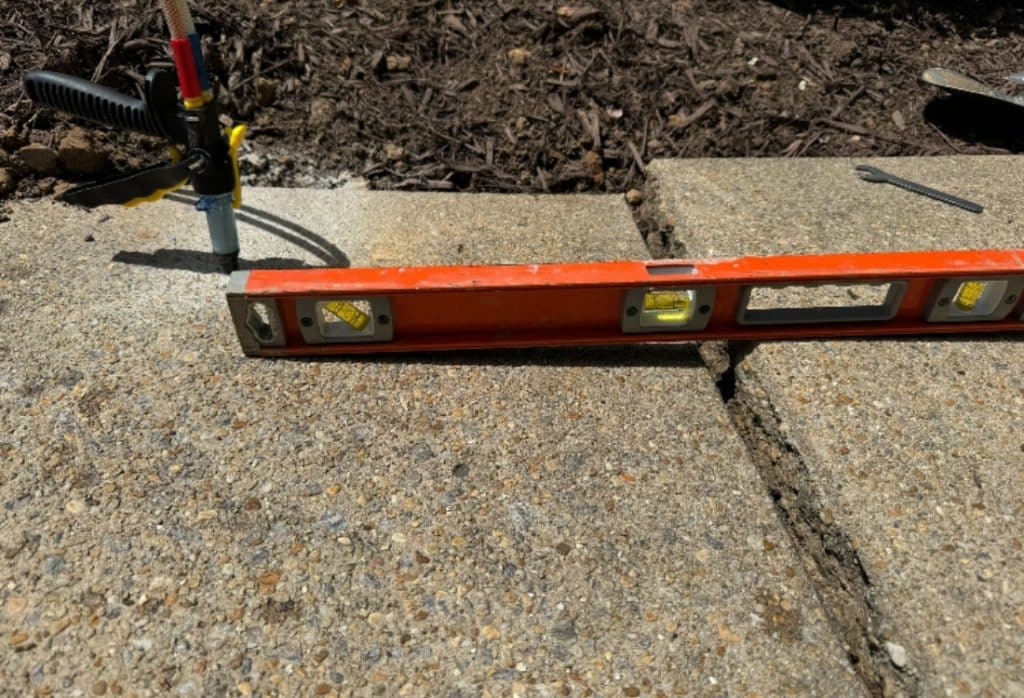
Concrete lifting offers more than a way to raise sunken concrete and level concrete slabs, providing several advantages beyond appearance alone. When the slab is suitable for lifting, it can improve safety, usability, and appearance, and reduce the disruption involved in the repair. Here are 10 benefits worth considering when dealing with uneven or settled concrete.
1. Restores Uneven Concrete
When concrete settles, sections can drop below the surrounding surface, leaving uneven transitions, sloped areas, or raised edges. That can make a walkway harder to cross, leave a patio uncomfortable to use, or create a tripping hazard around the property.
Concrete lifting raises the settled sections to restore a more level surface. Instead of tearing out the existing slab, the repair works with the concrete already in place when it is suitable for lifting. The result is a more functional surface with the uneven elevation corrected.
2. Improves Safety Around the Property
Uneven concrete can create raised edges, sudden changes in elevation, and other tripping hazards. Walkways, steps, patios, driveways, and other high traffic areas can become harder to navigate when sections settle at different levels.
Concrete lifting addresses the settled section to correct uneven areas and create a more stable, level walking surface. This can reduce trip hazards while making the area easier to use for family members, guests, and anyone moving around the property.
Correcting these elevation changes can make frequently used areas safer for family members, guests, and others on the property.
3. Improves Drainage and Water Flow
When concrete settles, its original slope can change, causing rainwater to collect in unwanted areas. A sunken porch, driveway, walkway, or slab near the house may direct water toward the foundation instead of away from it.
Concrete lifting can raise the slab back to the proper level and slope, allowing water to drain away from the home instead of pooling around it. Better drainage can reduce standing water and the problems that can develop when moisture repeatedly collects in the wrong areas.
4. Reduces Demolition and Cleanup
Traditional methods of replacing a settled concrete slab usually means breaking out the existing material, removing the debris, preparing the area, and concrete pouring for the new slab. That can turn a localized settlement problem into a larger repair project involving complete replacement of the slab.
Concrete lifting can restore concrete surfaces efficiently on suitable existing slabs without removing the entire surface. Because the concrete stays in place, there is less demolition and less material to haul away during the repair.
That means less debris and cleanup around the affected area once the work is complete.
5. Minimizes Disruption to the Property
A concrete replacement can affect more than the damaged slab. Demolition may disturb nearby landscaping, walkways, walls, or other areas around the repair.
Concrete lifting works with the existing slab, so the repair typically requires less demolition and fewer changes to the surrounding area. This can make it easier to address settled concrete without turning the repair into a larger construction project.
Less extensive work also means fewer areas need to be disturbed during the repair.
6. Preserves Usable Existing Concrete
Not every sunken concrete slab needs to be torn out. If the concrete is still structurally suitable for lifting, the existing surface can often be raised instead of undergoing a complete slab replacement.
Concrete lifting raises the settled slab while keeping it in place. This can preserve a surface that is otherwise usable, avoiding the need to discard sound concrete simply because it has dropped or shifted.
For patios, walkways, driveways, and basement slabs, the existing surface can remain in place while the settlement problem is addressed.
7. Restores the Appearance of Concrete Surfaces
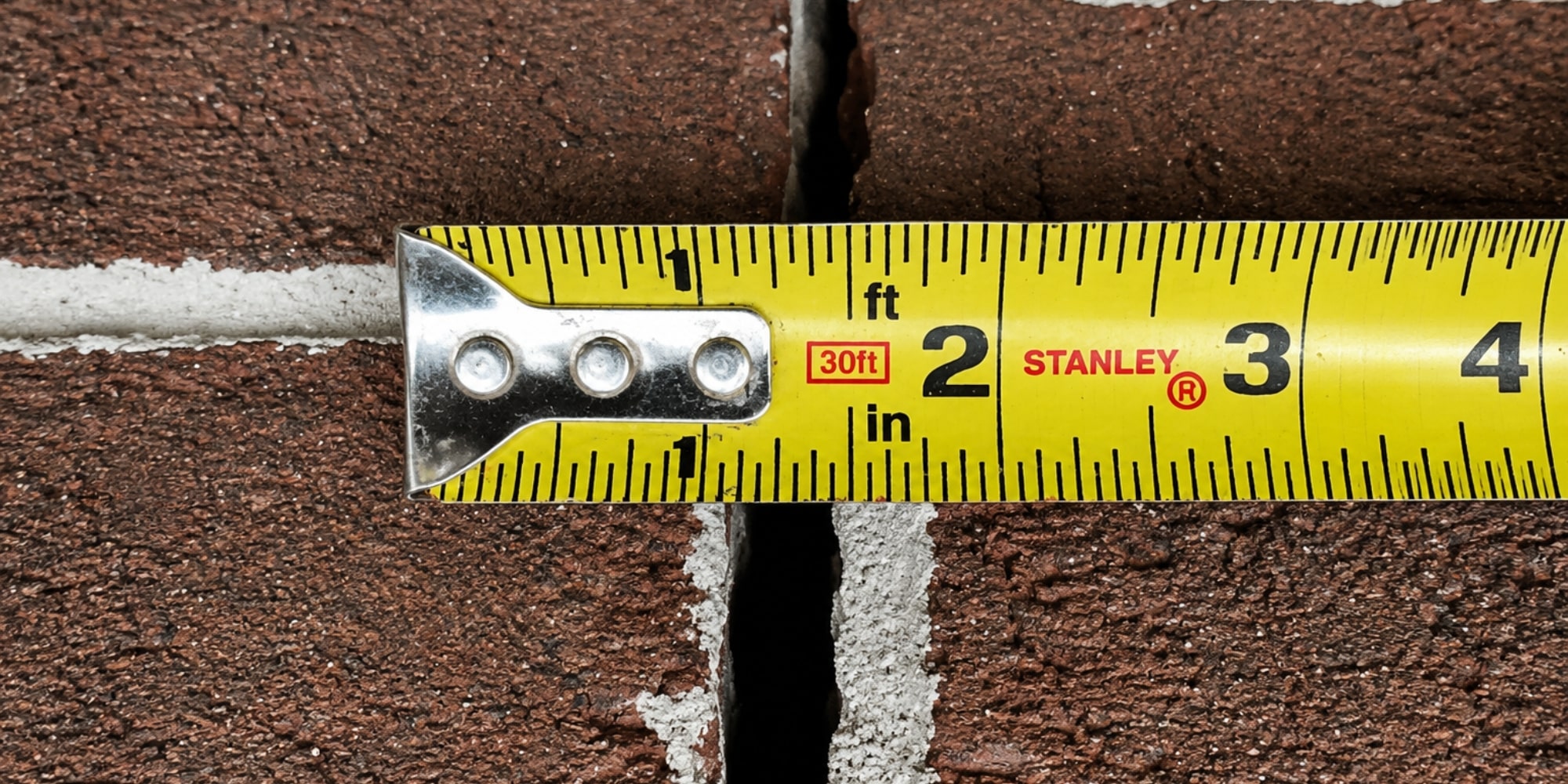
Sunken concrete can make an otherwise well-maintained property look uneven and neglected. Dropped sections, sloping surfaces, and visible gaps can stand out on driveways, walkways, patios, and other areas around the home.
Concrete lifting raises settled sections back toward their original position, helping create a more consistent surface. Leveling the settled section can improve the appearance without having to remove and replace the entire slab.
The result is a cleaner-looking concrete surface that fits better with the surrounding property.
8. Can Reduce Overall Repair Costs
When a concrete slab can be lifted rather than removed and replaced, the repair may require less demolition, materials, and labor. That can make lifting a cost effective solution compared to full replacement when the problem is limited to settlement rather than widespread concrete damage.
Concrete lifting works with the existing slab, which can reduce the scope of the repair compared with a full replacement. It can also avoid the added work involved in breaking out and disposing of the old concrete.
The actual cost depends on the size and condition of the slab, the extent of settlement, and the cause of the problem beneath it.
9. Provides Support Beneath Settled Concrete
Concrete can settle when voids develop beneath the slab or when the supporting soil changes. Once that support is lost, the concrete may continue to shift, crack, or become uneven.
Concrete lifting works because the material injected beneath the slab expands to fill voids and raise it back toward level, the same method used in a completed concrete lifting project in Middletown, VA. This helps restore contact between the slab and a stable base beneath it, rather than simply correcting the surface appearance.
Addressing the space beneath the concrete can help stabilize the repaired area and reduce problems associated with unsupported sections.
10. Long-Lasting Results When Done Correctly
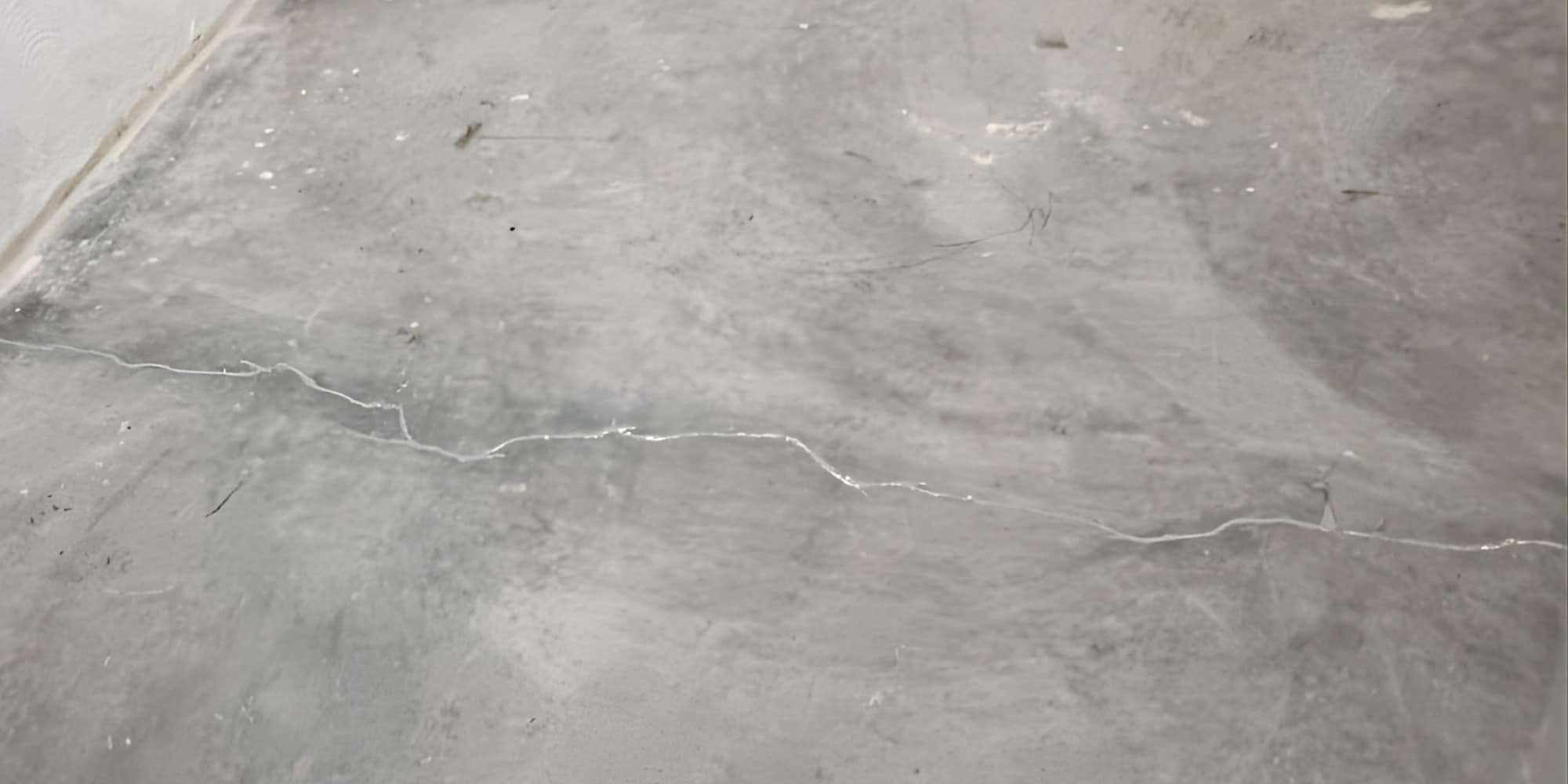
Settlement can return when the conditions beneath a slab remain unresolved. Simply correcting the surface does not necessarily address the space or loss of support underneath, which can leave the concrete vulnerable to further movement.
Concrete lifting can fill voids beneath the slab while raising and stabilizing the settled concrete. When the cause of settlement is properly assessed and the slab is suitable for lifting, this can provide a long lasting solution rather than simply correcting the surface elevation.
Are There Any Limitations to Concrete Lifting?
Concrete lifting works well for many situations, but it isn’t the right fix for every case. A few things can affect whether it’s the best option for your concrete:
- Severe damage may not fully resolve with lifting alone, including slabs with extensive cracking, multiple broken sections, or structural damage beyond what settling can address.
- Results depend on soil and site conditions, since ongoing soil movement, poor drainage, or ground conditions specific to your property can affect how well and how long the results hold.
- It addresses settlement, not every underlying cause, so the same problem can eventually return and cause further damage if drainage issues or soil erosion aren’t resolved alongside the lift.
An assessment of the concrete and the conditions beneath it can help determine whether lifting is appropriate or whether another repair is needed.
Ready to Restore Sunken or Uneven Concrete?
Because the right concrete repair depends on the slab’s condition, the soil beneath it, and what’s actually causing the settlement, it’s not always something you can fully judge on your own. A professional evaluation is the most reliable way to determine which concrete repair fits your situation or whether another approach is needed, before any work begins.
If your driveway, patio, walkway, or basement slab has settled or become uneven, LUX experts can assess the cause and recommend the right repair for your property. Schedule a free assessment and find out if concrete lifting is the right solution for your home.
Frequently Asked Questions
What types of concrete can be lifted?
Concrete lifting, a form of concrete leveling, offers several advantages for uneven slabs on driveways, walkways, patios, porches, garage floors, basement slabs, and pool decks, including surfaces that carry significant weight from vehicles or foot traffic, depending on the condition of the concrete and the cause of settlement.
Is concrete lifting better than replacing concrete?
Lifting is usually the better option when the concrete itself is still structurally sound, and the problem is limited to settlement, while replacement becomes necessary when a slab is severely damaged, has broken apart, or has damage beyond what raising the surface can fix, a distinction that can make a significant difference in the outcome.
What determines whether a slab is a good candidate for lifting?
A slab should be lifted when the concrete is still intact, and the problem is caused by soil settlement rather than structural failure. Factors like the extent of the damage, the condition of the soil beneath the slab, and the cause of the settlement all play a role in that determination.
How long does concrete lifting last?
Concrete lifting can provide long-lasting results when the material injected beneath the slab expands fully to fill the voids, and the conditions beneath it are properly assessed. Soil movement, soil erosion, drainage problems, and other site conditions can affect how long the results hold.
Can concrete lifting fix drainage problems around my home?
Concrete lifting can correct drainage issues caused by a slab’s altered slope, since restoring the concrete’s original elevation often restores the intended flow direction of water. This makes it a useful fix when sunken concrete near the house is contributing to water pooling or runoff toward the foundation.
Does lifting concrete affect its appearance compared to new concrete?
Lifting keeps the original slab in place, so the color, texture, and overall curb appeal stay consistent with the surrounding concrete. This differs from replacement, in which a newly poured section can stand out visibly next to older, weathered concrete.