Wet Crawl Space Insulation
When insulation in a crawl space gets wet, it stops working and starts causing damage. In Northern Virginia, persistent ground moisture, high summer humidity, and aging plumbing lines give crawl space insulation very little chance of staying dry without the right moisture controls in place.
What is Wet Crawl Space Insulation?
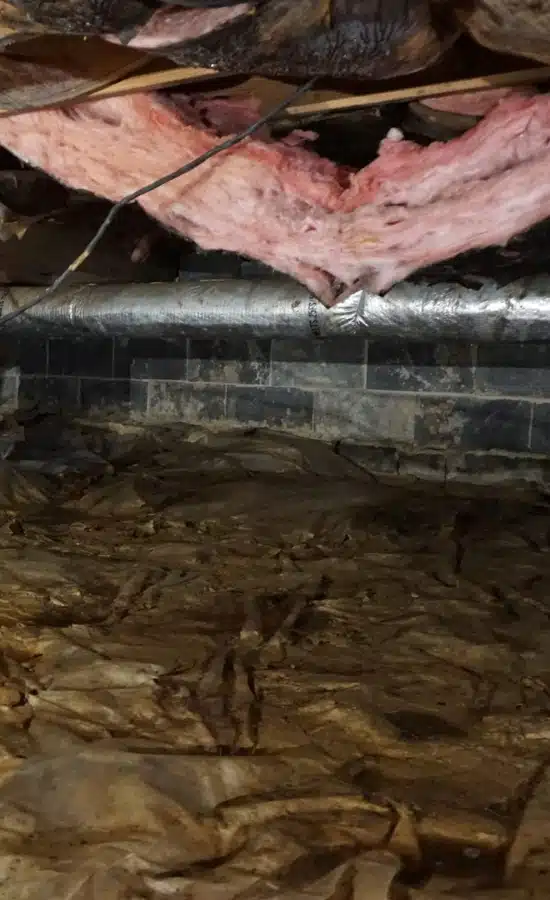
Wet crawl space insulation occurs when fiberglass batt insulation installed between floor joists absorbs moisture from the crawl space environment beneath your home. Once wet, fiberglass loses its R-value and can no longer keep your home warm in winter or cool in summer.
It typically appears dark, matted, and discolored rather than fluffy, and in many cases has already fallen from the joists onto the crawl space floor in clumps, creating ideal conditions for wood rot and mold to grow.
Northern Virginia homes are particularly prone to this problem because of the region’s clay soil and seasonal ground moisture. Our crews consistently find waterlogged insulation across the area long before homeowners notice anything wrong above the floor. At LUX Foundation Solutions, our team installs crawl space insulation that aligns with Virginia Building Code Section R402.1.3 standards.
Signs of Wet Insulation in Crawl Space
Wet insulation in a crawl space rarely announces itself through a single obvious warning inside your home. Most Northern Virginia homeowners notice something feels off before they think to check what is happening beneath it.
These are common signs of wet or deteriorating crawl space insulation that indicate moisture damage.
- Fiberglass insulation that is falling or hanging beneath the floor joists often indicates that the material has absorbed excess moisture.
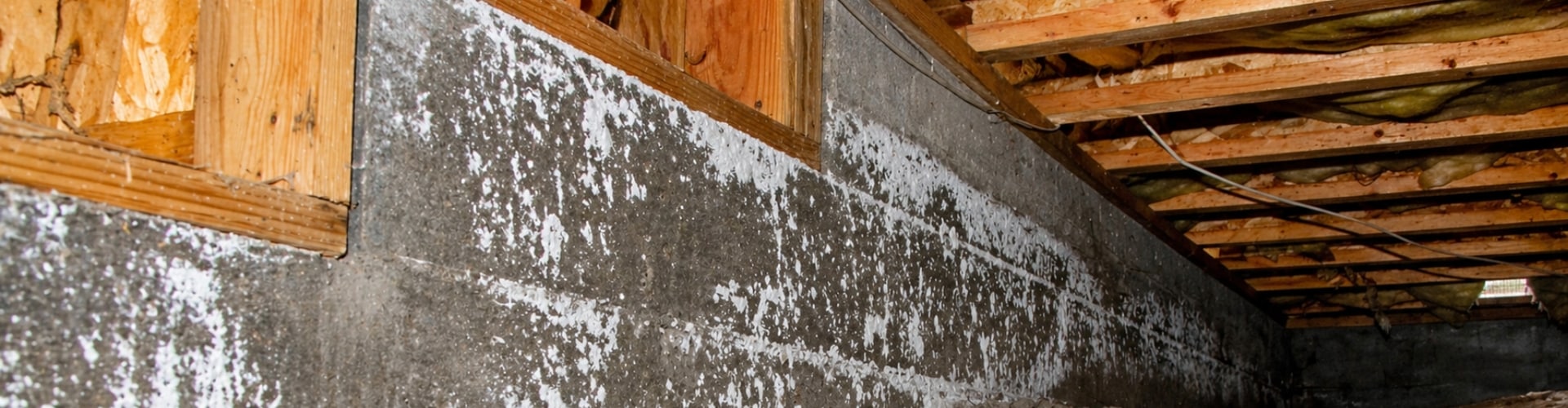
- Insulation surface has darkened or shows black and green spotting where mold has taken hold against the material.
- A musty odor persists inside the home near the floor, along baseboards, or in rooms directly above the crawl space.
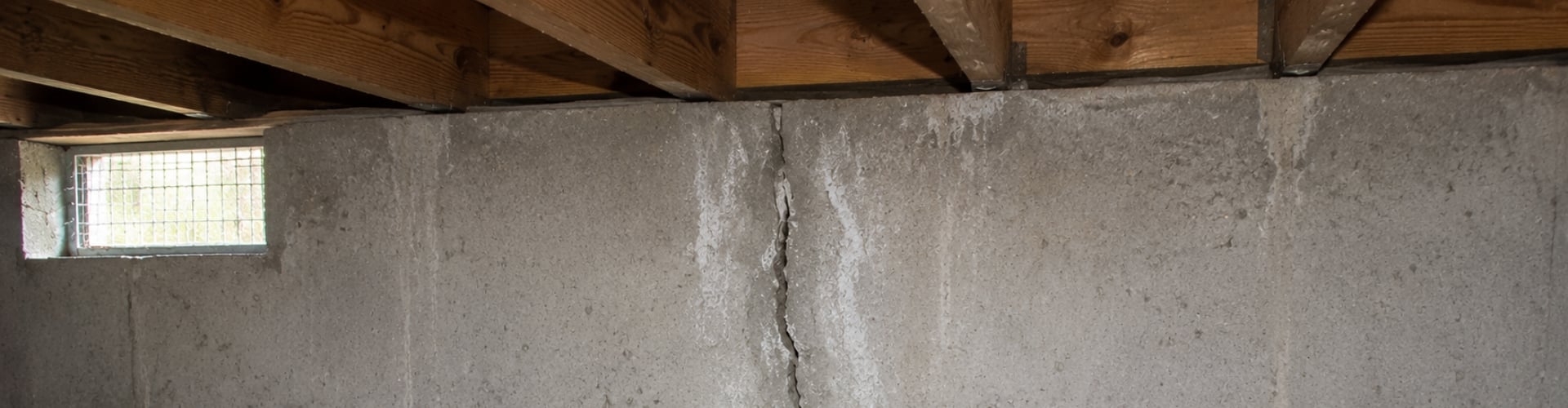
- Condensation forming on crawl space walls, pipes, or ductwork shows that humidity levels inside the space are high.
- Hardwood floors are cupping, buckling, or showing edge gaps that were not present before.
- High energy bills without any change in usage habits or equipment indicate that wet insulation is no longer providing proper insulation or thermal protection.
Wet crawl space insulation gets worse with every season it goes unaddressed. Contact LUX Foundation Solutions for a free crawl space assessment and find out exactly what is happening beneath your home.
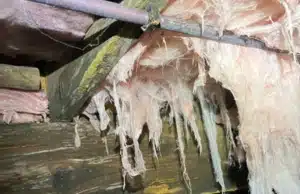
Sagging insulation
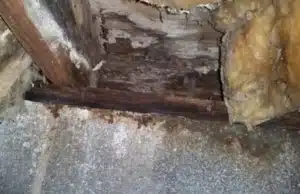
Mold growth
Musty odor
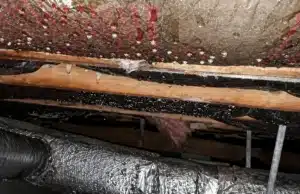
Condensation
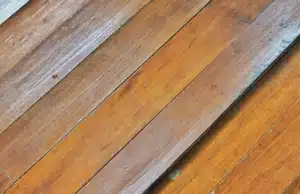
Hardwood floors cupping or buckling

High energy bills
What Causes Wet Crawl Space Insulation?
Wet crawl space insulation does not always develop from a single source. In Northern Virginia homes, several conditions often work together beneath the floor at the same time. Identifying the correct cause is the only way to choose a repair that holds. Here are the six most common causes our team identifies during crawl space inspections across the region:
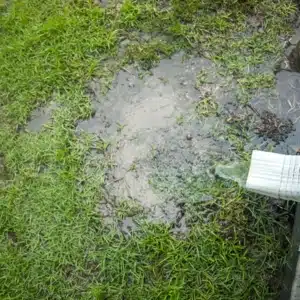
Poor Drainage
When the yard slopes toward the home or gutters overflow during heavy rain, water will pool around the foundation and seep into the crawl space. Northern Virginia’s clay-heavy soil makes this worse because it drains slowly and keeps water around the foundation long after a storm. Inadequate grading, clogged gutters, and short downspout extensions are among the most common causes LUX finds during inspections across the regions.
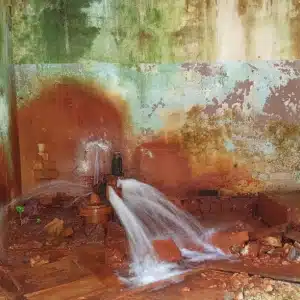
Plumbing Leaks
If your crawl space insulation is wet in one specific area instead of throughout the space, a leaking pipe is causing the problem. A slow water drip can keep soaking the same area over time, leaving the insulation saturated even without obvious flooding.
Many older homes in Northern Virginia, especially in areas like Winchester and Front Royal, still have original copper or galvanized steel pipes that can develop small pinhole leaks and go unnoticed for months.
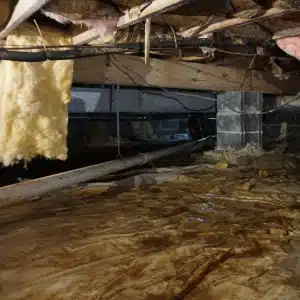
Groundwater Seepage
If you notice wet soil or standing water under your crawl space after heavy rain or during spring, groundwater is pushing up through the floor and walls under hydrostatic pressure. In Northern Virginia’s clay-heavy soil, this type of moisture intrusion looks similar to a drainage issue. However, it requires a different solution because the water source is below ground.
High Crawl Space Humidity
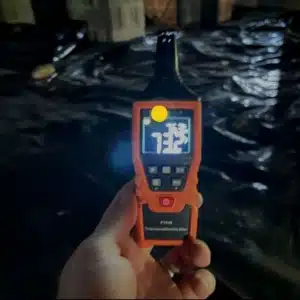
When insulation feels damp without a visible leak or standing water, high humidity is pulling moisture directly from the air. Northern Virginia crawl spaces regularly exceed 70 percent relative humidity, causing fiberglass insulation to absorb moisture, compress under the added weight, and grow mold even without direct contact with water.
Damaged or Missing Vapor Barrier
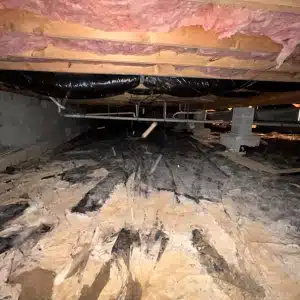
When the vapor barrier on the crawl space floor is torn, missing, or improperly sealed at seams and edges, ground moisture can rise freely into the insulation above. Many older Northern Virginia homes were built without adequate vapor barriers. LUX regularly finds vapor barriers in Shenandoah Valley and North Central Virginia homes that are torn, buried under debris, or completely disconnected from the foundation wall.
Open Crawl Space Vents
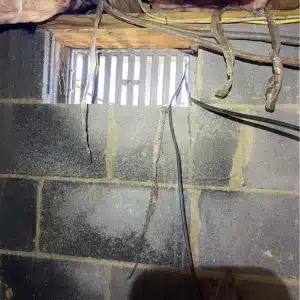
If your crawl space vents are open year-round, warm, humid outdoor air condenses directly onto insulation, joists, and pipes every summer. Northern Virginia summers push outdoor humidity above 70 percent. Homes with open vents in areas pull that humid air through the crawl space for months, and technicians find this condition in the majority of wet insulation inspections performed each summer.
How LUX Fixes Wet Crawl Space Insulation
Wet crawl space insulation is usually a sign that moisture has been entering or building up beneath your home for some time. LUX Foundation Solutions addresses wet crawl space insulation with five proven repair solutions, each targeting a specific source of moisture. The right repair depends on what our inspection uncovers about the specific moisture conditions affecting the home.
Crawl Space Drainage
If groundwater enters through the floor or foundation walls during heavy rain, the insulation will continue getting wet until the source of the moisture is controlled. A drainage system intercepts that water before it saturates the soil and reaches the insulation.
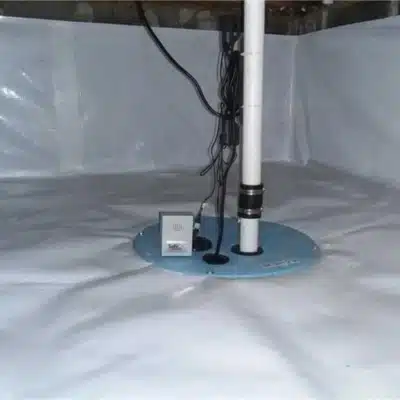
LUX installs a perimeter interior drainage channel connected to a sump pump. Groundwater is captured as it enters and routed away from the crawl space before it pools. Homes sitting on Northern Virginia clay soil are especially vulnerable because clay holds rainwater against the foundation for days after a storm ends.
Crawl Space Encapsulation
Replacing wet insulation without sealing out the moisture that caused it means the new material will face the same conditions again. Encapsulation stops the moisture from returning. In many vented crawl spaces throughout Northern Virginia, humid outdoor air enters through vent openings, allowing insulation to absorb moisture over time.
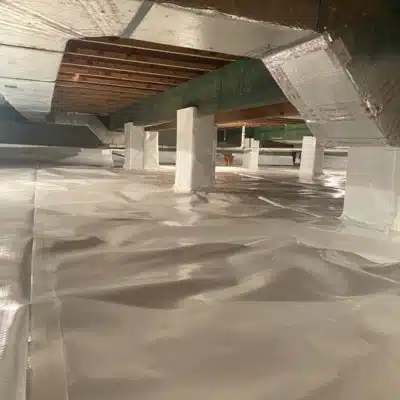
LUX seals the crawl space floor and walls with a Class 1 vapor barrier, closes all foundation vents, and secures every gap around pipes and penetrations. The result is a sealed crawlspace with a controlled environment beneath your home that holds steady humidity regardless of wet seasons.
This solution is the right choice when moisture enters from multiple sources, when the existing vapor barrier is torn or missing, or when insulation problems have returned more than once.
Crawl Space Dehumidifier
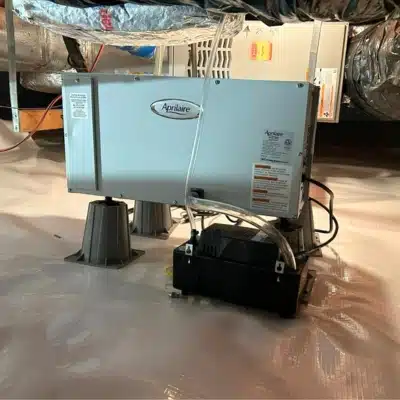
Even after moisture entry points are sealed, humidity already trapped inside the crawl space continues to affect the insulation and framing if it is not actively removed, particularly during the humid summers in Northern Virginia. A commercial-grade dehumidifier runs continuously to pull residual moisture from the air before it reaches insulation or wood framing.
LUX sizes and installs dehumidifiers for the specific square footage of your crawl space, automatically maintaining humidity within the EPA-recommended range of 30 to 60 percent year-round, without manual intervention. This solution delivers the most reliable results when paired with full encapsulation and when crawl space humidity consistently exceeds 60 percent.
Crawl Space Insulation Replacement
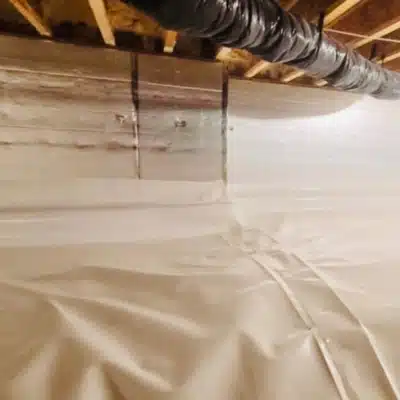
Wet fiberglass batt insulation cannot be dried out and put back. Once it absorbs moisture, it compresses, loses its R-value, and can start growing mold against the floor joists. Replacing it removes that risk immediately.
LUX removes the saturated material entirely and installs rigid foam board insulation that meets Virginia Building Code Section R402.1.3 standards. It resists moisture, holds its shape, and does not fall from the joists over time. This helps keep floors warmer, improves energy efficiency, and removes a major source of mold. This solution is recommended when the insulation is sagging, discolored, or separating from the framing.
Crawl Space Vent and Crawl Space Door Closure
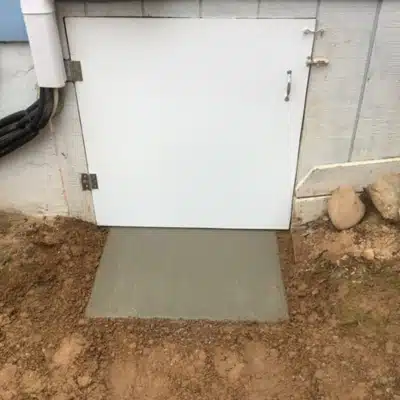
Open crawl space vents and poorly sealed doors allow humid outdoor air to enter beneath the home year-round. Warm, humid air can move in through these openings, collect on insulation and wood framing, and increase moisture levels even when there are no obvious signs of water intrusion.
LUX seals foundation vents with insulated blocks and replaces damaged crawl space doors with sealed, insulated units to help keep outdoor air out of the crawl space. This solution is the correct first step when insulation damage patterns align with vent locations or when the access door has gaps, rot, or no insulation backing.
Let LUX Fix Your Wet Crawl Space Insulation Before It Costs You More
Wet crawl space insulation is not a problem that resolves on its own. Every season, it goes unaddressed: the moisture driving the damage continues to affect the insulation, the wood framing, and the air quality in the living space above.
LUX Foundation Solutions inspects crawl spaces across Northern Virginia, Shenandoah Valley, North Central Virginia, and West Virginia. Our expert identifies the moisture source, assesses the condition of the existing insulation, and produces a written estimate for the specific repairs the crawl space needs.
Explore our full range of crawl space repair services, or call us today at 540-616-3900 or fill out our online form to schedule a free estimate.
Request a free Estimate
Wet Crawl Space Insulation FAQs
Wet crawl space insulation cannot dry out on its own in most cases. Fiberglass batts trap moisture within the material rather than releasing it back into the air. Once saturated, the insulation stays damp indefinitely, permanently loses its thermal resistance, and continues to support mold growth on the wood framing above until it is professionally removed and replaced.
Crawl space insulation sags when fiberglass batts absorb enough moisture to become heavier than the friction holding them between the joists. As the material gets wet, it compresses and clumps, pulling away from the wood above it until gravity brings it down to the crawl space floor.
Wet crawl space insulation is a direct health risk because mold growing on saturated material releases spores that circulate throughout the home, causing poor air quality. Up to 50 percent of indoor air rises from the crawl space through the stack effect, carrying those spores upward.
Homeowners with asthma, allergies, or respiratory conditions are most vulnerable, though prolonged exposure affects all occupants living above a crawl space with long-term moisture damage.
Fixing wet crawl space insulation without professional help rarely produces a lasting result. Wet crawl space insulation is almost always a symptom of a deeper moisture problem beneath the home. Without identifying and resolving that source first, any replacement insulation installed by a homeowner will face the same conditions and fail again.
Professional assessment and equipment are needed to locate the moisture source accurately before any repair work begins.
Wet crawl space insulation left untreated causes a chain of problems that extends well beyond the crawl space itself. Saturated insulation loses its thermal resistance, raising heating and cooling costs throughout the home. Mold grows on the wet material and spreads to the floor joists, reducing structural integrity over time. Indoor air quality deteriorates as mold spores rise into living areas through the stack effect, creating persistent odors and respiratory irritation for everyone inside the home.