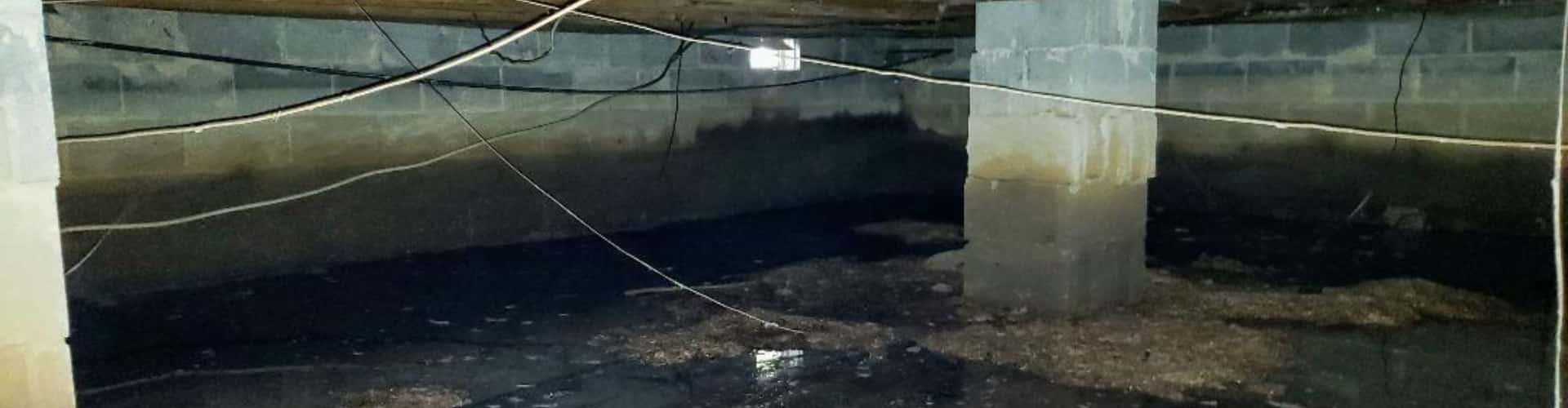
High electric bills that keep climbing without a clear reason are often a crawl space problem in disguise. In Northern Virginia, where seasonal humidity and clay-heavy soil create persistent moisture conditions beneath homes, a compromised crawl space forces your HVAC system to work harder than it should every single month.

Most homeowners assume high electric bills come from aging appliances or HVAC energy inefficiency. What they do not realize is that up to 50 percent of the air circulating through their home enters from the crawl space below through the stack effect. When that crawl space is damp, poorly insulated, or inadequately sealed, every cubic foot of conditioned air your HVAC produces must fight the moisture and temperature conditions rising from beneath your floors, directly affecting your home’s efficiency.
In Northern Virginia, clay-heavy expansive soil holds moisture against crawl space foundations through multiple wet seasons. Crawl space issues in this region make HVAC systems work measurably harder, driving up monthly energy bills season after season.
LUX Foundation Solutions has inspected crawl spaces across Northern Virginia. In those inspections, the team consistently finds that homes reporting unexplained spikes in energy costs have crawl space issues that the billing pattern suggests.
Not every sign of crawl space energy loss shows up in your statement. Some show up in how your floors feel in January, how your air conditioner sounds in August, and how your home smells near the vents year-round. These are the warning signs to watch for:
If you are noticing more than one of these signs, your crawl space is likely costing you more each month than any appliance inefficiency would. Ignoring them risks costly repairs down the road. To find out exactly what is driving the energy loss beneath your home, schedule a free on-site assessment.


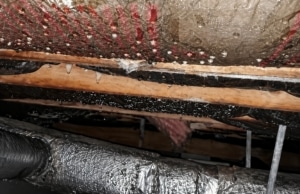
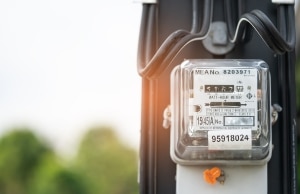
High electric bills from crawl space problems do not develop overnight. Each cause works gradually beneath your home, quietly forcing your HVAC system to consume more energy with every passing season. Here are the five most common crawl space-related causes found in homes across Northern Virginia and surrounding regions.
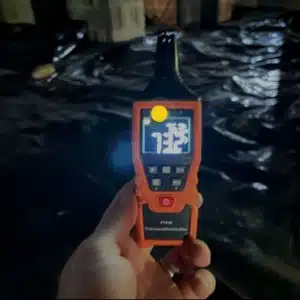
When excessive moisture builds in your crawl space, it raises the humidity of the air entering your home through the stack effect. Your HVAC system then has to remove that moisture while simultaneously heating or cooling the space, consuming significantly more energy than it would in a dry environment.
In Northern Virginia, summer outdoor humidity regularly exceeds 60 percent. Because of that, crawl space moisture is the most persistent driver of HVAC overwork and high electric bills.
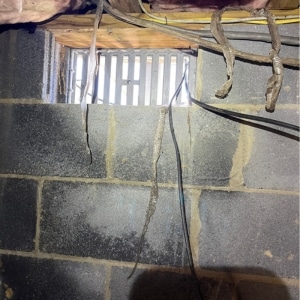
Vented crawl spaces pull warm, humid outdoor air directly beneath your home during Northern Virginia’s summer months, when outdoor dew points regularly exceed the temperature of your crawl space surfaces. As that warm, humid air cools inside the crawl space, moisture forms on floor joists, insulation, and pipes.
This added humidity can also make your HVAC system work harder to keep your home comfortable. Rather than ventilating the crawl space as intended, opening vents in this area can worsen moisture conditions and drive up your energy expenses with every peak summer month that passes without intervention.
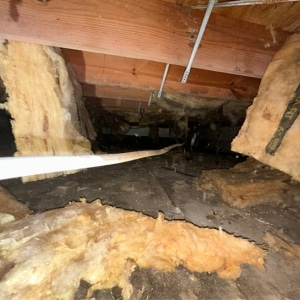
When crawl space insulation is damaged, compressed, or missing, the thermal barrier between your living space and the crawl space below breaks down. Heat escapes through your floors in winter and transfers upward from the hot crawl space in summer, forcing your HVAC to work harder in both directions. In Northern Virginia, freeze-thaw cycles repeatedly saturate and compress insulation materials, making damaged crawl space insulation a common cause of seasonal energy bill spikes.
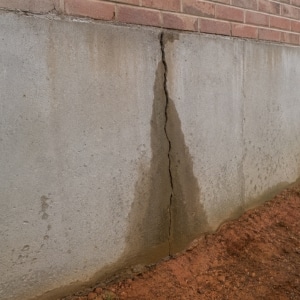
When water enters your crawl space through foundation cracks or gaps in the foundation wall, it saturates the insulation above and significantly reduces its thermal effectiveness. Air leaks through those same openings allow unconditioned outdoor air to enter your home directly from below, adding to the moisture load your HVAC has to manage. In Northern Virginia, clay-heavy soil keeps consistent moisture pressure against crawl space foundation walls through every wet season, so this energy loss compounds with each rainfall event.
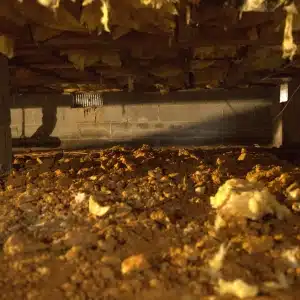
A crawl space without a vapor barrier allows ground moisture to evaporate continuously into the space beneath your home. That rising moisture increases humidity, reduces insulation effectiveness, and forces your HVAC to run longer cycles to maintain comfortable indoor temperatures.
In Northern Virginia, clay-heavy soil retains ground moisture through multiple wet seasons. As a result, an unencapsulated crawl space contributes to high electricity bills year-round rather than only during peak-humidity months.
Each cause puts sustained energy pressure on your HVAC system from a different direction. The right solution depends on which cause or combination of causes our team identifies during your free on-site assessment.
High electric bills driven by crawl space problems will not improve until the root cause, whether moisture, insulation failure, or air infiltration, is addressed directly. Here are the five reliable solutions our team recommends after identifying the exact crawl space condition driving your energy expenses during your free on-site assessment.
When crawl space humidity forces your HVAC to remove moisture from the air before it can heat or cool your home effectively, a dehumidifier targets that moisture load directly at the source. Our crawl space dehumidifier installation maintains humidity below 55 percent in the space beneath your home, reducing the burden on your HVAC system and allowing it to operate within its designed energy efficiency range, delivering immediate cost savings on your monthly statement.
In Northern Virginia, where summer outdoor humidity regularly exceeds 60 percent, a properly sized crawl space dehumidifier is often the most immediate fix for high electric bills driven by seasonal moisture overload beneath your home.

Ground moisture evaporating upward through bare crawl space soil is one of the most consistent energy cost drivers in Northern Virginia homes, and encapsulation stops it at the source. Our crawl space encapsulation seals your crawl space floor and walls with a heavy-duty vapor barrier, cutting off the ground moisture that has been raising humidity beneath and affecting your home’s environment.
By removing the moisture source rather than managing it after it enters the air, encapsulation permanently reduces the energy burden on your heating and cooling system, creating a more energy efficient home not just seasonally.

A failed thermal barrier between your crawl space and the living area above is what makes your floors cold in January and your ground floor unbearably warm in August, both of which force your HVAC to run beyond its normal capacity. Our crawl space insulation restores that thermal barrier by removing damaged or moisture-saturated insulation and installing new material correctly fitted to your crawl space, enhancing energy efficiency throughout your home.
In Northern Virginia, where freeze-thaw cycles repeatedly saturate and compress crawl space insulation, restoring proper insulation is one of the most direct ways to lower energy bills seasonally.

When groundwater entering your crawl space keeps the environment consistently wet and drives up humidity, forcing your HVAC to overwork, removing that water before it raises moisture levels is the first step toward lowering your energy costs. Our crawl space drainage system installs a perimeter drain network and a sump pump that collects groundwater as it enters and discharges it safely away from your foundation before it evaporates into the crawl space air and increases the moisture load your HVAC has to manage.
This solution addresses active water intrusion rather than ambient humidity and works best when crawl space dampness is driven by groundwater rather than condensation.

Every open crawl space vent beneath your Northern Virginia home is a direct pathway for outdoor air, carrying summer humidity levels above 70 percent, to enter the space beneath your floors. That incoming humid air raises crawl space moisture levels above the threshold your HVAC can manage efficiently, driving up your energy consumption during every peak summer month.
Our crawl space vent and door closure seals crawl space vents and doors permanently, stopping the outdoor air leaks that have been worsening your crawl space moisture conditions and contributing to the high electric bills you see most severely during Northern Virginia summers.

Every month your crawl space goes unaddressed is another month your HVAC system compensates for moisture and insulation conditions it was never designed to manage alone. In Northern Virginia, where summer humidity and wet winters put consistent pressure on crawl space environments, that monthly cost compounds across every billing cycle until the underlying problem is identified and fixed.
A free on-site assessment from LUX Foundation Solutions identifies exactly which crawl space condition is driving your high electric bills and what the right solution is for your specific home. There is no guesswork and no obligation.
We offer crawl space encapsulation and repair services across Northern Virginia, the Shenandoah Valley, North Central Virginia, and West Virginia. Call us at 540-508-8982 or fill out our online form to schedule your free no obligation repair estimate today.
Yes, crawl space encapsulation directly reduces high electric bills by eliminating ground moisture that forces your HVAC to work harder than it’s designed to. Sealing the crawl space floor and walls with a vapor barrier blocks humidity from rising into your home and reduces the energy load on your heating and cooling system.
Your crawl space is likely causing your high electric bills, as increases align with seasonal humidity peaks rather than changes in appliance use. Clear indicators include cold floors in winter despite full heating, rooms that stay humid with air conditioning running, and an HVAC system that runs constantly without reaching the set temperature.
Crawl space repair can lower high electric bills by 15 to 25 percent, depending on the severity of the moisture or insulation problem and the solution installed. Encapsulation, combined with a dehumidifier, typically delivers the greatest reduction in homes where humidity is the primary driver, while insulation replacement delivers the most immediate results where the thermal barrier has failed.
Yes, replacing damaged or missing crawl space insulation makes a direct and measurable difference in energy costs by restoring the thermal barrier between your living space and the crawl space below. Without that barrier, heat escapes through your floors in winter and transfers upward in summer, forcing your HVAC to compensate year-round.
High electric bills that spike in summer and winter but stay stable in spring and fall almost always point to a crawl space insulation or moisture problem. Summer humidity forces your air conditioning to remove moisture as it cools. Winter insulation failure allows heat to escape through your floors. Spring and fall require less HVAC demand, which can mask the underlying problem.
Most homeowners see lower electric bills within one to two full billing cycles after crawl space repair is completed. Dehumidifier installation and vent closure deliver the fastest results by immediately reducing the moisture load on your HVAC. Encapsulation and insulation replacement show the most significant reductions during the first full seasonal cycle after installation.
Thank you! Your form has been successfully submitted. You may receive service-related text messages from Lux Foundation Solutions, including appointment updates, reminders, and one-time verification codes if needed. Message frequency may vary. Msg & data rates may apply. Reply HELP for help. Reply STOP to opt out.
Examples of messages you may receive:
• Lux Foundation Solutions: Your appointment has been scheduled. You will receive service-related updates as needed.
• Lux Foundation Solutions: Reminder — your scheduled service is approaching. Reply STOP to opt out.
• Lux Foundation Solutions: Your verification code is 739214. This code expires in 10 minutes.