
A damp basement is not a minor inconvenience. It is one of the earliest signs that moisture is actively working against your foundation. In Northern Virginia, where clay-heavy soil holds water against foundation walls long after rain stops, that pressure builds faster than most homeowners expect.

If you notice moisture in your basement, whether it appears on the floor, along the walls, or you catch a musty smell, that is not simply a surface issue. Moisture inside your basement means water is moving through or around your foundation because the soil outside is pressing it in.
In Northern Virginia, clay-heavy expansive soil absorbs and retains rainwater much longer than most soil types. As that saturated soil presses against your concrete walls, it forces moisture through cracks, porous concrete, and floor joints, weakening the foundation over time.
A damp basement floor or wall is your home telling you the foundation is under stress. LUX Foundation Solutions has inspected and repaired damp basements across Northern Virginia, the Shenandoah Valley, and North Central Virginia, and consistently finds that the moisture visible inside shows a foundation problem that has been building far longer than the stain or smell suggests.
Most homeowners notice a damp basement smell or a stain on the wall and assume it is a minor moisture issue. What those signs are actually telling you is that water is moving through your foundation, and it has been doing so long enough to leave a mark. Here is what to watch for:
If you are seeing more than one of these signs together, the foundation excess moisture driving them has likely been present longer than the visible damage suggests. Understanding what is causing it determines the right fix.

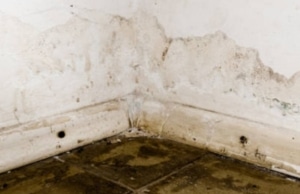
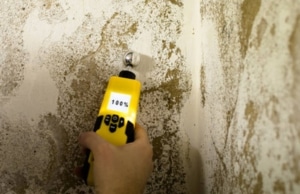
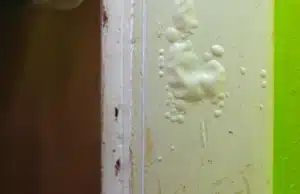
A damp basement is almost never caused by a single factor working on its own. In most homes across Northern Virginia, several of these causes are present at the same time, which is why addressing only one rarely solves the problem permanently.
To better understand how these factors intersect, here are the six most common foundation-related causes identified in homes throughout the region.
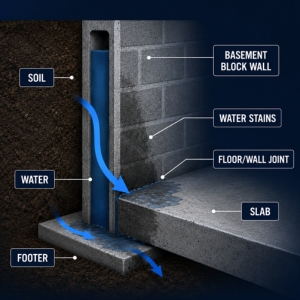
When groundwater accumulates in the soil around your foundation after heavy rain or snowmelt, it exerts outward pressure on your basement walls and floor. That pressure forces moisture through even the smallest pores and imperfections in the concrete. In Northern Virginia, where clay-heavy expansive soil holds water against your foundation long after rain stops, hydrostatic pressure is the most persistent and damaging driver of a damp basement.
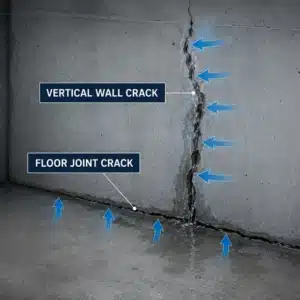
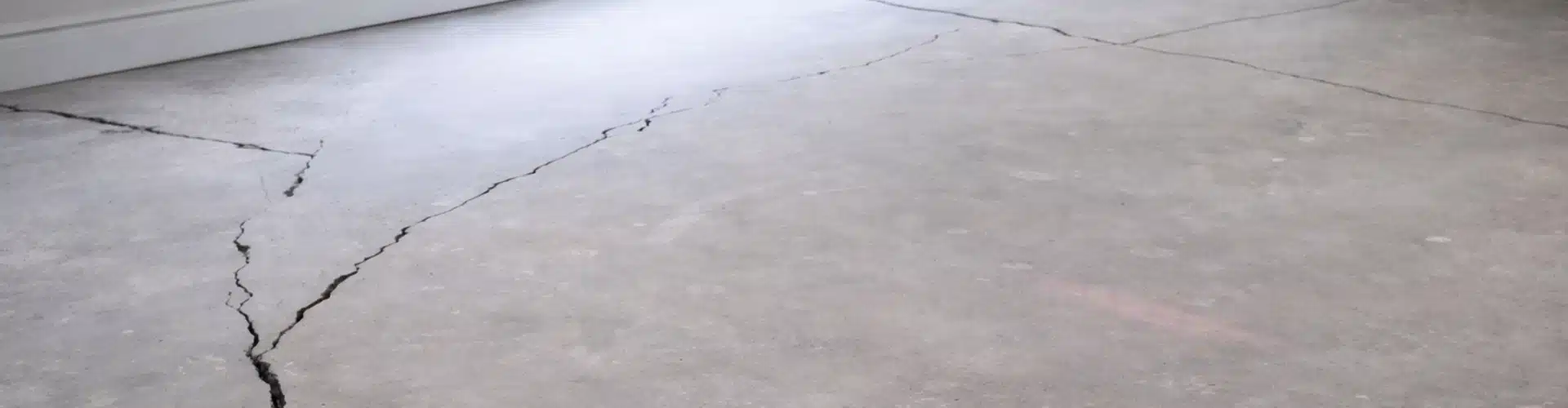
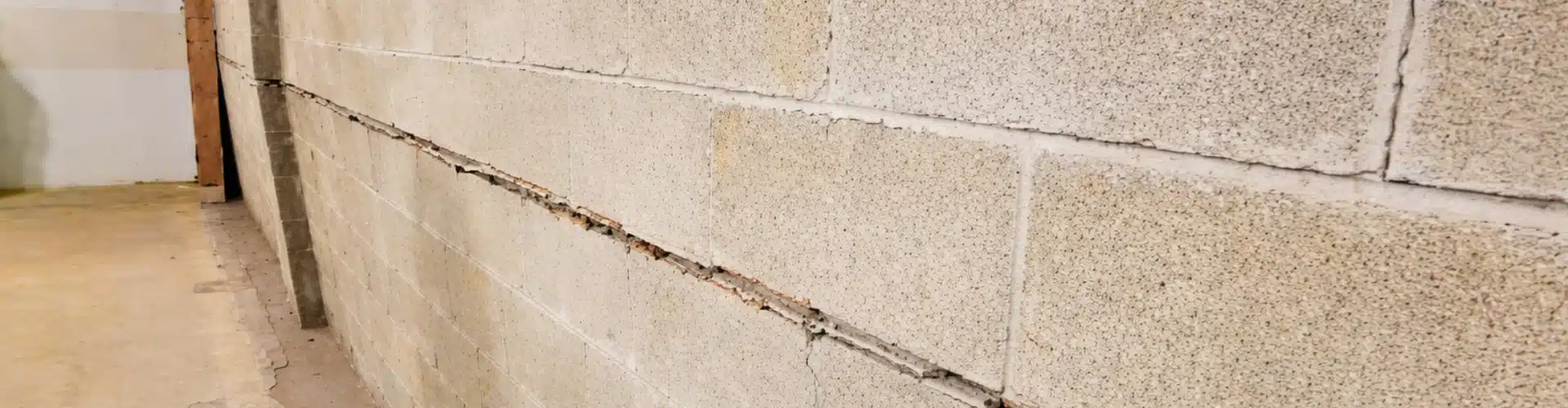
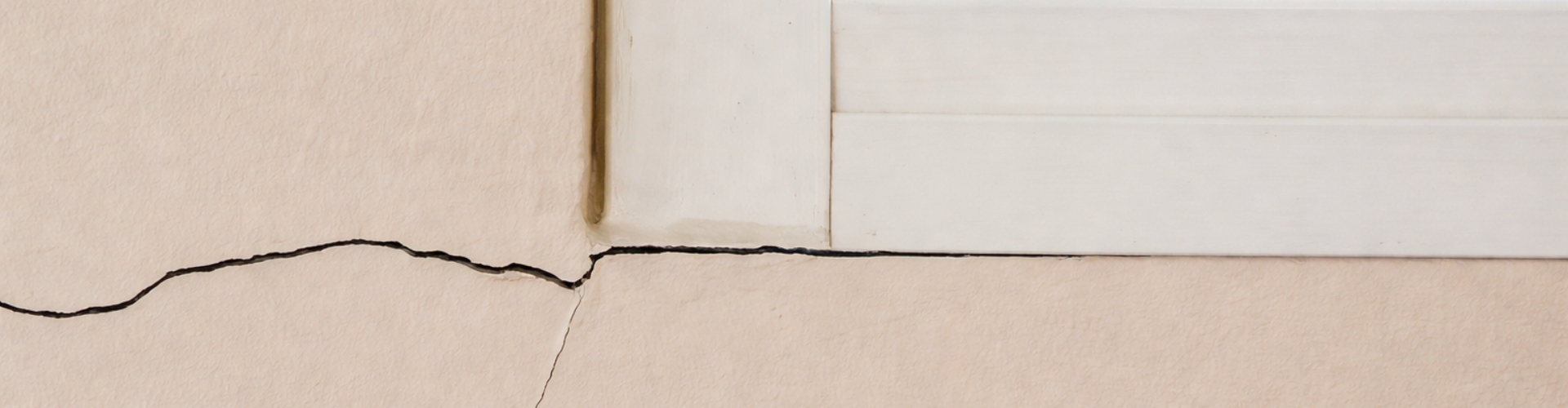
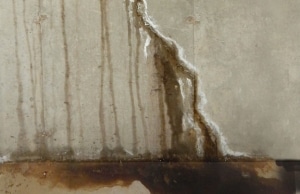
Cracks in your basement walls or concrete slab give groundwater a direct path into your home. These openings form when foundation stresses from soil movement, settlement, or hydrostatic pressure exceed the concrete’s capacity to resist them. Once a crack forms, water enters consistently rather than occasionally, and the dampness it creates tends to worsen with each wet season rather than resolve between storms.
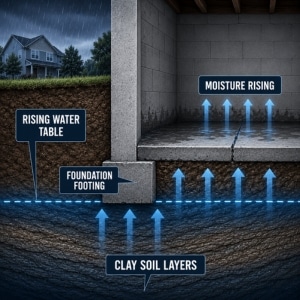
When the water table rises close to the surface after heavy seasonal rainfall or snowmelt, groundwater can reach your foundation footing level and push upward through your basement floor. In low-lying areas of Northern Virginia and the Shenandoah Valley, excessive moisture from seasonal water table fluctuations is more pronounced than in other regions. A consistently damp basement floor with no visible wall cracks is often the clearest sign.
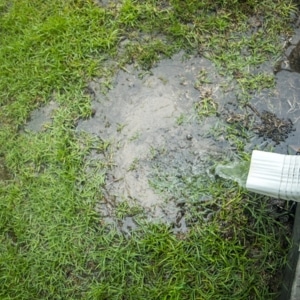
When the ground around your home slopes toward the foundation or gutters discharge roof runoff too close to your basement walls, water has nowhere to go but against your foundation. That saturated soil raises hydrostatic pressure against your basement walls and forces moisture through any available opening. That’s why downspout drainage matters; it is one of the most overlooked drivers of a damp basement in Northern Virginia.
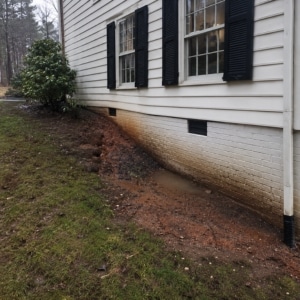
When slope failure occurs around your foundation, the soil that was originally graded to direct water away from your home shifts, erodes, or collapses inward. As the ground shifts, water no longer flows away from your home as intended. Instead, it collects against the foundation walls, increasing the risk of a damp basement.
Northern Virginia’s clay-rich soil expands when wet and shrinks when dry, making slope failure more likely over time. When that happens, water is more likely to collect around the foundation, contributing to damp basement problems.
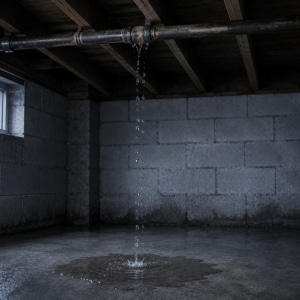
A leaking pipe, failed fitting, or deteriorating drain line running through or above your basement can introduce water into the space below without any connection to rainfall or groundwater. Unlike the other causes on this list, plumbing-related basement dampness can appear during dry weather with no recent rain, which is the clearest diagnostic sign that a plumbing failure is the source rather than a drainage or foundation problem.
Each of these causes puts sustained moisture pressure on your foundation from a different direction. The right solution depends on which cause or combination of causes our team identifies during your free on-site assessment.
A damp basement caused by foundation stress cannot be fixed by painting over the moisture or patching the surface. The underlying foundation problem must be addressed, or the dampness will return after every wet season.
Here are the four damp basement solutions our team recommends based on what we find during your free on-site assessment.
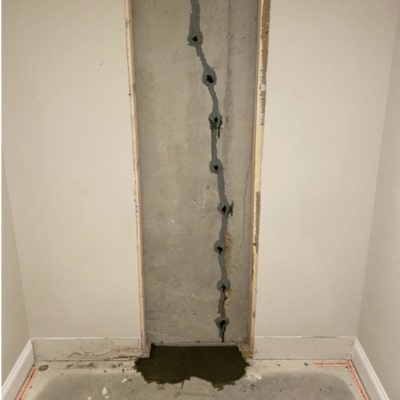
When foundation cracks provide groundwater a direct entry point into your basement, sealing those openings stops moisture before it reaches your floor or walls. Our foundation crack repair involves injecting polyurethane to completely fill the crack. As the material expands, it seals the opening and helps prevent water from entering your basement.
This solution works best when your damp basement is traced back to a specific visible crack in the wall rather than to generalized seepage across the entire surface. We recommend this when the dampness appears as a concentrated wet patch or water trail directly below a foundation crack.
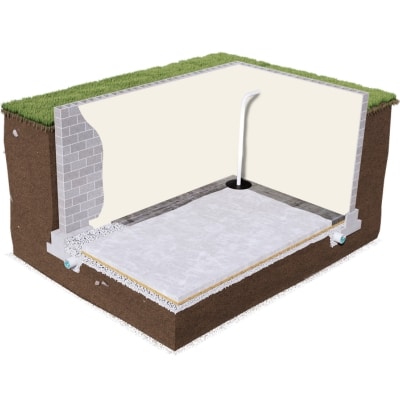
When moisture seeps through your basement walls or floor under sustained hydrostatic pressure from saturated soil outside, our interior waterproofing system is one of the most effective moisture control solutions available to remove moisture before it spreads across your basement floor.
We install a perimeter drainage channel along the base of your basement walls that captures water as it enters and channels it to a sump pump before it can damage your foundation or finished basement. This solution is recommended when your damp basement consistently appears after heavy rain and the moisture is coming through the wall surface rather than through a single identifiable crack.
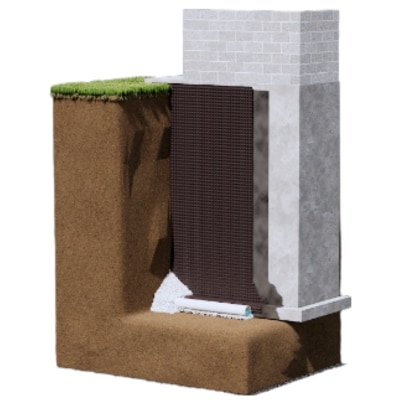
When the source of your damp basement is saturated soil pressing against the outside of your foundation, stopping the water before it ever enters the wall system is the most direct fix available. Our exterior basement waterproofing applies a waterproof membrane to your exterior foundation surface and improves drainage at the footing level, removing the moisture source rather than managing it after it gets inside.
In Northern Virginia, where clay-heavy soil holds groundwater against foundations long after seasonal rainfall ends, we recommend this solution when dampness consistently appears along the base of exterior walls after wet seasons.
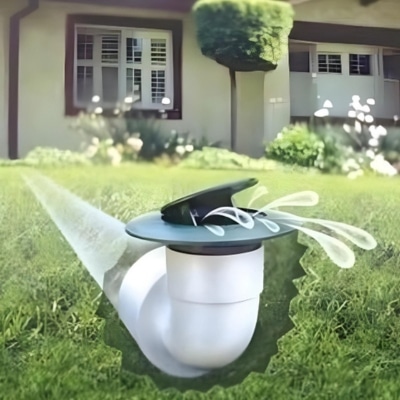
When faulty gutters or downspouts discharging too close to your foundation are contributing to your damp basement by saturating the soil directly against your walls, our downspout extension installation redirects that roof runoff to a safe discharge point away from your home.
We carry the downspout output far enough from your foundation that the soil immediately surrounding your basement walls stays dry even during heavy Northern Virginia summer storms. This solution works best when your damp basement symptoms are concentrated near exterior walls directly below roof drainage points and worsen most noticeably immediately after rainfall events.
If your basement feels damp, smells musty, or shows water stains on the walls, do not assume it will dry out on its own. That moisture is coming from somewhere, and in most cases it is your foundation telling you something is wrong beneath the surface.
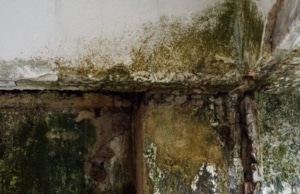
Every wet season that passes without addressing it adds more pressure against your foundation walls, widens existing cracks, and creates conditions for mold growth and structural deterioration that are far more costly to fix the longer they go unnoticed.
You do not have to figure it out alone. LUX Foundation Solutions offers free on-site assessments for homeowners across Northern Virginia, Shenandoah Valley, North Central Virginia, and West Virginia. Call us at 540-508-8982 or fill out our online form to schedule your free estimate today.
Yes, a damp basement is dangerous when left unaddressed because it creates conditions for mold growth, weakens structural wood framing, and signals that moisture is actively working against your foundation. Mold spores from a damp basement circulate through your home via the stack effect, carrying moist air and raising relative humidity, which affects air quality on the floors above.
If the moisture problem continues, it can increase stress on the foundation and eventually lead to cracks, settlement, and other structural damage that is more costly to repair.
Dampness in your basement walls and floors can put ongoing pressure on your foundation. Over time, it may weaken the concrete, enlarge existing cracks, and contribute toward uneven soil settlement around your home. Water that moves through foundation walls carries dissolved minerals, leaving behind efflorescence and gradually eroding the bond between concrete particles.
In Northern Virginia, where clay-heavy soil holds that moisture against the foundation through multiple wet seasons, the cumulative effect on the foundation is far greater than within areas with sandy soil and better natural drainage.
Yes, a minor damp basement can become a serious foundation problem because the moisture source driving it does not resolve itself. What starts as a faint musty smell or a small water stain on the basement wall reflects sustained pressure against the foundation that continues between wet seasons.
In Northern Virginia, the seasonal expansion and contraction of clay-heavy soil keeps that pressure cycling year after year, meaning a damp basement that seems manageable today can develop into active foundation cracking or settlement within a few seasons without intervention.
Fixing a damp basement permanently requires identifying and addressing the underlying foundation problem driving the moisture, rather than treating only the surface symptoms.
Depending on what our team finds during your assessment, the right solution may be foundation crack repair to seal entry points, exterior or interior waterproofing to manage sustained hydrostatic pressure, or a downspout extension to redirect roof runoff away from your foundation. Surface treatments applied over the dampness without addressing the underlying cause will not hold through the next wet season.
A wet basement is most likely a foundation problem when moisture consistently appears after rain, spreads across multiple wall sections or the floor joint, or occurs alongside other foundation warning signs such as diagonal wall cracks, sticking doors, or efflorescence on the walls.
If the dampness is localized to one spot below a visible pipe or appears only during dry weather, a plumbing leak is the more likely cause. A professional inspection can determine whether the dampness is being caused by a plumbing leak or a foundation moisture problem.
Yes, a new foundation can have a damp basement for several reasons unrelated to the concrete’s age. Improper grading around a newly built home, inadequate waterproofing during construction, poorly compacted fill soil that settles unevenly after the home is built, or downspouts discharging too close to the foundation can all produce a damp basement within the first few years of a home’s life.
In Northern Virginia, new homes built on clay-heavy soil are particularly vulnerable if the drainage around the foundation was not properly designed for the region’s seasonal rainfall patterns.
Thank you! Your form has been successfully submitted. You may receive service-related text messages from Lux Foundation Solutions, including appointment updates, reminders, and one-time verification codes if needed. Message frequency may vary. Msg & data rates may apply. Reply HELP for help. Reply STOP to opt out.
Examples of messages you may receive:
• Lux Foundation Solutions: Your appointment has been scheduled. You will receive service-related updates as needed.
• Lux Foundation Solutions: Reminder — your scheduled service is approaching. Reply STOP to opt out.
• Lux Foundation Solutions: Your verification code is 739214. This code expires in 10 minutes.