
You notice cracks running through your chimney bricks and wonder whether it is just normal wear or something more serious underneath. Cracks in chimney bricks in Northern Virginia homes are not always a masonry problem. Some crack patterns point directly to a shifting foundation below.

Cracks in chimney bricks are fractures that develop in the brick or mortar joint, cracking of your masonry chimneys, ranging from small cracks and hairline surface lines to wide gaps running through multiple damaged bricks. In Northern Virginia homes, not every crack means the same thing.
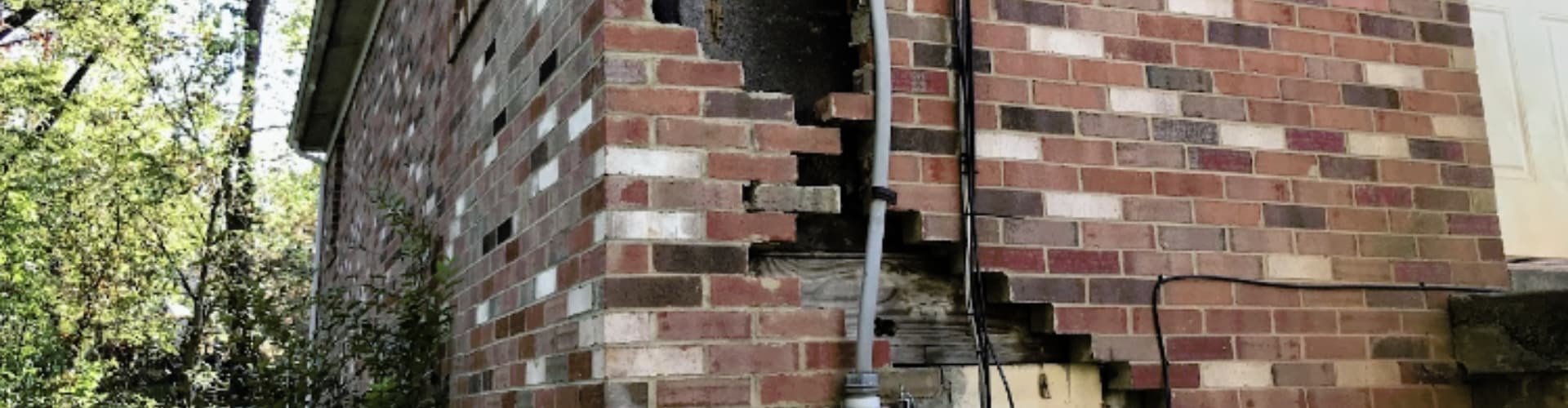
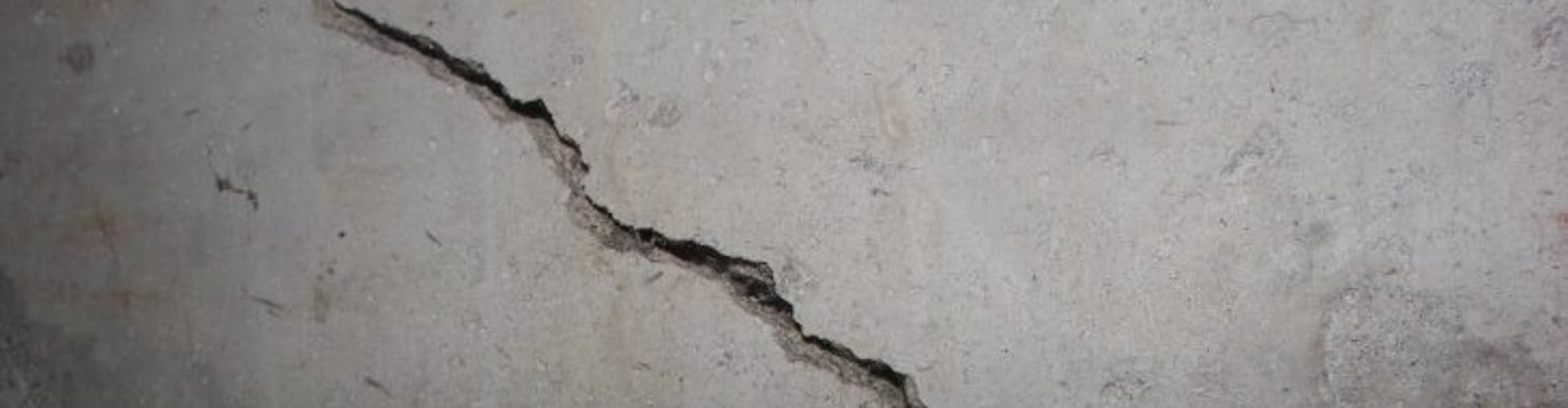
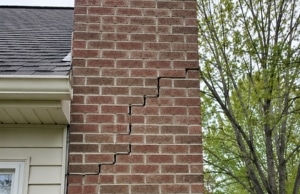
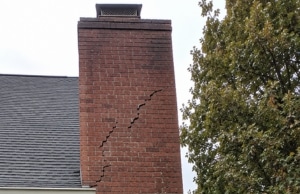
Stair-step cracks following the mortar joints point to foundation settlement chimney issues. Diagonal cracked bricks running through the brick face indicate more significant foundation movement. Vertical cracks often come from temperature swings, thermal expansion, and weather exposure. Horizontal cracks are the most serious and suggest structural pressure.
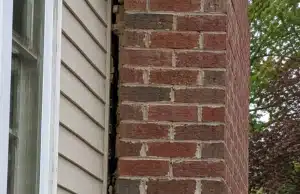
But when cracks keep returning after masonry repairs, when the leaning chimney begins to separate from the house, the problem is not in the chimney. It is in the foundation beneath it.
At LUX Foundation Solutions, we have inspected chimneys across Northern Virginia where these crack patterns were the first sign of a shifting foundation.
Cracks in chimney bricks in Northern Virginia homes appear differently depending on the cause. These are the six signs of chimney problems that point specifically to a foundation problem rather than normal masonry deterioration.
If you are seeing one or more of these signs in your Northern Virginia home, the cracks in your chimney bricks are likely a foundation problem that a masonry repair alone will not permanently fix.

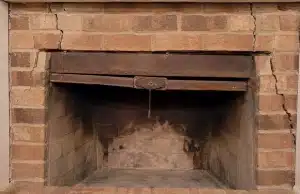
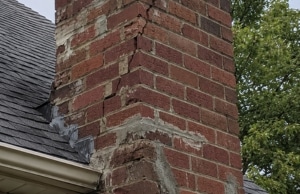
Cracked brick chimney problems in Northern Virginia homes rarely happen without a reason. Understanding the common causes helps determine whether the issue is related to foundation movement or normal masonry deterioration.

Northern Virginia sits above some of the most reactive clay soils on the East Coast. When those soils absorb moisture during heavy spring rainfall, they expand enough to push against the chimney footings from below.
During dry summer periods, the soil can shrink, leaving parts of the chimney footing with less support. Over time, this ongoing movement can lead to stair-step and diagonal cracks, even after the masonry has been repaired.

When soil beneath your chimney shifts or compresses unevenly, the chimney foundation settles at a different rate than the rest of the home, forcing bricks to crack along the weakest mortar joints.
In Northern Virginia, clay-heavy soils in Fairfax, Loudoun, and Prince William counties absorb water during wet springs and shrink in dry summers, making foundation settlement the most common driver of chimney brick cracks in this region.
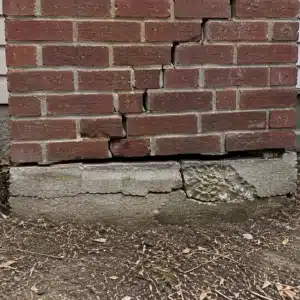
A chimney sits on its own footing, separate from the main foundation. When that footing deteriorates, shifts, or was never built for the soil conditions beneath it, the chimney moves independently from the rest of the home, causing loose bricks and brick spalling on the exterior.
In older Northern Virginia neighborhoods across the Shenandoah Valley and Winchester, original footings were often not designed to withstand the extensive damage caused by expansive clay soil movement common to this region.
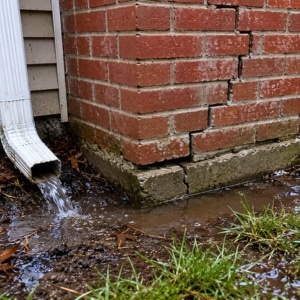
When water seeps around the chimney base from poor grading or clogged gutters, it saturates the soil directly beneath the chimney footing. That saturated soil loses its load-bearing capacity, allowing the footing to sink unevenly and transfer stress into the chimney bricks above, causing further water infiltration to the chimney crown and surrounding brickwork.
Northern Virginia’s heavy spring rainfall makes inadequate drainage around chimney bases damaging, as runoff drains too close to the foundation perimeter.
If any of these causes sound familiar, the cracks in your chimney bricks are telling you that your foundation needs to be addressed. A professional foundation inspection is the right next step to confirm what is driving the movement and the right repair.
Chimney cracks in brick caused by foundation movement will not stop on their own. At LUX Foundation Solutions, we start every job with a free on-site chimney inspection to confirm what is driving the movement beneath your chimney before recommending any repair. The right solution depends entirely on what we find below.
When Northern Virginia clay soils have compressed or shifted unevenly beneath your chimney footing, the footing sinks and the bricks above begin cracking along the stress lines created by that movement.
We install push piers by hydraulically driving steel piers through the unstable soil layer until they reach stable ground, then anchoring them directly to your chimney footing. This stops the settlement that has been causing further damage to your chimney bricks and, in many cases, allows us to restore the footing to a position close to its original position, so existing cracks stop widening.

When chimney brick cracks are traced back to footing movement in an area with limited access, a lighter chimney structure, or soil conditions where driven piers are not the right fit, we use helical piers to stabilize the foundation beneath your chimney.
We screw them into stable load-bearing soil beneath the shifting clay layer and bracket them to the chimney footing, stopping the movement that has been forcing the brickwork out of alignment. Once the foundation is stabilized, existing chimney brick cracks can be tuckpointed and will hold because the underlying cause has been addressed.

Not sure which solution applies to your chimney? Our team will inspect the foundation beneath it, identify what is driving the movement, and walk you through the right repair option during your free on-site inspection.
Cracks in chimney bricks that keep returning after masonry repairs are telling you the foundation beneath your chimney needs attention. The longer the foundation movement goes unaddressed, the wider the cracks become and the more expensive the repairs become.
At LUX Foundation Solutions, we inspect and repair chimney cracks caused by foundation problems across Northern Virginia, the Shenandoah Valley, North Central Virginia, and West Virginia. We know what Northern Virginia clay soils do to chimney footings over time and how to stop cracks from returning.
Call us at 540-508-8982 or fill out our online form to schedule your free chimney on-site estimate today.
The pattern and behavior of the cracks are the clearest indicators. Stair-step cracks running diagonally through mortar joints, diagonal cracks running through the brick face itself, or cracks that keep returning after masonry repairs all point to foundation movement rather than surface deterioration.
If the chimney is also leaning or separating from the house wall, foundation settlement is almost certainly the cause, and a professional inspection is the right next step.
A stair-step crack follows the mortar joints between bricks in a diagonal pattern and is a common sign of chimney foundation settlement. As the chimney foundation moves unevenly, cracks can form along the mortar joints.
In Northern Virginia, where clay soils expand and contract seasonally, stair-step cracks are a common early warning sign that the chimney footing has begun to move.
A chimney is a heavy, independent structure anchored to your home, and when its foundation shifts, it puts stress on the surrounding structure, including the roofline, exterior walls, and framing where the chimney meets the house.
As the chimney foundation continues to settle, existing cracks can grow wider and the gap between the chimney and the house may become more noticeable, affecting how the chimney connects to the home.
When chimney cracks return after tuckpointing or brick replacement, the problem is often related to foundation movement beneath the chimney. Patching the bricks seals the visible damage but does nothing to stop soil movement or footing settlement, which drives the cracking.
Until the foundation beneath the chimney is stabilized, the stress continues, and the cracks will keep reappearing in the same locations regardless of how many times the brickwork is repaired, unless the affected sections are completely rebuilt after the underlying foundation issue is corrected.
A gap forming between the chimney and the exterior house wall is one of the clearest signs that the chimney foundation is settling independently from the home foundation beneath it. As the chimney footing sinks or shifts, it pulls the chimney structure away from the house.
In Northern Virginia, where homes are built on expansive clay soils, this type of chimney separation is almost always driven by foundation movement. It requires a foundation repair rather than a masonry fix.
Depending on the type and cause of the crack. Surface mortar cracks from weathering are often considered minor cracks and are a maintenance issue rather than an immediate safety risk. However, diagonal or stair-step cracks from foundation settlement, a visibly leaning chimney, or a chimney separating from the house wall are serious structural concerns.
As a chimney settles, it can pull away from the home, damage flue liners, and lead to structural damage in the surrounding roof and wall structure.
Thank you! Your form has been successfully submitted. You may receive service-related text messages from Lux Foundation Solutions, including appointment updates, reminders, and one-time verification codes if needed. Message frequency may vary. Msg & data rates may apply. Reply HELP for help. Reply STOP to opt out.
Examples of messages you may receive:
• Lux Foundation Solutions: Your appointment has been scheduled. You will receive service-related updates as needed.
• Lux Foundation Solutions: Reminder — your scheduled service is approaching. Reply STOP to opt out.
• Lux Foundation Solutions: Your verification code is 739214. This code expires in 10 minutes.