
Chipping concrete on your foundation walls, basement walls, or concrete slab is rarely just a surface problem. It is a sign that the concrete itself is breaking down from within, driven by moisture, freeze-thaw damage, or reinforcement corrosion that has been building beneath the surface far longer than the visible chipping suggests.
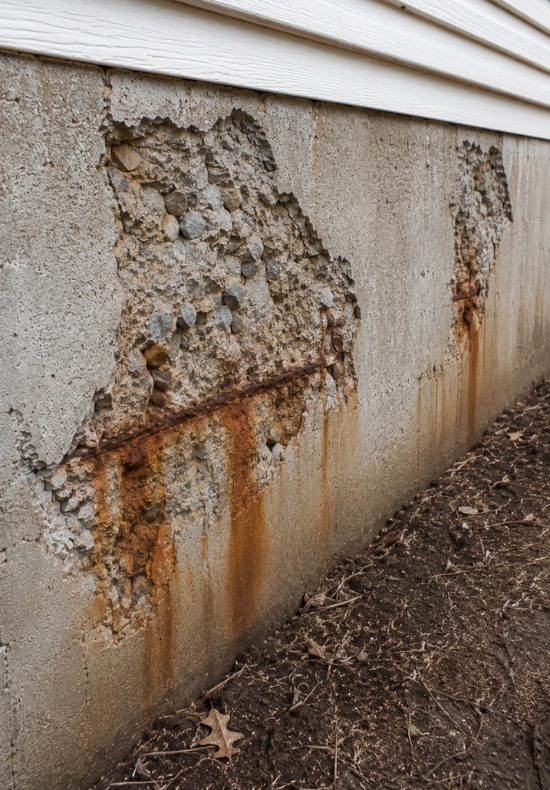
Chipping concrete, also called spalling, occurs when the surface layer of concrete breaks away in small pieces or flakes, exposing the rougher material beneath. On a foundation wall, basement floor, or concrete slab, this is not wear and tear. It is a sign that the concrete’s internal structure has already been compromised.
In Northern Virginia, clay-heavy expansive soil and repeated freeze-thaw cycles place ongoing stress on concrete foundations. Over time, these conditions can speed up surface deterioration and cause visible damage.
In the foundation inspections LUX has conducted across the region, chipping concrete has rarely been an isolated surface defect. It has consistently pointed to a moisture or structural condition working through the concrete from within.
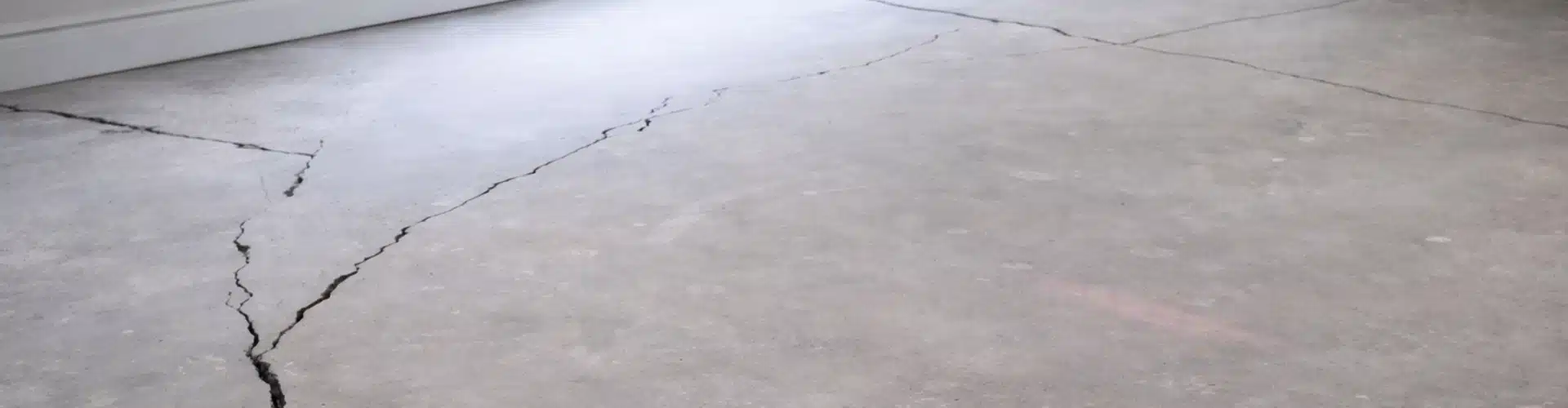
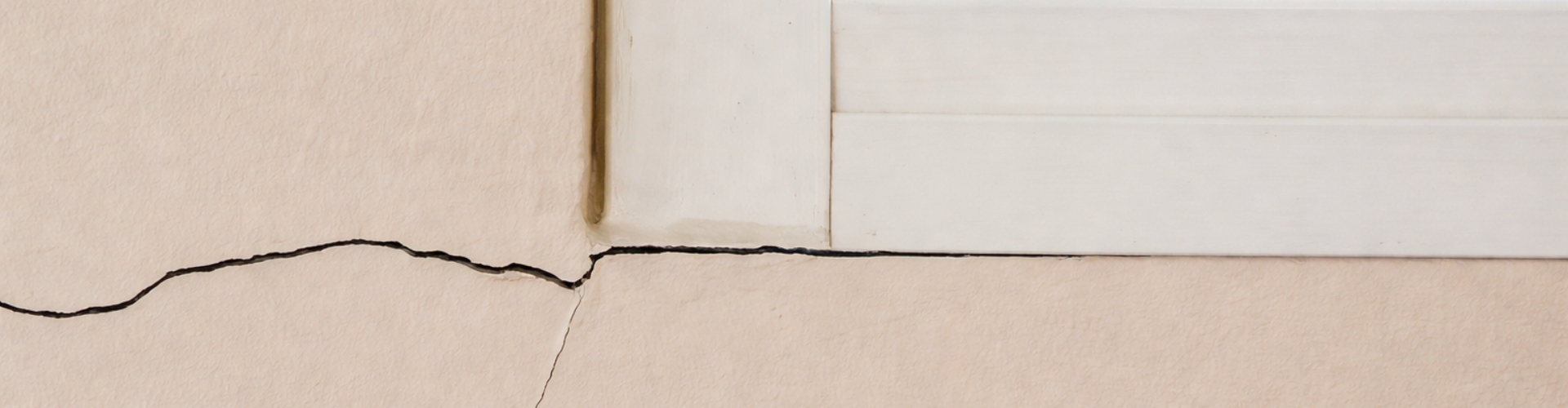
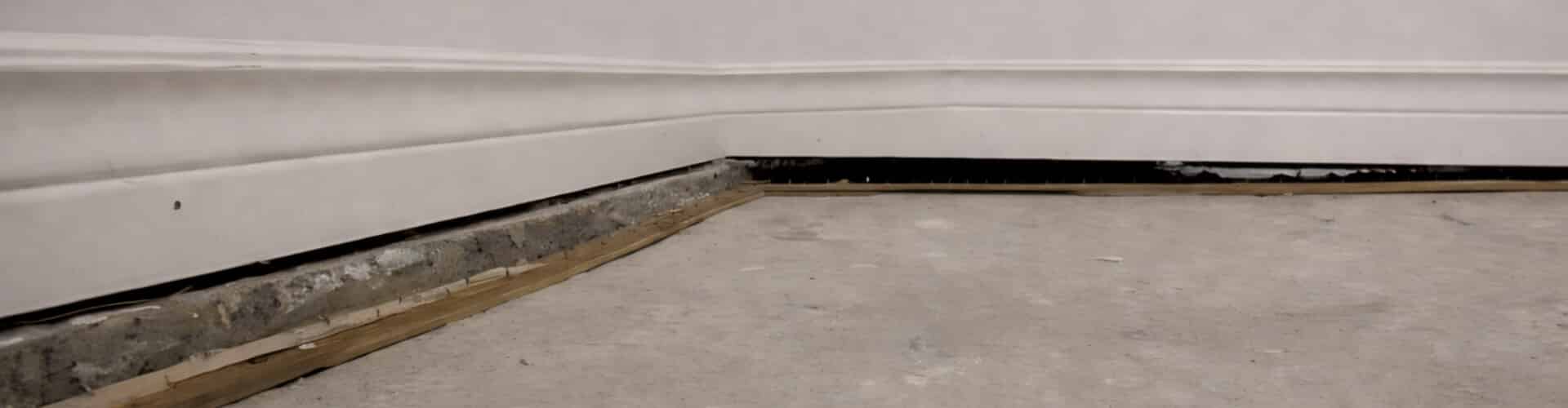
Concrete chipping on your foundation walls, basement floor, or concrete slab is a different situation entirely. These are the signs that tell you the deterioration has moved beyond the surface and into the structural concrete beneath your home:
If you are seeing more than one of these signs on your foundation walls or basement floor, the concrete deterioration driving them has likely been progressing for longer than the visible damage suggests. The pattern and location of the chipping tells a trained inspector far more about what is happening beneath the surface than the size of the chips alone.
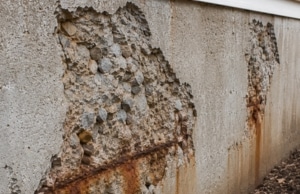
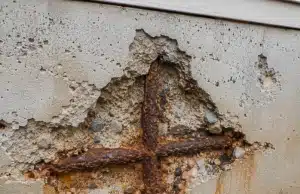
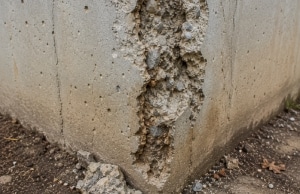
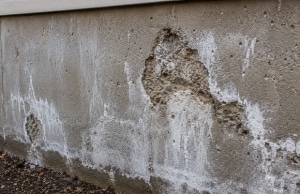
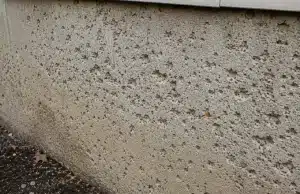
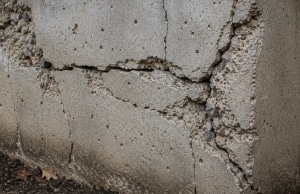
Concrete does not chip, flake, or spall randomly. When you notice surface material breaking away from your foundation walls or floor, it usually points to different underlying problems. Here are the five most common causes found in homes across Northern Virginia and surrounding regions.
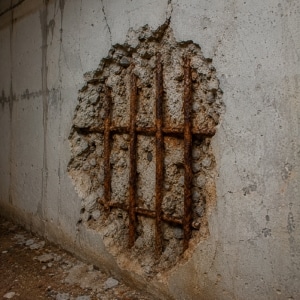
When moisture reaches the reinforcing steel inside your foundation walls or concrete slab, the rebar begins to rust. Corroding rebar expands to several times its original volume, exerting pressure that pushes the concrete cover off from within.
This is the most common driver of chipping concrete wall conditions in Northern Virginia, where clay-heavy soil keeps moisture in consistent contact with chipping and cracking foundation walls through multiple wet seasons.
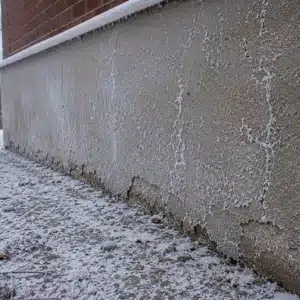
Water absorbed into your foundation concrete expands when it freezes during Northern Virginia winters and contracts when it thaws in spring. That repeated expansion and contraction cycle forces the concrete surface apart from within, progressively chipping the outer layer of your foundation walls and basement floor. The older the chipping concrete foundation, the more vulnerable the surface becomes to visible chipping with each passing winter.
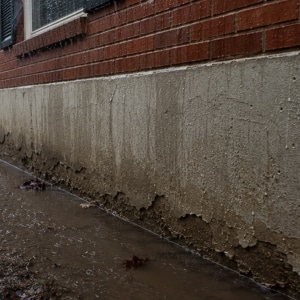
When groundwater flow or surface runoff collects against your foundation walls rather than draining away, the sustained moisture saturation accelerates both reinforcement corrosion and freeze-thaw damage to the concrete surface.
In Northern Virginia, where clay-heavy soil holds water against foundation walls long after rainfall stops, poor drainage is rarely the only cause of chipping concrete. Still, it is almost always a contributing factor that makes every other cause progress faster.
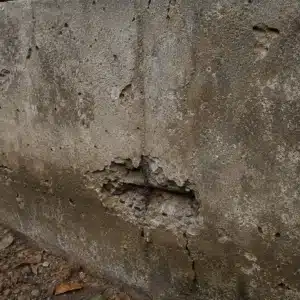
As foundation concrete ages, carbon dioxide gradually reduces its internal alkalinity, removing the protection that keeps reinforcing steel from rusting. When alkalinity drops below a critical threshold, the rebar begins to corrode even without direct water contact, pushing the concrete surface off from within.
In Northern Virginia, where old concrete foundation crumbling is common in the older housing stock, carbonation is a frequently overlooked driver of foundation wall chipping.
When foundation walls or slabs were poured with insufficient concrete cover over the reinforcing steel, the rebar sits too close to the surface. It corrodes sooner than in properly constructed foundations.
That accelerated corrosion quickly pushes the thin concrete cover off, creating the chipping pattern visible on the wall face. Homes built during periods of poor construction practices show this problem earlier than homes built to current standards.
Patching the surface without addressing the foundation problem driving the chipping means it comes back. Here is what our team recommends once the foundation condition behind the chipped concrete has been confirmed during your free on-site assessment.
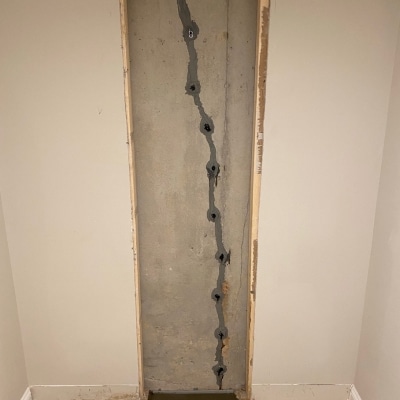
Moisture entering your foundation walls through cracks is the primary driver of the reinforcement corrosion that causes chipping concrete from the inside out. Sealing those entry points stops moisture before it reaches the rebar and accelerates further deterioration.
Our concrete foundation crack repair injects polyurethane directly into foundation wall cracks, where it expands to fill the void and cut off the moisture pathway that has been driving the chipping pattern on your wall surface. This is the solution when chipping concrete on your foundation wall traces back to visible cracks, allowing water to reach the reinforcement beneath.
When saturated soil pressing against the outside of your foundation is the moisture source driving reinforcement corrosion and freeze-thaw damage from the exterior, stopping that moisture before it enters the wall system is the most direct fix available.
Our exterior basement waterproofing applies a waterproof membrane to your exterior foundation surface. It improves drainage at the footing level, removing the moisture source that has been keeping your foundation concrete saturated and accelerating the chipping process. In Northern Virginia, where clay-heavy soil holds groundwater against foundation walls long after rainfall stops, this solution addresses what interior treatments alone cannot reach.
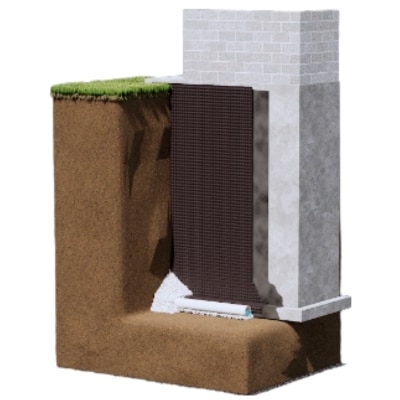
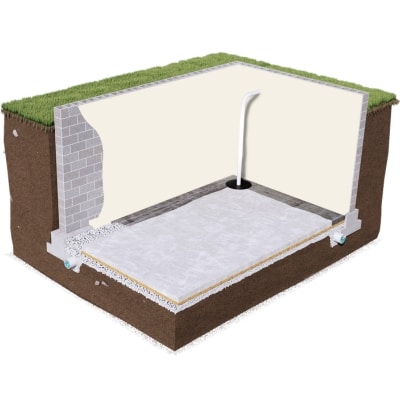
When moisture consistently enters your foundation walls and drives chipping from within, managing that water before it spreads further into the concrete is the next line of defense. Our interior basement waterproofing system installs a perimeter drainage channel along the base of your foundation walls that intercepts water as it enters and redirects it safely away before it continues saturating the concrete and accelerating reinforcement corrosion that causes chipping.
This solution works best when chipping concrete appears across multiple wall sections, and the moisture source is sustained hydrostatic pressure from the saturated soil outside your foundation.
When chipping concrete on your foundation wall has progressed to the point where reinforcement corrosion, carbonation, or inadequate concrete cover has compromised the wall’s structural integrity, surface repair and waterproofing alone cannot restore what deterioration has taken away.
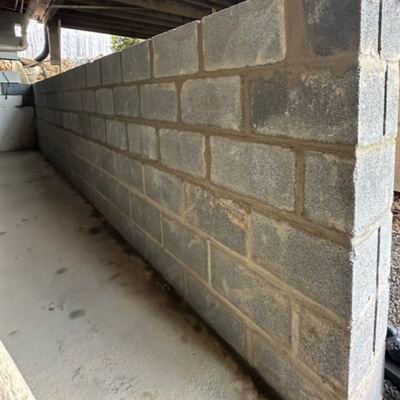
Our foundation wall replacement fully demolishes the compromised wall and rebuilds it to current structural standards, eliminating the deteriorated concrete rather than working around it. This is the solution when a professional assessment confirms the chipping has advanced beyond what crack repair or waterproofing can address and the wall’s structural capacity has been significantly reduced.
Chipping concrete on a foundation wall does not pause between seasons. Every freeze-thaw cycle pushes the deterioration deeper into the concrete. Every wet season keeps the reinforcing steel in contact with the moisture, accelerating its corrosion. The earlier the foundation condition behind the chipping is identified, the more repair options remain available.
LUX Foundation Solutions offers foundation repair services and free on-site assessments for homeowners across Northern Virginia, Shenandoah Valley, North Central Virginia, and West Virginia. Call us at 540-508-8982 or fill out our online form to schedule your free estimate today.
Not necessarily, but it always warrants a closer look. Surface spalling can be cosmetic, especially in older homes built before modern concrete mixes were standard. However, chipping paired with cracks, moisture, or wall movement is a clear signal that structural evaluation is needed.
Chipping concrete on a foundation wall is a serious warning sign that requires professional evaluation rather than surface patching. Unlike chipping on a driveway or sidewalk, which is typically cosmetic, chipping on a foundation wall indicates the structural concrete is deteriorating from within.
When accompanied by rust staining, exposed rebar, or cracks running alongside the chipping, the deterioration has likely been progressing for multiple seasons and needs immediate attention.
Normal concrete chipping appears on horizontal surfaces like driveways, sidewalks, or steps from surface wear and freeze-thaw exposure. Chipping concrete that indicates a foundation problem appears on vertical foundation walls or basement floors, is accompanied by rust staining, efflorescence, or cracks, and worsens progressively rather than remaining stable.
If the chipping is on your foundation wall and growing in area or depth, it is a foundation problem that needs professional assessment.
Chipping concrete on a foundation wall can sometimes be addressed through crack repair and waterproofing when the deterioration is caught early, and the structural concrete beneath is still sound. When reinforcement corrosion, carbonation, or inadequate concrete cover has compromised the wall’s structural integrity beyond what repair can restore, foundation wall replacement is necessary.
A professional on-site assessment is the only reliable way to determine which approach is right for your specific foundation condition.
Stopping chipping concrete on foundation walls permanently requires addressing the moisture source driving the deterioration rather than patching the surface where it appears. Sealing foundation cracks stops moisture from reaching the reinforcement.
Exterior waterproofing removes the moisture source at the foundation exterior. Interior waterproofing manages moisture entering through the wall. Each approach addresses a different entry point for the moisture that accelerates concrete chipping and reinforcement corrosion beneath your Northern Virginia home.
Chipping concrete on a foundation wall is typically not covered by standard homeowners insurance because it results from gradual deterioration rather than a sudden covered event. Most policies exclude damage caused by moisture, soil movement, or long-term concrete deterioration.
If the chipping resulted from a sudden specific event, coverage may apply. A professional foundation assessment documents the condition accurately before any insurance consultation or repair decision is made.
Thank you! Your form has been successfully submitted. You may receive service-related text messages from Lux Foundation Solutions, including appointment updates, reminders, and one-time verification codes if needed. Message frequency may vary. Msg & data rates may apply. Reply HELP for help. Reply STOP to opt out.
Examples of messages you may receive:
• Lux Foundation Solutions: Your appointment has been scheduled. You will receive service-related updates as needed.
• Lux Foundation Solutions: Reminder — your scheduled service is approaching. Reply STOP to opt out.
• Lux Foundation Solutions: Your verification code is 739214. This code expires in 10 minutes.