Basement Flooding
Basement flooding is not just a water problem. It is a sign that your home’s drainage system, foundation, or waterproofing is under stress. As the water problem persists, it can lead to mold growth, structural damage, and higher repair costs if it’s not addressed early.
What Does Basement Flooding Mean for Your Home?
Basement flooding occurs when water enters your home faster than the drainage system can handle. The source can be groundwater pushing through foundation walls, surface runoff water flowing into the basement area around your home, a failing sump pump, or a combination of all three happening at once.
Once moisture builds up, mold can start growing within 24 to 48 hours. If basement water problems continue, they can damage floor joists and drywall while placing added stress on the foundation walls.
In Northern Virginia, where clay-heavy soil holds water against foundations long after rain stops, a basement flood tends to worsen with each wet season rather than resolve on its own. LUX Foundation Solutions has assessed basement flooding across the region and consistently finds that addressing the first signs of basement flooding keeps repair costs significantly lower than waiting for the damage to spread.
Signs of Basement Flooding You Should Not Ignore
Basement flooding leaves behind warning signs that are easy to miss until the damage has already built up. These are the common signs of water in the basement homeowners across Northern Virginia most commonly notice before calling for a professional assessment.
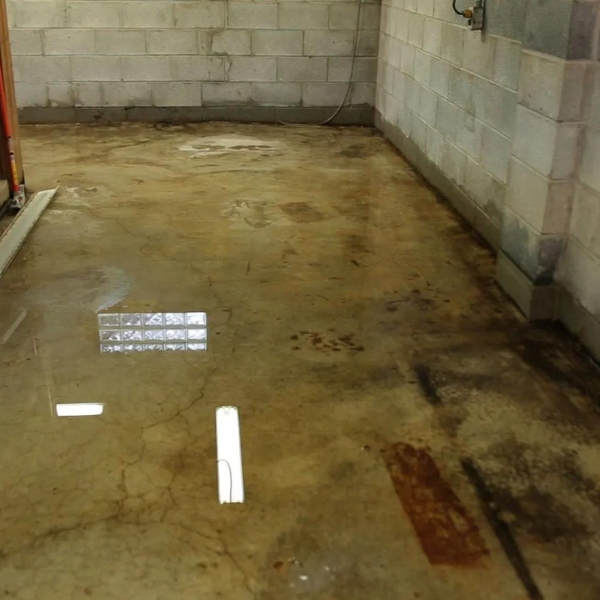
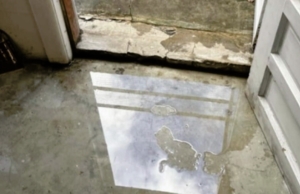
- Water appearing on your basement floor after rain or snowmelt is the clearest indicator that water is entering faster than your drainage system can handle.
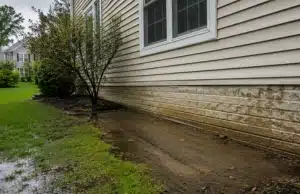
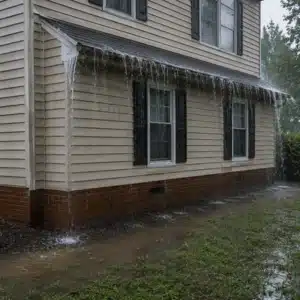
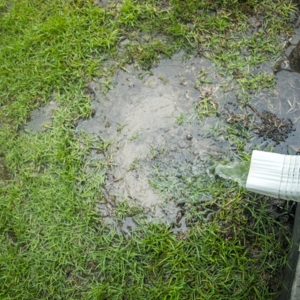
- Water pooling or puddles forming near your foundation exterior means surface runoff is collecting against your walls rather than draining away from the property.
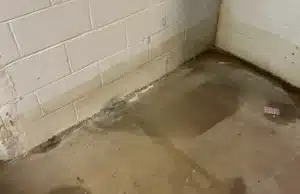
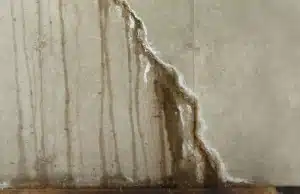
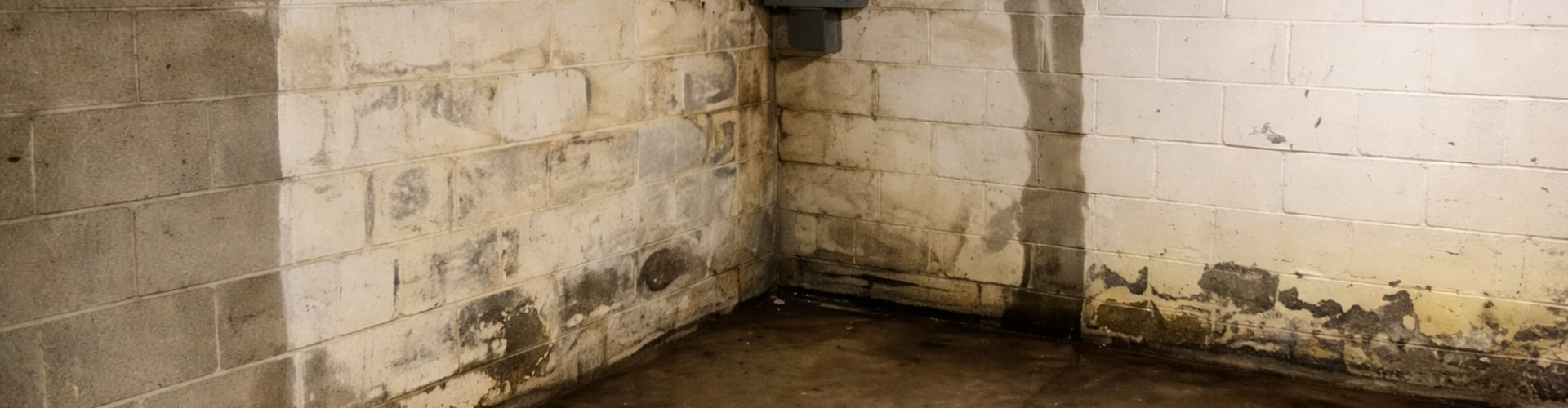
- Water marks or stain lines on your basement walls showing past water levels confirm flooding has already occurred, even if the floor appears dry when you look.
- Damp or musty odors after rain indicate moisture is building up behind finished surfaces or in the soil beneath your basement floor.
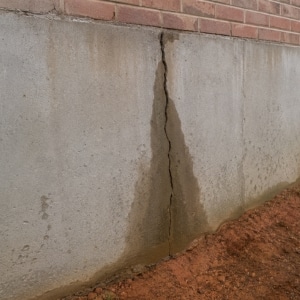
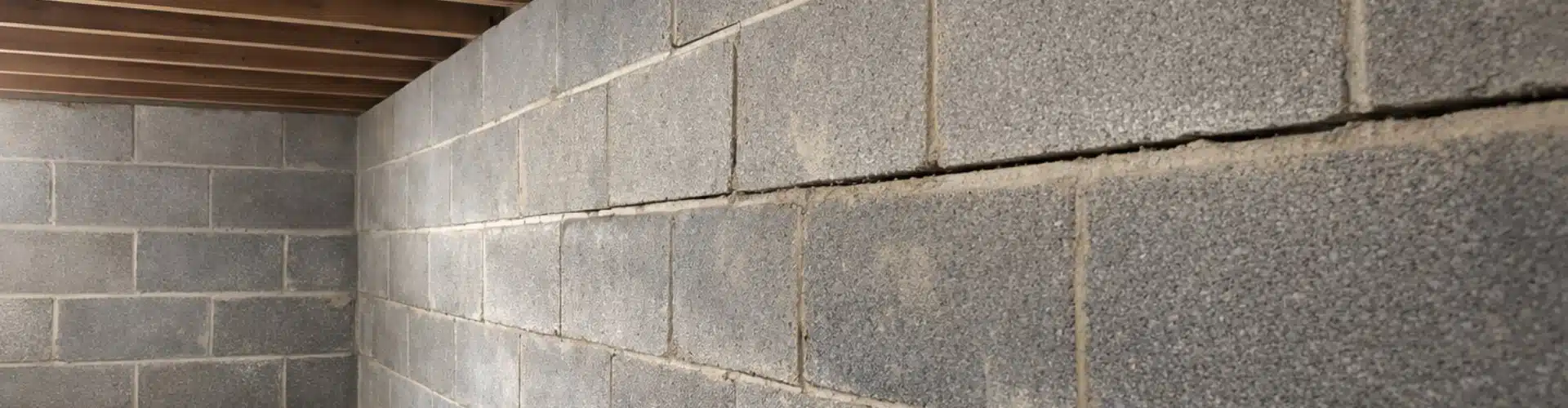
- Water seeping through basement wall cracks is a direct sign that hydrostatic pressure from saturated soil is forcing groundwater through openings in your foundation.
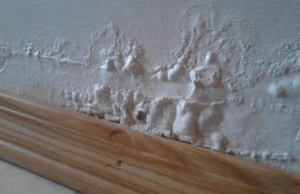
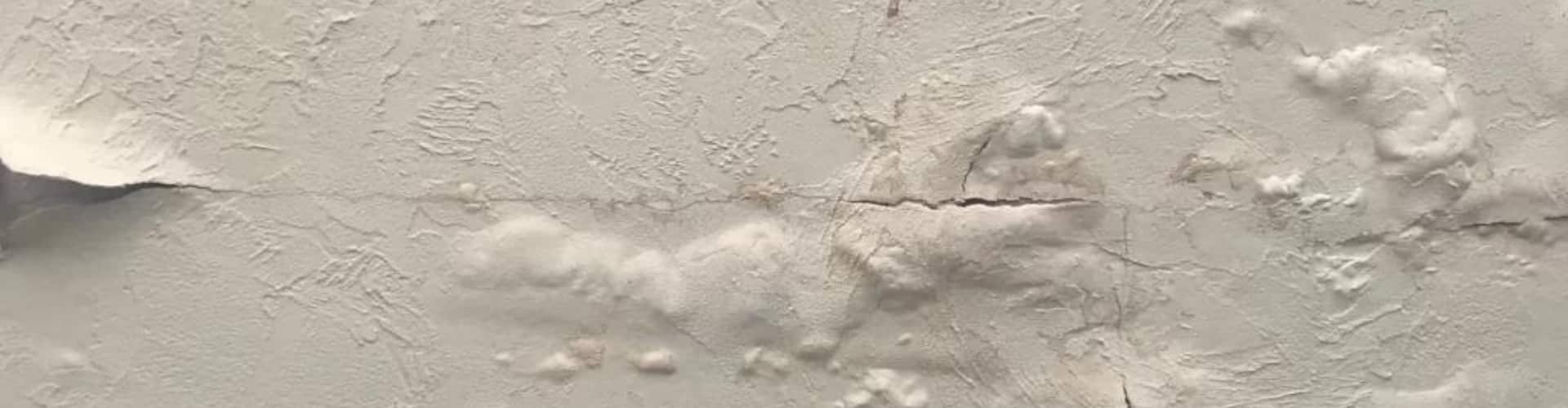
- Stained, bubbling, or peeling paint on your basement walls shows water has been working behind the surface long enough to break the paint bond.
If you are seeing any of these signs, the moisture source has likely been building longer than the visible damage suggests. Schedule a free on-site assessment to find out exactly what is causing water to enter your home.

Standing water after storms

Water Pooling Near Foundation Outside

Water Marks or Stain Lines on Basement Walls

Damp or Musty Odors After Rain

Water Seeping Through Basement Wall Cracks

Bubbling paint on basement wall
What Causes Basement Flooding?
Basement flooding rarely happens by accident. There is always an underlying cause, and identifying the right one is what determines which solution actually works. Here are the five most common causes of flooded basements found in homes across Northern Virginia and surrounding regions.
Heavy Rainfall and Soil Saturation
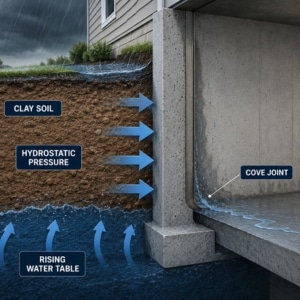
When excessive rainfall saturates the ground around your home, the soil can no longer absorb incoming water. This is one of the most common reasons rainwater floods the basement. As water builds up around the foundation, it creates pressure that can push moisture through cracks and other openings in the walls or floor.
In Northern Virginia, clay-heavy soil holds rainfall longer than sandy soil, meaning pressure on your foundation continues to build long after the rain stops.
Foundation Cracks and Wall Openings
Even hairline cracks in the foundation give groundwater a direct path into your basement. Hydrostatic pressure from saturated soil pushes water in basement spaces through the smallest openings in your walls and floor, turning what looks like a minor crack into a consistent water entry point. The longer these openings go unaddressed, the wider they become and the more flood water finds its way into the basement.
Sump Pump Failure
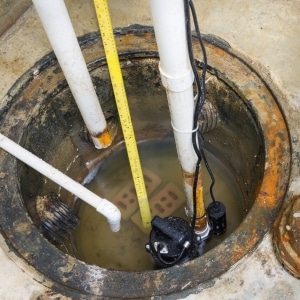
A sump pump failure during or after a heavy storm means water entering your basement has nowhere to go. Whether caused by a power outage, a clogged intake, or a worn-out motor, a failed pump allows standing water in the basement to accumulate rapidly on your floor. In Northern Virginia, where heavy seasonal rainfall is common, a functioning sump pump is one of the most critical components of any basement moisture control system.
Plumbing Leaks and Pipe Failures
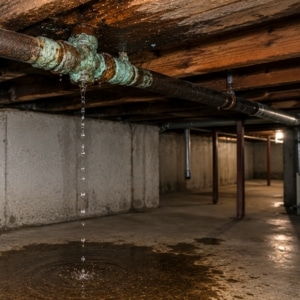
A leaking pipe, burst fitting, or failed connection inside or above your basement introduces water directly into the space below. Water in the basement when there is no rain is often the first indication that a plumbing issue, rather than a drainage problem, is the cause.
Unlike groundwater flooding that follows rainfall, basement water from plumbing failures can happen at any time, making it one of the harder causes to anticipate without regular inspection.
Poor Drainage and Improper Grading
If the soil around your home slopes toward the foundation, rainwater and runoff can collect next to the basement walls instead of flowing away from the house. These are among the most common causes for basement flooding that homeowners overlook until water is already inside.
Overflowing gutters full of debris and old or poorly maintained drainage systems, along with slope failure around the property, raise the risk of flooding in your basement after every heavy rain event.
Hydrostatic Pressure
When the water table rises after heavy rainfall or spring snowmelt, it pushes against your foundation from below and from the sides. This pressure, called hydrostatic pressure, is strong enough to force water through even small imperfections in concrete. You’ll often see this as water seeping up through cracks in the floor or appearing along the wall-floor joint (the cove joint).
In Northern Virginia, expansive soil keeps groundwater flow elevated long after rain stops, making hydrostatic pressure one of the most persistent drivers of recurring basement flooding.
Our Proven Flood in the Basement Solutions
Basement flooding has a specific source, and the right solution depends entirely on what our team identifies during your free on-site assessment. Here are the flood in basement solutions our expert team recommends based on what is causing the problem in your specific home.
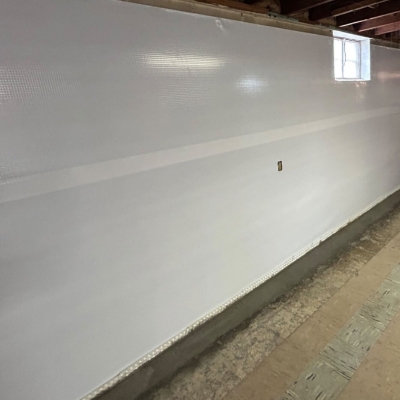
Interior Basement Waterproofing
Surface repairs alone will not stop rainwater flooding your basement from returning if water is leaking into your basement after heavy rain through your walls or floor under sustained hydrostatic pressure. Our interior basement waterproofing system installs a perimeter drainage channel along the base of your basement walls, intercepting water as it enters and directing it into a sump pump before it reaches your floor.
It does not stop water from entering your foundation; it manages it before it causes flood damage to your home. We recommend this when your basement consistently floods after heavy rain and water seeps through your basement floor or wall joints, making them the primary entry points.
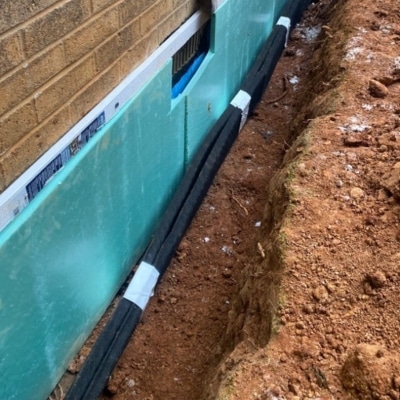
Exterior Basement Waterproofing
Hydrostatic pressure from saturated soil surrounding your foundation is one of the most common causes of a flooded basement, and water coming into the basement from outside walls is the clearest sign that it is happening. Addressing it from the outside is the most direct fix available for your home.
Our exterior basement waterproofing solution stops water at the source before it ever enters your wall system, applying a waterproof membrane to your exterior foundation surface and improving drainage at the footing level. In Northern Virginia, where clay-heavy soil holds groundwater against foundations long after seasonal rainfall stops, we recommend this when water consistently appears along the base of your exterior walls after wet seasons.
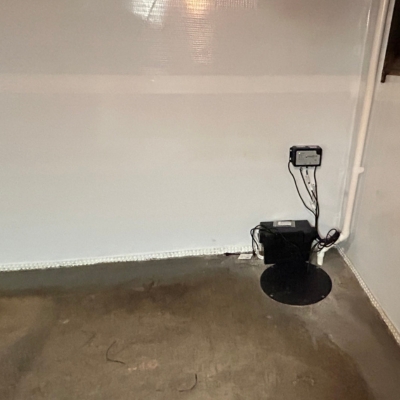
Basement Sump Pump Installation
When a failed or absent sump pump allows standing water to accumulate in your basement during heavy rain, our sump pump installation gives your home the protection it needs before the next storm arrives. We install a properly sized pump, a sealed sump pit, and an automatic float switch that activates the moment water levels rise, preventing a basement flood before it spreads across your floor.
We also install battery backup systems so your sump pump can continue working if the power goes out. That’s especially important in Northern Virginia, where heavy storms can cause outages at the same time water is entering the basement.
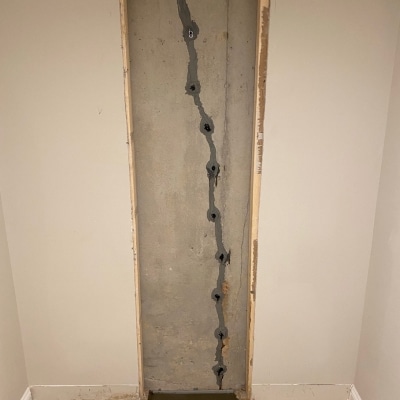
Basement Crack Repair
Foundation cracks let water seep into your basement. And water entering your basement through outside walls will not stop until the opening is sealed. Our basement wall crack repair injects polyurethane-based sealant directly into the crack to fill the void and seal it from the inside out, preventing water entry.
This is the right solution for your home when basement flooding appears as a concentrated stream or wet patch tracing back to a specific crack in your wall, with no active bowing or inward movement present elsewhere in your foundation.
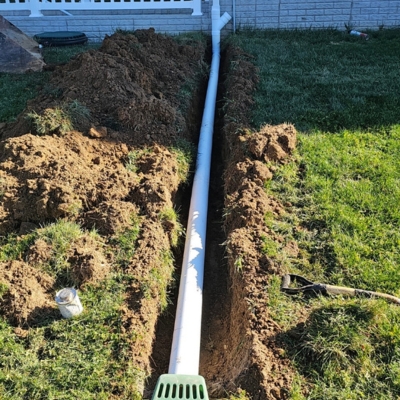
Downspout Extension
Poor grading and aging or poorly maintained drainage systems are common reasons water leaks into basements after heavy rain. Our downspout extension installation addresses that directly for your home. We carry roof runoff away from your foundation to a safe discharge point in your yard, redirecting rainwater before it pools against your basement walls and seeps through your basement floor or baseboard.
We recommend this solution when water flooding the basement is concentrated near exterior walls directly below roof drainage points and the surrounding grade slopes toward rather than away from your foundation.
Get a Free Assessment for Basement Flooding in Your Home
Basement flooding does not resolve between wet seasons. Every time water enters your basement without a permanent fix in place, it puts more pressure on your foundation, creates new conditions for mold growth, and makes the eventual repair more expensive than it would have been at the first sign of water.
Whether you are seeing standing water on your basement floor after rain, water coming into your basement from outside walls, or recurring moisture that keeps returning no matter what you try, the source needs to be identified before it causes further structural damage.
LUX Foundation Solutions offers free on-site assessments for homeowners across Northern Virginia, Shenandoah Valley, North Central Virginia, and West Virginia. Call us at 540-508-8587 or fill out our online form to schedule your free estimate today.
Request a free Estimate
Basement Flooding FAQs
The first steps when your basement floods are to cut power to the affected area, stop the water source if possible, and immediately remove water with a wet vacuum or submersible pump to quickly clear your basement floor. Move belongings to a dry area and document all damage with photographs before cleaning up to support any insurance claim.
Recurring basement flooding almost always means the root cause has never been addressed. The most common reasons include hydrostatic pressure from saturated soil, foundation cracks that provide a consistent entry point for groundwater, a failing sump pump, and poor drainage that allows rainwater to pool near your foundation.
In Northern Virginia, clay-heavy soil makes these problems more persistent than in regions with better-draining soil.
Preventing basement flooding starts with addressing the conditions that allow water in. Keep gutters and downspouts clear and extended away from your foundation, ensure the ground around your home slopes away from the walls, and have your sump pump tested before heavy rain seasons.
For homes with recurring water problems, interior waterproofing, exterior waterproofing, or a French drain system provides permanent prevent water damage protection rather than seasonal maintenance.
Standard homeowners insurance typically covers sudden and accidental water damage, such as a burst pipe. Generally, it excludes water leaking into your basement after heavy rain or seeping through cracks in the basement floor, which is considered gradual water damage. After the damage occurs, contact your insurance company as soon as possible to review your policy and find out what your coverage includes.
Flood insurance covers rising water from external sources. Reviewing your specific policy immediately after damage gives you the strongest position when filing a claim.
If water remains in your basement, mold can begin growing within 24 to 48 hours. Through the stack effect, mold spores can move upward into the rest of your home, lowering indoor air quality on the floors above.
Over time, exposure to mold spores may cause respiratory irritation, trigger allergy symptoms, and worsen asthma, especially in children, older adults, and people with existing respiratory sensitivities.
Minor contributing factors like cleaning gutters, extending downspouts, and improving yard grading can reduce the amount of surface water reaching your basement walls. However, if your basement flooding is caused by hydrostatic pressure, foundation cracks, a failing sump pump, or water seeping through your basement floor, DIY fixes rarely solve the root problem, and flooding will return after the next heavy rain.