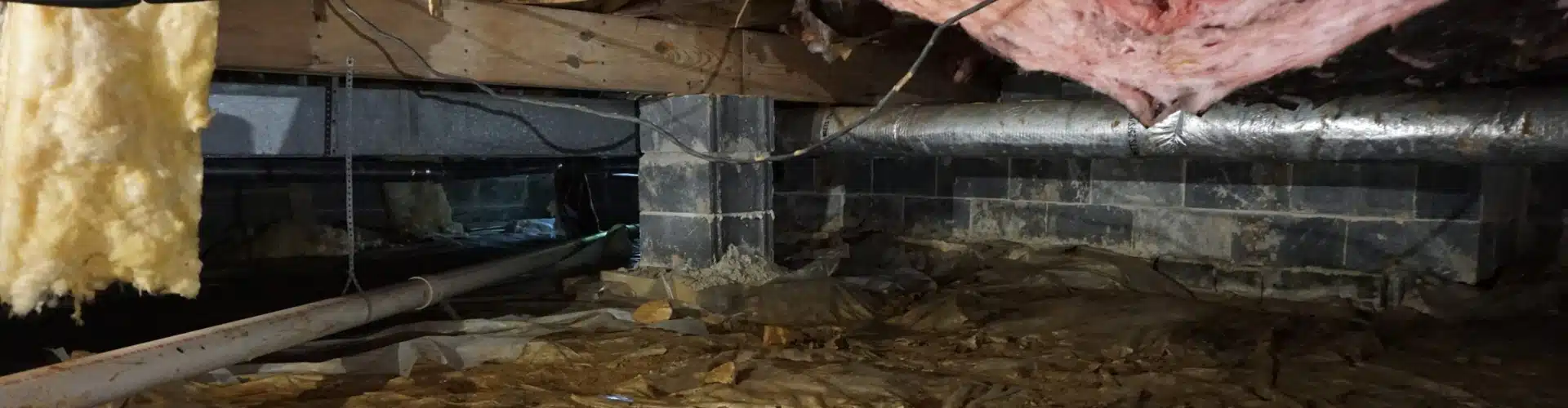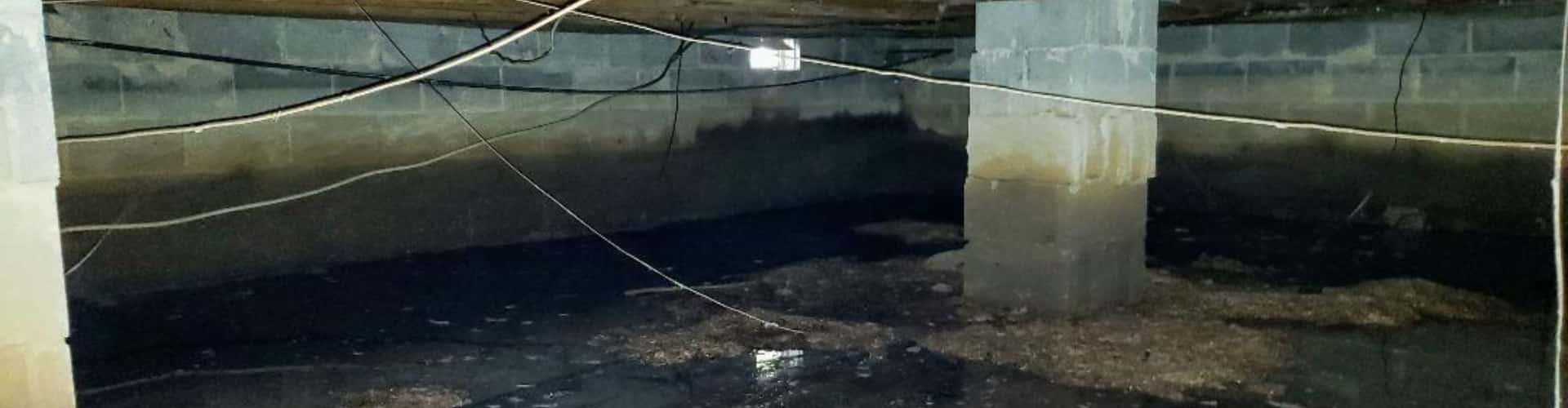
Asthma or allergy symptoms that consistently worsen inside your home are not always caused by outdoor pollen or seasonal allergies. In many Northern Virginia homes, these problems begin in the crawl space. Through the stack effect, mold spores, dust mite allergens, and humid air in your home can move from the crawl space into the rooms above.

Up to 50 percent of the air circulating through your home enters from the crawl space below through the stack effect. When that crawl space contains indoor air pollution sources like mold, dust mites, pest allergens, or moisture-saturated contaminated air, every breath your family takes indoors carries those irritants upward. For people already sensitive to allergens, this is often what turns seasonal allergies into a year-round crawl space health issue that never fully resolves.
In Northern Virginia, where clay-heavy expansive soil holds moisture against crawl space foundations through multiple wet seasons, damp crawlspaces develop allergen conditions that persist longer than in drier regions.
During crawl space inspections across Northern Virginia, the LUX team often finds active mold and moisture conditions beneath homes where the family’s health had already been affected for months before anyone suspected the crawl space below.
Not every allergy or asthma flare comes from outdoor pollen or pet dander. When the crawl space beneath your home is the source, the symptoms follow a specific pattern that outdoor allergen treatments cannot resolve. Worsening allergy symptoms that follow the patterns below are a strong signal that the source is beneath your home. Here is what to watch for:
If you or your family members are experiencing more than one of these signs together, your crawl space issues are likely driving the symptoms your family has been experiencing indoors. The crawl space condition causing them needs to be identified and corrected before any allergy treatment above ground will provide lasting relief.

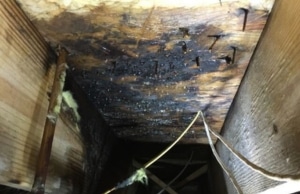

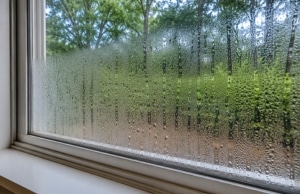
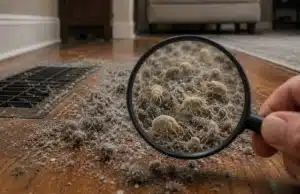
The allergic reactions caused by crawl space conditions do not develop overnight. Each of these causes work gradually beneath your home, quietly degrading your home’s air quality on every floor above. Here are the five most common crawl space conditions found in Northern Virginia homes that trigger persistent indoor allergy and asthma symptoms.
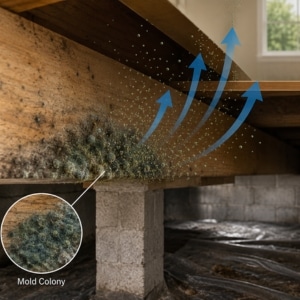
Mold growing in your crawl space releases spores continuously into the air circulating through your home via the stack effect. Prolonged exposure to these spores can trigger asthma, respiratory infections, and allergic reactions such as sneezing, coughing, and other breathing problems, especially during humid months
Northern Virginia’s clay-rich soil holds moisture for longer periods, so crawl spaces often stay damp after rain. With moisture remaining in the ground for longer periods, crawl spaces provide a better environment for mold growth.
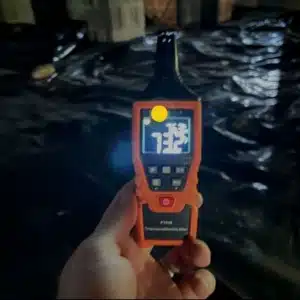
When excessive moisture builds up in your crawl space, humidity levels rise and create conditions where allergens can thrive. Through the stack effect, contaminated air from the crawl space moves into the living areas of your home. Damp crawl space allergies worsen as that air replaces conditioned air on your ground floor.
Northern Virginia’s summer outdoor humidity regularly exceeds 60 percent, which can keep crawl spaces damp and allow moisture to contribute to indoor air quality and allergy problems.
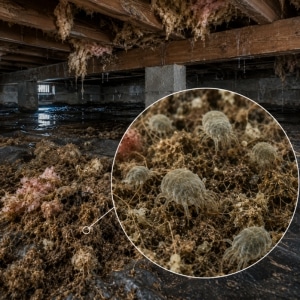
Dust mites in crawl space environments thrive when humidity exceeds 50 percent, releasing allergenic proteins that enter your home through the stack effect year-round. Unlike outdoor pollen that varies by season, dust mite allergens from a damp crawl space circulate continuously through your indoor air.
For homeowners already experiencing indoor asthma and allergy symptoms, a humid crawl space is often what prevents those symptoms from fully resolving between seasons.
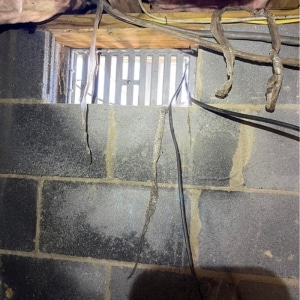
Open crawl space vents pull warm, humid outdoor air directly beneath your home during Northern Virginia summers, raising moisture above the threshold where mold and dust mites thrive. That incoming air rises through the stack effect, carrying crawl space allergy triggers into your living area and contributing to poor indoor air quality that worsens with every peak humidity month throughout the region.
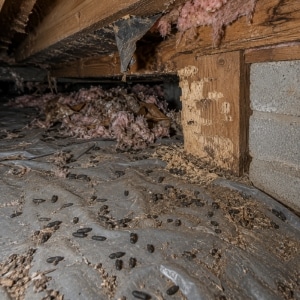
When rodents, insects, and other pests infest your crawl space, they leave allergens beneath your home that can affect the air inside your living spaces. Rodent droppings, urine, and dander can trigger indoor allergy symptoms and make asthma symptoms worse for some people.
Unlike moisture problems, pest allergens persist regardless of humidity levels, making them a year-round contributor to crawl space health issues in Northern Virginia homes.
Each of these crawl space conditions sends allergens and irritants upward into your living area through the stack effect. The right solution depends on which condition or combination of conditions our team identifies during your free crawl space inspection.
The allergens driving your indoor symptoms are coming from beneath your home. Treating the symptoms above ground without addressing the crawl space conditions producing them means they return with every humid season.
Here are the five solutions our team recommends after identifying the exact crawl space condition driving your allergy or asthma symptoms during your free on-site assessment.
Ground moisture evaporating upward through bare crawl space soil is the most consistent source of mold spores and dust mites that trigger asthma and allergic reactions in Northern Virginia homes. Our crawl space encapsulation seals the crawl space walls and floor with a durable vapor barrier, cutting off the ground moisture that has been sustaining mold growth and dust mite populations beneath your home.
By removing the moisture source at the ground level, encapsulation eliminates the primary allergen-producing conditions rather than managing the symptoms they cause in the living area above.
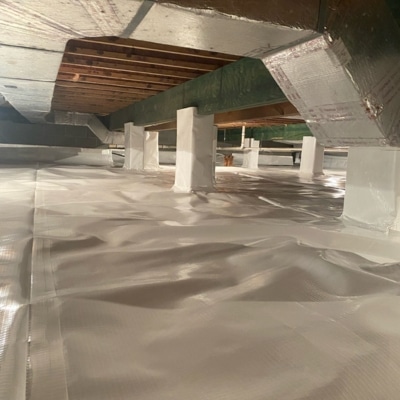
Temperature differentials between your living area and the crawl space below create condensation on floor joists and structural surfaces, providing the moisture that mold and dust mites need to establish and spread. Our crawl space insulation restores the thermal barrier between the crawl space and the living area above to regulate temperature and eliminate the condensation cycle that has been sustaining allergen growth beneath your floors.
In Northern Virginia, where freeze-thaw cycles repeatedly saturate and compress existing insulation, restoring proper insulation is one of the most direct ways to reduce allergen exposure your household experiences year-round.

When groundwater entering your crawl space keeps the environment consistently wet and creates conditions where crawl space mold and allergens thrive, removing that water before it raises moisture levels is the first step toward cleaner air above.
Our crawl space drainage system installs a perimeter drain network and sump pump that collects groundwater as it enters and discharges it safely away from your foundation before it evaporates into the crawl space air and raises the humidity that sustains mold, mildew, and dust mites, driving your indoor asthma and allergy symptoms.
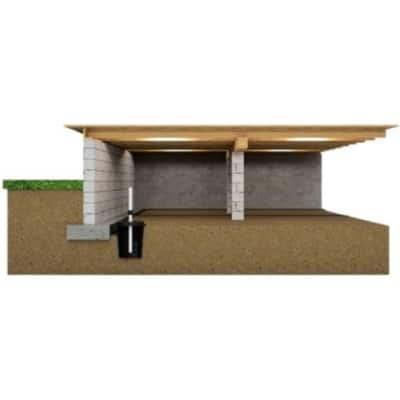
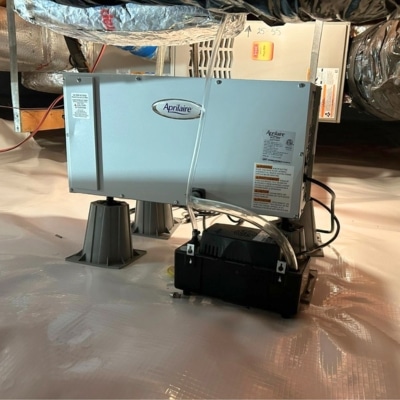
The crawl space humidity level determines whether mold and dust mites can survive beneath your floors. When that level stays above 55 percent, allergen production continues regardless of any other repairs in place. Our crawl space dehumidifier installation actively pulls excess moisture from the sealed crawl space air. It maintains conditions where crawl space mold and dust mite populations cannot sustain themselves year-round.
If mildew and asthma symptoms keep returning through summer despite other crawl space work, an undersized or absent dehumidifier is almost always the missing piece.
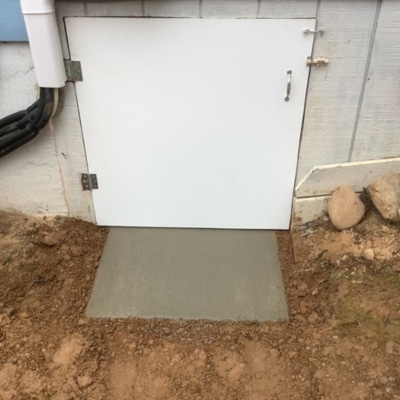
Open crawl space vents do not ventilate your crawl space in Northern Virginia. They import outdoor humidity, pollen, and mold spores directly into the space beneath your floors during the months when outdoor allergen levels are highest. Our crawl space vent and door closure seals those openings permanently, eliminating the allergen pathway from outside into your crawl space at the source.
If members of your family are experiencing crawl space allergies that peak in spring and summer, closing the vents often produces the most noticeable improvement in indoor air quality and allergies in the shortest time after installation.
Every humid season that passes without addressing your crawl space gives crawl space mold, dust mites, and pest allergens another cycle to establish further beneath your floors and worsen the poor indoor air quality your family breathes every day above.
The symptoms your family has been treating above ground may have a fixable source below it. A free on-site crawl space assessment from LUX Foundation Solutions identifies exactly which crawl space health issues are driving the indoor asthma and allergy symptoms and what the right solution is for your specific home.
We offer crawl space repair services across Northern Virginia, Shenandoah Valley, North Central Virginia, and West Virginia. Call us at 540-508-8982 or fill out our online form to schedule your free estimate today.
Yes, a damp crawl space directly causes allergies by creating conditions where mold, mildew, and dust mites thrive beneath your home. When crawl space humidity exceeds 50 percent, airborne allergens enter your living area through the stack effect and trigger allergic reactions including persistent sneezing, coughing, and congestion.
In Northern Virginia, seasonal humidity keeps crawl space moisture elevated through summer, meaning these allergen conditions rarely resolve without direct crawl space intervention.
Allergy symptoms caused by crawl space conditions are worse indoors because the allergen source is directly beneath your living area. Mold growing in your crawl space and dust mites can release allergens that the stack effect carries into the living areas of your home.
Outdoor air dilutes allergens while indoor air concentrates them, which is why coughing indoors but not outdoors is one of the clearest signs the source is inside your home rather than outside it.
Yes, crawl space mold directly causes asthma symptoms because mold spores are potent respiratory irritants that trigger asthma and airway inflammation when inhaled.
The mildew and asthma connection is well established, and when mold is in the crawl space, the stack effect carries those spores into every room above. Homeowners whose asthma worsens in summer and improves in dry months are often living above an active crawl space mold condition.
Poor indoor air quality in a Northern Virginia home is most commonly caused by crawl space mold, elevated humidity sustaining dust mite populations, pest allergens, and open vents pulling outdoor allergens into your home.
These conditions allow more allergens to enter your living areas through the stack effect. Crawl space health issues compound over time, making indoor air quality progressively harder to manage. Addressing the source in the crawl space is the best way to improve conditions over the long term.
The clearest sign that my house is making me sick from a crawl space source is indoor allergy symptoms consistently worse at home than away. If symptoms improve significantly after several days away from home or worsen during Northern Virginia’s humid summer months when crawl space moisture peaks, the crawl space below is almost certainly the source driving the symptoms above.
Yes, fixing crawl space health issues directly reduces indoor allergy symptoms and can improve indoor air quality by eliminating the moisture, mold, and allergen conditions producing them below. Many homeowners who encapsulate, install a dehumidifier, and seal crawl space vents consistently report measurable respiratory improvement within one to two seasonal cycles after completion. The improvement is most noticeable for symptoms that previously peaked during Northern Virginia’s humid summer months.
Thank you! Your form has been successfully submitted. You may receive service-related text messages from Lux Foundation Solutions, including appointment updates, reminders, and one-time verification codes if needed. Message frequency may vary. Msg & data rates may apply. Reply HELP for help. Reply STOP to opt out.
Examples of messages you may receive:
• Lux Foundation Solutions: Your appointment has been scheduled. You will receive service-related updates as needed.
• Lux Foundation Solutions: Reminder — your scheduled service is approaching. Reply STOP to opt out.
• Lux Foundation Solutions: Your verification code is 739214. This code expires in 10 minutes.