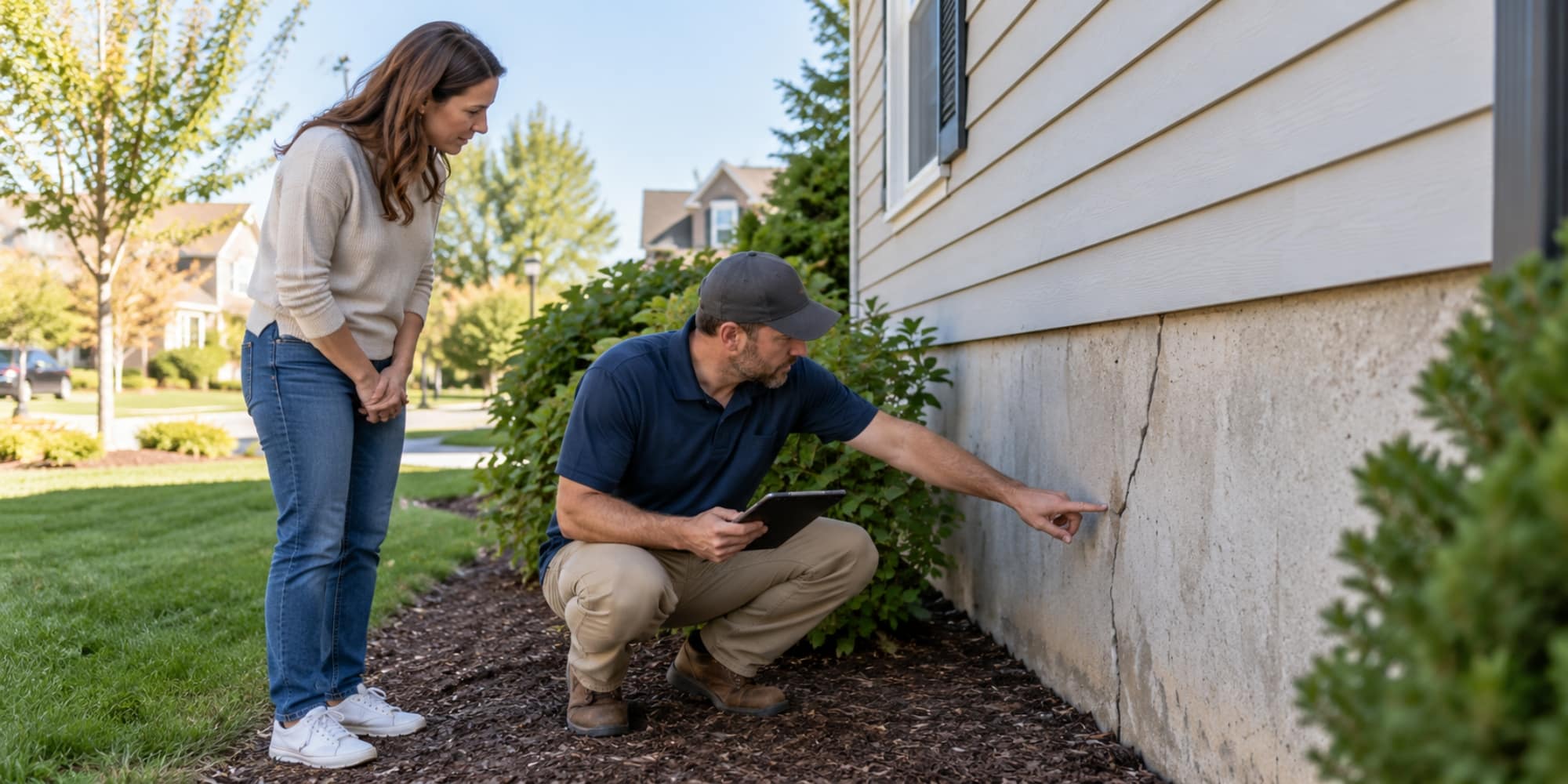
If you notice cracks in brick mortar around your home, it can be difficult to tell whether the damage needs simple repointing or points to a larger problem, since not all cracks mean the same thing. Some cracks in brick walls or mortar joints deteriorate with age and weather exposure and can be repaired without addressing the surrounding structure. In other cases, cracks are a sign that the wall itself is shifting, and no amount of new mortar will stop it from coming back.
Before choosing a repair, it helps to understand what the damage is telling you. This guide explains when repointing is enough to fix the problem, and when the crack instead needs foundation repair.
Key Takeaways
- Not every crack in brick mortar requires the same repair. Minor cracks can often be addressed through repointing, while more serious cracks or recurring cracking may require further evaluation.
- Repointing replaces deteriorated mortar joints and may be appropriate when the problem is limited to the mortar itself and does not affect structural integrity.
- Cracks that return after repair may indicate foundation shifting or another underlying issue that repointing alone will not resolve.
- The location, pattern, and progression of the damage are warning signs that matter when deciding whether the problem is limited to the mortar or needs closer attention.
- An expert assessment can help determine the appropriate repair when the cause of the cracking is unclear, before it leads to further damage.
How Mortar Cracks Normally Happen
Mortar is softer than the brick around it by design, so it is built to wear before the brick itself does. Over time, that wear can appear as surface shrinkage, hairline cracks, gaps, or crumbling along the mortar joints.
Aging and weather exposure are usually behind this kind of deterioration. Moisture, seasonal temperature changes that cause bricks to expand and contract, and repeated weathering gradually wear mortar down, and this type of damage stays confined to the joint; the bricks themselves stay solid, and the cracking does not spread into the brick or trace a path down a wall or across a corner.
Not every crack in a mortar joint stays this contained. For the fuller picture of what those warning signs of foundation-related mortar cracks look like, that breakdown covers it in detail, but the next section here walks through what changes when a crack in your own wall points to something more than surface wear.
When Should You Worry About Cracks in Brick Mortar?
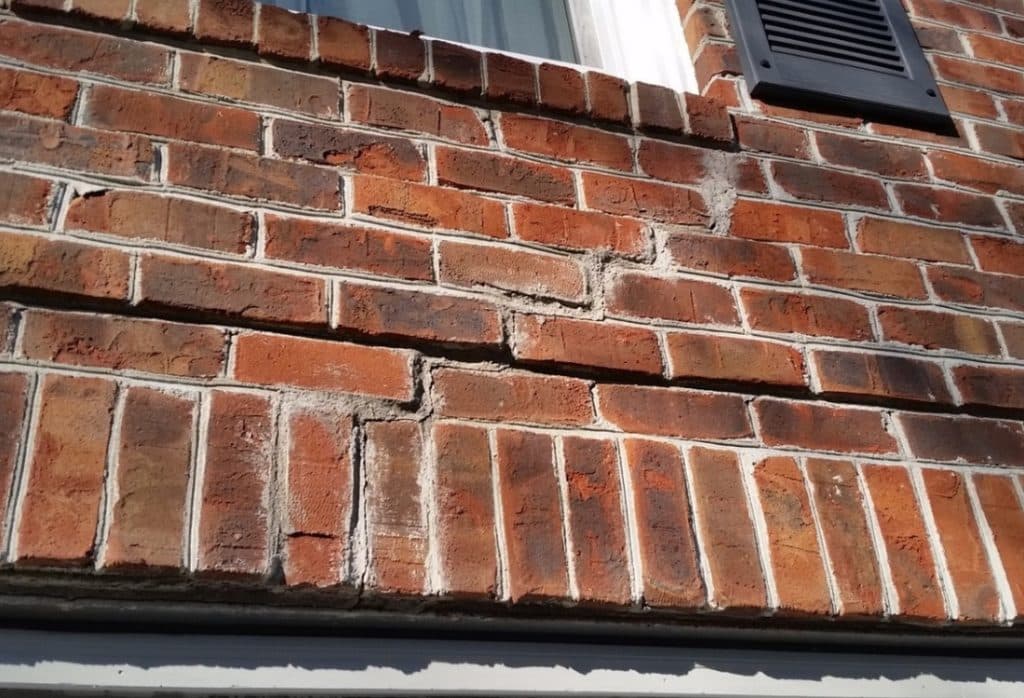
Mortar cracks are easy enough to spot on your own, but they do need a closer look before deciding what to do next. Walk up to the crack and check these three things:
Look at where the crack runs
Horizontal or vertical cracks confined to a single mortar joint usually indicate that the mortar is failing on its own. Check whether the crack runs straight through the brick itself, resulting in a cracked brick rather than just a failed joint, forms diagonal cracks across several joints, or creates stair-step cracks up the wall. Any of these points to something moving beneath or behind it, rather than the mortar simply aging out.
Treat a wide horizontal crack as the most serious of the three, since it often signals pressure pushing against the wall rather than surface wear. Small brick cracks that stay in the hairline are usually less concerning than large cracks that continue to widen over time.
Check whether it comes back after a repair
Mortar wear does not recur once it has been repointed correctly, since reliable repairs are built to last in the long term. If a crack reopens in the same spot within a short time, take that repeated movement as a sign that structural stress, not just surface wear, is still affecting the wall.
Notice what else is happening around it
Foundation movement brick cracks rarely show up alone. Look for doors or windows sticking, sloping floors, or drywall cracks appearing elsewhere in the house, if any of those show up alongside the mortar crack, treat it as one symptom among several rather than an isolated masonry issue.
None of these signs on their own is a guarantee either way, which is why a professional foundation inspection is the more reliable way for you to settle the question when more than one of them shows up at once in your own home.
When is Repointing Enough for Brick Mortar Cracks?
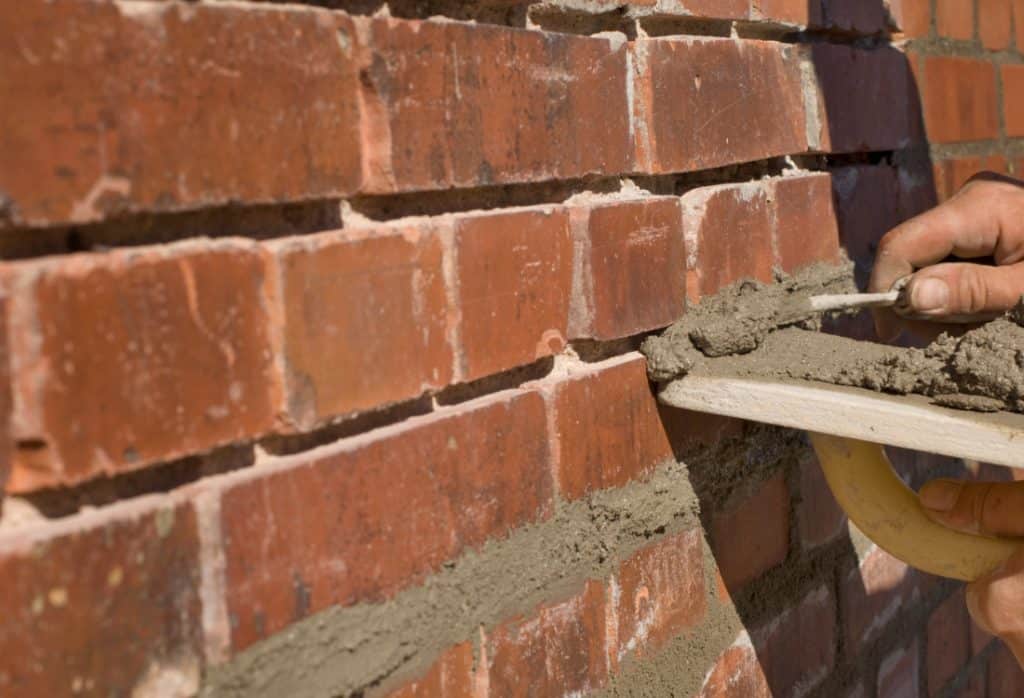
Repointing is enough when the crack in your brick mortar is due to ordinary wear, not a sign of movement beneath the wall or poor construction from the start. When done correctly, it removes the failed mortar and replaces it with fresh material matched to the original mix, restoring the joint completely and eliminating the risk of failure under normal conditions.
A properly repointed wall should hold up for decades. The mortar type matters more than most homeowners realize; choosing the wrong mix for an older wall can actually cause new problems, since mortar harder than the brick around it can crack the brick instead of wearing evenly with it, a risk the National Park Service’s guidance on brick masonry repair also warns against. This is one reason repointing is worth having done by someone experienced with your specific brick and mortar.
If the crack is a symptom of foundation issues or movement underneath the wall, repointing will not resolve it; the mortar will simply crack again once the new material cures.
When Do Foundation Movement Cracks in Brick Mortar Need Repair?
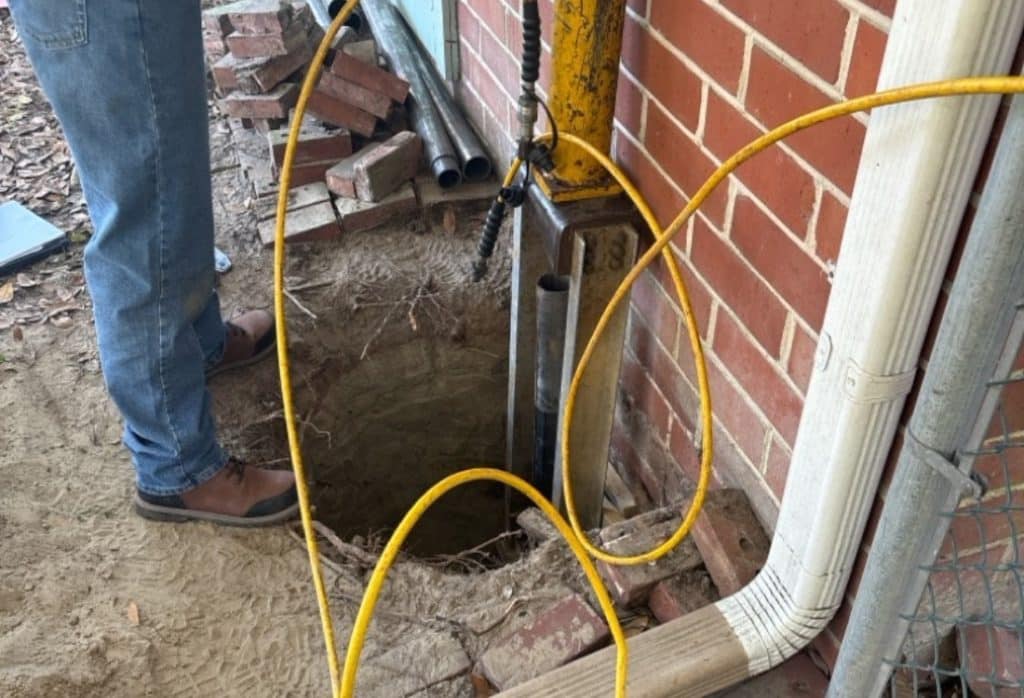
When the cause of your cracks in brick mortar is foundation movement rather than ordinary wear, the solution is foundation repair, not repointing. Foundation movement, often driven by settlement, tree roots, or shifting soil, puts uneven pressure on the brick wall above your home, and the mortar joints give way first since they are softer than the brick itself. This is why settlement cracks driven by foundation movement often follow a stair-step pattern or run straight through the brick, rather than staying confined to the joint.
Because the mortar is only reacting to that shifting, repointing will not hold on its own, it only delays the next crack while the ground underneath your home keeps moving. The actual fix is stabilizing the foundation, whether the underlying cause is settling soil, hydrostatic pressure and poor drainage around the footing, or something else moving beneath the wall. Left unresolved, this kind of movement can lead to serious structural problems or foundation failure over time.
A professional assessment identifies the cause and the right stabilization method for it. From there, a foundation repair solution built for the specific cause can stabilize your home and stop the movement that keeps creating new cracks.
Getting the Right Fix for Your Cracks in Brick Mortar
Telling ordinary mortar wear apart from a sign of foundation movement is not always obvious just by looking at a wall. Crack patterns can look similar at a glance, and the real difference often comes down to what is happening underneath the surface, something a homeowner cannot check without the right tools or experience.
If a crack keeps returning after repointing, or appears alongside other signs like sticking doors or sloping floors, it is worth having someone experienced take a closer look before assuming a repointing job will solve it. Our expert can assess the wall and the ground beneath it, and recommend whether the fix is masonry-only or something more.
Schedule a free assessment to find out which one applies to your home.
Frequently Asked Questions
Are these cracks in my brick and mortar a masonry problem, or is my house moving?
It depends on where the crack sits and how it behaves over time. A crack confined to the mortar joint that does not return after repointing is usually a masonry problem.
A crack that runs through the brick itself, resulting in a cracked brick rather than a mortar-only issue, follows a stair-step pattern, or keeps reopening in the same spot after repair points to the house moving, often due to foundation settlement, rather than the mortar simply wearing out. A professional inspection can confirm which one applies.
Can I repoint brick mortar myself, or do I need a professional?
Repointing looks simple, but getting it wrong is easy, and the mistakes are not easy to spot until later. Using a mortar mix harder than the surrounding brick, or failing to properly clear out the old material first, can cause new cracking, including structural cracks, or damage the brick instead of fixing the joint.
A professional matches the mortar to the brick and the technique to the wall, which is why repointing on any brick house is better left to someone experienced with the specific brick and mortar involved.
Can weather alone cause cracks in brick mortar?
Yes, some cracking in brick mortar is normal and expected over time. Mortar is designed to wear out before the brick does, and freeze-thaw cycles, moisture, and the way bricks expand and contract with the seasons naturally cause it to shrink and crack at the surface. This kind of cracking only becomes a concern when it spreads into the brick itself, keeps recurring after repair, or appears alongside other signs like sticking doors or sloped floors.
How long should a repointing repair last?
A correctly done repointing job should hold for decades without cracking again. If a repointed joint fails within a short time, that is not a sign of a bad repointing job on its own, it is more often a sign of foundation problems still affecting the wall.
What happens if a mortar crack is left unrepaired?
An unrepaired mortar crack lets moisture into the wall, which can accelerate deterioration and lead to serious structural damage over time. If the crack is tied to foundation movement, leaving it also means the underlying cause keeps affecting the structure while the visible sign goes unaddressed. Keeping proper drainage around the foundation can help slow this kind of deterioration.
Will repointing fix a crack caused by foundation movement?
No, repointing only addresses the mortar itself, not what is causing it to crack. If foundation movement is the underlying cause, the crack will return after repointing until the movement itself is corrected.